




South African Web Hosting Services Compared for Speed Security and Local Compliance
Article
Introduction
Africa’s digital economy is on the rise. South Africa and Kenya are leading the way in internet use and online shopping.

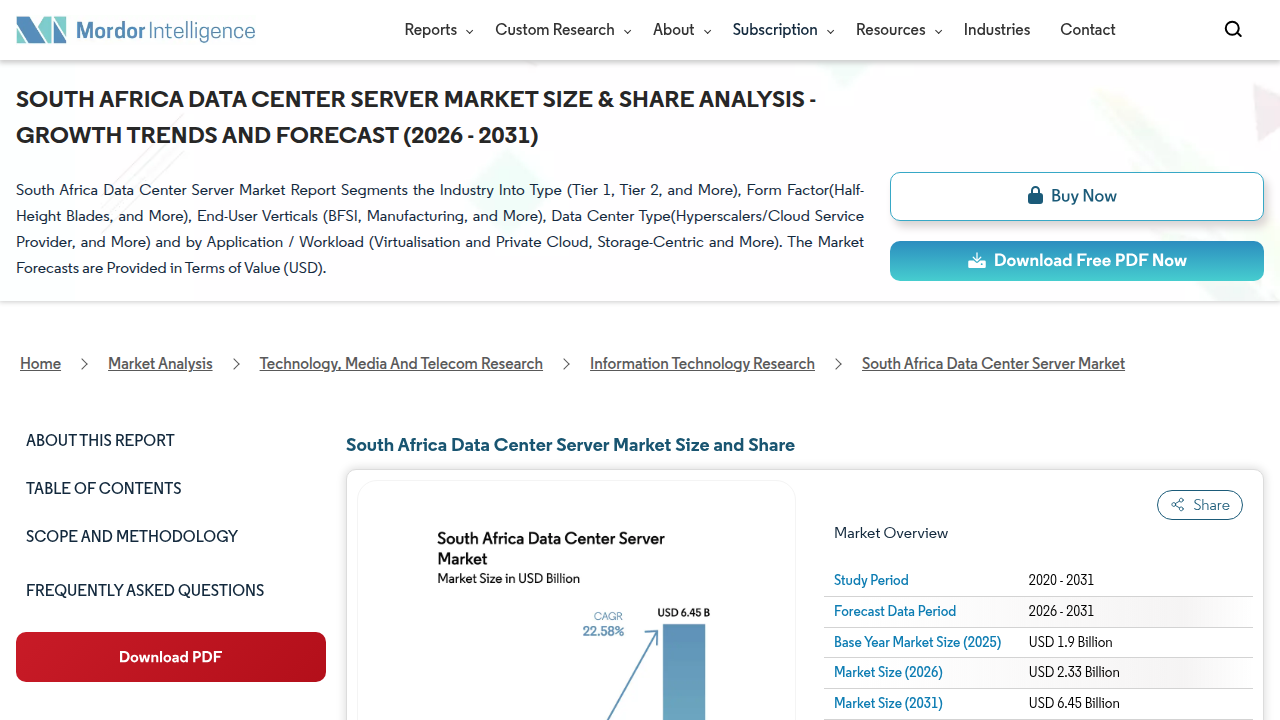
The South Africa Data Center Server Market is worth $2.33 billion in 2026, according to Mordor Intelligence. Globally, the web hosting market is set to reach nearly $390 billion by 2034. This boom means more businesses need a strong online home. And that starts with picking the right south african web hosting services.
But choosing a host is a big decision. You have to think about speed, security, and local data laws. A slow website drives visitors away. Weak security puts your data at risk. And not following local rules can cost you money. So finding a host that checks all the boxes is key.
That is why we made this guide. We give you an honest, data driven comparison of the best south african web hosting services. We look at performance, customer support, and web hosting cost. We also cover what matters most for small and medium businesses. If your audience is in Kenya, we touch on web hosting services in kenya so you can compare markets. Our goal is to help you find a host that fits your budget and goals.
If you are new to hosting, start with the basics. Read our beginner guide on what web hosting services are. When you compare hosts, look for strong security and fast speeds. Prism Webhost offers both.
It gives you a 99.99% uptime guarantee and powerful DDoS protection. That is the kind of solid foundation your business needs to grow online.
The Web Hosting Landscape in South Africa and Kenya (2026)
Let’s talk about what is actually happening on the ground in these two key markets. Understanding the infrastructure helps you see why choosing a local host matters.
South Africa has the most advanced data center setup on the continent. The market for data center servers is worth $2.33 billion in 2026 and is growing fast at a rate of 22.58% each year, according to Mordor Intelligence.
That growth means more high quality facilities are being built. Many of them are Tier III and Tier IV data centers, which are the gold standard for reliability and security.
What does this mean for you? When you pick a host with servers in South Africa, your site loads faster for local visitors. You also keep your data inside the country, which helps you follow local laws around data privacy. These are big reasons why south african web hosting services have become so popular among businesses that serve customers in the region.
Now let’s look at Kenya. It is quickly becoming a regional hub for digital growth. More fiber optic cables are being laid. Companies are investing in local data centers. This means web hosting services in kenya are getting better and faster every year. A local host in Kenya reduces the time it takes for your website to load for Kenyan visitors. That matters a lot for user experience and search rankings.
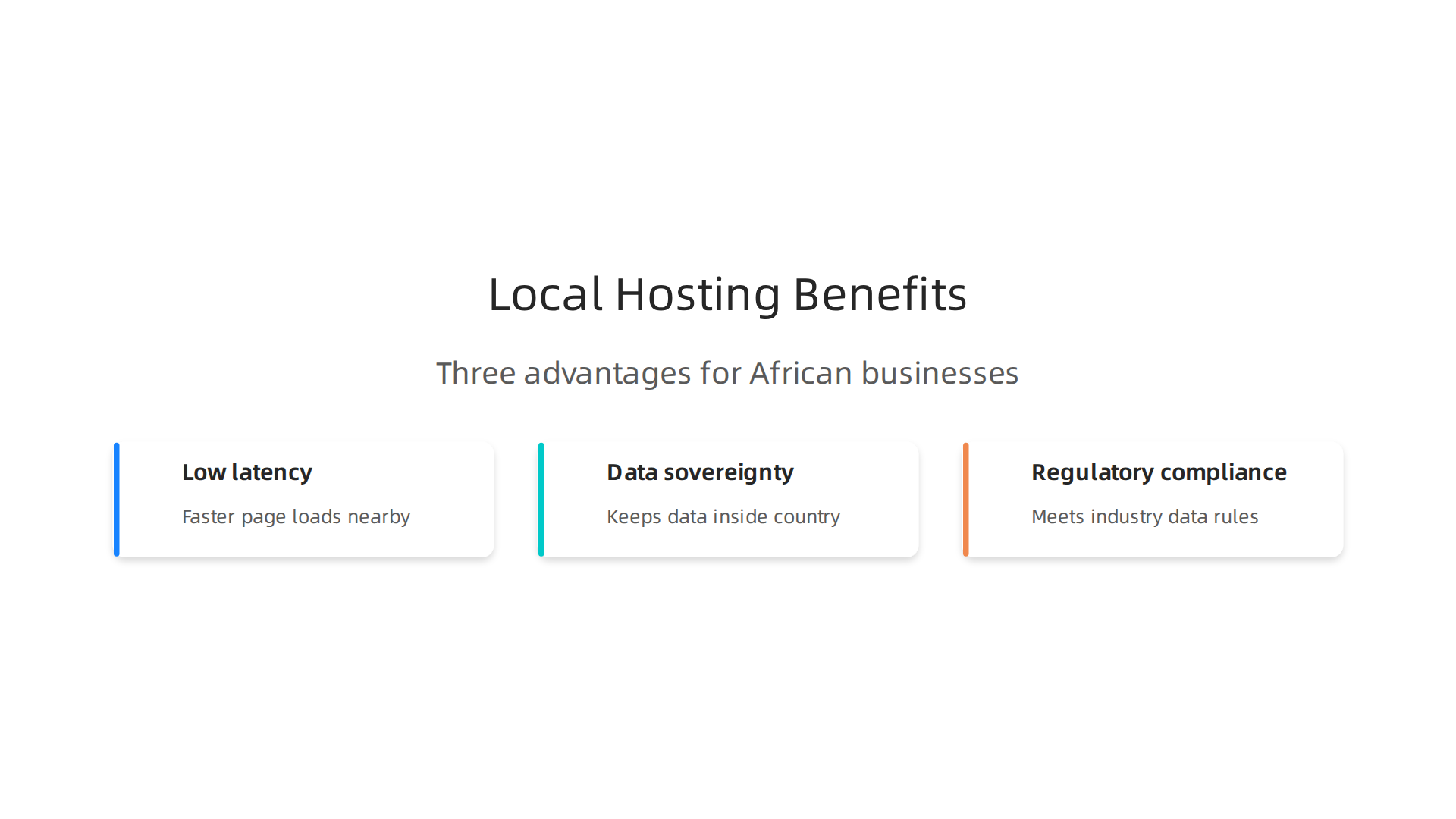
Whether you run an online store in Johannesburg or a blog in Nairobi, three things drive the need for local hosting:
- Low latency: Your site loads in milliseconds instead of seconds because the server is close to your audience.
- Data sovereignty: Your data stays within the country’s borders, which helps you meet regulations like POPIA in South Africa.
- Regulatory compliance: Some industries require you to store customer data locally.
If you are comparing options, also pay attention to web hosting cost. Local hosts often offer competitive pricing without the hidden fees that some international providers sneak in.
Now, if you want a host that offers the speed and security of South African infrastructure with a 99.99% uptime guarantee and 17Tbps DDoS protection, Prism Webhost is built for exactly that. Their NVMe SSD storage and LiteSpeed servers give your site the performance boost it needs. Whether your audience is in South Africa or Kenya, that kind of reliability makes a real difference.
Critical Factors for Choosing South African Web Hosting Services
You know the landscape now, so let’s get into what really matters when picking a provider. Not all hosts are the same, and the wrong choice can hurt your business more than you think.
Here are the biggest factors you need to look at closely.
Uptime Reliability and Network Redundancy
Your website needs to be available 24/7. Period. If your host goes down, you lose customers, sales, and trust. That is why uptime reliability is non-negotiable.
Look for a provider that guarantees at least 99.99% uptime. But the guarantee is only as good as the network behind it. The best hosts have redundant systems: multiple power sources, backup internet lines, and failover servers. If one part fails, another takes over instantly.
In 2026, South African regulators are also paying closer attention to data protection. The POPIA compliance framework now requires companies to process customer data securely.
A reliable host helps you meet those requirements by keeping your site protected and online.
Local Data Centers Improve SEO and Speed
Here is something many people miss. Where your server is located directly affects how fast your site loads for local visitors. And speed impacts your search rankings.
According to a 2026 analysis of South African web speed, international hosting without a local CDN often results in a Time to First Byte (TTFB) of 400 to 800 milliseconds for South African visitors. That is way too slow for Google’s Core Web Vitals.
When you choose south african web hosting services with servers in local data centers, your TTFB drops dramatically. Pages load in milliseconds instead of seconds. That is a direct boost to your SEO.
The same logic applies if your audience is in Nairobi. Choosing the right web hosting services in kenya or a South African host with a strong CDN can make a big difference.
Support Responsiveness Varies Widely
Not all support teams are created equal. Some providers offer 24/7 live chat with real experts. Others rely on email tickets that take hours or days.
When something breaks at 2 AM, you need help fast. That is why you should check reviews from other business owners. Look at how a host handles real problems, not just sign-up questions.
A good rule is to test the support team before you buy. Send a question during the sales process. See how fast and helpful they are. That gives you a preview of what you will get later.
Making sense of web hosting cost is also important here. The cheapest plan often comes with the worst support. Spending a little more for quality help can save you hours of frustration.
Security and Compliance Are Non-Negotiable
In 2026, data protection laws in South Africa are stricter than ever. The Information Regulator has introduced a new compliance monitoring programme to evaluate how organizations implement POPIA in practice.
Your web host plays a big role in this. They need to offer:
- SSL encryption for every site
- Regular security updates and monitoring
- Secure data backup procedures
- Access controls and authentication
If your host does not take security seriously, you are putting your customers’ data at risk. And that can lead to fines and legal trouble.
Recommended Host for Performance and Security
If you want a host that checks all these boxes, Prism Webhost is built for exactly this. They offer 99.99% uptime, NVMe SSD storage, LiteSpeed servers, and enterprise-grade security features like DNSSEC, SSL/TLS, and DDoS protection. Their infrastructure is designed to keep your site fast, secure, and always online.
Check out Prism Webhost to see how their hosting plans match your needs.
Now that you know what to look for, let’s compare the actual options available in the market.
Top South African Web Hosting Providers Compared
Now you know what to look for. Let’s see how the actual providers stack up. The South African hosting market has many options, but not all of them deliver the same quality.
A 2026 comparison guide from Rapidbiz Hosting lists the top 10 providers in the country. Names like Afrihost, Xneelo, HostAfrica, and Domains.co.za show up often.
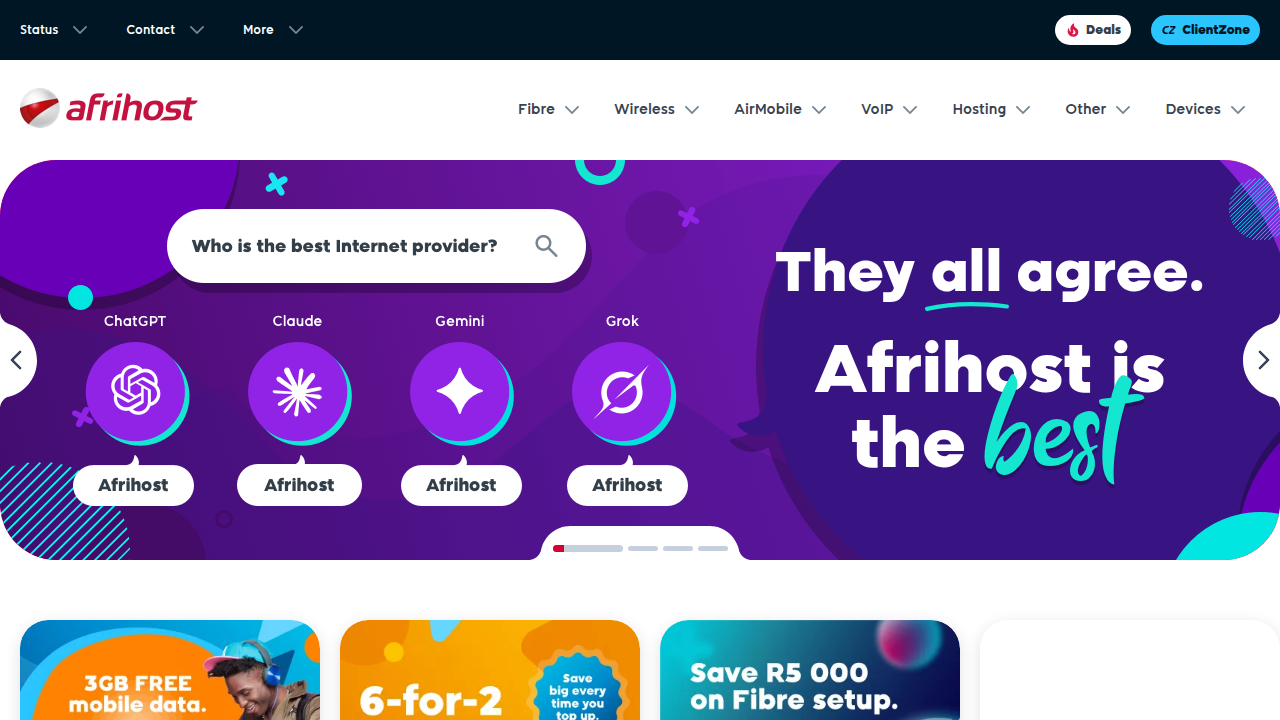
Telahosting also highlights how these providers compare in pricing, speed, uptime, and support.
Here is a quick look at what you can expect from these leading companies.
| Provider | Starting Price (Shared) | Key Features | Best For |
|---|---|---|---|
| Afrihost | Around R100/month | Local data centers, free SSL, cPanel | Small businesses |
| Xneelo | Around R150/month | 24/7 support, daily backups, strong security | Ecommerce sites |
| HostAfrica | Around R120/month | 99.9% uptime, free domain, 1GB RAM | Beginners |
| Domains.co.za | Around R80/month | Free SSL, email, 5GB storage | Budget shoppers |
These prices are just starting points. Your actual web hosting cost depends on the plan you choose and how much traffic you get.
What to Watch for in Each Category
Shared hosting is the cheapest. You share server space with other sites. It works well for new blogs or small business sites with low traffic. But if a neighbor site gets hit with a spike, yours might slow down too.
VPS hosting (Virtual Private Server) gives you a dedicated portion of the server. It costs more but offers better performance. If you run a growing ecommerce store or a site with moderate traffic, this is a smart upgrade.
Dedicated hosting means you get the whole server. It is expensive but gives you total control. This is for high-traffic websites, large databases, or sites that need strict compliance.
Understanding the different types of hosting can help you avoid paying for what you don’t need while still getting enough power.
The Cheapest Options vs. Quality Providers
Some people look at price first. That can work if the host still covers security and support. A 2026 comparison of the cheapest web hosting in South Africa by Themeisle shows options starting as low as R70/month. But these often come with trade-offs.
Cheap plans may have slower speeds, fewer backups, or limited support. When something goes wrong, you might wait hours for help. Spending a little more upfront for a reliable provider will save you time and stress later.
Why Prism Webhost Stands Out
Based on the factors we covered earlier, Prism Webhost checks every box. They offer 99.99% uptime, NVMe SSD storage, LiteSpeed servers, and enterprise-grade security with DNSSEC, SSL/TLS, and DDoS protection. Their shared hosting includes unlimited subdomains, free SSL, and cPanel. It is built for business owners who want to launch fast and stay safe.
To see how their plans fit your needs, take a look at Prism Webhost’s hosting services.
Reading reviews from actual users is another smart move before you decide. Check out our data-backed guide to web hosting reviews for tips on evaluating what other customers say.
Now let’s move to the next part: how to match the right hosting type to your specific business goals.
Web Hosting in Kenya: Opportunities and Providers
While South Africa has a mature hosting market, the picture looks different in other parts of Africa. Kenya, for example, is seeing rapid growth in web hosting services in Kenya. With fiber and mobile broadband adoption rising fast, more businesses are moving online. That means the demand for reliable web hosting services kenya is higher than ever.
According to a 2026 roundup from WebHost Experts, the top hosting companies in Kenya include Safaricom Cloud Hosting, Truehost, HostPinnacle, and HostAfrica. These providers offer plans that start from around KES 1,500 per month, making them affordable for small businesses and startups. Another comparison from Kickhost highlights that local hosts now compete on speed and support, not just price.
Why Local Data Centers Matter
For audiences in Mombasa and Nairobi, where your host stores its servers affects loading times. Hosting your site on servers close to your visitors reduces latency. Many Kenyan providers now operate data centers within the country, which is a big plus for performance. When comparing options, always check if the host has a local data center option.
What to Look for in a Kenyan Host
Just like with south african web hosting services, Kenyan providers vary in cost and quality. Here are the key factors to consider:
- Uptime guarantees – Look for 99.9% or higher.
- Customer support – Local support in your time zone saves headaches.
- Security features – Free SSL, DDoS protection, and backups are must-haves.
Not sure how to judge a host’s claims? Our guide to web hosting services reviews 2026 data-backed guide to choosing a reliable host can help you spot the real winners.
Taking It a Step Further
If you want a host that delivers enterprise-grade security and performance no matter where your audience is located, check out the plans at Prism Webhost. They offer 99.99% uptime, NVMe SSD storage, and strong DDoS protection, ideal for growing businesses in Kenya and beyond.
By keeping these points in mind, you can find a host that gives your Kenyan audience a fast, secure experience. Next, we will look at how to choose between shared, VPS, and dedicated hosting for different business stages.
Security and Compliance: POPIA, Data Sovereignty, and DDoS Protection
If you run a business in South Africa, you have probably heard about POPIA. But here is the thing. It is not just a legal paperwork exercise. It directly affects how you choose your web host.

In 2026, following the rules is more important than ever.
The Protection of Personal Information Act (POPIA) requires companies to handle customer data securely. That means your host must provide encryption, access controls, and safe data storage. According to cybersecurity experts at Facephi, POPIA "requires companies to process customer data securely" and limits how data can be used. And in 2026, enforcement is getting stricter. As Mayet Law explains, a new compliance monitoring programme now checks how organizations put POPIA into practice. So your hosting choice matters.
Why Data Sovereignty Matters
POPIA also pushes for data sovereignty. That is a fancy way of saying your data should stay inside South Africa’s borders. When you choose a local host, your website’s data never leaves the country. This reduces legal risk. As noted in a South African web design guide, a website is not truly finished until it meets POPIA standards. Local hosting makes meeting those standards much easier. Look for providers with data centers in South Africa.
Must-Have Security Features
Beyond compliance, you need real protection. DDoS attacks can knock your site offline. SSL certificates keep data safe between your visitors and your server. E-commerce sites especially need both. A good host includes these out of the box. For example, secure hosting typically includes SSL encryption, regular security updates, and access controls, as shown in this POPIA compliance notice. When comparing south african web hosting services, always check for these features.
For a full breakdown of what to look for in a reliable host, check out our web hosting services reviews 2026 data-backed guide to choosing a reliable host. It covers uptime, support, and security in detail.
Your Next Step
If you want a host that takes POPIA compliance seriously and provides enterprise-grade DDoS protection, free SSL, and a 99.99% uptime guarantee, take a look at Prism Webhost. They make it easy to stay secure and compliant, so you can focus on growing your business.
Choosing the right host is about more than price. It is about protecting your reputation and your customers. Make security and compliance a priority from day one.
Why Local Hosting Matters for Performance and SEO
Here is a situation you might know. You spend hours designing a beautiful website. You choose an international host because it seems cheap. Then your South African visitors complain. The site takes forever to load.

You check your analytics. Bounce rate is high. Sales are low. What went wrong?
The answer is often distance. When your host’s servers are in the US or Europe, data has to travel thousands of kilometers. That adds time. In the web hosting world, we call this Time to First Byte (TTFB). For South African users, an international host without local servers often delivers TTFB between 400 and 800 milliseconds, as noted in a 2026 managed WordPress hosting comparison. That is slow. And Google notices.
How Local Hosting Helps Your SEO
Google wants to show users the fastest, most relevant results. If your visitors are in South Africa, Google checks how fast your site loads for them. If your server is in Johannesburg or Cape Town, your site loads much faster than one sitting in New York. That speed gives you a direct SEO advantage.
Local hosting also improves your Core Web Vitals scores. These are metrics Google uses to rank pages. A local server means faster LCP (Largest Contentful Paint) and lower INP (Interaction to Next Paint). In 2026, Core Web Vitals are even more important than before.
Real Results from Local Hosting
The numbers back this up. A 2026 South African web speed report found that businesses that moved from international to local hosting saw big jumps in conversion rates. One case study showed a 22% increase in sales after the switch. Faster pages keep people on your site. They trust your brand more. They buy more.
Many business owners worry about the web hosting cost of local providers. But when you factor in lost sales from slow load times, local hosting often pays for itself. Plus, local hosts offer features that international hosts charge extra for.
Avoid a Common Hosting Mistake
A lot of small businesses pick a host based only on price. That can lead to performance problems that hurt your online reputation. For a closer look at the biggest mistakes to avoid, check out this article on common web hosting errors that small businesses should steer clear of. It explains how choosing the wrong server location can cost you customers.
Your Local Hosting Option
If you are ready to give your South African audience the speed they deserve, consider a provider with data centers in the region. For example, Prism Webhost uses local infrastructure to deliver low TTFB and fast load times. They include features like LiteSpeed servers and NVMe SSD storage to keep your site speedy. And they offer a 99.99% uptime guarantee so your site stays online.
When you compare south african web hosting services, make local performance one of your top criteria. Your visitors will thank you, and Google will reward you.
How to Migrate Your Website to a South African Web Host
So you are convinced local hosting is the right move for your South African audience. That is great. But now comes the part that worries most business owners: the actual move. How do you switch hosts without breaking your site or losing data?
Here is the good news. Moving your website to a new provider is not as hard as it sounds. In fact, many modern hosts make it almost painless.
Step 1: Sign Up for Your New Hosting Plan
First things first. Buy a plan from your new local host. If you choose a provider like Prism Webhost, the setup takes minutes. You will get access to your new control panel right away.
Step 2: Back Up Everything
Before you touch anything, back up your entire website. This includes your files, databases, and email accounts. A full backup protects you if something goes wrong. Most migration checklists for 2026 agree that this is the most critical step. Follow a detailed website migration checklist to make sure you do not miss anything.
You can usually export your site files via FTP or your old host’s file manager. For databases, use a tool like phpMyAdmin.
Step 3: Transfer Your Files and Database
This is the core of the move. You need to upload your backed-up files to your new host. Then import your database into the new server.
If you use a content management system like WordPress, the process is simpler. Some hosts provide migration plugins to do this automatically.
Pro tip: Many South African hosts offer free migration services for new customers. They will handle the entire transfer for you. That can save you a lot of time and effort.
Step 4: Update Your DNS Records
Once your site is on the new server, you need to point your domain name to it. This means updating your DNS records, specifically the nameservers.
This step can take 24 to 48 hours to fully update across the internet. Plan for a small window where some visitors might see the old site while others see the new one. That is normal.
Step 5: Test Everything
Before you go live, test your site on the new server. Check all your pages, forms, and links. Make sure images load. Test your contact forms. Look at your site speed using tools like Google PageSpeed Insights.
If you are moving from an international host, you should notice an immediate improvement in load times for your South African visitors.
Step 6: Cancel Your Old Hosting
Once you are sure everything works on the new host, cancel your old plan. But keep your backups for a few weeks just in case.
A smooth migration keeps your SEO rankings intact. Poor planning can hurt your traffic. For a deeper dive into what can go wrong if you are not careful, read about common web hosting errors that small businesses should avoid.
Make the Switch Today
Do not let the fear of migration keep you on a slow host. The process is straightforward, especially when you work with a provider that offers support. Check out Prism Webhost’s hosting plans to start your move to faster, local hosting. Your South African audience will notice the difference right away.
Summary
This guide explains why choosing the right South African web hosting service matters for speed, security, compliance and conversions. It compares the 2026 hosting landscape in South Africa and Kenya, highlights critical selection factors such as uptime guarantees, local data centers, support responsiveness and POPIA compliance, and shows how those factors affect SEO and user experience. The article walks through hosting types (shared, VPS, dedicated), pricing expectations, and a practical migration checklist so you can move without downtime or data loss. It also calls out common pitfalls—cheap plans with weak support or no local servers—and recommends the features to prioritise for small and medium businesses. By reading this guide you’ll know how to evaluate providers, what to test during sign-up, and the concrete steps to migrate to a faster, more secure local host.
