




Master Your Domain Name Cost: Uncover Hidden Fees and Smart Savings
Article
Starting a new business or a personal project often means watching every dollar.

That’s why finding a domain cheap is a big deal for many small business owners and people working for themselves. It helps them get their ideas online without spending a lot of money upfront. The idea of a low cost to buy a domain name makes it easier to take that first step into the online world. Sometimes, you might even hear about a "free website domain" included with hosting, which sounds like an amazing deal.
However, it’s really important to look beyond that first super low price. While a domain cheap offer can be tempting, these deals often come with a catch. Many registrars, which are the companies that help you buy domain names, will offer a very low price for the first year. But then, the domain name registration cost can jump way up when it’s time to renew. For example, some .com domains might be $1.99 for the first year but then cost $21.99 or more each year after that, according to experts in 2026 Domain Renewal Cost 2026: Why Prices Jump 300% After …. This big jump can surprise you if you’re not ready for it.
Here’s how it works: the actual base cost for a .com domain is around $10.44 to $10.46 a year, which includes fees paid to the organization that runs .com domains (Verisign) and a small fee to ICANN, the global group that manages domain names Domain Registrar Markup Exposed: Who Charges the Most Over …. Anything above that is what the registrar adds to cover their costs and make a profit.
So, when you see a very low first-year price, understand that registrars are essentially cutting into their own profits at the start, hoping you’ll stay for the higher renewal fees. Other things to think about include hidden fees that might pop up for services like privacy protection, or the quality of customer support you’ll get. A truly cheapest domain hosting option means good value over time, not just the lowest initial price. You want a provider that’s clear about all costs and offers good help when you need it. If you’re looking for transparent pricing and reliable service, consider exploring options from Prism Web Host – Affordable Domains & Hosting to find a trustworthy home for your online presence.
How Domain Pricing Works: What ‘Cheap’ Really Means
When you look for a domain cheap deal, it’s helpful to know what makes up the price you pay. Think of it like buying groceries. There’s the cost the store pays for the food, plus what they add for their own work and profit. Domain names work in a similar way.
There are a few parts to the total cost to buy a domain name:
- Registry Fees: This is the basic price set by the organization that manages a certain domain type. For example, Verisign is in charge of all .com domains. They set a wholesale price that every company selling .com domains has to pay. This part is fixed and doesn’t change from one seller to another. You can think of these organizations as the "landlords" of the internet’s addresses, as explained in a video about Domain Pricing Explained: From Registries to Premium Domains.
- ICANN Fees: ICANN is a global group that helps keep the internet organized. They charge a very small fee for each domain name registered. This fee is also fixed and added to almost every domain. In 2026, this fee is around $0.18 to $0.20 per domain per year.
- Registrar Markup: This is the extra amount that the company selling you the domain (called a registrar) adds to the base cost. This markup covers their business costs, customer support, and helps them make a profit. This is where prices can really differ. Some registrars add a lot, while others add just a little.
- Optional Services: Sometimes, your domain bill includes other things you might want. These could be privacy protection, email hosting, or website builder tools. These are extra services that cost more, but they are not always needed for just the domain itself.
The Real Story Behind "Cheap" First-Year Prices
Many registrars offer a very low price when you first sign up for a domain. For instance, you might see a .com domain for just $1.99 for the first year. This sounds like an amazing deal, right? Well, it is a great way to get started, but it’s important to remember that this low price is usually a special promotion.
After the first year, when it’s time to renew your domain, the domain name registration cost often jumps up quite a bit. That $1.99 domain might renew for $15, $20, or even more per year. Companies do this to get new customers in. They lose a little money on that first year, hoping you will stay with them for many years at the regular, higher renewal price. Many guides on cheapest domain registrars warn about these renewal traps in 2026.
So, when you see a really good initial price, always check what the renewal price will be. This way, you avoid surprises later on. Knowing the full cost helps you budget better and find the best value for your website in the long run. If you want to make sure you’re getting the best deal over time, it’s wise to run a domain price comparison to compare both first-year and renewal rates.
Common Hidden Costs & Upsells to Watch For
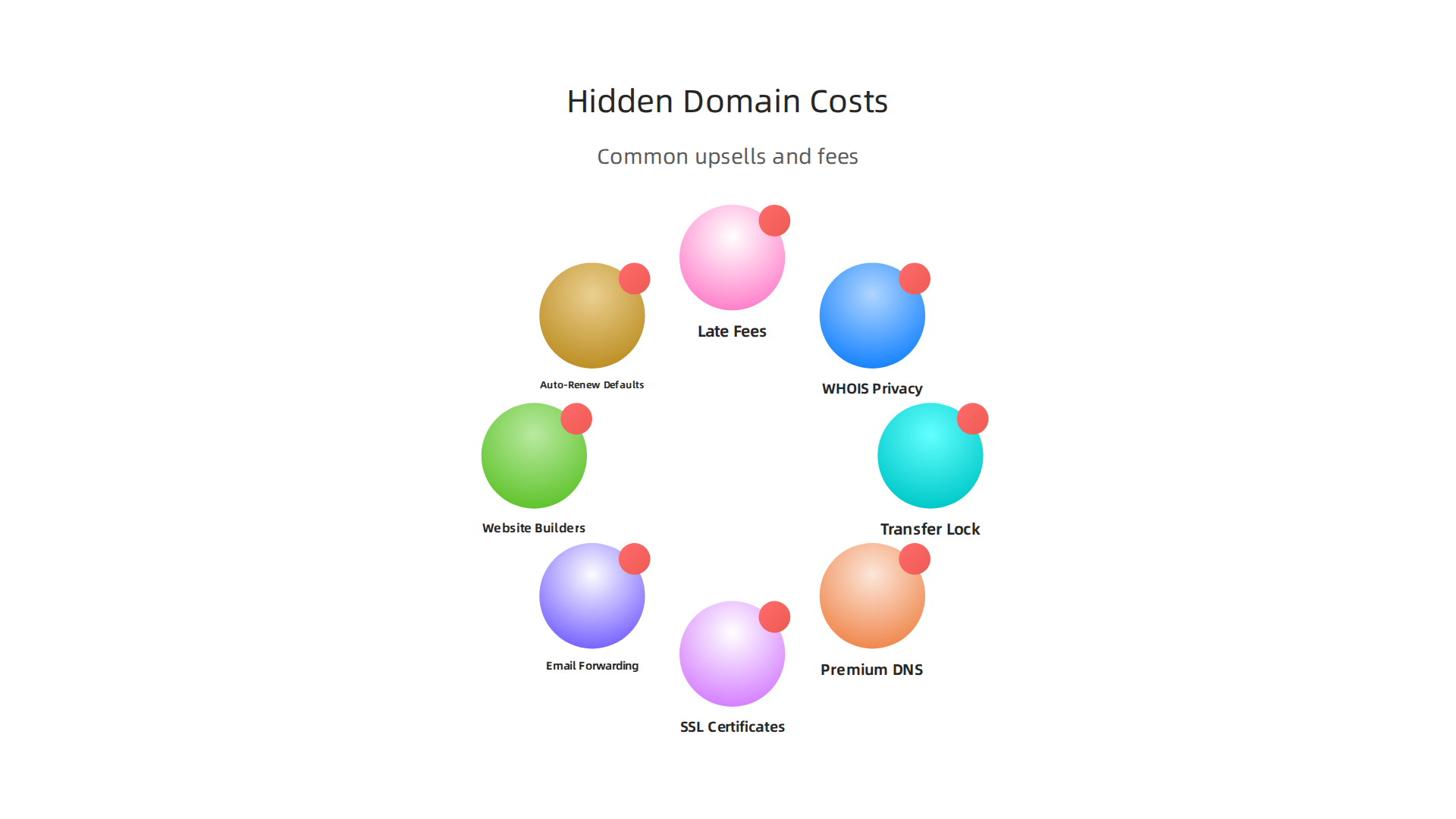
While checking renewal rates is a smart move, there are other tricky fees and extra services that can make your "domain cheap" deal less cheap. These are often added on during checkout or appear as options that seem important. Let’s look at some common ones you should know about.
WHOIS Privacy
When you register a domain name, your contact details (name, address, email, phone) become public information. This is part of a public database called WHOIS. To hide this personal information from spammers and others, many registrars offer a service called WHOIS privacy. It means the registrar’s details are shown instead of yours.
While this service is helpful for privacy, it often comes with an extra cost. Some registrars include it for free, but many charge an annual fee for it. In 2026, experts suggest using WHOIS privacy as a key way to protect your personal information online when managing your domain name, and some registrars like Namecheap even offer it for free initially, as noted in a comparison of Cheapest Domain Registrars 2026: True Cost Comparison. Always check if it’s included or if it’s an extra charge that adds to your overall domain name registration cost.
Domain Locks and Security Extras
- Transfer Lock: This is a security feature that stops someone else from moving your domain name to another company without your permission. It’s important for protecting your website, but it’s usually a free feature you just need to turn on. You can think of it as putting a lock on your online address. Setting a strong registrar lock is considered a best practice for Protecting Your Brand: Domain Security Best Practices in 2026.
- Premium DNS: DNS (Domain Name System) helps connect your domain name to your website’s server. Most registrars offer basic DNS for free. But some also offer "Premium DNS" with promises of faster speeds and better security. For most small businesses, the free DNS is perfectly fine. Premium DNS usually isn’t needed and will increase your cost to buy a domain name.
- SSL Certificates: An SSL certificate makes your website secure (you’ll see "https://" in the address bar). While very important for any website, many hosting providers now offer free SSL certificates. Don’t pay extra for one if your web host already provides it.
Other Upsells to Watch For
- Email Forwarding or Hosting: Many registrars will try to sell you email services. This could be simply forwarding emails from your domain (like info@yourdomain.com to your Gmail) or full email hosting with mailboxes. While useful, these are often better bought separately or are included with your web hosting plan.
- Website Builders: Some registrars will offer their own website builder tools. These can be handy for beginners, but you might find better features or value from other website builders or by choosing a specialized cheapest domain hosting in 2026 plan that includes one.
Auto-Renew Defaults and Late Fees
Many registrars set domains to automatically renew when they expire. This can be helpful so you don’t accidentally lose your domain. However, they will charge you the higher renewal price, which can be a surprise if you forgot about it. Always keep track of your renewal dates.
If you forget to renew a domain, registrars might hold onto it for a short time, giving you a chance to get it back. But if you are late, you could face extra "redemption" fees to restore your domain, which can be very expensive. This is why paying attention to your renewal dates and checking all costs upfront is so important, as highlighted in a guide on Domain Name Pricing: What You’ll Actually Pay in 2026. Knowing these potential extra costs helps you truly calculate your true web hosting cost and avoid hidden fees in 2026 and manage your online presence better.
After understanding those extra costs, it’s clear that finding a truly "domain cheap" option is not just about the first-year price. For small businesses (SMBs), picking the right domain registrar means looking beyond the sticker price. You need a registrar that makes things easy and keeps your website safe without tricky add-ons.
Keeping Things Simple: Clear Management and Easy Renewals
Small business owners are busy. They don’t have time to struggle with complicated settings or fear losing their domain name. So, when you choose a registrar, look for these simple features:
- Easy DNS Management: DNS is like your domain’s address book. You need to be able to change its entries easily, especially for things like email settings. A good registrar offers clear tools for this, which helps manage your website domain definition without technical headaches.
- Simple Renewals: We talked about surprise renewal prices before. A good registrar will have clear information about what you’ll pay each year. This makes planning your budget for your domain cost per year much simpler. Some even offer transparent renewal rates, meaning no big jump in price after the first year, as noted in reviews for the Best Domain Registrars 2026.
- Good Support: If something goes wrong, you need quick help. Look for registrars with reliable customer service that you can easily reach. This is a must-have for any business. Experts also highlight this when comparing 10 best domain name providers 2026.
These features reduce technical fuss, letting you focus on your business instead of website upkeep.
Important Security Features That Matter for Your Business
Beyond ease of use, security features are super important for keeping your business online and trusted.

- Free WHOIS Privacy: As we discussed, this hides your personal information. Many top registrars now offer this for free, which is great for protecting your privacy and avoiding spam. You should always aim for this free service to keep your domain name registration cost low.
- DNSSEC: This is a fancy way to say "Domain Name System Security Extensions." It’s like a special lock that protects your website from being sent to the wrong place by hackers. It makes your website more secure and is often offered by registrars that focus on strong security, such as those reviewed in the 2026 Review Domain Name Registrars for speed and security.
- Easy Domain Transfers: You should be able to move your domain to a different registrar if needed. A smooth transfer process ensures your business can switch providers without trouble, keeping your website running without interruption.
Choosing a registrar with these features helps you avoid hidden problems and protects your online presence. Many of the Best Domain Registrar for Small Businesses in 2026 reviews highlight these exact points. You want a provider that is known for transparent pricing and strong security practices.
If you are still looking for a place to get your domain name and hosting, remember that a good web host will combine these important features with solid support. Our own services at Prism Web Host – Affordable Domains & Hosting aim to make sure you get a reliable, secure, and easy-to-manage experience, so you don’t have to worry about these technical details.
Beyond ease of use, security features are super important for keeping your business online and trusted. When looking for a "domain cheap" option, you must not forget about protecting your website. Think of these like locks and alarms for your most important online address.
Keeping Your Domain Safe: Key Protections
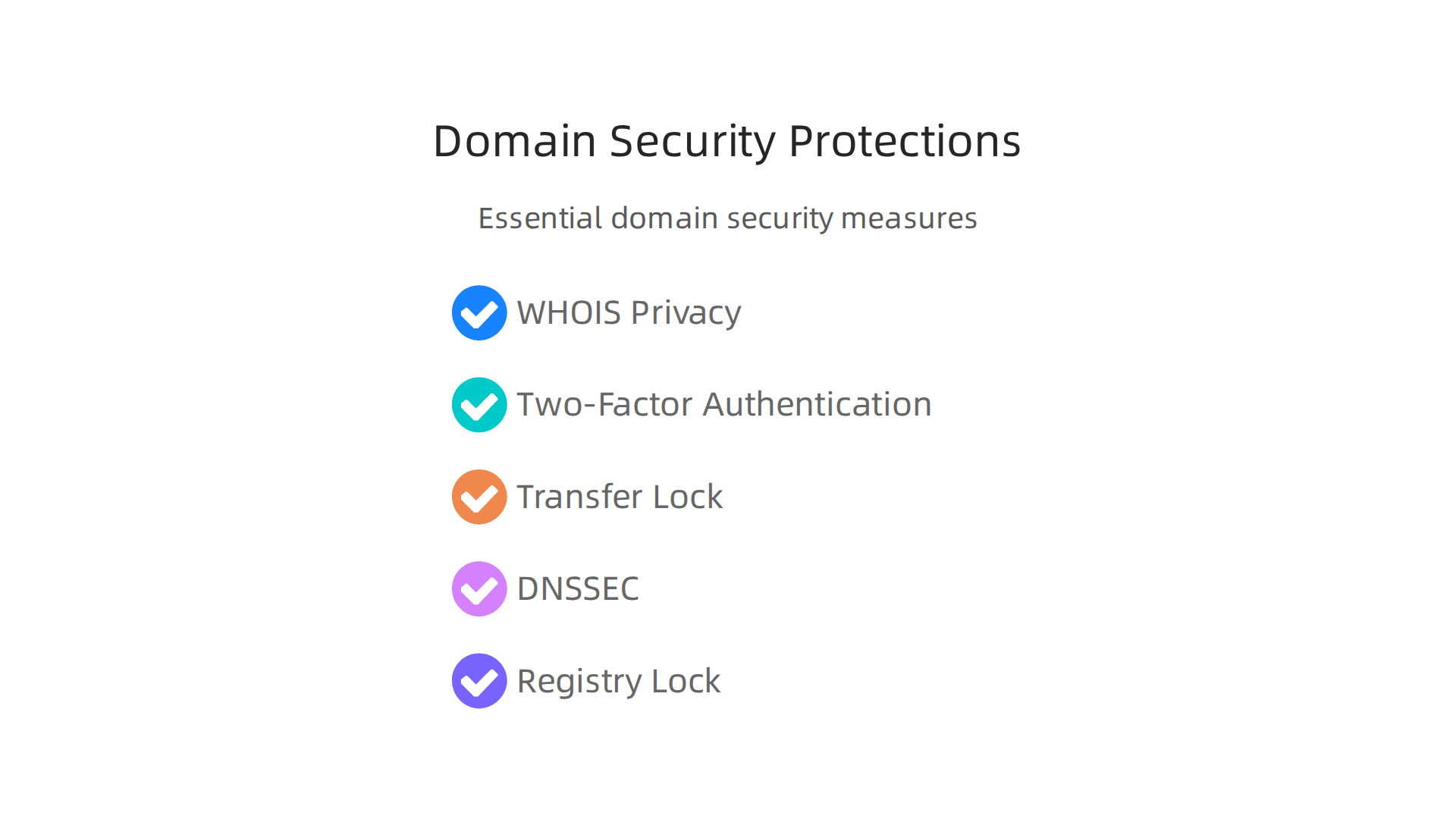
Even if you find a low initial cost to buy a domain name, true value comes from how well your registrar protects it. Here are some top ways to keep your domain safe:
-
Free WHOIS Privacy: We talked about this before. It keeps your personal details hidden from public view. This stops bad actors from finding your phone number or address, which helps prevent spam and unwanted contact. Look for a registrar that gives this to you for free, as it’s a basic shield for your privacy online. Many experts agree this is a key practice for domain privacy in 2026, as discussed in Domain Privacy Best Practices in 2026.
-
Two-Factor Authentication (2FA): This is a very important extra step to protect your registrar account. It means that even if someone gets your password, they still can’t log in without a second code. This code often comes from your phone or a special app. Enabling 2FA on your registrar account makes it much harder for hackers to take control of your domain, a crucial tip from the 2026 Domain Management Security Guide.
-
Domain Transfer Locks: Imagine your domain name is like the deed to your business property. A transfer lock is like putting that deed in a secure safe. It stops anyone from moving your domain to another registrar without your clear permission. This feature protects your brand, making sure your website stays where it belongs. You can usually turn this "Registrar Lock" on in your domain settings, as part of Protecting Your Brand: Domain Security Best Practices in 2026.
-
DNSSEC: We mentioned this as a special lock for your website. DNSSEC helps make sure that when someone types your website address, they go to your actual site, not a fake one set up by hackers. It’s like having a secure mailing address that can’t be tricked. Implementing DNSSEC for all your domains is a critical DNS Security Best Practices (2026).
-
Registry Lock: This is an even stronger lock than a transfer lock. It’s a special service that registrars can offer to prevent any changes to your domain without a very strict manual process. It adds a huge layer of security, especially for big brands. Not all domains or registrars support it, but it’s the highest level of protection available.
The Risks of Cutting Corners on Security
Sometimes, when you look for the "cheapest domain hosting," registrars might cut corners on these very important security features. They might charge extra for WHOIS privacy or not offer 2FA at all. This might seem like a small saving on your domain name registration cost at first. But actually, it puts your business at big risk.
If your domain is stolen, or if visitors are sent to a fake website, it can hurt your business badly. You could lose customers, trust, and money. That’s why choosing a reputable registrar that focuses on security is much more important than just finding the absolute cheapest price. For more tips, learn how to find reputable domain name registrars that protect your business. Always remember, good security is an investment, not an extra cost. If you are looking for cheapest domain hosting in 2026 avoid price traps and get real value, prioritize providers that offer these essential security features.
Finding a domain cheap isn’t just about picking the lowest number you see. You want to make smart choices so you get a good deal that lasts, without giving up important features like security. Actually, there are good ways to save money on your domain name without running into problems later.
Here are some smart strategies to get the best domain deals:
Look for Special Promotions
Many domain registrars offer special deals for new customers. You might see a very low price for the first year of your domain name registration cost. These deals can make a domain cheap for a short time, sometimes as low as $0.99 for the first year, according to experts. Websites like Network Solutions explain how to find these deals.
Be Careful with Renewal Prices: This is a big one. That super low first-year price almost always jumps up a lot when it’s time to renew. Some registrars might offer a domain cheap at first, but then charge three or four times more later. Always check the "renewal price" before you buy. For example, a .com domain might be $1.99 for the first year but renew at $21.99 annually, as noted by Best Domain Registrars in 2026. This renewal shock can make your "cheapest domain hosting" not so cheap over time. Learn more about domain renewal cost after the first year.
Bundle Domain and Hosting Together
If you need both a domain name and web hosting, sometimes buying them from the same company can save you money. Many hosting providers offer a free website domain for the first year if you sign up for their hosting plan. This can be a great way to save on the initial cost to buy a domain name. Just remember to check the renewal prices for both the domain and the hosting.
Use Discount Codes and Coupons
Before you buy, do a quick search online for discount codes or coupons for your chosen registrar. Many companies offer special codes that can knock a few dollars off your domain registration. It’s a simple step that can help you get a domain cheap without much effort.
Register Your Domain for Multiple Years
Some registrars give you a better deal per year if you register your domain for several years at once, like two, three, or even five years. While it’s a bigger upfront payment, it can lower your overall domain cost per year. This also saves you the hassle of remembering to renew every single year. You can also avoid price increases that might happen later on. For insights into understanding these costs, check out our guide on mastering your domain name registration cost.
Avoid Risky Tactics
Not all "cheap" deals are good deals. Some registrars use tricks to make their prices seem lower. Be careful of these:
- Hidden Fees: Some companies will add fees for things like WHOIS privacy (which should often be free), or for simply transferring your domain later. Always read the fine print. According to How Much Does a Domain Name Cost? Domain Price in 2026, hidden costs are a common concern.
- Aggressive Upsells: If a registrar constantly tries to sell you many extra services you don’t need, it might be a sign they’re trying to make up for a very low initial domain price.
The actual wholesale cost for a .com domain is around $10.44 per year, made up of registry and ICANN fees. Any price much lower than that for the first year usually means you’ll pay much more later, as highlighted by Domain Registrar Markup Exposed.
The best way to get a truly good deal on a domain name is to compare both the first-year price and the renewal price. Also, make sure the registrar offers good security and customer support. It’s often better to pay a little more for a reliable service than to chase the absolute lowest "domain cheap" price and face problems later. For a deeper dive into cost comparison, consider our guide on running a domain price comparison to truly uncover true costs.
Once you’ve done your homework on prices and found a domain name that’s not only a good deal but also perfect for your needs, the next step is to get it working. This involves a few important technical steps. Don’t worry, they are easier than they sound!
Technical Steps: Buying a Domain, Pointing It, and Ongoing Management
Getting your domain online and keeping it safe takes a few key actions. Think of this as a checklist to make sure everything runs smoothly.
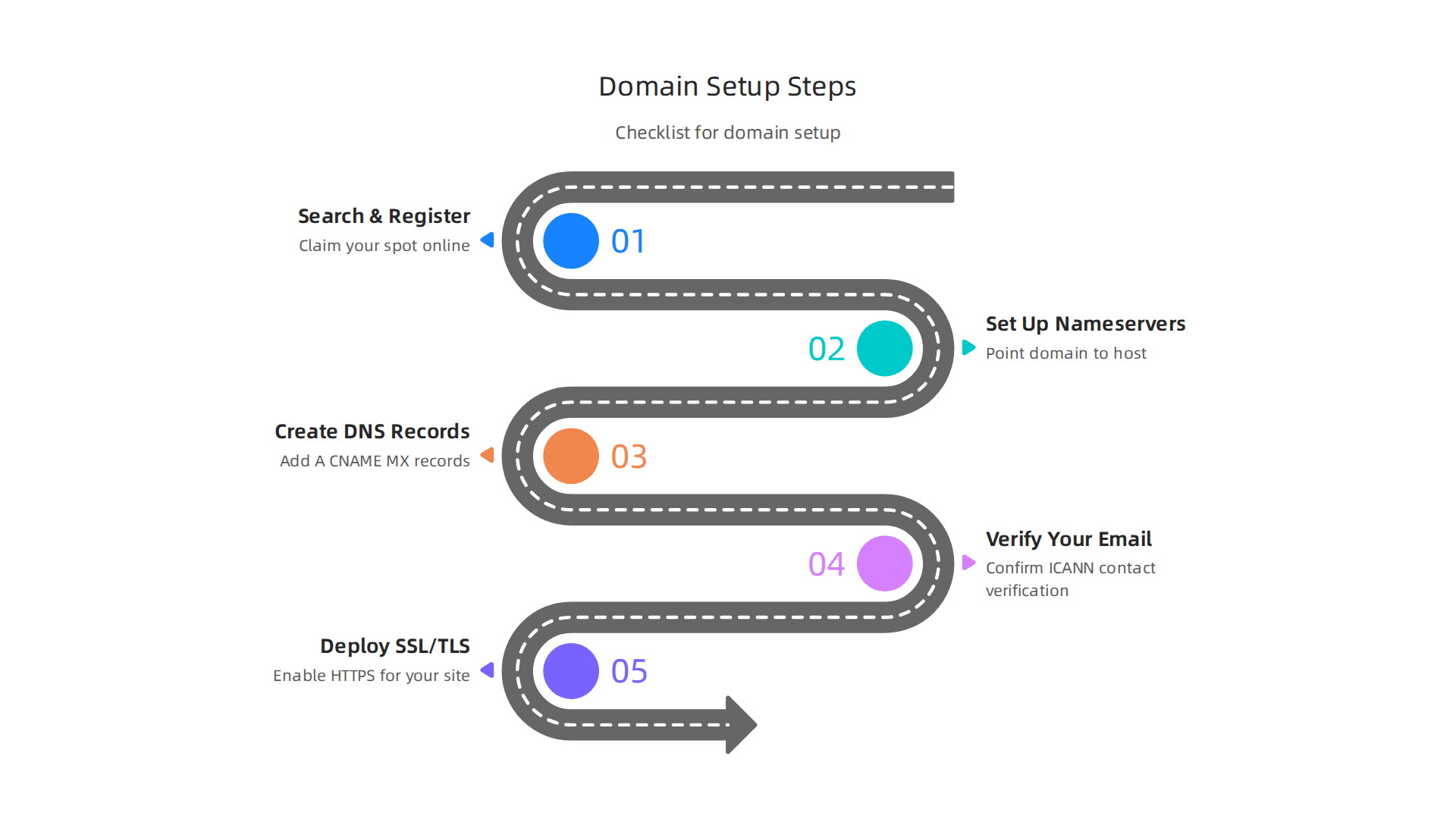
Your Step-by-Step Domain Checklist
- Search and Register Your Domain: You’ve picked out your perfect web address. Now you need to register it with a domain registrar. This is like claiming your spot on the internet. Even if you’re looking for a domain cheap, make sure the registrar is reliable.
- Set Up Nameservers: After you register, you need to tell your domain where your website lives. This is done by setting up "nameservers." Your web host (where your website files are stored) will give you these. They usually look something like
ns1.yourhost.comandns2.yourhost.com. You enter these into your domain registrar’s control panel. - Create DNS Records: DNS records are like a phone book for the internet. They tell computers where to find different parts of your online presence, such as your website (A record), your email (MX record), or other services (CNAME, TXT records). Setting these up correctly is vital for your site and email to work. For enhanced security and protection against certain attacks, using DNSSEC (Domain Name System Security Extensions) is a smart move, as recommended by the Secure Domain Name System (DNS) Deployment Guide.
- Verify Your Email: When you register a domain, you’ll get an email asking you to verify your contact information. This is a must-do step required by ICANN, the group that oversees domain names. If you don’t do it, your domain could get suspended. Using secure email practices can protect your domain identity, as detailed in Email security best practices for 2026.
- Deploy SSL/TLS Certificate: An SSL (Secure Sockets Layer) certificate encrypts the connection between your website and your visitors’ web browsers. This makes your site secure, shows a padlock in the browser bar, and is good for SEO. Many web hosts offer a free SSL certificate. Learn about managing these costs with resources like our guide on GoDaddy SSL certificate cost 2026. For a secure and speedy website with free SSL, consider checking out our cheapest domain hosting in 2026 options.
Tips to Reduce Errors and Boost Security
Managing your domain name doesn’t stop after the initial setup. Ongoing care helps prevent problems and keeps your site safe.
- Document Account Credentials: Write down and safely store all your login details for your domain registrar and hosting accounts. This includes usernames, passwords, and any backup codes. Losing these can be a huge headache.
- Enable Two-Factor Authentication (2FA): This adds an extra layer of security to your accounts. After you enter your password, 2FA asks for a second code, usually from your phone. This makes it much harder for bad actors to get into your account, even if they have your password. Experts agree that enabling 2FA is a key security measure for domain management, according to the 2026 Domain Management Security Guide.
- Set Renewal Alerts: Domain names expire. If you forget to renew, someone else could buy your domain! Set up reminders well before the renewal date, and consider enabling automatic renewals if your registrar offers it. This helps you avoid losing your online identity. Keeping track of your account is easy if you know how to use the GoDaddy dashboard.
- Delegate Access Carefully: If you work with a team or an agency, give them only the access they need. Don’t share your main login. Many registrars let you set up different user roles with limited permissions. This protects your core accounts.
- Use Registrar Lock: Most registrars offer a "registrar lock" feature. This stops anyone from transferring your domain to another registrar without your specific permission, adding another layer of security, as advised in Protecting Your Brand: Domain Security Best Practices in 2026.
By following these steps, you can confidently manage your domain name and keep your online presence safe and sound in 2026 and beyond.
When to Spend More: Premium Domains, Brand Value & Long-Term Considerations
While looking for a domain cheap can save you money at first, there are times when spending a bit more on a "premium" domain name is a smart move.

Think of it like buying a house. A basic house works fine, but a house in a great spot with a unique look might be worth more in the long run.
A premium domain is often a short, easy-to-remember web address. It might use common words or be a very popular name. These domains are not usually found at regular registration prices. They are often already owned and sold on a special market called the "aftermarket."
Why a Premium Domain Can Be Worth It
Investing in a premium domain brings many benefits:
- Strong Branding: A short, catchy domain helps people remember your business. It builds trust and makes your brand look professional. For example, a domain like "shoes.com" sounds more official than "best-shoes-online-store-2026.net." A strong brand makes it easier for customers to find you and feel good about your business.
- Better for SEO (Search Engine Optimization): If your domain name includes words people often search for, it can help your website show up higher in search results. For instance, if you sell flowers, having "flowers.com" is better for SEO than a less clear name. Search engines like simple, relevant names.
- Easy to Remember: Imagine telling someone your website address over the phone. A simple, short domain is much easier to say and recall. This means more direct visits to your site.
- Long-Term Value: Premium domains often keep their value, or even grow in value, over time. They are like a good investment for your online business.
How Premium Domains Get Their Value
So, what makes a domain "premium" and costly? Experts look at several things when figuring out the value of a domain name. These include:
- Length and Simplicity: Shorter domains are almost always worth more because they’re easier to remember and type.
- .COM is King: The
.comending is still the most trusted and recognized around the world. Domains ending in.comare often worth much more than those with other endings. - Keywords: If the domain name has words that many people search for, like "car insurance" or "travel guide," it adds a lot to its value.
- Brand Potential: Can the name easily become a big brand? Does it sound good and is it unique? These factors boost its worth. You can learn more about finding the true domain name value for your business.
Companies use tools to value a domain name in 2026 by looking at how many people search for certain terms, how likely people are to buy things related to those terms, and how clear and memorable the name is.
Buying a Premium Domain on the Aftermarket
When a domain name is already owned, you can often buy it from the current owner. This is called the "aftermarket." The process might involve:
- Finding it: You can find these domains on special marketplaces.
- Making an Offer: You’ll usually make an offer to the seller.
- Using Escrow: For expensive domains, you’ll often use a service called "escrow." This service holds your money and the domain name until both sides have met all the rules of the sale. This protects both you and the seller.
While you can often find a cost to buy a domain name 2026 price guide and hidden fees for new registrations, premium domains have different pricing rules. It’s not about getting a domain cheap but about getting the right one for your future. Picking a great domain is a crucial part of building a strong online presence for years to come.
Summary
This article explains how to find a truly cheap domain by looking beyond low first‑year offers and understanding the real costs involved. It breaks down the components of domain pricing — registry and ICANN fees plus registrar markup — and shows why promotional prices often spike at renewal. The guide covers common hidden charges and upsells like WHOIS privacy, premium DNS, SSL and redemption fees, and it highlights essential security features such as WHOIS privacy, 2FA, DNSSEC and transfer locks. You’ll get a practical checklist for buying, pointing, and managing a domain, plus tips to save money responsibly (bundle hosting, multi‑year registration, coupons) and guidance on when to invest in a premium name for branding. After reading, you’ll be able to compare true costs, pick a registrar with transparent pricing and security, and manage renewals and transfers without costly surprises.
