




Free Website Domain: What It Costs Your Brand & How to Choose
Article
Many people starting a new online project or business in 2026 wonder if they can save money on their website. It’s a common question: "Can I really use a free website domain?" The idea of getting something for nothing is always appealing, especially for new founders and small teams trying to keep costs low.

The truth is, what people call a "free website domain" usually comes in a few forms, and they’re not always truly "free" in the long run.
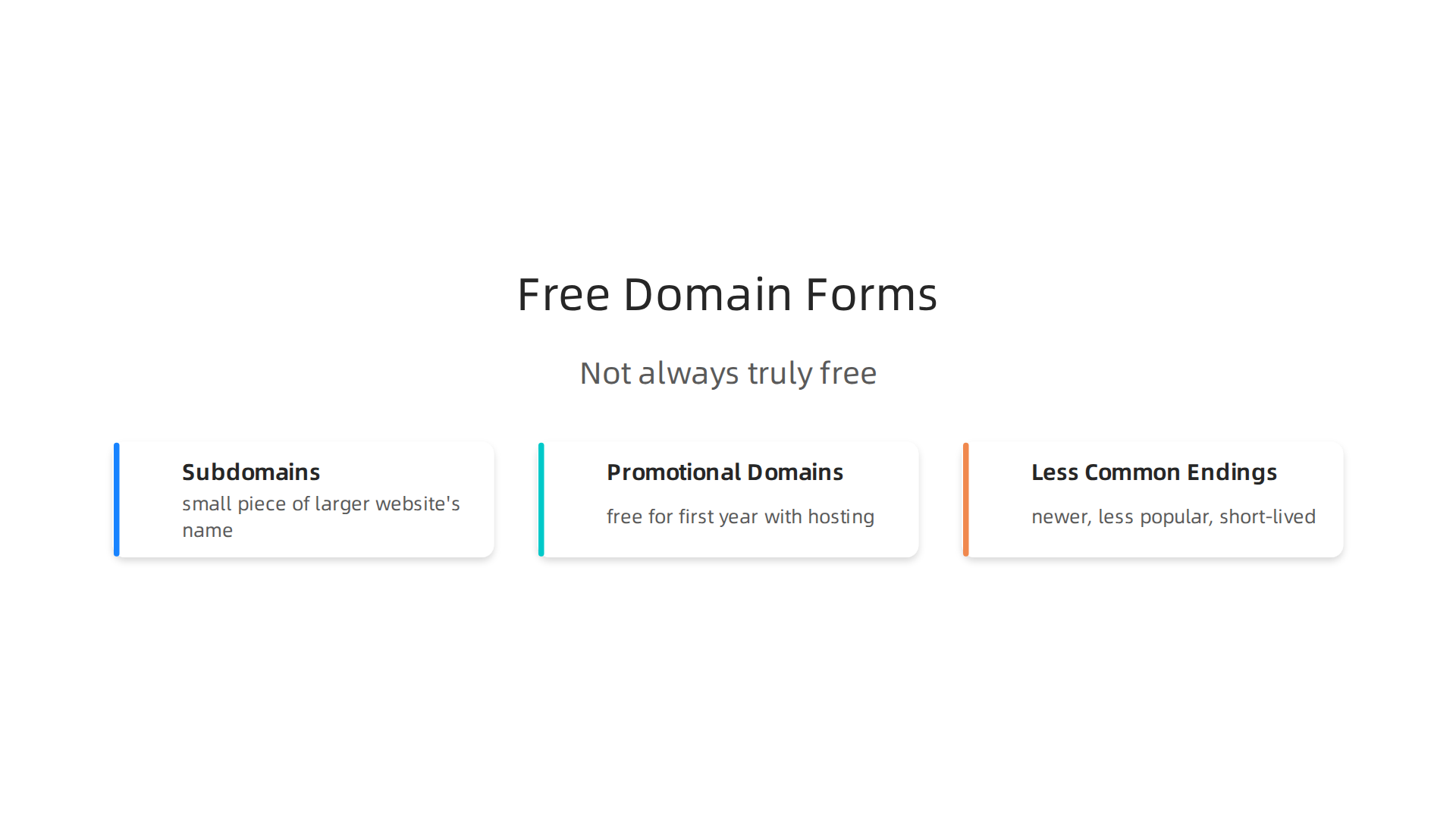
- Subdomains: This is the most common kind of free option. You might get an address like
yourbusiness.wordpress.comoryourproject.squarespace.com. Here, you’re using a small piece of a much larger website’s name. These are great for students, hobbyists, or for trying out an idea without commitment. - Promotional Domains: Sometimes, when you buy web hosting, the company will offer a free domain for the first year. For example, you might get a
.comdomain for free, but you’ll need to pay for it every year after that. - Less Common Domain Endings: There are some newer, less popular domain endings (called TLDs) that might be offered for free for a short time. However, these often don’t last, or they don’t look as professional.
The Big Trade-Offs: Cost vs. Your Brand
Choosing a free website domain brings important choices for any entrepreneur. On one hand, the cost savings are clear. If you’re just starting, every dollar counts. This can be a smart way to test a business idea or build a simple online presence for [web hosting for students].
However, there are significant downsides to consider for your brand:
- Professional Look: A custom domain like
yourcompany.commakes your business look much more serious and trustworthy. A free subdomain, likeyourcompany.freehosting.biz, can make you seem less established. Your web address is a big part of your brand identity. - Security and Control: With a free domain, you often don’t have full control over your website. If the free service decides to shut down, your website could disappear too. Paid domains give you more ownership and often come with better security features. You can learn more about managing your domain by checking out these [FAQs for Registrants: Transferring Your Domain Name].
- Growing Your Business: As your business grows, you’ll want more features and flexibility. A free website domain can limit how much you can change, expand, or move your website later. It’s often better to start with a [domain cheap] option, even if it costs a little bit, for better control. You can always [run a domain price comparison] to find the best value.
The "free" options discussed earlier often come from a few main places. Understanding these sources helps you see the whole picture of what you’re getting and what might be expected later.
Where free domain options come from (sources explained)
When you see an offer for a free website domain, it’s usually tied to a larger service.
Here are the most common sources:
- Website Builders: Many website builders, like Wix or Squarespace, give you a free subdomain when you use their free or trial plans. This means your website address will look something like
yourname.wixsite.comoryourbusiness.squarespace.com. It’s an easy way to get online quickly, especially for personal projects or for trying out a website idea. While these are convenient, they tie you closely to that builder’s platform. For those looking at options like Squarespace, it’s good to understand the full picture of [Squarespace Hosting in 2026]. - Web Hosting Providers: This is a very common way to get a free domain. Many hosting companies offer a free domain name for the first year when you sign up for one of their paid web hosting packages. These often include popular domain endings like .com, .net, or .org. Companies like Hostinger and Bluehost are known for these deals, making it possible to get [cheapest domain hosting in 2026] along with your web space. This can be a smart move because you’re already paying for hosting, which is essential for any website, so the domain feels like a bonus. You can often find many choices in their offers, as explained in guides about how to get a FREE domain name.
- Free Subdomain Providers: Some services focus only on giving out free subdomains, without offering full hosting. These might be less well-known and often come with more generic main domains, like
yourproject.freewebpage.org. While truly free, these might not give the professional look you need for a business. - Educational Programs and Government Initiatives: Sometimes, schools or other public bodies offer free subdomains for their students or certain projects. For example, a university might give out
studentname.university.edu. These are usually for specific purposes and have strict rules. Even government agencies use subdomains, with specific guidelines for their creation and management, as seen with some Government of Canada domains and URLs and university domain name standards. - Country-Specific Free Domain Initiatives: In some countries, there might be special programs that offer free country-code top-level domains (ccTLDs) for a short time, often to encourage local businesses to get online. These are less common for a generic free website domain offer that most people are looking for.
Understanding the Terms of "Free"
It’s really important to read the fine print with any free domain offer. That’s because "free" often comes with strings attached:

- Duration of the Free Offer: A free domain is almost always free for the first year only. After that, you’ll need to pay the regular renewal fee. These fees can range from $10 to $25 or even more per year, depending on the domain ending. This is a common practice with web hosting deals that include a free domain name.
- Renewal Costs: This is where many people get surprised. The cost after the first year can be much higher than what you might expect for a [domain name renewal price comparison]. Always check the renewal price before committing, especially if you want to keep your domain for a long time. Knowing the [cost to buy a domain name 2026] helps set proper expectations.
- WHOIS Policies and Control: With a free subdomain, you usually don’t own the domain in the same way you would a paid one. The provider owns the main domain, and you’re just using a part of it. This means they control the domain’s privacy settings and can make decisions that affect your online presence. With a domain you register and pay for, you have full ownership and control over the WHOIS information, which lists the domain owner’s details. For a deeper dive into the specifics, resources on what is truly free can be found in guides like Best Free Domain Registrars in 2026.
- Limited Features: Free website domains, especially subdomains, might come with fewer features or less storage than paid options. This can limit your website’s growth later on.
To avoid hidden costs and ensure you understand the terms, it’s wise to consider what [what is web hosting services] means for your overall website strategy. Even if you start with a free offer, plan for the long term and the costs that come with it.
After understanding where free domain options come from and their hidden terms, let’s look at the bigger picture: what’s the real difference between a free website domain and one you pay for? This choice affects how people see your brand, how much control you have, and how easily new customers can find you.
Free Domain vs Paid Domain: Pros, Cons, and Decision Criteria
Choosing between a free and a paid domain is a big step for anyone setting up a website, especially for small businesses.

It’s like picking between a shared apartment with rules versus owning your own house.
The Free Website Domain: Good Points and Bad Points
A free website domain can be tempting because it costs nothing upfront.
- Good points: It’s super easy to get started. If you’re just trying out an idea or building a personal hobby page, a free option might be enough. It lets you learn how websites work without spending money.
- Bad points: The biggest drawback is how it looks. A free website domain often means you get a subdomain, like
yourbusiness.freewebsitebuilder.com. This can make your brand seem less serious or professional. Think of it like a free email address versus a custom one for your business. Most free options also give you less control. You don’t truly own the domain; the provider does. This can limit what you can do with your site and how you manage its content. When it comes to being found on search engines, free subdomains might have a harder time building their own strong standing compared to a paid domain name, which acts as a single, powerful home for all your content.
The Paid Domain: Good Points and Bad Points
A paid domain is one you register and own, like yourcompany.com.
- Good points: This gives your brand a much more professional and trustworthy look. You have full control over your website address, which is great for marketing and building a lasting online presence. When you pay for a domain, it’s easier to build authority in the eyes of search engines. This means your website has a better chance of showing up higher in search results, which is key for getting more visitors. Paid domains also usually come with better security options and more features from your web hosting provider. For instance, in 2026, many experts suggest that using subdirectories (like
yourcompany.com/blog) on a paid domain can help your site’s overall search engine ranking more than using separate subdomains (blog.yourcompany.com) because it consolidates your site’s authority. Research from 2026 shows that moving content from a subdomain to a subdirectory can actually increase organic traffic significantly over time, while the opposite can cause traffic to drop, showing the importance of how a domain is set up for SEO. - Bad points: The main downside is the cost. You have to pay an upfront fee to register the domain, and then yearly renewal fees. These fees can vary, so it’s smart to compare prices. Also, setting up a paid domain might feel a little more complex than just using a free subdomain, but good web hosting services make it much easier. To avoid any surprises, it’s wise to look into the [cost to buy a domain name 2026] and understand potential renewal prices.
Making Your Choice: What Matters for Your Business
When deciding, small to medium-sized businesses (SMBs) should think about these key things:
- Your Budget: How much can you afford to spend each year? While a paid domain has costs, many web hosting providers offer a free domain for the first year if you sign up for their hosting package. This can make getting a paid domain much more affordable upfront. To find real value, you might want to look at [cheapest domain hosting in 2026].
- Your Growth Plans: Do you expect your website to grow a lot? If you plan to add many pages, sell products, or attract a large audience, a paid domain offers the flexibility and strong foundation you’ll need. A free option might quickly become too limiting.
- Security Needs: How important is protecting your website and customer information? Paid domains, combined with good web hosting, offer much better security features like better protection against online threats. This is important, as malicious domain registrations continue to be a concern in 2026, with attackers registering millions of bad domains.
- Marketing and SEO Goals: Do you want your website to rank high on Google and other search engines? A paid domain is generally much better for SEO. It helps you build a strong, recognizable brand that search engines can easily understand and rank. As experts note, search engines tend to treat subdomains as separate sites, which can split the value your content builds. This makes a clear, consistent paid domain much better for your overall marketing strategy.
Thinking about these points will help you pick the best option for your unique online presence.
When we talk about a free website domain, it is important to know that not all free options are the same. They come in different forms, and each has its own rules and things to think about. It is like getting a free toy; some are just for fun, and others might have small strings attached.
Subdomains, ccTLD Giveaways, and Promotional TLDs: What They Mean for Your Site
Understanding these different types of free online homes is key for your business. Let’s break them down simply.
What is a Subdomain?
A subdomain is like adding a new section to a bigger, existing website. Think of blog.yourcompany.com or shop.yourcompany.com. Here, "blog" or "shop" are subdomains of the main domain yourcompany.com. When you get a free website domain from a free website builder, it is usually a subdomain. It often looks like yourbusiness.freewebsitebuilder.com.
The "freewebsitebuilder.com" part is the main domain owned by the company, and "yourbusiness" is your little section on their domain. You do not fully own the main part of the address. This means the company that provides the free service sets the rules for your site. Many big organizations use subdomains too, like government bodies or universities, for different departments or projects within their main online presence, as seen with some government agencies managing their subdomains for official use in 2026. A subdomain is a part of a larger domain name, usually sitting to the left of the main domain, like the "www" part of "www.example.com" is a subdomain. Learning more about the basic parts of a web address can help you understand your options better. To learn more, check out this guide on Understanding Domain Name Rules or get a general idea of What is a domain name? Ultimate guide to….
Country Code Top-Level Domain (ccTLD) Giveaways
Sometimes, you might see offers for a free domain that looks like yourbusiness.uk or yourbusiness.md. These are called country code Top-Level Domains (ccTLDs). They tell people what country your website is linked to. For example, .uk is for the United Kingdom, and .md is for Moldova.
Some countries or domain registrars might offer these for free for a limited time, especially if they want to make their ccTLD more popular. While it sounds great, there are a few things to keep in mind.
- Geo-targeting: A ccTLD can help if your business only serves people in that specific country. Search engines often see a
.ukdomain as more relevant to users in the UK. But if you want to reach a global audience, a.comor.orgmight be better. - Restrictions: Some ccTLDs have special rules about who can register them. You might need to live in that country or have a business there.
- Ownership and Renewals: Even if the first year is free, you will almost certainly have to pay to renew it later. Always check the long-term costs. The length of domain names often has rules too; for example, many domains need to be at least 2 or 3 characters long and no more than 63 characters. You can find more details about general domain rules in this Domain: the definitive guide (2026) to help you pick the right domain.
Promotional Top-Level Domains (TLDs)
Besides country codes, there are many other TLDs like .xyz, .online, .shop, or .club. These are called generic TLDs (gTLDs). Sometimes, domain registrars or hosting companies offer these for free or at a very low price for the first year. This is often a way to attract new customers.
- Initial Cost vs. Renewal: The catch with these promotional TLDs is almost always the renewal price. A domain that costs nothing or very little in the first year can become much more expensive to renew in the second year and beyond. It is crucial to understand these future costs when you see a "free website domain" offer.
- Brand Perception: While many new TLDs are now common, some might still be seen as less established than a
.comor.org. For serious businesses, how your domain looks matters a lot. - Ownership: When you get a promotional TLD, even if it is free for a year, you are the official owner for that period. This gives you more control than a subdomain. However, if you do not renew it, you lose that ownership. It is always wise to compare prices to avoid surprises, especially with new extensions that might seem cheap at first. To fully understand what you might be getting into, learn about the cheapest domain extensions: the real costs and risks you must know before making a choice.
In summary, while a "free website domain" can be tempting, it is important to know if you are getting a subdomain, a ccTLD, or a promotional TLD. Each comes with its own set of benefits, limitations, and potential future costs that can affect your website’s success and your brand’s image.
After learning about the different kinds of free website domains, let’s look at how you actually get them. Many popular web hosting companies and website builders offer a free domain as part of a bigger package. It’s like getting a bonus when you buy something else.
Popular Hosting Platforms and Website Builders that Include Free Domains (How the Offers Work)
Many companies want to make it easy for you to start your website. They often put together deals that include a free domain. Here’s how these offers usually work:
Free Domain for the First Year with Hosting Plans
This is a very common offer. When you buy a web hosting plan for a year or more, many providers will give you a domain name for free for that first year. Companies like Hostinger and Bluehost are known for these kinds of deals, where a free domain is part of their starter packages in 2026.
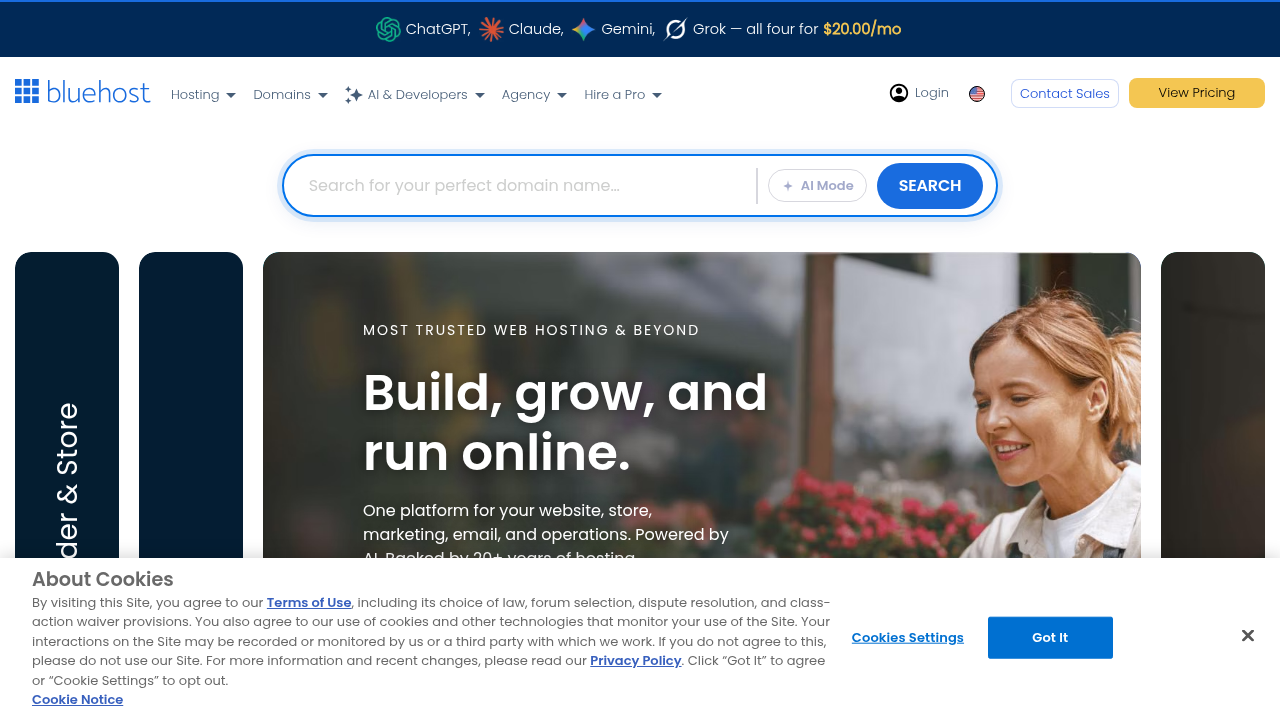
This means you get a real domain like yourbusiness.com without paying extra at first. It is often linked to buying a longer subscription, like an annual plan, rather than a monthly one.
The important thing to remember is that this "free" part usually only lasts for the first year. After that, you will need to pay the normal price to keep your domain. This renewal fee can sometimes be much higher than what you might expect. So, when you see a free website domain offer, always check the renewal costs to avoid surprises. Many people look for cheapest domain hosting in 2026, but it’s important to know the full cost over time. You can learn more about finding good deals from lists like the Best Web Hosting with Free Domain: Top 5 Picks for 2026.
Free Subdomain Forever with Website Builders
Some website builders, like Wix or Squarespace, let you build a website for free and give you a free subdomain. This means your website address will look something like yourbusiness.wixsite.com or yourbusiness.squarespace.com. We talked about subdomains before; they are a part of the builder’s main website address.
This option is truly free forever for the subdomain, but it comes with some limits. You might not have as much control over your site, and it might show ads from the builder. If you want a more professional look with your own .com address, you’ll usually need to pay for a premium plan. If you are using platforms like Squarespace, you might be interested in learning about Squarespace hosting in 2026 for more features. These free subdomain options are often good for web hosting for students or for personal projects where a custom domain isn’t a top priority.
Domain Included with Paid Plans
Sometimes, a free website domain is simply included with any paid website builder or hosting plan. For example, when you sign up for a higher-tier plan, your domain registration is just part of the deal. This is usually more straightforward than promotional offers, but you still need to know the domain name renewal price comparison after the first year.
Practical Setup Steps and Common Gotchas
Once you pick an offer, setting up your free domain is usually easy. The hosting company or website builder will guide you through it. However, there are a few "gotchas" or tricky parts to watch out for:
- Auto-Renewal Fees: Many services will automatically renew your domain and charge your card. Make sure you know when this happens and how much it will cost. If you don’t want to keep the domain, turn off auto-renewal before it charges you. Understanding your calculate your true web hosting cost is very important.
- Transfer Restrictions: If you get a free domain, you usually can’t move it to another company right away. Most domains have a "60-day lock" which means you must keep it with the original registrar for at least 60 days after registration or transfer before you can move it again. Transferring your domain can be a bit tricky, but there are guides like How to Transfer Your Domain Name to a New Registrar in 2026 that can help you.
- WHOIS Privacy: When you register a domain, your contact information (name, address, email) becomes public in a database called WHOIS. Some providers offer "WHOIS privacy" for free, which hides your personal details. If they charge for it, decide if you want to pay for that privacy or have your information openly available.
- The Risk of Malicious Domains: It is also important to know that a lot of malicious websites use free or cheaply registered domains. For example, reports from 2026 show that a large number of newly registered domains in 2025 were linked to harmful activities, like phishing scams. In fact, between 10% and 20% of all new domain names created in 2025 were later blocked for being malicious, and many attacks use free webmail domains. This means you should always choose reliable web hosting solutions from trusted providers to keep your own site safe and build trust with your visitors.
Choosing a free website domain can be a good starting point, but knowing these common practices and potential issues will help you make a smart choice for your online home.
Choosing a free website domain is a big step, but it’s important to think about more than just the upfront cost. There are also important things to consider about how your website will show up in searches, how safe it will be, and what legal issues you might face. Let’s look at these points closely.
SEO, security, and legal implications of using free domains
When you pick a free website domain, especially a subdomain, it can change how people find your site on Google and other search engines. It can also affect how safe your site is and who really controls it.
How Free Domains Affect Your SEO
SEO stands for Search Engine Optimization. It’s about helping your website appear higher in search results. If you use a free subdomain, like yourstore.wixsite.com, it’s generally not as good for SEO as having your own top-level domain, like yourstore.com. Search engines often see subdomains as different from the main website of the builder. This means your site might not get as much "power" or authority from the main builder’s site.
Many experts in 2026 agree that using a subdirectory (like yourstore.com/blog) is usually better for SEO than a subdomain (like blog.yourstore.com) if you want all your content to help build up the main website’s strength. Studies show that subdirectories often get higher rankings faster because they share the main domain’s authority. For example, if you build a new site, it is often best to use subdirectories for all your content sections unless you have a strong reason not to, as it helps your site become stronger online Subdomain vs Subdirectory SEO: Which Site Structure Wins? – Indexed. Having your own domain, even if it costs a bit, helps your site build its own value over time. You can learn more about how websites get strong in searches by understanding domain rating.
Security Risks with Free and Managed Domains
Security is a huge concern today. While many trusted companies offer free domains with hosting, some truly free options or those with less strict rules can have risks. Malicious websites often use free or very cheap domain registrations. For example, a report from 2026 found that between 10% and 20% of all new domain names made in 2025 were later blocked because they were used for bad things, like phishing scams that try to steal your information Malicious Registrations in the Domain Market. Another study in 2026 showed that roughly 1 in 10 new domains registered in 2025 were linked to harmful activities A tenth of all new domains last year were malicious.
This means choosing a provider that takes security seriously is very important. Always aim for reputable domain name registrars to protect your site and your visitors.

Legal and Trust Issues
Think about your brand. A professional business will usually want its own .com or .org address, not one that clearly shows it’s part of a free service, especially for squarespace domain registration. Using a free subdomain can make your business look less serious or trustworthy to customers.
Also, when you use a free service, you’re often bound by their "Terms of Service." These are the rules you agree to. If the provider changes their rules or decides to close down their free service, you might lose your website or your domain. You might not have full control or ownership, which can be a big problem if your website grows. It’s smart to understand the website domain definition fully to avoid these issues.
Understanding these points helps you make a better choice for your online home, balancing the initial low cost with the long-term health and safety of your website.
Choosing a free website domain is a great way to start, but there comes a time when your website needs to grow up. If your website becomes more popular or you want your business to look more serious, a free domain might hold you back.

It’s like moving from a small toy car to a real car when you need to drive further and faster.
When to keep a free domain and when to upgrade — migration checklist
It’s smart to know when your free website domain has done its job and when it’s time for something better. Upgrading to a paid, owned domain gives you more control, better security, and helps your site grow.
Signals It’s Time to Upgrade Your Domain
How do you know it’s time to move on from your free domain? Look for these signs:
- Your site is growing: If more and more people visit your website, or your business is making money, you’ve outgrown the basic features of a free domain.
- You want to look professional: A business with its own
.comor.orgdomain looks much more trustworthy than one using a subdomain likeyourbusiness.freewebsite.com. This is especially true if you started with something like a freesquarespace domain registrationthat came as a subdomain. - You care about search rankings: Having your own domain helps a lot with SEO. Search engines like Google often give more weight to sites with their own domain, which means you can show up higher in search results.
- You need better security: While many services offer good security, a paid domain often comes with more advanced tools and support to keep your site safe from attacks.
- You want full control: With your own domain, you decide everything. You can move your site to any host you want, change providers, and you won’t lose your domain if the free service shuts down or changes its rules.
- You need special features: Paid hosting often includes things like professional email addresses, more storage, and faster speeds, which are important for a growing business.
Actually, getting your own paid domain doesn’t have to be super expensive. Many companies offer a domain cheap when you buy web hosting, making it much more affordable than you might think. You can often find some of the cheapest domain hosting plans bundled with a free domain for the first year.
Your Migration Checklist: Moving from a Free Domain
If you decide it’s time to upgrade, don’t worry! Moving your website to a new, paid domain is a step-by-step process. Think of it like moving houses for your website.
Here’s a simple checklist to guide you:

- Choose a New Home (Registrar and Hosting):
- First, pick a new domain name that fits your brand. Make sure it’s easy to remember.
- Then, choose a good web hosting company. This is where your website’s files will live. Many hosts offer a free domain name for the first year when you sign up for their services. Companies like Hostinger and Bluehost are often noted for providing cheap hosting and a free domain as part of their plans in 2026. You can compare various best web hosting with free domain options to find the right fit, even if you are a web hosting for students looking for good value.
To understand the total spending, learn about the cost to buy a domain name.
* For reliable web hosting solutions designed for growing businesses, you can explore options at Prism Web Host.
2. Prepare Your Old Domain for Transfer:
* If you currently have a free domain that you want to keep (meaning, transfer to a new provider), you’ll need to "unlock" it with your current service.
* You’ll also need to get a special code called an "EPP code" or "Auth Code." This code proves you own the domain.
* Make sure your domain is at least 60 days old and not expiring soon, as these are common rules for transferring domains.
3. Initiate the Transfer:
* Go to your new domain registrar (the company where you want to keep your domain) and start the transfer process. You will give them the EPP code.
* Confirm the transfer. You might get emails that need your approval to make sure the move is allowed. This process can take a few days. For more detailed steps, check out guides on how to transfer a domain name.
4. Move Your Website Files:
* Copy all the files and information from your old website to your new web host. This is like packing up your furniture and moving it to your new house.
* If your website has a database (like for a blog or online store), you’ll need to move that too.
5. Set Up Redirects:
* This is very important! You need to tell search engines and old visitors that your website has a new address. You do this by setting up "301 redirects."
* These redirects send anyone who tries to go to your old free domain automatically to your new paid domain. This helps you keep your visitors and your search engine rankings.
6. Install an SSL Certificate:
* An SSL certificate makes your website secure (you’ll see "https://" in front of your website address). This protects your visitors’ information and helps with SEO. Many web hosts include a free SSL certificate.
7. Test Everything:
* Once everything is moved, check your website thoroughly. Click on all the links, make sure pictures load, and test any forms. This ensures everything is working perfectly on your new domain.
By following these steps, you can smoothly move your website from a free domain to a paid one, setting it up for more success and a more professional look.
Summary
This article explains what people really mean by a
