




Cheapest Domain Extensions The Real Costs and Risks You Must Know
Article
Let’s be real for a second. Shopping for a website address can feel like a guessing game. You find a name you like, and then the price jumps from $1 to $150 depending on what comes after the dot. It makes you wonder: what is the real cost to buy a domain name? And if you are just starting out, are the cheapest domain extensions actually any good?
Here is the thing. The price tags on different domain extensions vary dramatically. A popular extension like .com usually renews at around $14 to $21 per year cybernews.com.
On the other hand, some of the cheapest domain extensions like .xyz can cost less than a buck for the entire year domainoffer.net. That difference adds up fast. Picking the wrong one quietly drains your wallet.
Most business owners overlook something important. They see a flashy "free website domain" offer or a $0.99 first-year price. It looks like a steal. So they grab it fast. Twelve months later, the renewal bill shows up, and it is ten times higher. They forgot to check the fine print. That is how a domain cheap deal turns into an expensive mistake.
This guide is here to help you skip that headache. We broke down the most affordable TLDs on the market. You will see their true first-year costs and their renewal rates. We also cover how to pick a registrar with fair pricing and solid support. After all, what good is a cheap address if you have to sacrifice performance or security? If you want to learn more about choosing a trusted provider, check out our guide on how to find reputable domain name registrars.
Once you lock down your cheap domain, you need a strong home for your website. A reliable hosting partner keeps your site fast, secure, and always online. That is exactly what Prism Webhost delivers. We provide enterprise-grade security, automated backups, and a 99.99% uptime guarantee so your small business never misses a beat.
Let’s jump into the list so you can save money the right way.
1. .COM Domains – Still the Most Trusted, But Not the Cheapest
When you think of a website address, .com probably pops into your head first. It is the most recognized domain extension in the world, used by over 303 million websites as of 2026 instantdomainsearch.com. That trust is valuable. If you want to look professional and established, a .com is still the go-to choice.
But here is the catch. The cost to buy a domain name with .com is not as low as you might hope. Most registrars hook you with a first-year deal around $10 to $15. That sounds great. However, when renewal time comes, the price jumps to $12 to $18 per year. In some cases, it can go up to $21
cybernews.com. That quiet price hike eats away at your savings if you are not paying attention.
The trick is to look beyond the introductory offer. Many business owners grab a free website domain promo without reading the fine print. Twelve months later, they face a renewal bill that is double or triple what they expected. To avoid that surprise, you need a registrar with transparent pricing. You can learn more about picking one in our guide on how to find reputable domain name registrars that protect your business.
So, is .com still worth it? Yes, if you need instant recognition and trust from visitors. But if you are on a tight budget and just testing an idea, some cheapest domain extensions like .xyz or .online can give you similar credibility at a fraction of the price. For example, you can get a .xyz domain for under a dollar for the first year domainoffer.net. That kind of domain cheap option lets you spend your money where it really matters, like on solid hosting.
Once you pick your domain, you need a reliable home for your site. Prism Webhost offers secure, fast hosting with a 99.99% uptime guarantee so your website stays up and your visitors stay happy.
2. .XYZ – The Budget‑Friendly Default
If you want the absolute lowest price to get started, .xyz is hard to beat. It is one of the cheapest domain extensions you can buy right now.
So what does it cost? You can grab a .xyz domain for as little as $0.80 to $1.99 for the first year domainoffer.net. That is almost free compared to the cost to buy a domain name with .com. For someone testing a side project or launching a quick landing page, that price makes a huge difference.

But pay attention to renewal. When year two rolls around, the price typically jumps to $8 to $12 per year. That is still cheaper than a .com renewal, but it is not the same rock-bottom intro rate. Always check the fine print before you buy.
Here is something interesting. .xyz has grown a lot in popularity. In 2026, it saw a 240% increase in usage instantdomainsearch.com. Startups and tech companies especially like it because it sounds modern and clean. And with many cheapest domain hosting packages, .xyz works just as well as any other extension.
One thing to watch out for though. Because .xyz is so cheap and easy to get, some bad actors use it for spam or phishing sites. That can hurt its reputation over time. When you shop for a domain cheap option, make sure you choose a registrar that checks for security risks. You can learn more about that in our guide on how to find reputable domain name registrars that protect your business.
For most people, .xyz is a smart choice for a free website domain or low-cost first project. It saves you money upfront, and the renewal is still fair. Pair it with reliable hosting to keep your site fast and secure. Prism Webhost gives you NVMe SSD storage and LiteSpeed servers so your .xyz site loads in a flash.
3. .CLUB, .TOP, and .LINK – Low‑Cost Alternatives
Maybe .xyz does not fit your brand perfectly. Or you want a domain that instantly tells visitors what your site is about. That is where .club, .top, and .link come in. They are some of the best cheapest domain extensions available in 2026, and they often come with intro prices that match .xyz.
Here is the pricing picture. You can usually register these for $1 to $3 in the first year. The renewals are also reasonable. Many of these stay under $10 per year,
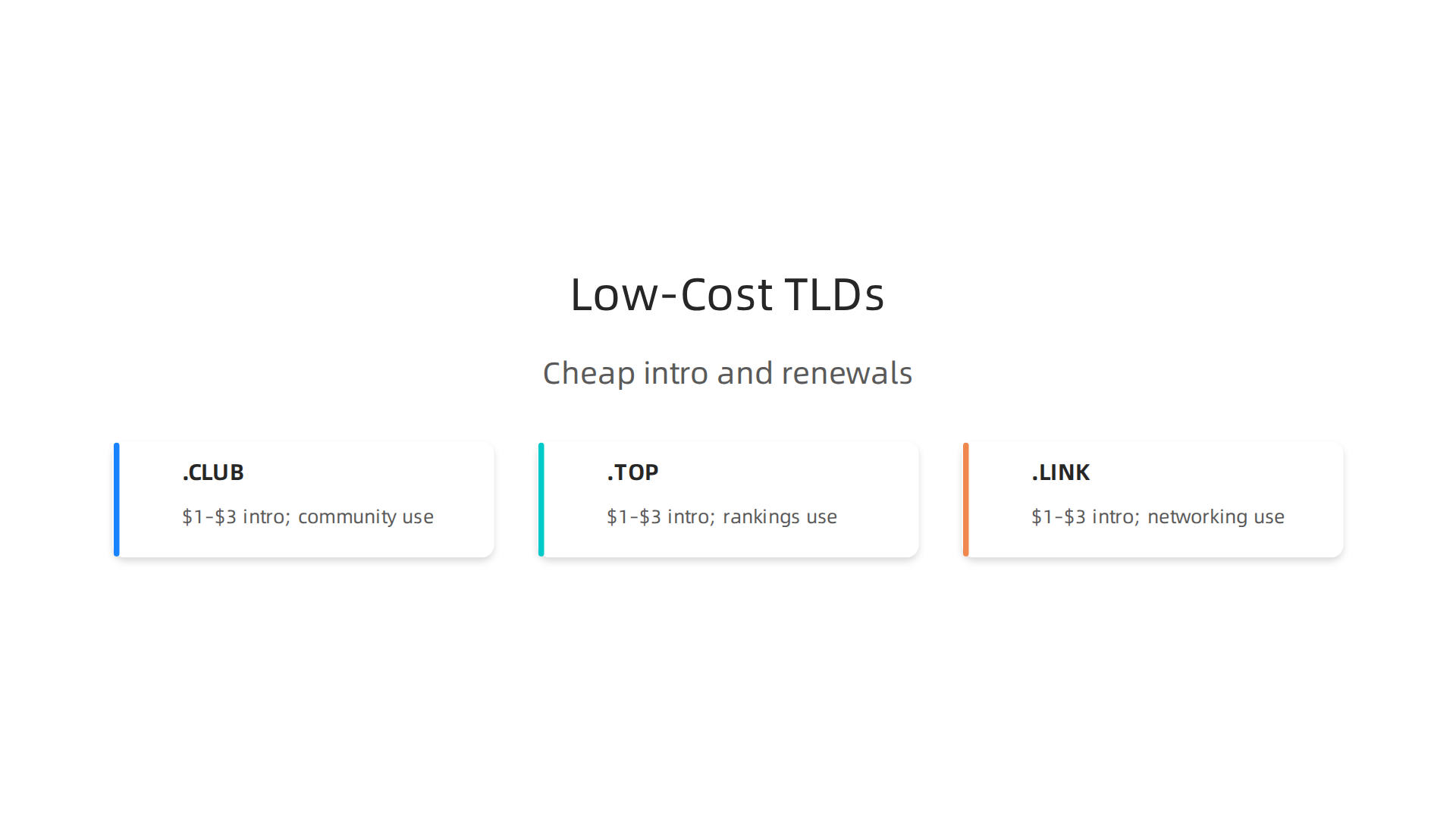
which keeps your cost to buy a domain name very low compared to traditional options cybernews best cheap domain registrars.
But price is not the only reason to choose one. Each extension sends a different signal to your visitors.
.club is perfect for building a community. Run a membership site, a local group, or a paid newsletter? A .club domain fits naturally. It tells people they belong somewhere.
.top works well for rankings, reviews, or directory sites. If you plan to build a site that lists the best products or services, this extension reinforces your goal.
.link is a favorite for networking and sharing. Use it as a link in bio page, a portfolio, or a short URL redirect. It is clean and makes people want to click.
Choosing the right extension is a key part of your online identity. If you are new to this, learning the basics can help. Read our post on the website domain definition every small business owner needs to build a strong foundation.
Another advantage of these extensions is bulk buying. If you plan to own several domains for one project, some registrars give you a discount. This makes your domain cheap strategy even more affordable.
A cheap domain is a great start, but it needs reliable cheapest domain hosting to actually load fast and stay secure. Prism Webhost gives you the performance to make the most of your affordable domain name with NVMe SSD storage and free SSL. That way your low-cost domain runs like a premium site.
4. .IO and .CO – Premium Value for Tech and Global Brands
So far we have looked at the cheapest domain extensions you can get for a dollar or two. But maybe your brand needs something that feels a bit more serious or tech‑forward. That is where .io and .co come in. They cost more upfront, but they can give your site a premium image that builds trust with visitors right away.
Here is what you can expect to pay. A .io domain usually runs between $30 and $60 per year. .co is a little less, often $25 to $40. That is a jump from the domain cheap options we talked about. But here is the thing: the renewal prices for .io and .co are more stable. They do not spike as much as some ultra‑cheap TLDs do after the first year. That makes them easier to budget for long term most popular domain extensions 2026.
Why would you spend more? Because the extension itself sends a signal. .io is hugely popular with tech startups, SaaS companies, and crypto projects. It sounds modern and digital. .co is often used as a short, clean alternative to .com for global brands.

It feels professional without being too old‑school. If you are building a business that wants to look established from day one, these extensions help.
Of course, the cost to buy a domain name is only part of the picture. You still need reliable hosting to make your site fast and secure. Even with a premium domain, a slow or glitchy host will hurt your reputation. That is why many business owners pair a .io or .co domain with Prism Webhost hosting. It gives you NVMe SSD storage, free SSL, and DDoS protection so your premium domain actually performs like one.
If you are still learning the basics of domain names, take a look at our guide on how to find reputable domain name registrars that protect your business. It helps you choose a registrar that keeps your domain secure and your renewal costs fair.
The bottom line? If your budget allows, .io and .co are worth the extra money. They give you instant brand credibility, and their renewals stay predictable. For many tech and global businesses, that stability alone makes them a smart long‑term choice.
5. Country Code TLDs (.US, .UK, .DE, .CA) – Cheap Options for Local Businesses
If you run a local business, you may not need a global domain like .io or .co. You just want people in your city or country to find you easily. That is where country code top-level domains (ccTLDs) shine. They are often some of the cheapest domain extensions you can get, and they give you a powerful local boost.
Take a look at typical prices. .de (Germany) can cost as little as $1.90 per year at some registrars. .uk (United Kingdom) is around $4.66. .eu (European Union) starts at $1.79, and .ca (Canada) often stays under $10 Domnest TLD Price Comparison.
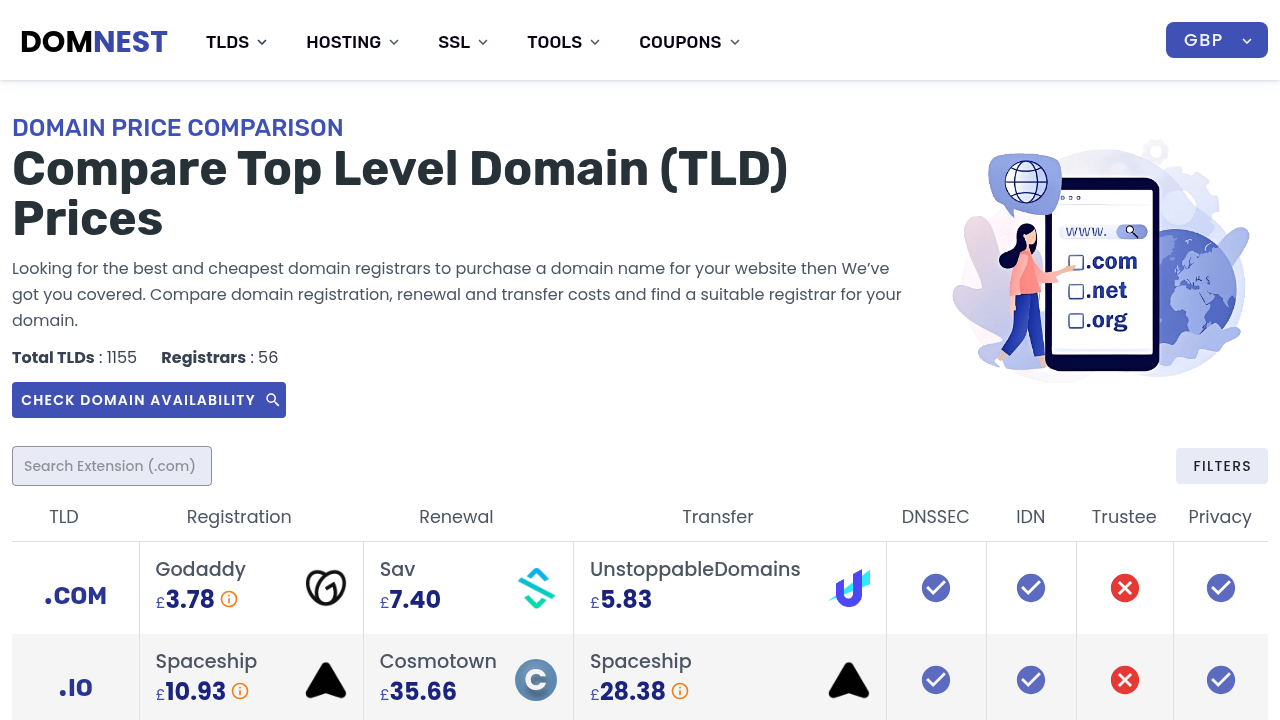
For a small business, that is a domain cheap price that leaves room in your budget for other things like hosting or marketing.
So why choose a ccTLD over a generic .com? The main advantage is local SEO. Search engines treat ccTLDs as strong signals for geographic targeting. A .ca domain is more likely to appear in Canadian search results, and a .us domain helps you connect with U.S. audiences. It builds trust because visitors immediately know you operate in their country.
There is one catch: eligibility. Many ccTLDs require you to prove you live or do business in that country. That sounds like a hurdle, but it actually protects your brand. It keeps squatters from grabbing your local domain, and it reassures customers that you are a real local business. If you are unsure how to register one, our guide on how to find reputable domain name registrars that protect your business walks you through the process.
Once you grab that affordable ccTLD, do not forget about hosting. Even the cheapest domain needs a fast, secure server to perform well. For a local site, you want reliable uptime and quick loading so your neighbors stay happy. Pair your cost to buy a domain name with hosting from Prism Webhost. You get NVMe SSD storage, free SSL, and DDoS protection that keeps your site safe and your customers confident.
In short, country code TLDs give you local trust, better search rankings, and some of the cheapest domain hosting options around. If your business serves one region, they are a no-brainer.
6. New gTLDs (.ONLINE, .SITE, .STORE) – Affordable and Descriptive
You want a domain that tells people exactly what you do, and you want it cheap. That is where new generic top-level domains (new gTLDs) come in. Extensions like .online, .site, and .store are some of the cheapest domain extensions you can grab right now.
Here is the deal on pricing. Many new gTLDs have intro prices as low as $2 to $5 for the first year. For example, you can register a .store domain for as little as $1.01 at some registrars TLD List .store prices. Renewals usually stay under $15, which is far more affordable than a .com that can jump to $21 per year Cybernews Best Cheap Domain Registrars 2026. Compared to the cost to buy a domain name in 2026, which averages $10 to $20 per year, these new gTLDs are a steal Hostinger Domain Name Cost 2026.
Who should use them? If you run an online store, .store instantly signals what you sell. A portfolio site? .site works perfectly. A blog or personal brand? .online gives you flexibility.

The descriptive nature of these extensions helps your visitors understand your site before they even click. That is a domain cheap advantage that adds clarity without extra effort.
One thing to watch out for, though. Some new gTLDs have higher spam rates because they are so cheap and easy to register. Always check the registry policies before you buy. A good registrar will show you the rules clearly. If you need help picking a safe place to purchase, our guide on how to find reputable domain name registrars that protect your business walks you through the process.
Once you decide on your new gTLD, pair it with reliable hosting. Even the cheapest domain needs a fast, secure server to perform well. Prism Webhost offers affordable plans with NVMe SSD storage and free SSL so your site loads quickly and stays safe. Check out what Prism Webhost can do for your project today.
New gTLDs give you a descriptive, budget-friendly way to stand out online. Whether you are building a store, a portfolio, or a simple site, they offer some of the cheapest domain hosting options available in 2026.
7. Bundled Domain + Hosting Deals – A Trap or a Steal?
You see an ad: “Get a free domain with hosting!” It sounds like a great way to save money. But here is the truth you need to know before you click buy.
Bundles often give you a free website domain for the first year. The catch? That free domain locks you into a hosting plan that might cost way more later.
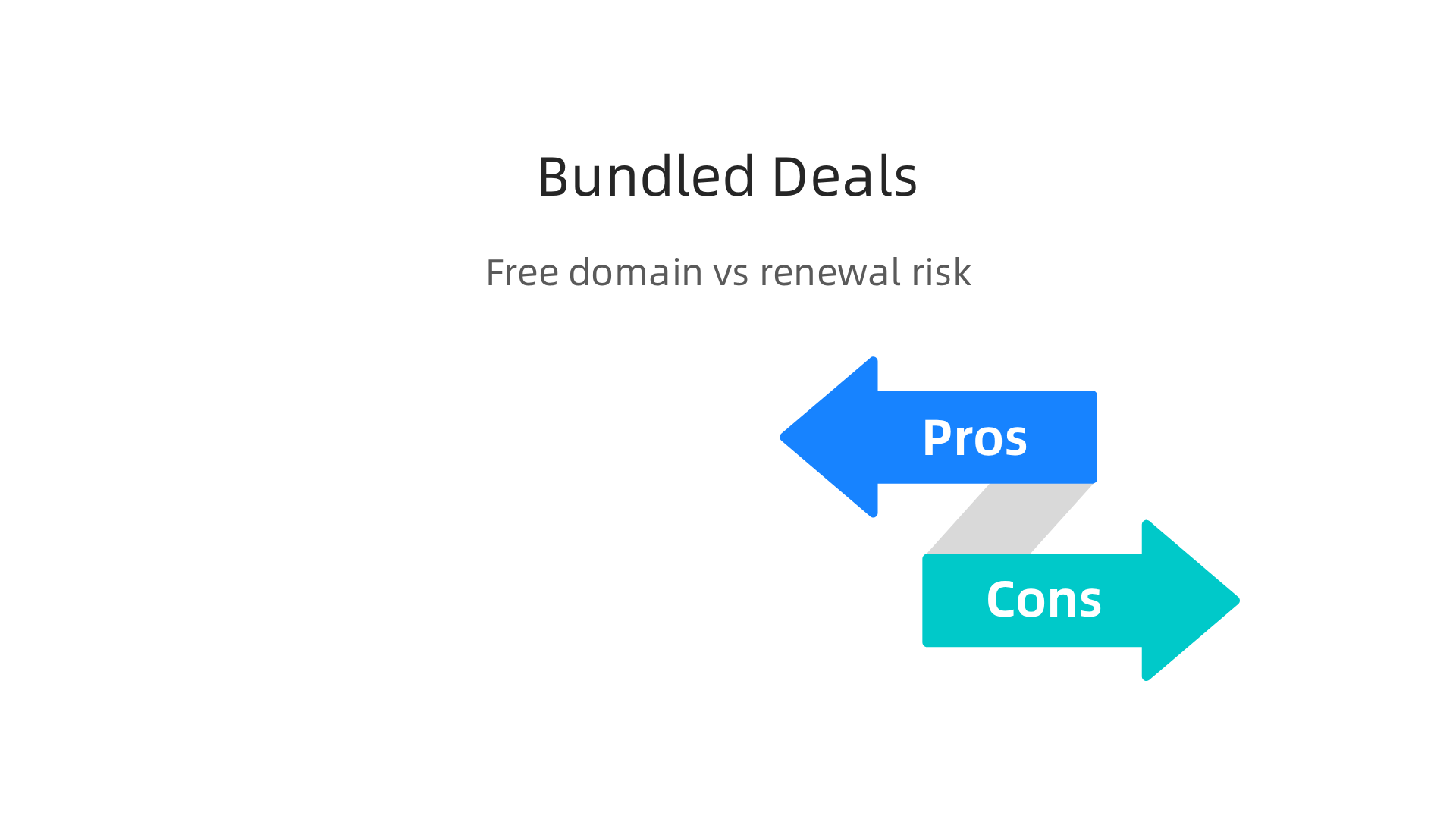
In 2026, a typical .com domain renews at around $21 per year, but some hosting bundles quietly raise their hosting renewal prices to $10–$15 per month after the first term Hostinger on domain name cost. Suddenly that “free” domain is costing you hundreds extra.
So how do you know if a bundle is a trap or a steal? Do the math over two or three years. Compare the total cost of the bundle against buying your domain separately and choosing a separate hosting plan. Sometimes buying a cheap domain like a .store for $1.01 TLD List .store prices and pairing it with a low-cost host is cheaper in the long run.
Another risk: hosting quality in bundles is sometimes subpar. The provider might use slow servers, poor support, or tricky cancellation policies. Always read the fine print. You want a host that gives you fast speeds, solid security, and easy cancellation. If the bundle looks too good, check what others say about the host’s renewal rates Cybernews best cheap domain registrars.
A smarter move? Pick a reliable host that offers clear pricing from day one. If you want a host with no hidden surprises, look at what Prism Webhost offers. They give you NVMe SSD storage, free SSL, and 99.99% uptime without locking you into a high-renewal trap.
Before you commit to any bundle, learn how to find a reputable domain registrar that puts your interests first. That way, you keep your costs low and your website fast.
8. Security Risks of Cheap Domains – What You Need to Know
You might think saving money on the cheapest domain extensions is a smart move. But here is the hidden cost: some of those bargain TLDs are riddled with abuse. If you pick the wrong one, your brand’s reputation can take a serious hit.
According to the Spamhaus Domain Reputation Update covering October 2025 to March 2026, new domain registrations rose by over 7%, and researchers detected 2.9 million malicious domains in that period Spamhaus Domain Update Oct 2025 – Mar 2026.
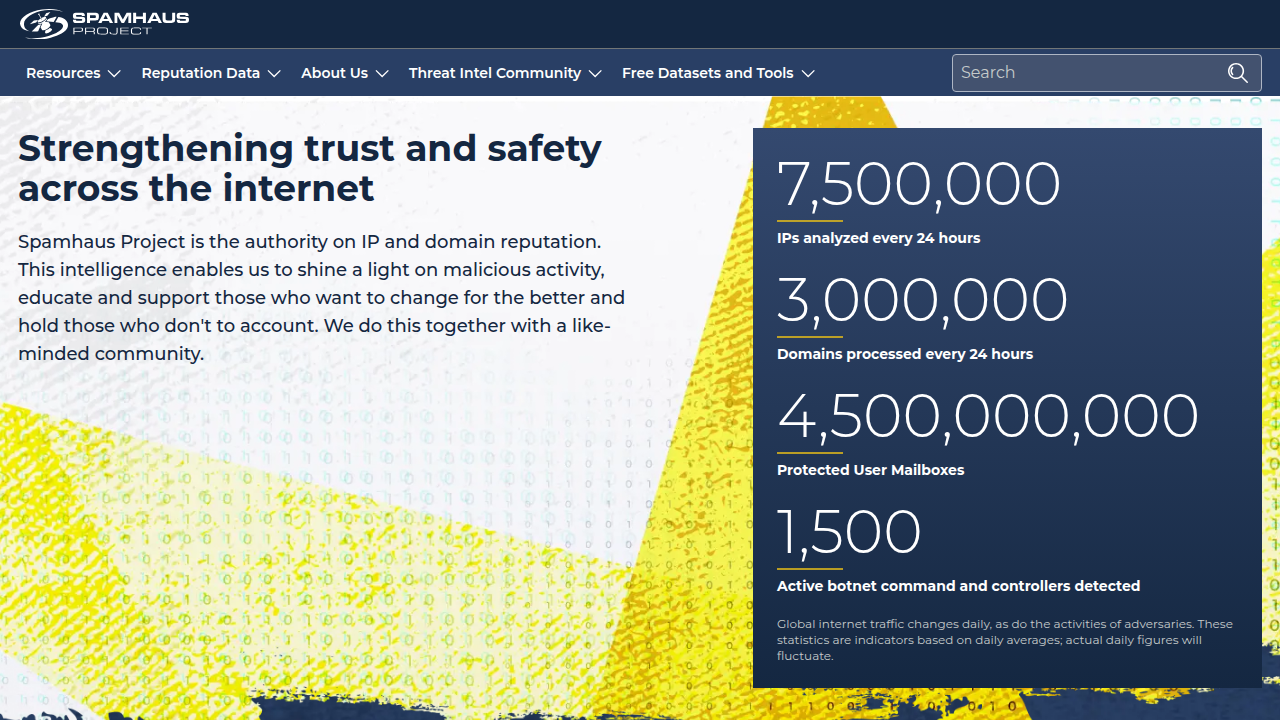
Certain TLDs are hotspots for phishing, spam, and malware. For example, the .top TLD continues to be a favorite among bad actors Domain Reputation Update Oct 2024 – Mar 2025. When you register a domain cheap that sits in a high-abuse zone, your own site can get lumped in with the junk. That hurts your email deliverability and makes visitors question your legitimacy.
Remember: a free website domain from an unknown TLD might save you $10 today, but it can cost you customers tomorrow. Another report shows that 77% of newly registered domains in some TLDs are created purely for abuse Brandsec Top TLD Risk Trends 2025-2026. That’s a staggering number.
So how do you avoid this trap? Check the abuse rate of any TLD you’re considering. Resources like Spamhaus and ICANN reports can show you which extensions have the worst reputation. A reliable host will also screen domains for you. At Prism Webhost, we include free SSL and enterprise-grade security checks like DNSSEC and DMARC to protect your site from day one. That way, the cost to buy a domain name stays low without risking your brand.
Before you pick a registry, take a moment to learn how to find a reputable domain registrar that keeps your business safe. Sometimes the cheapest option ends up being the most expensive one of all.
9. Performance and SEO Impact of TLDs – Does the Extension Matter?
You already know that some cheapest domain extensions come with security baggage. But what about search engine rankings? Does your TLD actually help or hurt your position on Google?
The short answer is no, not directly. Google has said for years that the TLD itself isn’t a ranking factor. A .com won’t automatically beat a .top or a .xyz just because of the extension. What matters much more is page speed, mobile friendliness, and content quality.
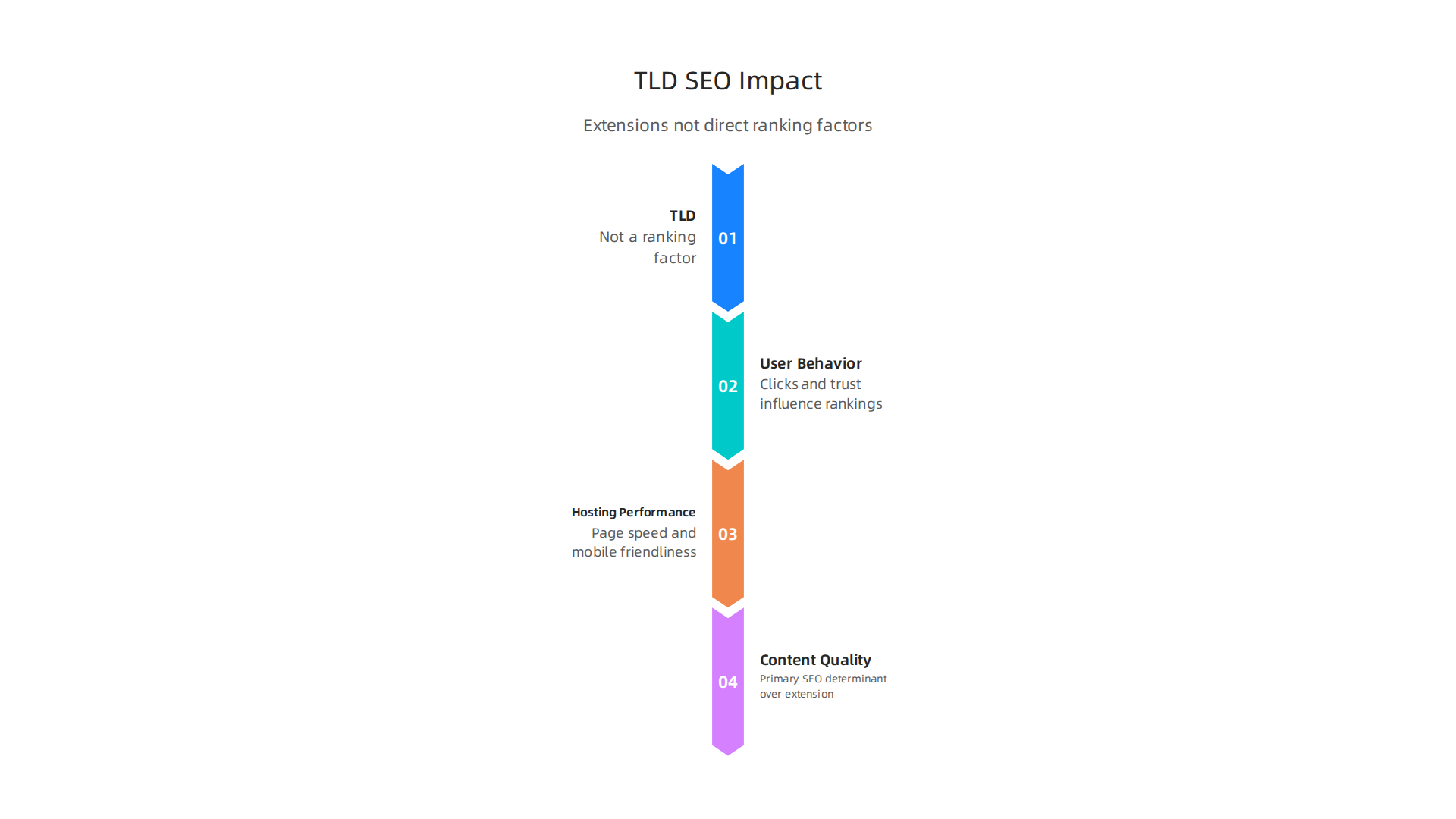
But here’s the real story. Your TLD can still affect your SEO indirectly through user behavior. When visitors see a domain cheap from a suspicious TLD, they hesitate. They might not click your link in search results. That lower click-through rate tells Google your page isn’t as appealing. Over time, your rankings can slip.
According to the Spamhaus Domain Reputation Update Oct 2025 – Mar 2026, some TLDs like .top remain hotspots for abuse Spamhaus Domain Update Oct 2025 – Mar 2026. If your site lives on one of those extensions, visitors may associate you with spam. Trust drops, and so do conversions.
The bigger factor for SEO is your hosting performance. A slow, unreliable server hurts your page speed and frustrates users. That’s why choosing cheapest domain hosting without good infrastructure is a mistake. You want a host that gives you fast load times, strong uptime, and solid security. That’s where Prism Webhost comes in. With LiteSpeed servers, NVMe SSD storage, and a 99.99% uptime guarantee, your site loads fast and stays online. That’s real SEO fuel.
So when you think about the cost to buy a domain name, don’t forget the hosting side. A trusted TLD like .com or .org builds confidence. But fast hosting builds rankings. Pair both for the best results.
Before you decide, take a moment to learn how to find a reputable domain registrar that puts security first. Your SEO will thank you.
10. How to Choose the Right Cheap Domain Extension for Your Business
You’ve seen the long list of cheapest domain extensions out there. Some cost barely over a dollar. But picking the right one isn’t just about the lowest price.

You want a domain that works for your brand, your audience, and your budget over the long haul.
Start by thinking about your brand identity. If you run a local bakery in Berlin, a .de domain cheap extension makes more sense than a random new TLD. Country-code TLDs like .de, .uk, or .fr show customers you’re based in their area. That builds trust. On the other hand, if you serve a global audience, a classic .com or .org feels familiar and professional. Even if .com costs a bit more, it might be worth it.
Next, look at the total cost over three years. That cheap $1.22 .top registration might jump to $10 or more on renewal. Some registrars also charge extra for privacy protection, which should be free. Always check renewal prices and add-on fees. Use a domain price comparison tool to see the real cost across registrars. You can also check the latest prices for cheapest domain extensions on Openprovider’s list here.
Finally, put security reputation above the absolute lowest price. TLDs like .top are cheap because they attract spammers. A premium TLD or a well-known ccTLD may cost more upfront, but you’ll avoid the trust issues that hurt your conversions. If you’re serious about your business, don’t save a few dollars at the cost of your reputation.
Need help getting started? Review how to find reputable domain name registrars that protect your business to make a safer choice.
And remember, the domain is just the address. You still need reliable hosting to make it all work. Check out Prism Webhost for fast, secure hosting that matches your new domain.
Summary
This article explains the real cost of buying a domain name, showing how introductory offers can hide large renewal fees and reputational risks. It compares popular extensions—from trusted .com and premium .io/.co to budget choices like .xyz, .club, and new gTLDs such as .store—and lists typical first‑year and renewal price ranges. The guide highlights country code TLDs for local businesses, the pros and cons of bundled domain+hosting deals, and how cheap TLDs can carry higher abuse rates that hurt email deliverability and user trust. You’ll learn practical rules for choosing the right extension for your brand, how to calculate multi‑year costs, and why registrar reputation and hosting performance matter more than the absolute lowest price. After reading, you’ll be able to compare real costs, avoid renewal traps, pick a safer TLD, and pair your domain with reliable hosting to protect performance and SEO.
