




How to Determine and Maximize Your Domain Name Value
Article
Why domain name value matters for your business
Imagine your business is a store. Your domain name is like its special address and its main sign all rolled into one.

Just like a good location and a clear sign can help a store, a strong domain name helps your business online. In 2026, the value of your domain name is more important than ever. It’s not just a web address; it’s a key part of your business’s success.
A good domain name has a big impact on how people see your brand. It helps customers remember you and tells them what your business is about right away. Think of a short, easy-to-say name. This makes it simple for people to find you, share your name, and feel good about your business. A good name also helps your website show up higher in search results, which is a process called SEO, or Search Engine Optimization. When your domain name includes important words related to your business, it can help search engines understand what you do, boosting your visibility. Factors like keyword quality, length, and how memorable it is all play a part in a domain’s worth How Are Domain Names Valued? The 2026 Guide for Investors.
Understanding your domain name value also matters because your domain is an important asset. Just like a building or equipment, a domain name can hold real financial value and can even be sold later. Many business owners face tough choices when it comes to domains. Should you buy a new one or try to get an existing one? How do you pick the best domain name ideas that truly represent your business and have good domain rating? Figuring out the true worth of a name can be tricky, especially if you’re looking for things like a reliable godaddy domain appraisal to see what it’s really worth. Knowing the real value helps you decide if a price is fair, whether you are buying, selling, or just trying to choose the right one.
To learn more about what a domain name means for your online presence, read our guide on The website domain definition every small business owner needs.
Core valuation factors: what determines domain name value
While we know a good domain name is important, how do we actually figure out its worth? It’s like asking what makes a house valuable. Many things come together to decide a domain’s true price. These factors are split into what people generally agree on (objective) and what can feel more like a feeling (subjective) How much my domain is worth: Complete valuation guide 2026. In 2026, understanding these helps you get a good idea of its actual market value.
Here are the main things that make up a domain name’s value:
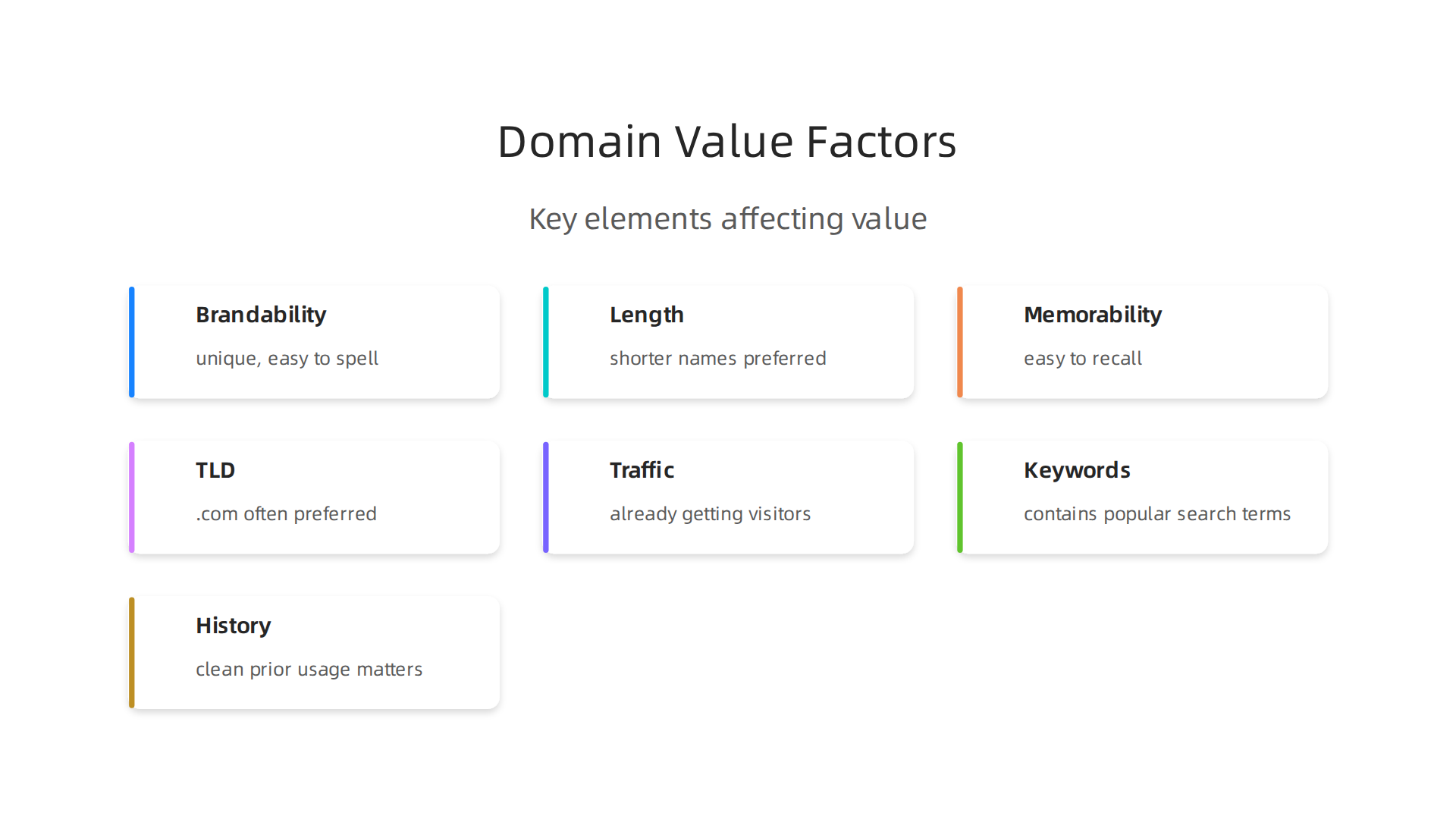
- Brandability: This is about how easy it is to build a brand around the name. Is it unique? Does it sound good when you say it out loud? Is it easy to spell so people don’t get confused? Names that are clear, easy to remember, and trigger good feelings are much more valuable How to Value a Domain Name in 2026: The Complete Pricing ….
- Length: Simply put, shorter names are usually better. A domain with fewer letters is often easier to type and remember, which adds to its appeal and value Domain Valuation Guide 2026: How Much Is a Domain · KEYDAL.
- Memorability: This goes hand-in-hand with brandability. Can people recall your domain name easily after hearing it once? A memorable name means more direct visitors and fewer lost customers.
- TLD (Top-Level Domain): This is the part after the dot, like
.com,.net, or.org. The.comextension is still king and often holds the highest value. Other TLDs can be good, but.comusually sets the standard How Much Is My Domain Worth? A Complete 2026 Valuation Guide. - Traffic: Does the domain already get visitors? If an existing domain has a lot of people coming to it, that means it has established an audience, making it more valuable right away.
- Keywords: If your domain name includes words that people actively search for, like "web hosting" or "fast cars," it can help your website appear higher in search results. This is a big boost for its value and your SEO efforts. You can learn more about this by reading our guide on domain rating a practical guide to boosting your seo authority.
- History: A domain’s past can greatly affect its current worth. Was it used for good purposes or something bad like spam or malware? A clean history with no past problems is very important Domain Due Diligence Guide: 8-Step Checklist to Avoid …. You’ll want to check things like its DNS history and overall reputation.
When looking at these factors, some are more clear-cut than others. Things like how much traffic a domain gets, how old it is, or how many other websites link to it (backlinks) are objective facts. But how well a name fits a brand or how easy it is to say can be more subjective, meaning it depends on opinion. For instance, a quick way to get an idea of your domain’s potential market worth is through a godaddy domain appraisal get real value from automated estimates, though automated tools provide estimates and human expertise is often needed for final decisions.
We just talked about the main things that make a domain name valuable. But did you know there are different kinds of valuable domain names, and different people will pay more for one type over another? It’s like how a family might value a big house with a yard, while a single person might prefer a small apartment in the city. The type of buyer changes what they value most.
Here are some types of domains that hold high domain name value and who often wants them:
Premium Short Keywords
These are domain names that are very short and use common, powerful words. Think of names like "Cars.com" or "Money.net." They are easy to remember and clearly tell you what the website is about. They often have high search traffic potential because people naturally type these words into search engines.
- Who values them most: Big companies, established businesses, and serious investors often want these. They see them as digital real estate that guarantees a strong online presence and can bring in a lot of traffic without much effort. Investors value them for their long-term growth potential and resale value.
Brandable Coined Names
These are unique names that might not be real words but sound good and are easy to say and remember. Think of company names like "Google" or "Spotify." These domains are great because they are unique and can be easily turned into a strong brand. They feel fresh and modern. Many experts say that how easy a name is to say and remember is a big part of its worth How to Value a Domain Name in 2026: The Complete Appraisa ….
- Who values them most: Startups and new businesses love these. They offer a blank slate to build a strong brand identity from scratch. Small and medium-sized businesses (SMBs) also seek these for fresh domain name ideas that help them stand out from competitors.
Geo/Domestic Domains
These domain names include a location, like "LondonRealEstate.com" or "NewYorkTaxis.co.uk." They are helpful for businesses that serve a specific area. People looking for services in a certain place will often include the city or region in their search.
- Who values them most: Local businesses and regional service providers are the primary buyers. An SMB like a plumber in Atlanta or a bakery in Seattle would find a geo-domain very useful for attracting local customers and improving their online visibility in their area.
Exact-Match Domains (EMDs)
EMDs are domain names that perfectly match a popular search term. For example, if many people search for "best shoes online," then "BestShoesOnline.com" would be an EMD. In the past, these were huge for search rankings. While their power isn’t as strong now, they can still be valuable if they are short and also brandable.
- Who values them most: Smaller businesses and affiliates might still look for these to get a quick boost in searches, especially if the keyword is very specific to their niche. However, they are less prized by large brands that prefer unique, brandable names.
Understanding these different types helps you see why some domains sell for huge sums and others are more affordable. The key is to match the domain type to the buyer’s needs and goals. When you are looking to choose a domain, knowing these categories can help you make a smart choice for your own online presence. To learn more about selecting a good address for your website, you can check out our guide on website domain definition.
Now that you know about different types of valuable domains, how do you figure out what a specific domain name is truly worth? It’s like finding the right price for a house. You don’t just guess. You look at what similar houses have sold for. This is called looking at "comparable sales" or "comps."

How to Find Comparable Sales (Comps)
To get a good idea of a domain’s value, you need to be a bit like a detective. Here’s how to find clues about past sales:
- Online Marketplaces: Many websites let people buy and sell domain names. These marketplaces often have records of past sales. Places like Sedo or Dynadot publish reports showing how the market is doing, including sales from their platforms in 2026. For example, Dynadot looked at over 54,000 sales in just one quarter of 2026 to see what was selling well Domain Intelligence Report Q2 2026 – Dynadot. These sites give you a peek into what people are actually paying.
- Auction Histories: There are special sites that track domain name auctions. These sites list domain names that have been sold, when they sold, and for how much. One such site gathers public sales data from many major places. They found over 113,000 sales worth over $111 million in a recent six-month period We Analyzed 113,408 Domain Sales from the Last 6 Months. This kind of data is super helpful for understanding real market prices for a domain name value.
- Broker Reports: Some experts, called domain brokers, help people buy and sell valuable domains. They sometimes create reports about the market. While they may charge fees, these brokers can offer deep insights, especially for high-value domains.
How to Adjust Comps for Differences
Finding similar sales is a good start, but no two domains are exactly alike. You need to adjust your findings based on certain features:
- Traffic: Does the domain already get a lot of visitors? A domain that already has many people coming to it is usually worth more because it means less work to get eyeballs on a new website.
- TLD (Top-Level Domain): This is the end part of the domain name, like .com, .net, or .org. The ".com" domains are still generally seen as the most valuable. In fact, some research shows that a .com domain can be worth 40-60% more than other types of domain endings. Newer TLDs like .AI are also getting popular, with millions registered in 2026 Domain Name Market Trends 2026: Insights for Resellers.
- Brand Fit: How well does the domain name fit a business or a brand? A name that perfectly matches a company’s identity will be much more valuable to that company.
- Length and Category: Shorter domain names are usually easier to remember and type, making them more valuable. Also, how the domain fits into a certain category (like tech, finance, or travel) can change its worth.
When you put all this information together, you can get a clearer picture of a domain’s true worth. It’s a key step in understanding your own domain name value or deciding what to pay for a new one. Some tools, like a GoDaddy domain appraisal, can also give you an automated estimate, but always combine that with your own research into comparable sales to get the most accurate number. For a deep dive into how these tools work, check out our guide on GoDaddy domain appraisal.
Once you’ve done your research and found the perfect domain, the next step is to make sure your website has a strong online home. For reliable website hosting for businesses, you’ll want a service that offers great performance and security. Consider exploring Prism Web Host to launch and maintain your website with ease.
Finding the right comparable sales helps a lot, but a domain name’s value isn’t just about what it looks like or how many people visit. There are also important technical and legal things that can change its worth.
These are like hidden details in a house’s history that you would want to know before buying.
Technical and Legal Factors That Affect Value (Hosting, Transferability, Trademark)
When you’re looking at a domain name, you need to check its past. Just like a car’s history report, a domain’s past can tell you a lot about its real value.
The Domain’s Digital Footprint
A domain name carries a digital history, which includes details about its hosting and how it was used. Buyers often do a lot of checking to make sure a domain is "clean" before they buy it. This is called domain due diligence.
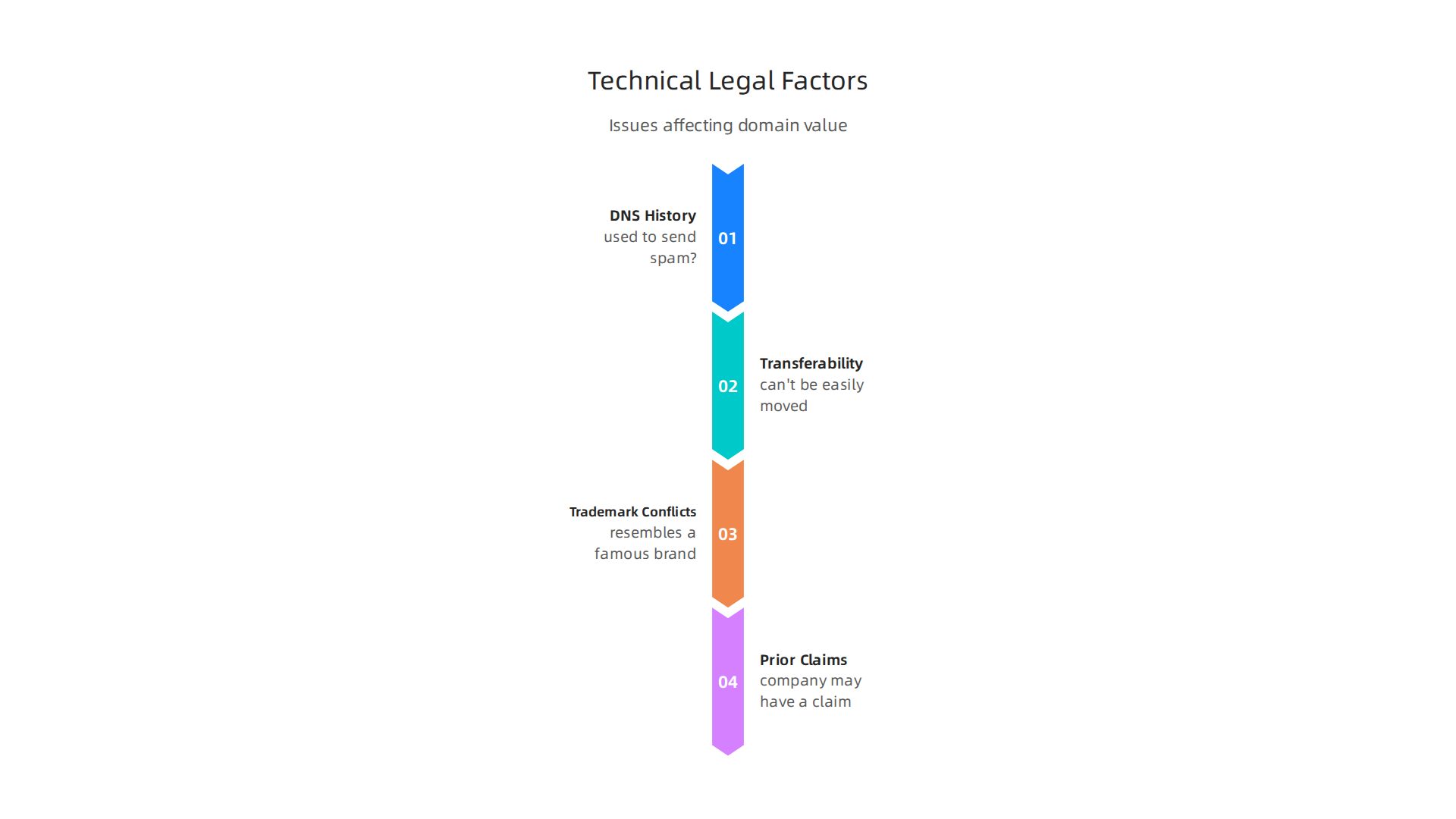
- DNS History and Hosting: The DNS (Domain Name System) is like a phone book for the internet. Its history shows where the domain has pointed over time. If a domain was used for sending out lots of spam emails or had problems with malware in the past, that bad history can stick with it. Even if the issues are fixed, older records can affect how reliable the domain and its emails seem. Tools exist to check a domain’s historical DNS records and see if it was ever linked to harmful activity or spam. It’s smart to check a domain’s reputation to make sure it’s safe and trustworthy Free Domain Reputation Check: Risk & Threat Score. You can even check its malware history to see if it was used to hurt visitors or systems Checking a Domain’s Malware History With VirusTotal: The Full Method. This history can lower its overall domain name value. For any business owner, understanding what a domain name means for your online identity, SEO, and security is vital, which you can learn more about by reading our guide on domain name meaning the business guide to web identity seo and security.
- Transferability: Imagine buying a house that you can’t actually move into. Some domain names might have a "transfer lock" on them, meaning they can’t be easily moved from one owner or registrar to another. This can happen for different reasons, like recent changes in ownership or if there’s a dispute. A domain that is hard to transfer is less valuable because it creates more hassle for the buyer. It is important to know how to find reputable domain name registrars that protect your business to avoid these issues.
Legal Troubles and Trademarks
Legal problems can greatly reduce a domain name’s value. No one wants to buy something that comes with a lawsuit.
- Trademark Conflicts: A trademark is a special word, phrase, symbol, or design that identifies and sets apart the source of goods or services of one party from others. If a domain name sounds too much like a famous brand’s trademark, it could lead to legal trouble. For example, if you own "CocaColaDrink.com," the Coca-Cola company would likely say you’re trying to confuse people. This kind of problem is often handled through something called the Uniform Domain-Name Dispute-Resolution Policy (UDRP). Under UDRP rules, a domain name can be taken away from its owner if it is very similar to a trademark, if the owner doesn’t have a good reason to own it, and if they registered it in bad faith UDRP Trademark Domain Guide | Aug 2026. This policy, put forth by ICANN, means that domain name disputes linked to trademarks usually need to be settled by agreement or other official actions before a domain can be canceled or moved Uniform Domain-Name Dispute-Resolution Policy. If a domain has a trademark problem, its value can drop to zero, because the new owner might lose it.
- Prior Claims: Sometimes, even if there isn’t a direct trademark infringement, a company might have a "prior claim" or special rights to a name. It’s always a good idea to search for existing businesses or products that use similar names before getting new domain name ideas.
Understanding these technical and legal details is a big part of knowing the true domain name value. It helps you avoid big headaches and makes sure your online asset is strong and secure.
Understanding the technical and legal health of a domain is crucial. But a domain name’s true worth also comes from how well it connects with people and how search engines see it. This is about its brand appeal, what it says to users, and its power to attract visitors from places like Google.
Brandability, SEO Value, and User Trust Signals
A great domain name isn’t just an address for your website. It’s a key part of your brand and a big factor in how much your business can grow online.

Think of it as your digital storefront’s name.
The Power of a Strong Brand Name
- Brand Fit and Memorability: A strong domain name fits your brand perfectly. It’s easy to remember, simple to say, and quick to type. This helps people find you again and again. If your domain name is unique and catchy, it sticks in people’s minds, making it more valuable. Good domain name ideas are often simple and tell you what the website is about.
- Perceived Trustworthiness: A good, professional-sounding domain name instantly builds trust. If a name looks spammy or has lots of hyphens and numbers, people might not trust it. A clean, clear name makes customers feel safer when they visit your site, which can directly affect your domain name value.
How SEO Affects Domain Value
Search Engine Optimization (SEO) is about making your website easy for search engines like Google to find and show to people. The right domain name can give you a big head start here.
- Keyword Value: Some domain names include important keywords that people search for. For example, "bestcoffeemachine.com" clearly tells you what the site is about. If a domain name has good keywords, it can help it rank higher in search results, leading to more organic traffic. More traffic usually means higher domain name value.
- Organic Traffic Potential: Beyond direct keywords, a reputable domain name that’s been around for a while and has a good history can draw more organic traffic. This is because search engines learn to trust certain domains over time. Services like GoDaddy domain appraisal often consider traffic potential when giving an estimated value.
- Domain Rating and Authority: Websites have a "domain rating" or authority score, which measures how strong and trustworthy they are in the eyes of search engines. A higher domain rating often means better search rankings and more visitors. A domain with a high rating is more valuable than a new one with no history.
- Past Penalties: Just like legal issues, past problems with search engines can hurt a domain’s value. If a domain was once penalized for bad SEO practices, like using sneaky tricks to rank higher, it might be hard to get it to rank well again. Search engines remember this history, which can make the domain less appealing to buyers.
By carefully looking at these branding and SEO factors, you get a much clearer picture of a domain name’s real worth and its ability to help a business succeed online.
Once you understand how much a domain name is truly worth, the next big question is what to do with it. Should you build a website on it, rent it out, or sell it? Making the right choice can help your business grow.
How to monetize, sell, or hold a domain: strategies and timing
There are many ways to make money from your domain name.
Each way has its own good and bad points, especially for small business owners.
Different Ways to Use Your Domain
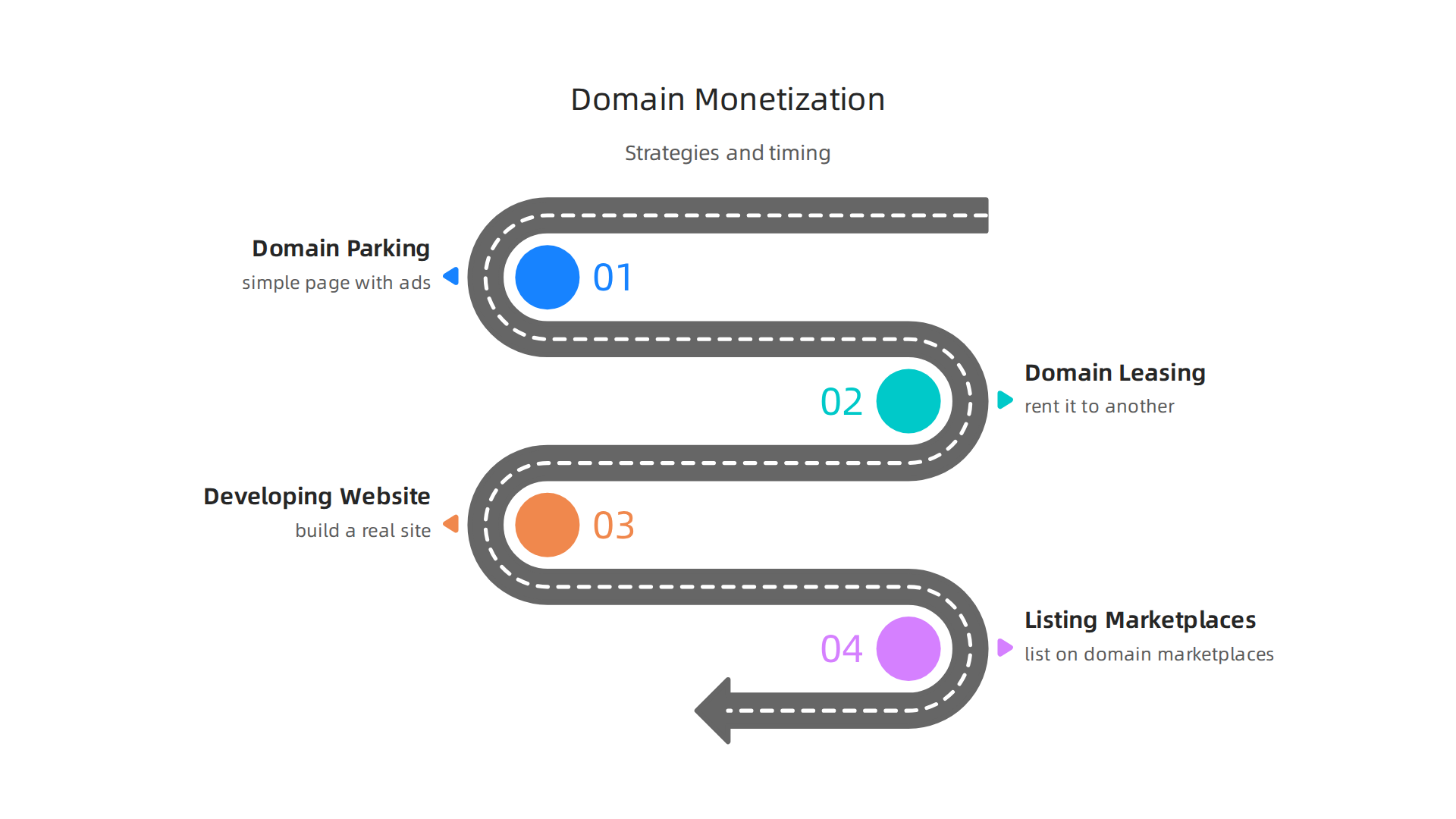
- Parking Your Domain: This is the easiest way to make a little money without doing much. You simply put up a simple page with ads on your domain. When people visit and click the ads, you earn a small fee. It’s a low-effort choice if you’re not ready to build a full website yet. But the money you make is usually not very much.
- Leasing Your Domain: You can rent out your domain name to another business. This is like renting a house. The other business gets to use your domain for a set time, and they pay you regularly. This can give you steady income without giving up ownership.
- Developing a Website: This is often the best way to get the most value from your domain. You build a real website, like a blog, online store, or service site. This lets you attract lots of visitors, build your brand, and sell products or services. If you choose to develop your domain, you’ll need reliable web hosting. Prism Web Host offers secure and fast hosting designed for businesses, making it easy to launch and maintain your site.
- Listing on Marketplaces: If you want to sell your domain, you can list it on special websites called domain marketplaces. These sites help buyers and sellers connect. Popular marketplaces let you set a price or let people bid on your domain. This can be a quick way to sell if your domain name value is high. You can learn more about making your domain stand out with effective domain listings.
When to Hold or Sell Your Domain
Deciding if you should keep a domain or sell it right away depends on market trends and your own goals.
- Holding for More Value: Sometimes, a domain name might be worth more in the future. This happens if new technologies become popular, or if a certain type of business starts to grow fast. For example, domains related to Artificial Intelligence became very popular in 2026, increasing their value. The global domain name market continues to grow, so holding a good domain can pay off later, as noted in the Global Domain Report 2026.
- Selling Now: There might be a good reason to sell your domain now. If the market for your specific domain type is very hot, you could get a great price. Also, if you need money for your business right away, selling a valuable domain can be a smart move. In 2026, the global domain name market saw continued growth, with total domain name transactions reaching US$128 million in the first quarter alone, suggesting a healthy selling environment for some domains 2026 Domain Name Market Status, Structure, and Development Trends. Experts also noted that the overall trend for domain sale prices pointed upward in 2026, which can make it a good time to sell if you have a premium domain Domain Name Market Trends: What to Expect in 2026.
Look at market reports and trends. If a certain keyword or industry is booming, domains tied to it might be selling for a lot. This helps you figure out the best timing for your domain.
When you decide it’s time to sell your domain, knowing how to set the right price and talk with buyers is very important. This helps you get the most money for your asset. It’s all about understanding its true value.
Pricing, negotiation, and when to get an expert appraisal
First, let’s talk about how to figure out a good asking price for your domain name. It’s not just a guess. You need to do a little homework to understand its true value.
Setting Your Domain’s Asking Price
The best way to set your asking price is to look at what other similar domains have sold for. This is called "comparable sales analysis." Think about things like:
- How long is the domain name? Shorter ones are often worth more.
- What kind of ending does it have? A ".com" is usually more valuable than others.
- What industry or topic does the domain fit into?
- Does it have keywords people search for?
- How easy is it to remember and brand?
Combining these points helps you set a realistic asking price for your domain name value. Using many ways to value your domain, including looking at similar sales, gives you the best idea of its worth, as experts suggest in a guide on setting realistic domain pricing.
You can also use online tools for a quick check. Some services offer a free automated domain appraisal. For example, some tools can give you an AI-powered appraisal to estimate your domain’s value. You might also find services like a GoDaddy domain appraisal that give you an estimate. These can be a starting point, but they might not always capture the full value, especially for unique domains.
Negotiating with Buyers
Once you have an asking price, you might get offers. Negotiation is like a friendly back-and-forth talk.

Here are some tips for negotiating:
- Do your research: Always know what similar domains have sold for. This helps you know what a fair price is before you even start talking, according to advice on how to negotiate a domain price without overpaying.
- Start a bit higher: Set your initial asking price a little higher than what you actually want. This gives you room to come down a bit during talks.
- Don’t accept lowball offers: If someone offers a price that is much too low, don’t worry. You don’t have to take it. Your domain name value might be much higher.
- Use specific numbers: Instead of saying "$7,000", try "$7,350". Specific numbers can make your offer seem more thought out.
- Don’t drop your price too fast: Make your price drops small as you talk. Never drop more than 15% in one go, as advised for domain sales negotiation tactics.
Email is often a good way to negotiate because it gives you time to think about your answers.
When to Get an Expert Appraisal or Broker
For very valuable domain names, or if you’re not comfortable negotiating yourself, you might want to hire an expert.
- Domain Appraisers: These people can give you a detailed report on your domain’s worth. This is different from the quick online tools. They look deep into many factors to give you the most accurate [domain name value]. This often costs money, with written appraisals sometimes costing around $499.00 or more, as noted in some fee schedules for marketplace and services.
- Domain Brokers: A broker is like a real estate agent for domain names. They will find buyers, talk prices, and handle all the tricky parts for you. This can save you time and stress. Brokers usually charge a commission, which is a percentage of the sale price. This can be anywhere from 10% to 20% of the final sale, and sometimes they also ask for a small upfront fee. Many brokers will charge a percentage, and some add a retainer of $99 to $500 that might be credited back later, according to information on domain broker fees and marketplace pricing. For higher-value domains, over $15,000 for example, the commission rate might be lower.
Should you use a broker or an automated tool?
- Automated tools are great for getting a general idea, especially if your domain is not super unique or expensive. They are quick and often free or low-cost.
- A broker or expert appraiser is best for domains with high potential value or if you don’t have time to do the selling yourself. They have the skills and connections to get the best price, especially for a premium domain.
So, for smaller domains, a quick online check might be enough. But for high-value domains, getting a professional opinion or hiring a broker can really pay off.
Summary
This article explains why a domain name is a key business asset and how to assess its true value in 2026. It covers the objective and subjective factors that determine price—brandability, length, TLD, traffic, keywords, history and more—and shows which features different buyers prize. You’ll learn practical ways to research value, including finding comparable sales on marketplaces and auctions, and how to adjust comps for traffic, TLD, and brand fit. The guide also walks through the technical and legal checks to avoid bad history, transfer locks, or trademark risk, and explains how SEO, domain rating, and perceived trust affect worth. Finally, it outlines monetization options (parking, leasing, development), timing to hold or sell, pricing tactics, negotiation tips, and when to hire an expert appraiser or broker. After reading, you’ll be able to estimate a domain’s market value, spot deal-breakers, and choose the right next step for your domain.
