




Cost to Buy a Domain Name 2026 Price Guide and Hidden Fees
Article
Why understanding the cost to buy a domain name matters for your business
Thinking about starting a business online in 2026? Then you’re probably wondering about the cost to buy a domain name.

Your domain name is your online address, like yourbusiness.com, and it is a very important part of your brand. Knowing how much it costs helps you plan your money wisely.
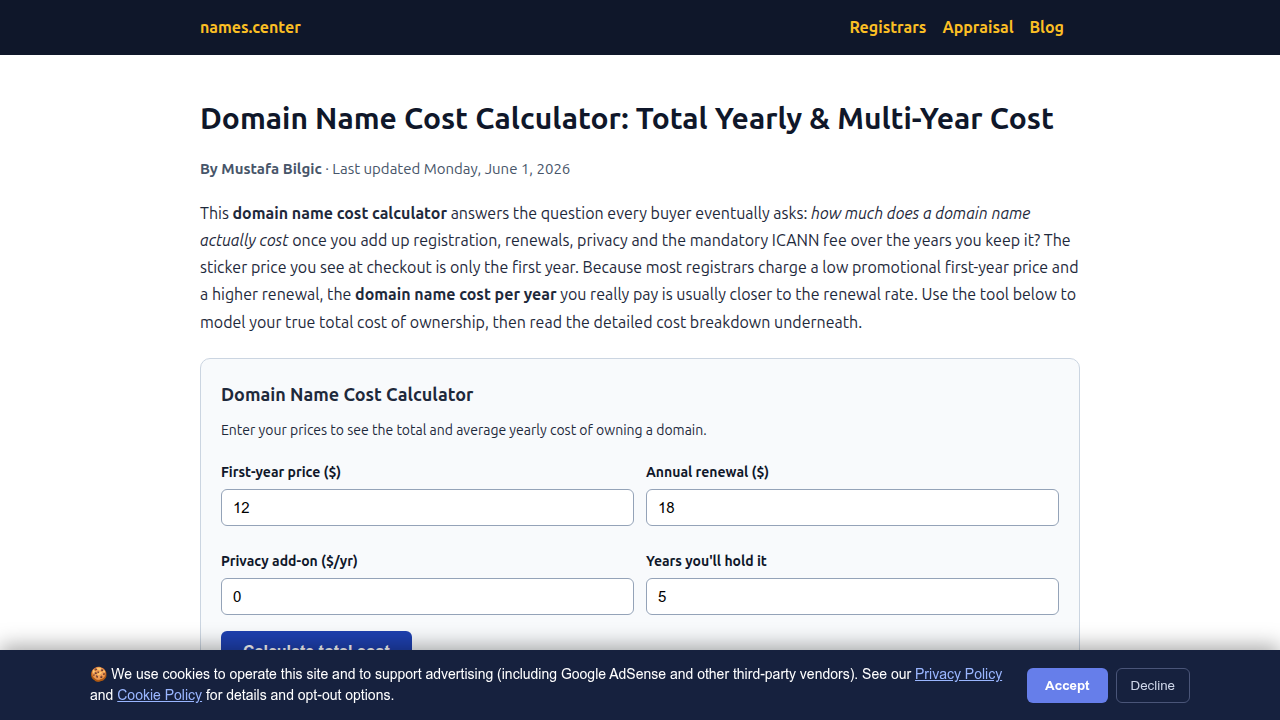
The price to get your own website address can change a lot. For many common names, especially with a .com ending, you might expect to pay about $10 to $15 for the first year. When you renew it each year after that, the cost might be a little higher, usually around $15 to $22 annually, according to a 2026 domain name cost calculator Domain Name Cost Calculator (2026) — Yearly Total.
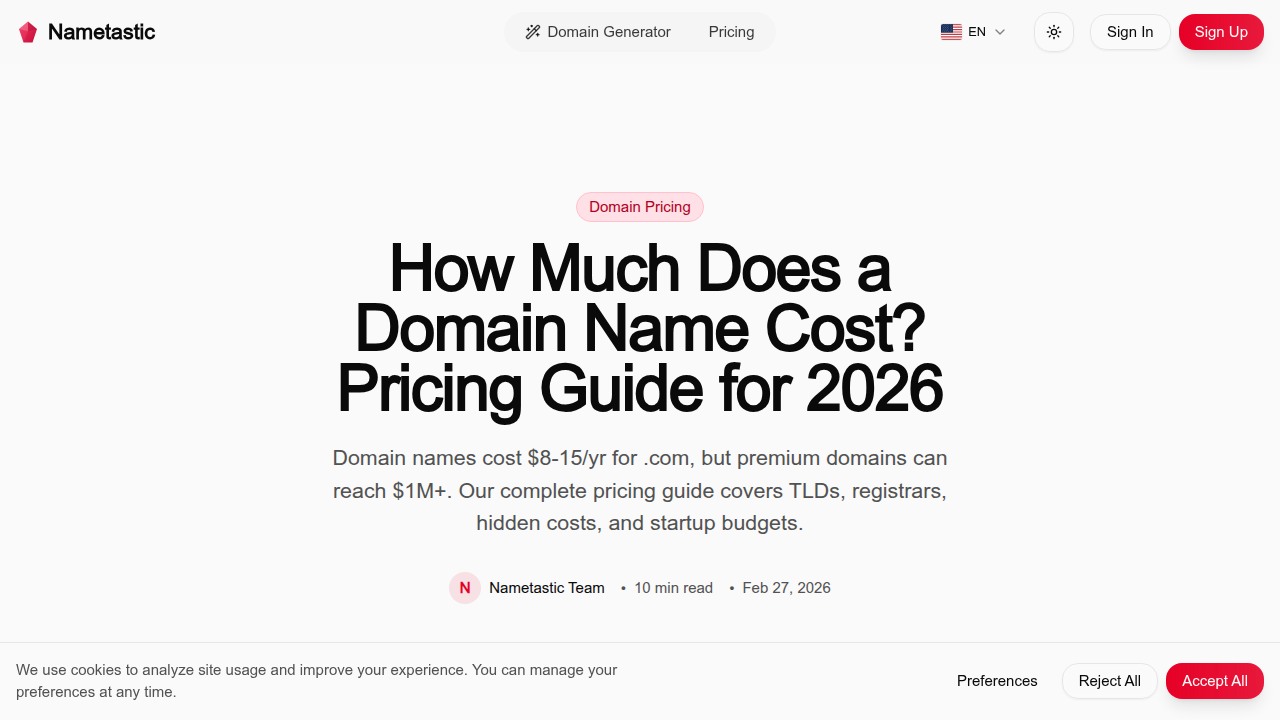
Other popular endings, also known as Top-Level Domains (TLDs), have different prices. For example, a .co domain might cost you $25 to $35 each year. A .io domain could be $30 to $50 annually. Even specialized ones like .ai can range from $50 to $150 per year, as shown in a 2026 pricing guide How Much Does a Domain Name Cost? Pricing Guide for 2026.
You can find a full list of these different endings and what they mean to help you decide Domain Extensions: The Full List of TLDs and Which to Pick.
The cost to buy a domain name isn’t always the same. Here’s why prices can change:
- The type of ending you choose: Some endings, like .com, are very well-known. Newer or more specific endings, like .xyz or .tech, might be offered as budget TLDs for $1 to $10 a year, while tech TLDs like .io or .dev can be $25 to $60 annually How Much Does a Domain Name Cost? Complete Pricing Guide (2025).
- How long you register it for: You can often register a domain for one year or several years at once, sometimes with discounts for longer periods.
- Where you buy it from: Different companies that sell domain names can have different prices and deals. It’s a good idea to do a domain name renewal price comparison to avoid overpaying.
It’s important to remember that the domain name registration cost is a regular cost, not a one-time payment. This is just one part of your overall website budget. You also need to plan for web hosting, which is like renting space on the internet for your website files to live.

Plus, you might need money for website design, security tools, and other helpful services. Planning for these ongoing costs helps you avoid any surprises later on. While you might see ads for a free website domain, this usually comes with other services like web hosting and may only be free for the first year.
The cost to buy a domain name really changes depending on the kind of ending you pick. These endings are called Top-Level Domains, or TLDs for short. While we talked about some common ones earlier, let’s look at more details and why some are much pricier.
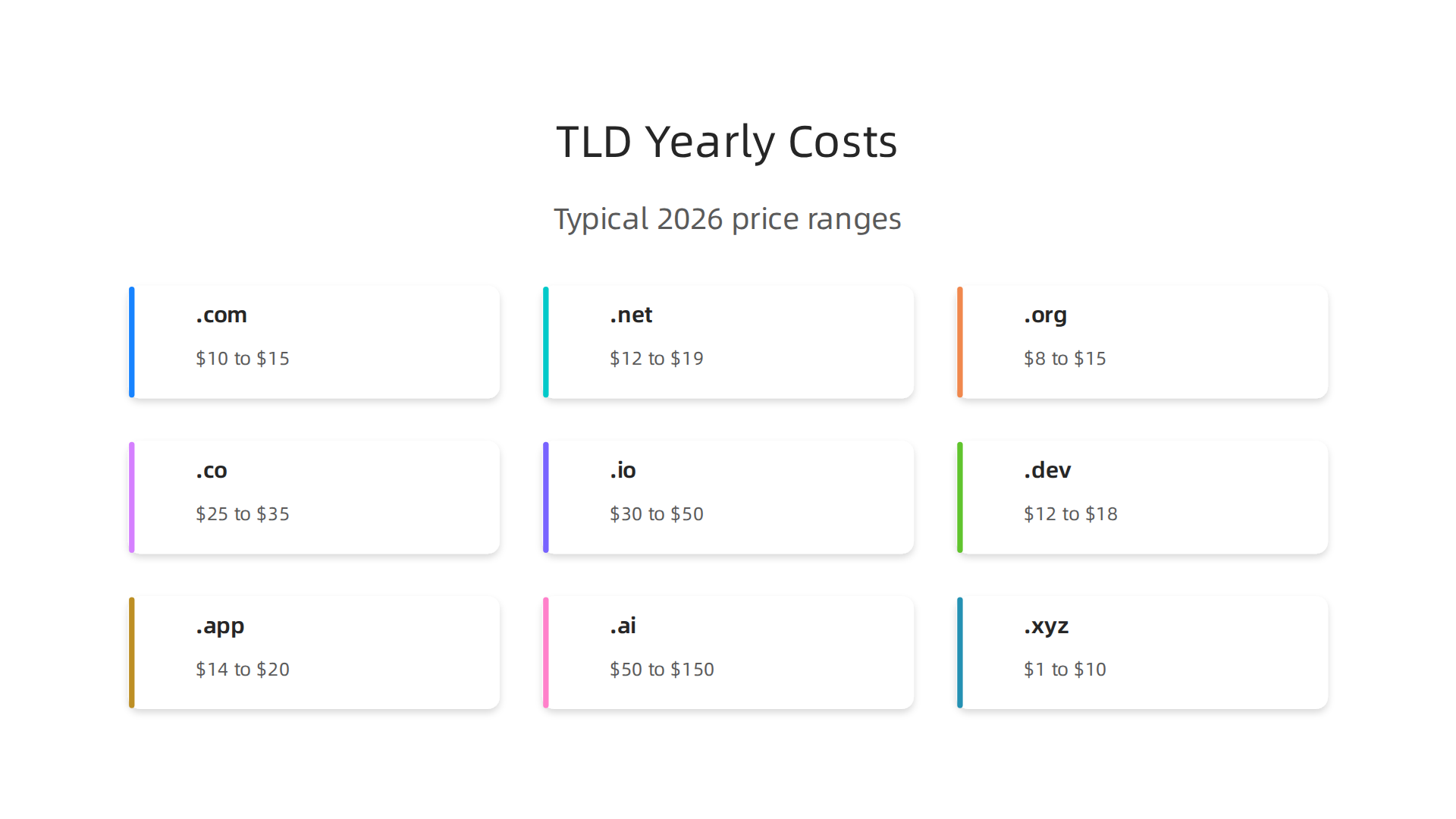
Here’s a simple look at what different domain endings might cost you each year in 2026:
| Domain Ending (TLD) | What it’s often used for | Typical Yearly Cost |
|---|---|---|
| .com | Commercial businesses | $10 to $15 |
| .net | Network-related sites | $12 to $19 |
| .org | Organizations | $8 to $15 |
| .info | Information sites | $10 to $20 |
| .co | Companies or corporations | $25 to $35 |
| .io | Tech and startups | $30 to $50 |
| .dev | Developers | $12 to $18 |
| .app | Mobile apps | $14 to $20 |
| .ai | Artificial intelligence | $50 to $150 |
| .xyz | Budget choice | $1 to $10 |
You can see that popular TLDs like .com, .net, and .org usually fall into a similar price range. But newer, more specialized TLDs like .io or .ai tend to cost more because they are in high demand for certain industries Extensions (TLD) and Prices. For example, two-letter .ai domains can be very expensive, sometimes over $100 per year, just for the basic registration How Much Does a Domain Name Cost? Pricing Guide for 2026.
Specialty and Premium Domain Names
Beyond the regular yearly fees, some domains are considered "premium." These are usually short, easy to remember, or contain popular keywords. A premium domain name might cost hundreds, thousands, or even millions of dollars to buy just once. This is because they are seen as very valuable online addresses. After the first big purchase, you still pay a yearly renewal fee, which can also be higher than for a regular domain.
The actual price you pay for your domain name registration cost also includes a small fee set by ICANN. ICANN is a group that helps manage the internet’s naming system. They charge a small amount, around $0.20 per year, for each domain name registered, renewed, or moved What is an ICANN fee? — Everything domain buyers should know. This small fee is added on top of what the company you buy your domain from (called a registrar) charges. Registrars add their own costs for things like customer support, tools, and keeping your domain safe. This is why a domain costs more than just that tiny ICANN fee.
When you’re looking for your perfect domain, it’s a good idea to compare domain prices from different places. Finding a reliable provider like Prism Web Host can help you get a good deal and make sure your domain is safe.
Remember, the goal is to find a good domain cheap enough for your budget but still powerful enough for your business.
Understanding these different price points helps you plan your money better. It also helps you see why some domain names are a great deal, while others require a bigger investment. Knowing the factors behind the cost to buy a domain name helps you make smart choices for your online home.
Getting your own piece of the internet means thinking about different kinds of costs. It’s not just a one-time payment. When you buy a domain name, you’ll see charges for signing it up (registration), keeping it each year (renewal), moving it to a new company (transfer), and keeping your personal details private.
Registration vs. Renewal Costs
The very first time you buy a domain name, it’s called registration. Often, companies offer a special lower price for this first year to get you started. For example, a common .com domain might cost you around $10 to $15 for the first year.
However, the "cost to buy a domain name" for the long term actually involves the renewal price. After that first year, the price usually goes up a bit. For a standard .com domain, you might pay $15 to $22 each year to keep it after the first year Domain Name Cost Calculator (2026) — Yearly Total. This yearly renewal fee is how you keep owning your web address. Always look at both the first-year price and the renewal price when you are doing a domain price comparison, so you don’t get a surprise later. Understanding these ongoing costs helps you budget for your online home.
You can often register a domain for more than one year at a time, sometimes up to 10 years. This can sometimes save you a little money compared to renewing every single year. It also means you don’t have to worry about forgetting to renew and losing your domain. To learn more about managing these costs, check out our guide on domain cost per year what determines your renewal price and how to lower it.
Domain Transfer Fees
Sometimes you might want to move your domain name from one company (registrar) to another. This is called a domain transfer. Most of the time, transferring a domain has a small fee. This fee often includes one extra year of renewal added to your domain’s expiration date. It’s usually a straightforward process and not very expensive, but it’s another factor in the overall domain name registration cost if you decide to switch providers.
WHOIS Privacy and Other Add-ons
When you register a domain name, your contact information (like your name, address, email, and phone number) has to be collected and is usually made public in a database called WHOIS. This is a rule set by ICANN, the group that helps run the internet’s naming system.
Many people don’t want their personal details out there for everyone to see. This is where WHOIS privacy, also called domain privacy or WHOIS protection, comes in. For an extra yearly fee, your domain registrar can put their information in the public WHOIS database instead of yours. This keeps your personal details hidden from spammers and others who might use the public data. This add-on usually costs around $5 to $15 per year, depending on the registrar. If you’re wondering how to keep your domain cheap and secure, adding privacy is a smart move.
Besides privacy, registrars often offer other helpful services that add to the overall cost to buy a domain name. These might include:
- Email hosting: So you can have an email address like yourname@yourdomain.com.
- Website builder tools: Simple tools to help you create your website easily.
- SSL certificates: These help make your website secure, showing a padlock icon in web browsers. (Many hosting providers, like Prism Web Host, actually offer a free SSL certificate when you buy hosting from them.)
While these extra services aren’t always needed to get a free website domain or simply register one, they can make setting up and running your website much easier. Remember to consider which ones are important for your needs when calculating your full domain name cost.
Now that you know what goes into the cost, like registration, renewal, and privacy fees, let’s look at where you actually buy a domain name. It’s not just one type of company selling them. There are a few different players in the game, and knowing them helps you understand the true cost to buy a domain name.
Registries, Registrars, Resellers, and Marketplaces
Think of it like this:
- Registries are like the main landlords for a whole street of houses. They manage all domain names that end in a certain way, like all the .com or .org domains.
For example, Verisign is the registry for .com domains. They set the basic rules and wholesale prices for these domains.
- Registrars are like real estate agents. They are companies that are allowed by the main internet group, ICANN, to sell domain names directly to you. They buy names from the registries and then sell them to people like us. These are the places most people go to buy their first domain.
- Registrars pay fees to ICANN to be able to sell domains. For example, in 2026, registrars pay an annual fee of $4,000 to ICANN to be accredited ICANN-Accredited Registrars Approve Registrar-Level Fees for Fiscal Year 2026.
They also pay a small fee for each domain registered, renewed, or transferred. This is often around $0.20 per year for each domain What is an ICANN fee? — Everything domain buyers should know. These fees are part of why your domain name registration cost is more than just a few cents.
- Resellers are like smaller agents who work under bigger real estate companies. They sell domain names on behalf of a registrar. They might offer special deals or come as part of a hosting package. The prices can sometimes be cheaper at first, but it’s good to check their renewal rates.
- Marketplaces or Aftermarket Brokers are where people sell domain names they already own. Imagine a flea market for domain names. If someone has a really good name they’re not using, they might sell it here. These domains can sometimes be more expensive, especially if they are short, memorable, or very popular.
Pros and Cons of Different Buying Spots
Each place has its good and bad sides when you’re looking at the cost to buy a domain name.
- Buying directly from a Registrar:
- Pros: It’s usually straightforward, and you get direct support from the company managing your domain. They often have good tools to help you manage your domain. Many people find this the easiest way to find a
domain cheapfor the first time. - Cons: Prices can vary a lot between registrars, especially for renewals. You might see many extra services pushed during checkout.
- Pros: It’s usually straightforward, and you get direct support from the company managing your domain. They often have good tools to help you manage your domain. Many people find this the easiest way to find a
- Buying from Resellers:
- Pros: Can sometimes offer very low prices, especially when bundled with web hosting.
- Cons: You might get less direct support, and the service can depend on the main registrar. Renewal prices can also jump up unexpectedly.
- Buying from Marketplaces/Brokers (Aftermarket):
- Pros: You can find premium, already-registered domain names that might not be available otherwise.
- Cons: These domains are often much more expensive than registering a new one, as you’re buying from another owner, not directly from a registrar. It’s usually not where you’d look for a
free website domain.
Understanding these different players helps you make a smarter choice. The path you choose impacts your overall domain price comparison. To truly master how much you pay for your online address, you’ll want to avoid hidden fees and find a good deal. Find out more about how to do that in our guide to master your domain name registration cost and avoid hidden fees. When you’re ready to pick a company, it’s wise to research the companies carefully. Knowing how to find reputable domain name registrars that protect your business can save you headaches later.
You’ve learned about the different places where you can buy a domain name. But knowing where to buy is just one part. To truly understand the cost to buy a domain name, you also need to know about the extra fees that can pop up. Sometimes these fees are small, but they can add up and surprise you.
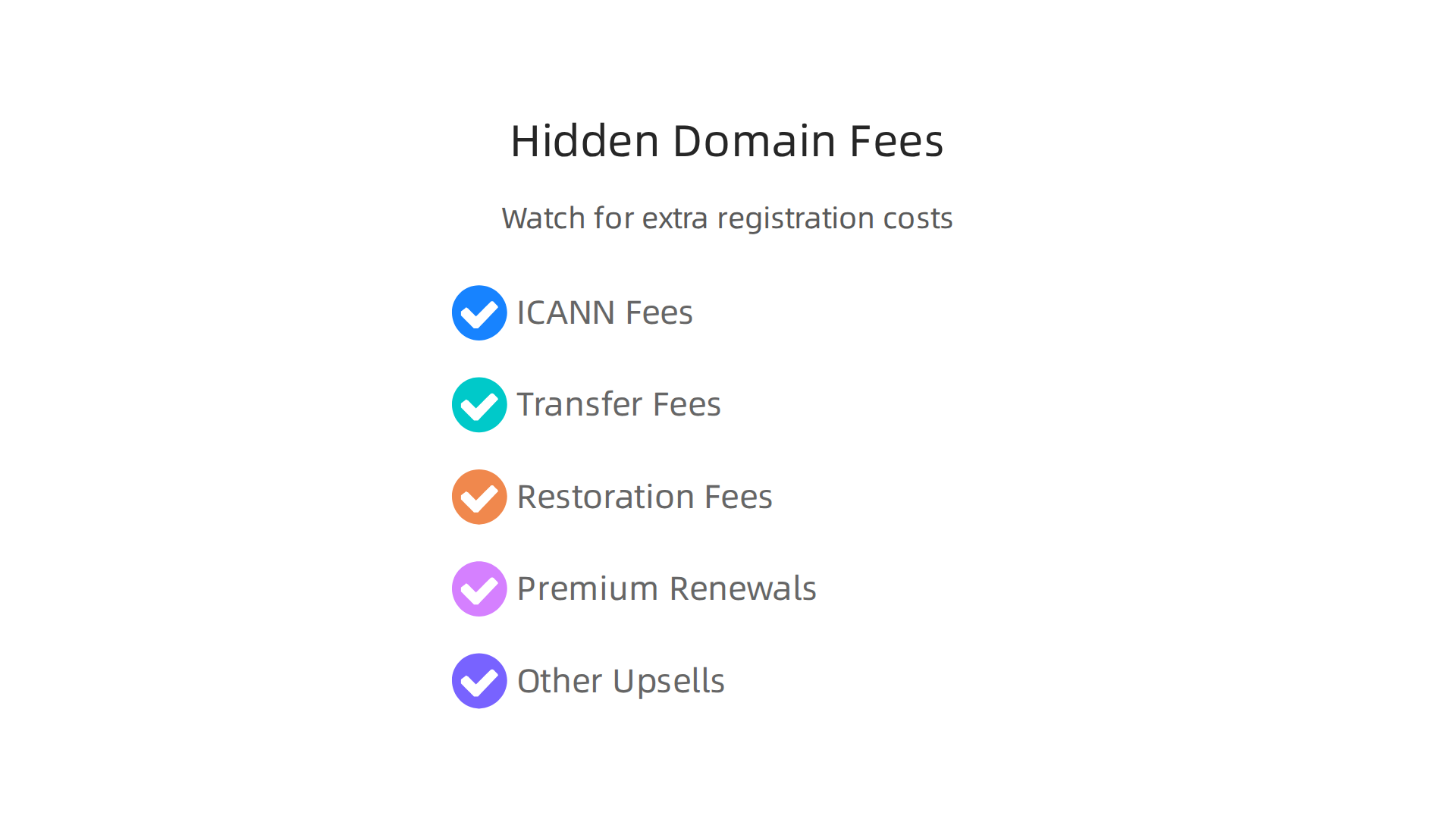
Hidden and optional fees to watch for (transfer fees, ICANN fees, restoration fees)
When you’re looking for a domain cheap, it’s easy to just look at the first price you see. But there are often other costs involved that might not be clear at first glance. These can make your total domain name registration cost much higher than you planned.
What are ICANN Fees for You?
We talked about how registrars pay fees to ICANN, the main internet group. One of these is a small fee for each domain you register, renew, or transfer. For you, the buyer, this is usually a mandatory charge of about $0.20 per year for each domain. It’s often added automatically to your bill by the registrar What is the ICANN fee? – Checkout & Billing. Many people don’t realize this small fee is separate from the registrar’s own price. It’s part of why your actual domain price comparison can look different than just the basic yearly charge.
Domain Transfer Fees
Sometimes you might want to move your domain name from one registrar to another. This is called a domain transfer. While it’s usually free or very low cost to transfer out of a registrar, some companies might charge a small fee to transfer in. It’s a good idea to check this if you plan to move your domain in the future.
Restoration Fees for Expired Domains
This is one of the most costly scenarios. If you forget to renew your domain name, it eventually expires. When a domain expires, it doesn’t just disappear right away. There’s a "grace period" where you can still renew it, usually for the regular price. But if you miss that, the domain enters a "redemption period." During this time, you can still get your domain back, but it will cost you a lot more. Restoration fees can be anywhere from $50 to hundreds of dollars, on top of the regular renewal fee. This is a big reason why managing your renewals is key to keeping the cost to buy a domain name low.
Premium Renewal Surprises
You might find a great deal for a domain cheap in the first year. Some registrars offer very low prices to get you started. However, the renewal price for that same domain can sometimes jump much higher after the first year. This is especially true for certain domain extensions or if the domain is considered "premium." Always check the renewal price before you buy, not just the first-year cost. It’s important to understand this when you do a domain price comparison. You do not want to be surprised by a high renewal bill later on, as this could impact your business’s online presence. If you’re looking to avoid these kinds of unexpected costs, learning about how to calculate your true website costs can be very helpful. Check out our guide on how to calculate your true web hosting cost and avoid hidden fees in 2026.
Other Hidden Upsells and Add-ons
Registrars often try to sell you extra services during checkout. While some, like domain privacy, can be useful, many are not strictly needed for your domain name registration cost. These might include things like:
- Website builders: They often offer their own tools to help you create a website.
- Email hosting: A professional email address that uses your domain name.
- SSL certificates: These help secure your website, but some hosting plans include them for free.
- SEO tools: Services to help your website rank better in search engines.
It’s common for registrars to pre-select these items in your cart, making it seem like they are part of the basic cost to buy a domain name. Always review your cart carefully before paying. Many of these add-ons can be skipped, especially if your web host already provides them. You can find out more about common hidden fees and how to spot them in a recent article Domain Registrar Hidden Fees: Checkout Traps Exposed (2026).
To ensure your website is secure and performs well, choosing a host that’s transparent about all fees is vital. With Prism Web Host, you get reliable and secure hosting tailored for businesses. Our services include enterprise-grade security and automated scalability. You can easily launch and maintain your online presence without technical hurdles. Choosing a reputable provider that prioritizes performance and security helps you achieve your online goals effectively.
You’ve learned about the different places where you can buy a domain name. But knowing where to buy is just one part. To truly understand the cost to buy a domain name, you also need to know about the extra fees that can pop up. Sometimes these fees are small, but they can add up and surprise you.
Hidden and optional fees to watch for (transfer fees, ICANN fees, restoration fees)
When you’re looking for a domain cheap, it’s easy to just look at the first price you see. But there are often other costs involved that might not be clear at first glance. These can make your total domain name registration cost much higher than you planned.
What are ICANN Fees for You?
We talked about how registrars pay fees to ICANN, the main internet group. One of these is a small fee for each domain you register, renew, or transfer. For you, the buyer, this is usually a mandatory charge of about $0.20 per year for each domain. It’s often added automatically to your bill by the registrar What is the ICANN fee? – Checkout & Billing. Many people don’t realize this small fee is separate from the registrar’s own price. It’s part of why your actual domain price comparison can look different than just the basic yearly charge.
Domain Transfer Fees
Sometimes you might want to move your domain name from one registrar to another. This is called a domain transfer. While it’s usually free or very low cost to transfer out of a registrar, some companies might charge a small fee to transfer in. It’s a good idea to check this if you plan to move your domain in the future.
Restoration Fees for Expired Domains
This is one of the most costly scenarios. If you forget to renew your domain name, it eventually expires. When a domain expires, it doesn’t just disappear right away. There’s a "grace period" where you can still renew it, usually for the regular price. But if you miss that, the domain enters a "redemption period." During this time, you can still get your domain back, but it will cost you a lot more. Restoration fees can be anywhere from $50 to hundreds of dollars, on top of the regular renewal fee. This is a big reason why managing your renewals is key to keeping the cost to buy a domain name low.
Premium Renewal Surprises
You might find a great deal for a domain cheap in the first year. Some registrars offer very low prices to get you started. However, the renewal price for that same domain can sometimes jump much higher after the first year. This is especially true for certain domain extensions or if the domain is considered "premium." Always check the renewal price before you buy, not just the first-year cost. It’s important to understand this when you do a domain price comparison. You do not want to be surprised by a high renewal bill later on, as this could impact your business’s online presence. If you’re looking to avoid these kinds of unexpected costs, learning about how to calculate your true website costs can be very helpful. Check out our guide on how to calculate your true web hosting cost and avoid hidden fees in 2026.
Other Hidden Upsells and Add-ons
Registrars often try to sell you extra services during checkout. While some, like domain privacy, can be useful, many are not strictly needed for your domain name registration cost. These might include things like:
- Website builders: They often offer their own tools to help you create a website.
- Email hosting: A professional email address that uses your domain name.
- SSL certificates: These help secure your website, but some hosting plans include them for free.
- SEO tools: Services to help your website rank better in search engines.
It’s common for registrars to pre-select these items in your cart, making it seem like they are part of the basic cost to buy a domain name. Always review your cart carefully before paying. Many of these add-ons can be skipped, especially if your web host already provides them. You can find out more about common hidden fees and how to spot them in a recent article Domain Registrar Hidden Fees: Checkout Traps Exposed (2026).
To ensure your website is secure and performs well, choosing a host that’s transparent about all fees is vital. With Prism Web Host, you get reliable and secure hosting tailored for businesses. Our services include enterprise-grade security and automated scalability. You can easily launch and maintain your online presence without technical hurdles. Choosing a reputable provider that prioritizes performance and security helps you achieve your online goals effectively.
How brand value and SEO impact domain cost decisions
After looking at all the hidden fees, you might wonder if it’s ever worth paying more for a domain name. The answer is yes, sometimes it really is.

This is where your brand and how people find you online (SEO) come into play.
Should you pay more for a memorable domain?
Imagine you’re starting a new business. You want people to remember your website address easily. A short, easy-to-type, and memorable domain name can be a big help. Think about well-known brands like Google or Apple. Their domain names are simple and easy to recall. These kinds of premium domains often cost more upfront, sometimes hundreds or even thousands of dollars.
But why pay more? Because a good domain name builds trust and makes it easier for people to share your website. If your domain is hard to spell or too long, people might give up trying to find you. So, paying more for a short, clear name can be a smart move for your brand in the long run. It’s an investment in how people see and interact with your business.
How domain choice affects search visibility
In 2026, the way domain names affect your search engine ranking (SEO) has changed a lot. Back in the day, having keywords in your domain name was a big boost. For example, "bestcoffeepot.com" might have ranked high for "best coffee pot." But now, Google cares less about keywords in the domain itself. Instead, it looks at how trustworthy and popular your domain is over time.
Your domain name doesn’t directly make you rank higher anymore. However, it still matters for other reasons. A good domain helps with:
- Click-through rates: People are more likely to click on a domain name they trust or find relevant in search results Domain Name and SEO in 2026.
- User trust: A professional-looking domain name makes people feel safer about visiting your site.
- Memorability: If your domain is easy to remember, people are more likely to come back directly.
- Brand signals: Search engines use brand recognition to understand how important your website is. A strong brand linked to a clear domain helps with this Does Your Domain Name Affect SEO in 2026? What Actually ….
So, while keywords in your domain are not as important for SEO as they once were, a domain that builds trust and is easy for people to use is still very valuable. It helps your overall online presence and can indirectly improve your search rankings because more people will click on it and share it. This makes the cost to buy a domain name more complex than just the basic registration. You’re also paying for its potential to help your brand grow and be found. Learn more about how to find reputable domain name registrars that protect your business.
Choosing the right domain extension can also play a small part. While Google says all top-level domains (like .com, .org, or .io) are treated equally for ranking, some people still trust .com more. However, newer, more descriptive extensions like .tech or .store can sometimes help if they perfectly match your business, making your domain cheap to buy yet still effective. You can compare different domain extensions to see their true costs and risks.
Ultimately, your domain name is more about building a strong brand and making a good impression than about stuffing keywords. Sometimes, paying a little extra for a great domain is a worthy investment.

If you’re interested in understanding the real value of a domain name, you might find our insights on unlocking your domain value with GoDaddy domain appraisal helpful.
Prism Web Host helps businesses like yours succeed online with reliable hosting and strong security. We provide enterprise-grade features and support, so you can focus on building your brand, not on technical problems. Find out more about how we can support your online growth by visiting Prism Web Host.
Picking the best domain name is a big step, but your website needs more than just an address. It also needs a place to live online, called web hosting, and ways to stay safe, like security features. Many companies offer to bundle your domain, hosting, and even security all together. This can seem like a great deal at first glance.
The Perks of Bundling Your Domain and Hosting
When you buy your domain name and hosting from the same company, it can make things much simpler. Think of it like this: instead of getting your mail from one place and your electricity from another, you get both from the same provider. This means:
- Easier setup: The domain and hosting are often set up to work together automatically. This saves you time and hassle, especially if you’re new to making websites.
- One bill to pay: You usually get one bill for everything, which makes keeping track of your "cost to buy a domain name" and other website expenses easier. Many providers will combine payments into one bill, even helping with financial management Why You Should (or Shouldn’t) Register Your Domain Through Your Web Host.
- Cost savings: Often, bundling can lower your total domain name registration cost. Many hosting companies offer a free website domain for the first year when you buy hosting from them. This can also include things like a free SSL certificate to make your site secure. You might find offers that save you a good amount of money compared to buying each service separately.
- Simpler support: If you have a problem, you only need to call one company. This can make getting help faster and less confusing.
Watch Out for the Trade-Offs
While bundling sounds perfect, there are a few things to keep in mind:
- Renewal price jumps: Just like with single domain registrations, the first-year price for a bundle can be very low. But the renewal price for both the domain and hosting can jump up a lot after the first year. Always check the full "domain price comparison" and renewal costs before you commit. You want to avoid any surprises when the bill comes due.
- Vendor lock-in: If everything is with one company, it can be harder to move your website or domain later. Transferring your domain or hosting to a different provider might take more steps. You might not get a "domain cheap" price if you decide to separate them later.
- Less choice: You might not get the best hosting or security features for your specific needs if you’re tied to one company’s bundle. Sometimes it’s better to choose different providers who are experts in each area.
Many benefits come from keeping your web hosting and domain name together, like convenience and customer support 5 Benefits of Keeping Your Web Hosting and Domain Together. Still, it’s wise to weigh the pros and cons carefully. When looking at bundles, always read the fine print about renewal rates and what exactly is included. This helps you get a good deal without hidden costs. If you want to dive deeper into how much web hosting truly costs, you can learn more about web hosting cost in 2026 how to compare pricing models and avoid hidden fees.
Sometimes, the perfect website name you want is already owned by someone else. When this happens, you might need to look at the "aftermarket." This is where domains that have already been registered are put up for sale again. The cost to buy a domain name this way can be much higher than buying a new one.
Buying a Domain from Another Owner
If your dream domain is taken, you can try to buy it from its current owner. This usually starts with finding out who owns the domain and then making an offer. This part is like a negotiation. You might go back and forth on the price until both sides agree. There are special marketplaces, called domain aftermarket platforms, where these kinds of sales happen easily Domain Aftermarket Platforms Comparison 2025. These platforms help you find domains and connect with sellers. You can also watch a helpful video about How to Buy a Domain That Someone Else Owns.
When buying a domain on the aftermarket, the actual "cost to buy a domain name" is often much higher than the yearly registration fee. Some simple, short .com domains can even sell for hundreds of thousands of dollars Should You Buy an Aftermarket Domain? A Guide for ….
Using Escrow Services for Safety
Once you agree on a price, you’ll want to make sure the sale is safe for both you and the seller. This is where an escrow service comes in handy. Think of an escrow service as a trusted middleman. The buyer sends the money to the escrow company, and the seller transfers the domain name to the buyer. Only when the buyer confirms they have the domain does the escrow company release the money to the seller. This protects everyone involved Domain Escrow Services: Complete Guide to Secure ….
The whole process of using escrow, from payment to transfer, usually takes about 3 to 7 business days Escrow Timeline From Payment to Transfer: How Long Each Stage …. Escrow services do charge a fee for their help. For deals under $5,000, for example, the fee might be about 3.25% of the transaction amount Domain Escrow Services: Complete Guide to Secure ….
When to Invest in a Premium Domain
Some domains are called "premium domains." These are usually very memorable, short, or contain important keywords. They might be exact matches for common searches or well-known phrases. For example, "Books.com" would be a premium domain.
Investing in a premium domain means paying a much higher "domain name registration cost" upfront. But it can be worth it if:
- It perfectly matches your brand: A great domain helps customers remember you easily.
- It boosts your online presence: A keyword-rich domain can help people find you through search engines.
- It saves you marketing money: A memorable domain needs less advertising for people to remember it.
However, if the premium domain price is too high for your budget, it might be better to walk away. You can often find a good alternative name or register a new "domain cheap" that still works well for your business. It’s smart to weigh the extra "domain name registration cost" against the real benefits it brings. If you are trying to understand your domain’s value, learning how to unlock your domain value with GoDaddy domain appraisal can be a helpful step.
Summary
This article explains why knowing the cost to buy a domain name matters for any business planning an online presence. It breaks down typical 2026 price ranges for common TLDs (for example, .com often $10–$15 first year, $15–$22 renewals; .io and .ai cost more), and shows how registration, renewal, transfers, ICANN fees (~$0.20), privacy, and add-ons all add to the total. You’ll learn the difference between registries, registrars, resellers and aftermarket marketplaces, plus when premium domains or escrow services make sense. The guide warns about first-year discounts that jump at renewal, restoration fees for expired domains, and common upsells, and it explains when bundling domain and hosting helps or hurts. After reading, you’ll be able to compare real prices, spot hidden fees, decide whether to buy a premium name, and choose the right buying channel for your budget and brand.
