




Domain Rating A Practical Guide to Boosting Your SEO Authority
Article
Introduction
If you have spent any time trying to improve your website’s search rankings, you have probably come across a number called domain rating. Maybe you saw it inside an SEO tool and wondered what it actually means. Or perhaps you confused it with other metrics like Domain Authority, which led you to make decisions that did not really help your site grow.
Here is the thing. Domain rating is one of the most talked about SEO metrics in 2026, but it is also one of the most misunderstood. Many website owners think a high domain rating automatically means top rankings. Others ignore it completely and wonder why their content never seems to gain traction.

Both approaches miss the mark.
So what is domain rating exactly? According to Ahrefs, Domain Rating (DR) is a proprietary metric that measures the strength of a website’s backlink profile on a logarithmic scale from 0 to 100.
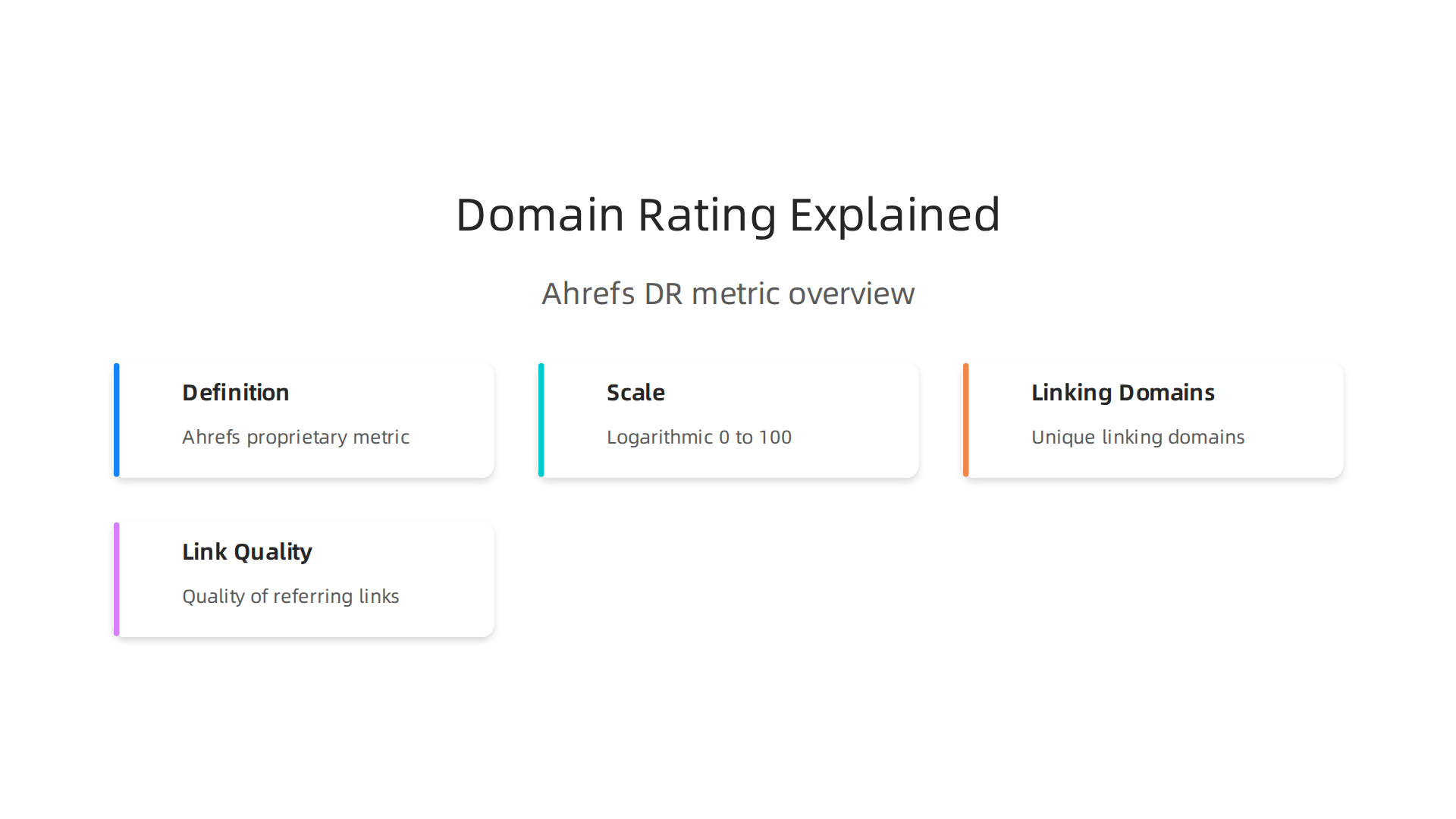
In simple terms, it shows how many quality websites link to yours compared to others in the same database. A site with a DR of 70 has a much stronger backlink profile than one with a DR of 20, all else being equal.
Why does this matter for your business in 2026? A recent SEO ranking factor study analyzing over 100,000 pages found that domain rating had a 0.68 correlation with higher search positions. That puts it right behind backlinks themselves as one of the strongest signals Google uses to decide where your pages land in search results. While content quality and user experience matter more than ever, your domain rating remains a powerful proxy for authority that search engines trust.
The challenge is that domain rating does not improve overnight. Unlike flipping a switch, building a strong DR takes consistent effort. Many people turn to shortcuts like buying cheap links or using a domain appraisal godaddy tool to estimate value, only to realize that real authority comes from earning links naturally. That is where this guide comes in.
Over the next few sections, I will walk you through what domain rating actually measures, how it affects your domain name value, and the practical steps you can take to raise your score without resorting to risky tactics. Whether you are just starting out or looking to strengthen an existing site, understanding domain rating will help you make smarter decisions about your SEO strategy.
Let’s start with the basics so you can finally stop guessing and start building real authority online. And if you need a reliable foundation to host all that growing content, check out Prism Webhost for hosting infrastructure built to support SEO success.
What is Domain Rating?
Let’s get straight to the point. Domain rating is a number created by the SEO tool Ahrefs.

It measures how strong your website’s backlink profile is compared to other sites in their database. The scale runs from 0 to 100. The higher your score, the stronger your backlink profile.
According to Ahrefs’ official help center, Domain Rating (DR) "shows the strength of a website’s backlink profile compared to the others in our database on a 100-point scale." This means it is a relative metric. A site with a DR of 70 has a much stronger link profile than a site with a DR of 20.
Here is what you need to understand. Domain rating is not a Google ranking factor. Google does not use it. But it does correlate strongly with how well your pages perform in search results. Why? Because sites that earn links from many quality domains tend to be seen as authoritative by search engines too.
How does Ahrefs calculate domain rating?
The math behind domain rating is not simple. But the idea is. Ahrefs looks at two main things:
- The number of unique domains linking to your site
- The quality of those linking domains
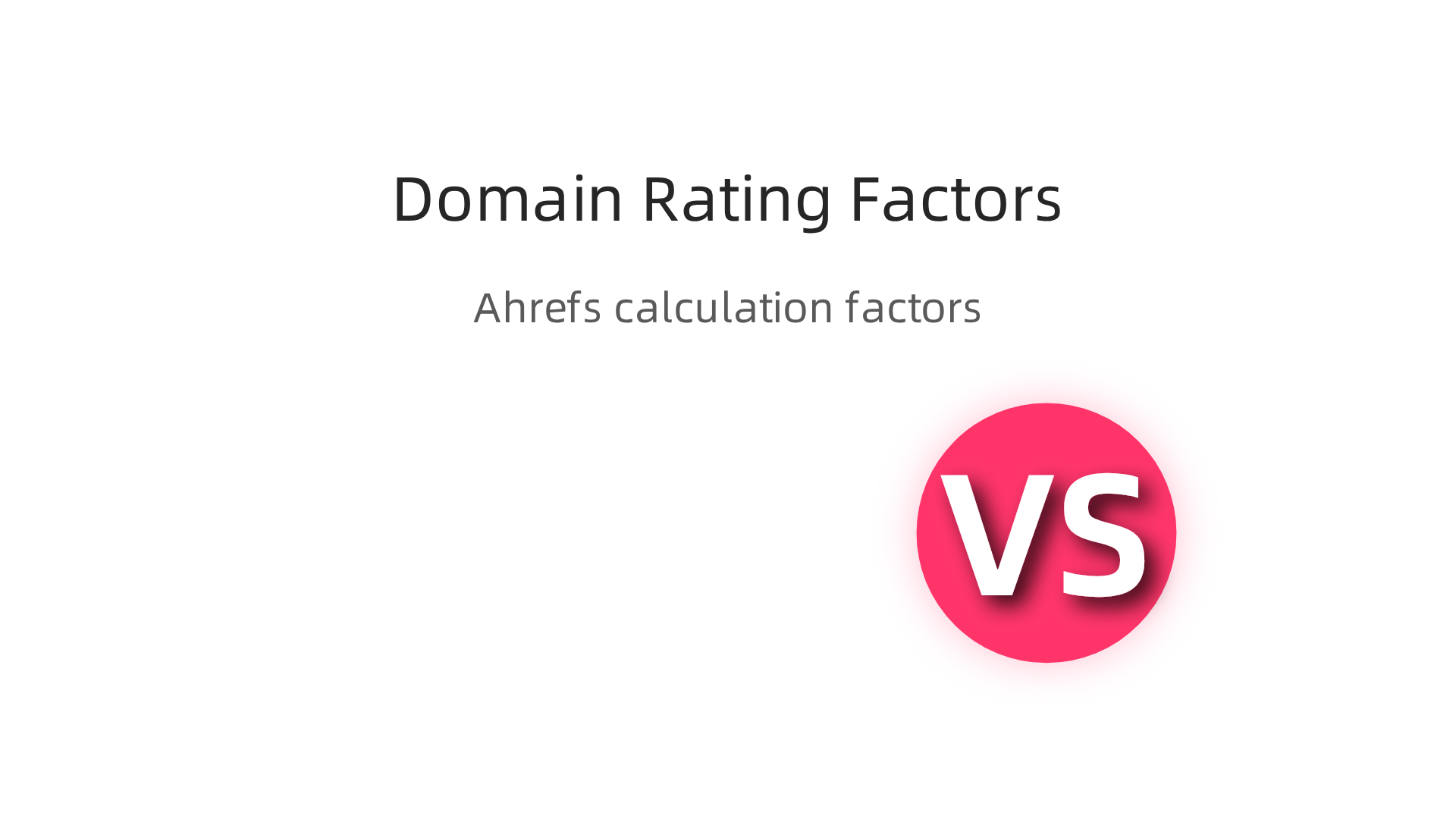
A link from a high-DR site passes more authority than a link from a low-DR site. This is why getting one link from a trusted news site can boost your score more than ten links from random blogs.
The system uses a logarithmic scale. That means moving from DR 10 to DR 20 is easier than moving from DR 70 to DR 80. The higher you climb, the harder it gets.
Another tool that measures something similar is Moz’s Domain Authority.

Many people confuse the two. But domain rating focuses purely on your backlink profile, while Domain Authority looks at a broader set of signals. If you want to learn more about how these metrics compare, check out our detailed breakdown of domain rating vs domain authority.
What does domain rating mean for your website?
A high domain rating tells you one thing clearly. Your site has earned trust from other websites. That trust matters because search engines pay attention to it.
But here is the trap. Some people chase a high DR without focusing on real value. They buy cheap links or use old, spammy domains hoping to jump the score. That approach rarely works in 2026. Search engines are smarter now.
Instead of looking for shortcuts, focus on earning links naturally. Create content that people actually want to reference. Build relationships in your industry. And make sure your website runs fast and stays secure, because a slow or broken site can hurt even a strong link profile.
If you want to check your own domain rating, Ahrefs offers a free website authority checker that lets you see your DR along with your total backlinks and referring domains.
What domain rating is not
Let me clear up a few common myths.
Domain rating does not measure your traffic. It does not measure your content quality. It does not measure your brand reputation. It only measures one thing. The strength of your backlink profile.
A brand new website can have a DR of 0 and still rank well if it targets low competition keywords with excellent content. And an old site with a high DR can lose rankings if its content goes stale or its user experience falls apart.
So do not obsess over the number alone. Use it as one signal among many.
The bottom line on domain rating
Domain rating is a useful metric when you understand what it actually represents. It is a snapshot of how many quality sites link to you. It correlates with search performance but does not guarantee it.
The best way to improve your DR over time is to build a website worth linking to. That means useful content, a good user experience, and reliable hosting. If your site loads slowly or goes down often, even great content will struggle to earn links.
That is where having solid hosting infrastructure matters. Prism Webhost provides the performance and uptime your site needs to build authority and earn trust, so your domain rating reflects real value, not cheap tricks.
In the next section, we will look at how your domain rating affects your domain name value and what that means if you ever want to sell your site.
Why Domain Rating Matters for Your SEO
So you now understand what domain rating is. A score from Ahrefs that measures your backlink strength. But why should you actually care about it in 2026?
Let’s get real for a second. Domain rating is not a direct Google ranking factor. Google has said this many times. But here is what the data says anyway. A large scale study from 2026 analyzed over 100,000 pages and found that domain rating has a very strong correlation (0.68) with higher search positions. That is a big deal. It means sites with a high DR tend to rank better in Google.
Better organic visibility
Why does this happen? Search engines trust sites that other sites trust. A strong backlink profile is a powerful signal of authority. When many quality domains link to you, Google sees your content as valuable. And valuable content deserves to be seen.
Think about the math. The #1 result in Google has on average 3.8 times more backlinks than positions 2 through 10. Having a high DR means you are competing at that level. It directly influences your organic visibility.
The authority snowball effect
Here is the thing. A high domain rating makes it easier to get even more backlinks. Why? Because people check your DR before linking to you.

If your site has a DR of 60, a blogger or journalist is much more likely to trust you as a source compared to a site with a DR of 10.
DR serves as a proxy for your site’s authority. It opens doors for partnerships, guest posts, and media mentions. It creates a snowball effect where your authority keeps building on itself. You start earning links more easily, which pushes your DR even higher.
Stronger brand perception and click-through rates
A high DR often goes hand in hand with a strong brand. When people see your site in search results and recognize your name, they trust it. And that trust leads to more clicks. A higher click-through rate tells Google your result is relevant, which can push you even higher in the rankings. It is a positive feedback loop that pays off in real traffic.
Why it matters for your domain name value
This authority does not just help with SEO. It also directly impacts your domain name value. If you ever want to sell your site or get a domain appraisal like a GoDaddy domain appraisal, a high DR is one of the first things buyers check. Strong domain listings with high authority scores sell for a premium. Your domain rating becomes a financial asset.
The foundation matters most
But here is the reality check. You cannot build a high DR on a weak foundation. Search engines and users hate slow, broken, or insecure sites. If your site loads slowly or goes down often, no one will link to you. Your DR will stagnate no matter how great your content is.
You need a hosting partner that keeps your site fast, secure, and always online. If you are not sure what to look for, check out our clear definition of web hosting services for business owners. And when you are ready for a hosting experience built for real performance, explore what Prism Webhost offers. The right infrastructure gives your site the speed and uptime it needs to earn trust and build authority over time.
Domain rating matters because it captures the essence of your site’s online reputation. It influences visibility, attracts new links, and boosts brand perception. Focus on building a site worth linking to. Your DR will follow naturally.
Domain Rating vs. Other Authority Metrics
You have a solid handle on why domain rating matters. But here is where it gets tricky. You open your SEO tools and see different numbers everywhere. Ahrefs says your DR is 42. Moz says your Domain Authority is 38. Majestic shows a completely different score. Which one do you trust?
The truth is, these metrics measure similar things in different ways. And mixing them up can waste your time.
Domain Rating (DR) versus Domain Authority (DA)
These two are the most popular but they are not the same. Let’s break it down simply.
Domain Rating comes from Ahrefs. It looks at the number of unique domains linking to your site. The scale goes from 0 to 100 and it uses a logarithmic scale. That means going from DR 40 to 50 is much harder than going from DR 10 to 20. DR focuses purely on your backlink profile strength.
Domain Authority comes from Moz. It also uses a 0 to 100 scale. But DA considers more factors beyond just backlinks. It looks at link quality, spam signals, and other ranking factors. Moz updates DA less often than Ahrefs updates DR.
According to research comparing both metrics, DR is better for understanding your current backlink strength while DA works better for predicting future ranking potential. Knowing this difference changes how you use each tool. If you are doing link building outreach, DR gives you a cleaner picture. If you are forecasting traffic growth, DA might serve you better.
Some SEO experts argue that Trust Flow from Majestic is actually more accurate than DA because it focuses on link quality over quantity. And the Majestic index updates more frequently.
Trust Flow and Citation Flow
Majestic uses two metrics together. Trust Flow measures the quality of links pointing to your site.
It checks if those links come from trusted sources. Citation Flow measures the quantity of links regardless of quality.
Think of it this way. A site with high Trust Flow and low Citation Flow has a few really good links. A site with low Trust Flow and high Citation Flow has many links but many of them are low quality. You want both scores to be balanced and growing together.
Why the difference matters for your strategy
Here is the practical takeaway. If you only chase DR without looking at other metrics, you might focus too much on quantity over quality. If you only watch DA, you might miss real backlink opportunities because DA updates slowly.
The smart move is to use DR for link building campaigns, DA for competitive analysis, and Majestic scores for link quality checks. Each metric tells one part of the story.
Your domain name value also benefits when you understand these metrics. A buyer looking at domain listings will check multiple authority scores. A high DR alone is good. But a site with strong DR, solid DA, and balanced Trust Flow looks much more trustworthy.
The foundation still wins
None of these metrics matter if your site cannot perform. Slow load times and frequent downtime kill your ability to earn quality backlinks. That is true no matter which tool you use to measure authority.
You need a hosting partner that keeps your site fast and reliable. Check out how to find reputable domain name registrars that protect your business. And for a hosting solution built for real performance and security, Prism Webhost gives your site the foundation it needs to build authority across every metric.
Understanding the difference between domain rating and other authority metrics helps you spend your SEO budget wisely. Use the right tool for the right job. Track all the signals. And focus on building a site that earns real trust from real people.
How to Improve Your Domain Rating
You know what domain rating is and how it compares to other metrics. Now it is time to actually raise that number. The good news is you do not need a huge budget or a team of SEO experts. You just need a clear plan and consistent effort.
Here are three proven ways to boost your domain rating in 2026.
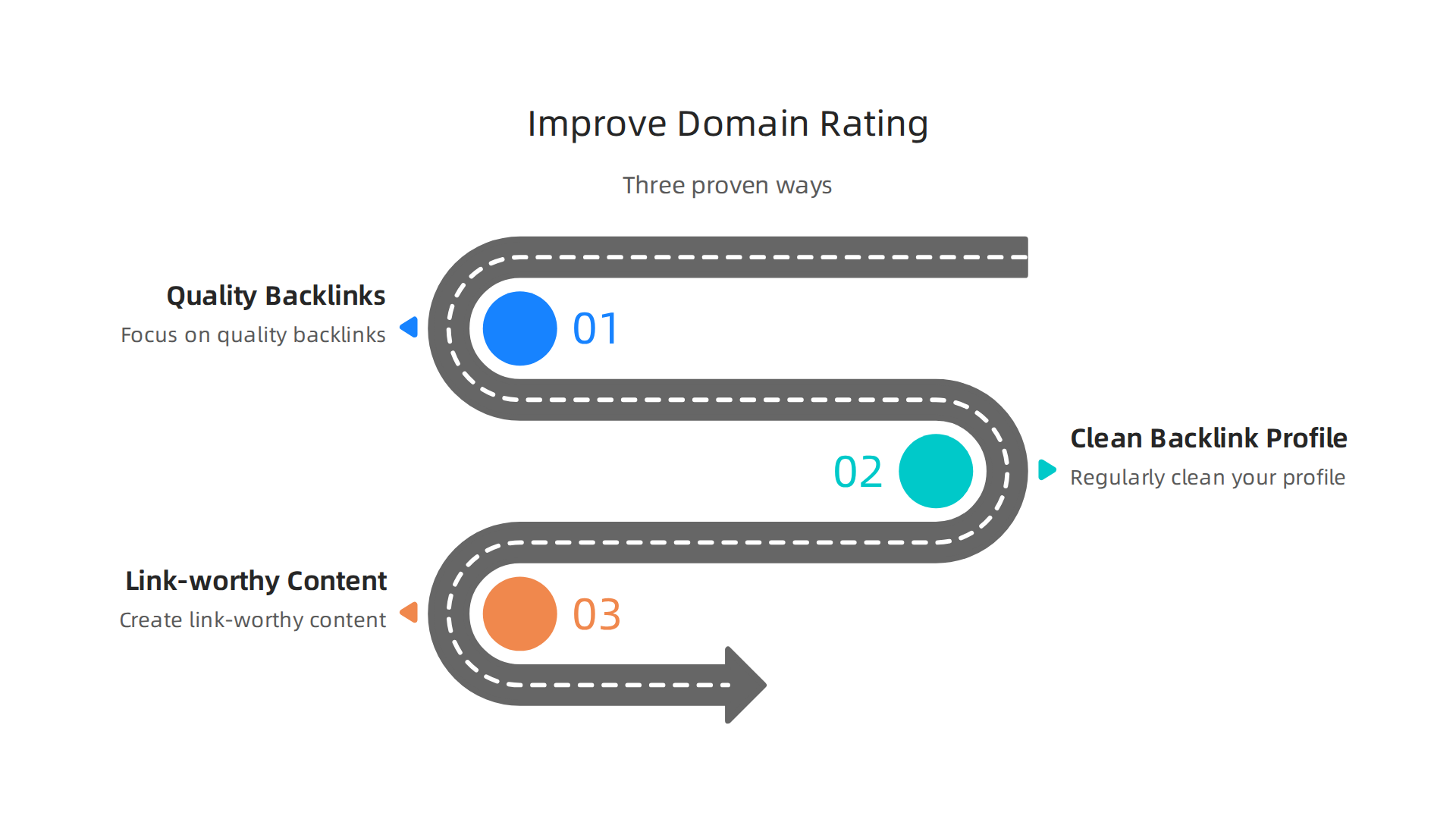
Focus on quality backlinks, not just many backlinks
One link from a trusted site in your niche is worth more than ten links from random directories. Search engines look at relevance and authority. If a well-known blog in your industry links to you, that signal is strong.
A simple way to start is guest posting on sites your audience already reads. When you write useful content for another site, you earn a natural link back. According to a 2026 guide on safe link building, guest posting is one of the most effective strategies for earning high authority backlinks without penalties. Just make sure the site you contribute to is real and has its own solid domain rating.
You can also build links by getting listed on relevant resource pages or collaborating with other businesses. The key is to always check the linking site first. A link from a spammy site hurts more than it helps.
Clean up your backlink profile regularly
Here is something many people skip. You need to audit your existing backlinks every few months. Some of those links might be from low quality or toxic sites. Those drag your domain rating down and can even trigger a search penalty.
Use tools like Ahrefs or Majestic to find bad links. Then add them to a disavow file and submit it to Google. This tells Google to ignore those links when judging your site. Make sure you also remove links from link schemes or paid directories that violate guidelines.
A clean backlink profile helps your domain rating climb steadily. It also protects your site from sudden drops.
Create content that people want to link to
You cannot rely only on outreach forever. The best long term strategy is to create assets that naturally attract links. Think original research, step by step guides, infographics, or industry surveys.
When you publish something unique, other websites will reference it without you asking. One high quality guide can bring in dozens of backlinks over time. Focus on solving real problems for your audience. Answer questions they search for. Make the content easy to understand and visually appealing.
A 2026 article on increasing domain authority highlights that creating linkable content is the foundation of any successful link building campaign. You can also repurpose your best content into different formats to reach more publishers.
The foundation still matters
All your link building efforts mean little if your site loads slowly or goes down often. Search engines consider user experience when ranking sites. A fast, secure hosting setup gives your site the best chance to earn and keep backlinks.
If you are serious about improving your domain rating, start with a reliable hosting partner. Prism Webhost offers the performance and security your site needs to build lasting authority. Check out their hosting plans to see how a solid technical foundation supports your SEO goals.
Keep working on those three strategies. Your domain rating will not jump overnight. But with patience and smart effort, it will go up. And that means more traffic, more trust, and more growth for your business.
Common Myths About Domain Rating
You know what domain rating is and how to improve it. But chasing a high number without understanding the truth behind it can waste your time. Many people fall for common myths about this metric. Here is the reality behind three big misconceptions in 2026.
Myth 1: Domain Rating is a direct Google ranking factor
Here is the thing. Domain Rating (DR) is not a Google score. It is a tool created by Ahrefs to measure the strength of your backlink profile. As the Ahrefs glossary clearly states, DR is simply "a proprietary SEO metric" on a scale from 0 to 100. Google does not use it.
Google has its own ranking system. It looks at your content quality, page speed, and how well you answer user questions. A high DR score is useful for comparing your backlink profile to competitors, but it is not a ranking signal.
Your hosting setup, for instance, directly impacts page speed and user experience. Choosing a reliable provider is a key part of your overall strategy. You can explore a data-backed guide on web hosting services to find a setup that matches your growth goals.
Myth 2: A higher DR always means higher rankings
Not at all. A site with a lower DR can easily outrank a site with a higher DR for the right keyword. This happens all the time. Why? Because Google looks for the best answer to a user question. If your content is more helpful and more relevant, you win.
Some people also confuse DR with tools like Godaddy domain appraisal. Domain appraisal guesses the market value of your domain name. While a high domain name value is nice, it does not automatically mean higher search rankings.
According to a 2026 analysis of common SEO myths, many people still believe that authority metrics like DR are more important than actual content relevance. That belief can lead you to ignore your audience while chasing a number.
Myth 3: You can quickly manipulate your DR
Some services promise to boost your DR overnight by selling links or using link farms. Do not fall for this. Google is extremely good at detecting link schemes. If you buy spammy links, your site could get penalized and lose visibility in search results.
Real growth takes time. Quality link building requires patience and consistent effort. You earn trust by creating content that people naturally want to share and reference.
While you work on that, make sure your hosting foundation is solid. A fast and secure server helps your site perform well when those links start coming in. Check out Prism Webhost for a hosting partner that supports your long term SEO growth.
Focus on building a genuinely useful site. DR is a helpful tool, but it is not the goal. The right metrics and traffic will follow naturally.
How to Check and Monitor Your Domain Rating
Okay, you know the myths. You know chasing a quick DR boost is a bad idea. Now let us get practical. How do you actually check and monitor your Domain Rating the right way in 2026?
Use the Right Tools (Most Have a Free Option)
The main tool for tracking domain rating is Ahrefs. Their free Webmaster Tools gives you your DR score after you verify your site. It is a simple starting point that tells you where you stand.
But Ahrefs is not your only option. Moz has a similar metric called Domain Authority. Semrush calls theirs Authority Score. The numbers will differ between tools, so pick one and stick with it. Jumping between different scores will only confuse you.
If you want a visual walkthrough of how to check your DR and understand the Ahrefs dashboard, you can watch this guide on how to increase your domain rating. It helps to see the setup in action.
Watch the Trend Over Months, Not Days
Here is a big mistake people make. They check their DR every single morning. If it drops by one point, they panic. Do not do this.
DR updates periodically. It is not a live score. Daily fluctuations mean nothing. What matters is the direction you are moving over 3 to 6 months.
Building real backlinks takes time. Smart link building strategies focus on earning links through useful content and real relationships. You cannot rush this process without risking a penalty.
This is also where your hosting infrastructure plays a quiet role. A fast and secure server makes sure visitors stick around when those links finally start sending traffic your way. You need a reliable foundation for long term growth. Check out Prism Webhost for a hosting setup built for steady performance.
Use DR as Part of a Bigger Picture
Never look at Domain Rating alone. It is just one signal. You need to pair it with other numbers to see the full story.
| Metric | Why It Matters |
|---|---|
| Referring domains | How many unique sites link to you. This is more important than total backlinks. |
| Organic traffic | Are people actually finding you through search? |
| Keyword rankings | Are you moving up for the terms your audience searches? |
| Your domain name value, what you might pay for a domain appraisal on GoDaddy, and how you handle domain listings all contribute to your online presence. But none of that replaces the need for content that earns links and traffic. |
A site with a DR of 30 and 5,000 monthly visitors is often healthier than a site with a DR of 50 and 100 visitors. Look at the whole picture, not just one number. If you are building a serious site, choosing the right infrastructure from the start makes monitoring these metrics much easier. A data-backed guide to web hosting services can help you pick a solid partner for your journey.
Focus on creating real value for your audience. Track your progress with patience. Let the numbers guide you, not scare you.
Summary
This article explains Domain Rating (DR) — Ahrefs’ 0–100 measure of backlink profile strength — and why it matters for SEO and domain value in 2026. It clarifies what DR measures (referring domains and link quality), how Ahrefs calculates it on a logarithmic scale, and why DR correlates with higher search positions even though Google does not use DR directly. The guide compares DR with other authority metrics like Moz’s Domain Authority and Majestic’s Trust Flow, then gives practical steps to improve your score: earn quality backlinks, audit and disavow toxic links, and create linkable content. It stresses patience, monitoring trends over months, and the importance of a fast, reliable hosting foundation to support link-driven growth. The article also debunks common myths (DR as a direct ranking factor, quick fixes, and automatic ranking guarantees) and shows how to check and use DR as part of a broader SEO strategy.
