




Domain Listings Boost Your SEO and Drive More Customers
Article
You have a website. But can people actually find it? That is where domain listings come in. Think of them as your digital storefront signs. They tell search engines and customers where you live online. Yet according to recent data, many business owners still overlook this simple but powerful tool. In fact, a 2026 study found that 62% of small business owners say their website is crucial for attracting new customers (Wix Blog). That means your domain listings matter more than ever.
Here is the thing. Properly managing your domain listings does more than just boost discoverability. It also solves two big pain points that keep entrepreneurs up at night: technical complexity and security fears. You do not need to be a tech wizard to get this right. And once you understand how online directory services and domain companies work, the fear around hackers or lost traffic starts to fade.

This guide gives you a complete overview of domain listings, directories, and best practices to maximize their value. We will cover everything from choosing the right domain name ideas to understanding domain rating and how it affects your SEO. If you are still fuzzy on the basics, start with our breakdown of the website domain definition every small business owner needs.
And remember, reliable hosting keeps your site fast and secure while you focus on growing your business. Pair your domain listings with a solid foundation from Prism Webhost to make sure everything runs smoothly. Let us dive in.
What Are Domain Listings and Why Do They Matter?
Let us clear up a common mix-up. Domain listings are not the same as domain registration. Think of it like owning a house. When you register a domain name, you buy the deed to a piece of online real estate. You own it. Domain listings, on the other hand, are all the places where your domain name appears across the web. They are the signs that point people to your front door.
More specifically, domain listings are references to your domain name inside online directory services, business listings, and registries. Platforms like Google Business Profile, Yelp, Bing Places, and even industry specific directories all host these listings. Every time your business name, address, and website appear somewhere, that is a domain listing.
Why does this matter for small businesses? A lot. Your domain listings help build authority, drive traffic, and boost your local SEO. In 2026, directories are still a big deal. They are evolving with AI powered features that connect customers to businesses faster (Jasmine Directory). That means the more places your domain name shows up, the more chances you have to be found.
Here is the distinction you need to remember:
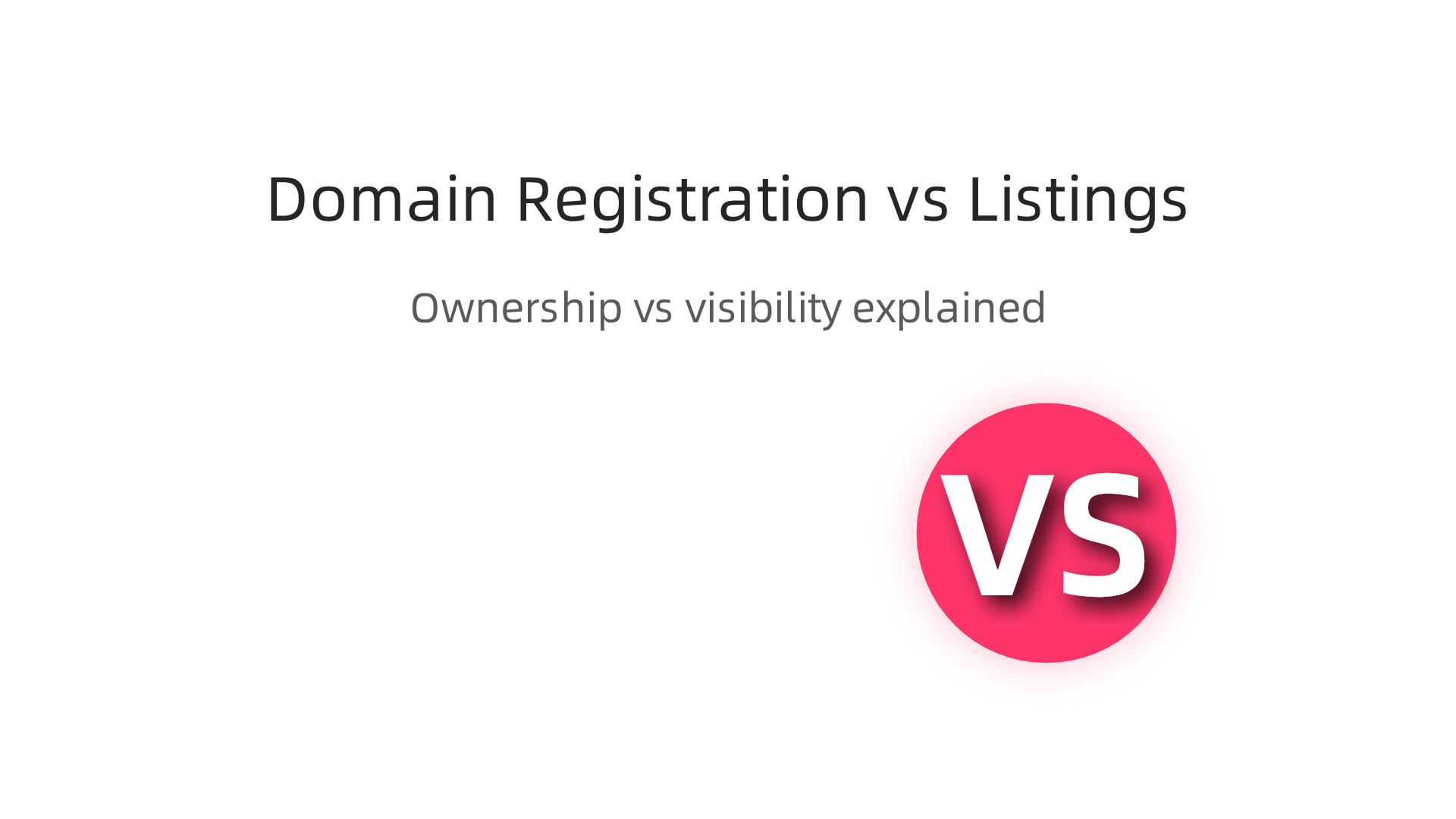
- Domain registration = ownership. You pay a domain company to hold the rights to your domain name ideas.
- Domain listings = visibility. Your name appears in online directories and other places where customers search.
Registration alone does not guarantee traffic. If nobody knows where you are, nobody visits. Listings bridge that gap. They tell search engines your business is real, consistent, and worth ranking. This directly impacts your domain rating, which is a measure of how authoritative your site looks to search engines. A higher domain rating means better search positions.
For small businesses, consistent listings across directories also supercharge local SEO. When your name, address, and phone number match everywhere, Google trusts you more. That trust leads to higher local search rankings.
The bottom line? You need both registration and listings to win online. Think of registration as the foundation and listings as the street signs. One without the other leaves you lost.
To make sure your domain listings point to a fast and secure website, pair them with reliable hosting from Prism Webhost. A solid host keeps your site loading quickly, which makes every listing more effective.
Want to dive deeper into how your domain listings affect your search power? Check out our guide on domain rating and boosting your SEO authority.
How Domain Directories Impact SEO and Brand Authority
Now that you know what domain listings are, let us get into how they actually help your business rank higher and look more trustworthy. Domain directories are the websites that host your domain listings. And these directories can make a big difference in your search engine visibility.
Here is how it works. Every time your business appears on an online directory service, search engines count that as a citation.
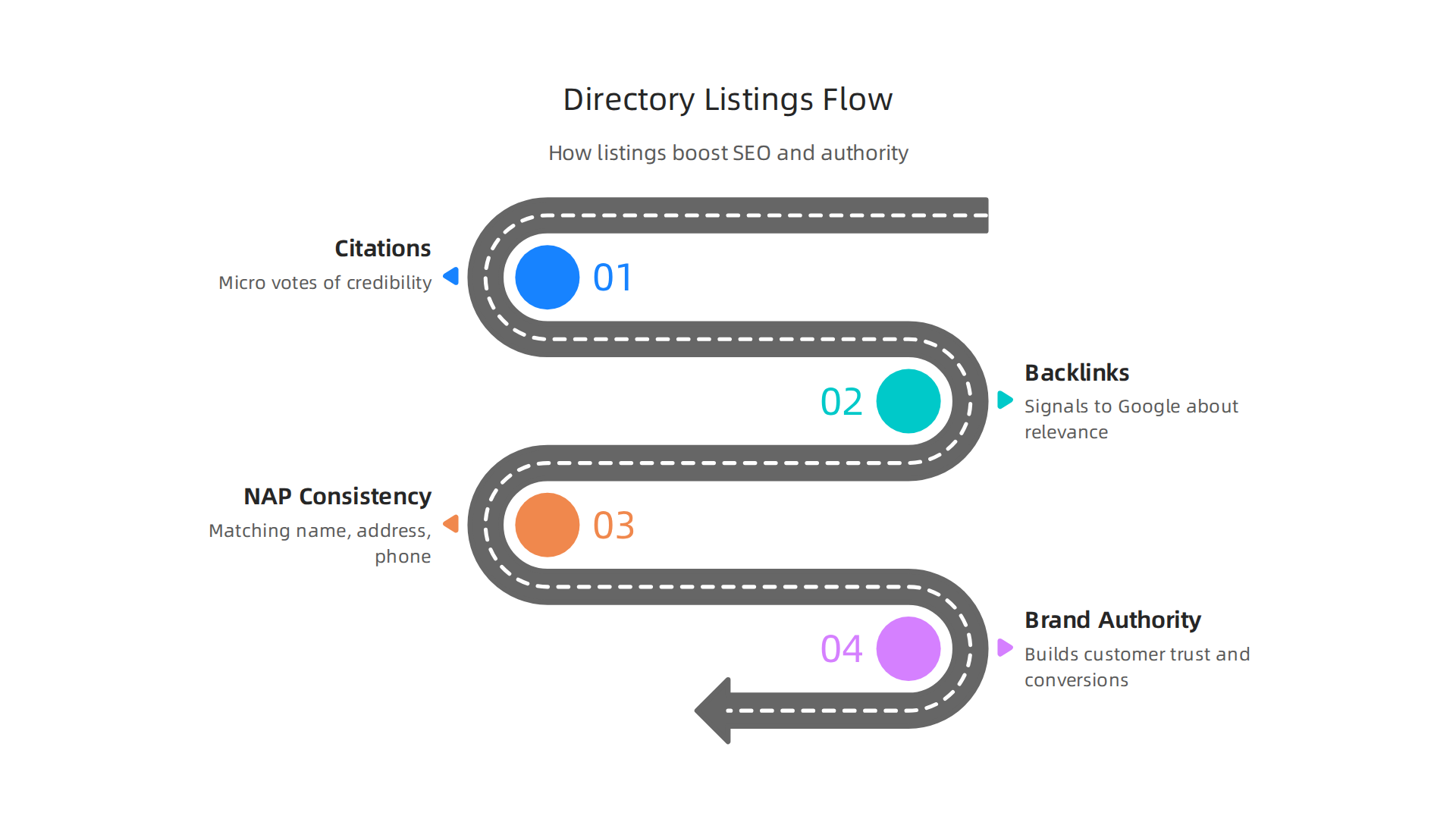
Citations are like little votes that say your business is real and reliable. The more quality citations you have, the better your local SEO. According to the 2026 Guide to Effective Local Business Directory Citations, structured citations are the bread and butter of local SEO. When your business name, address, and phone number show up the same way across directories, your rankings get a direct boost.
But not all citations are equal. Listings on high-authority directories also give you valuable backlinks. Backlinks from trusted sites send a strong signal to Google that your website matters. In fact, backlinks and brand signals are among the most important local SEO ranking factors in 2026 as highlighted by Ranko Media. Each good backlink helps raise your domain rating, which is the score search engines use to measure your authority.
Consistency is the secret ingredient. Search engines check if your Name, Address, and Phone number match across every single directory. If everything lines up, Google trusts you more. If there are mismatches, your rankings drop. A 2026 study from Augmun Solutions confirms that citations still strengthen local search presence, but only when they are consistent. One wrong letter in your street name can confuse both customers and search engines.
Consistent domain listings also build brand authority. When shoppers see your business on well known directories like Google Business Profile, Yelp, or industry specific sites, they feel safer doing business with you. It shows you are established. That trust turns into clicks and sales.

Start by claiming your listings on the top directories. Make sure your domain name ideas match your business name exactly. And keep an eye on your NAP data across all platforms. For more on how your domain rating affects your search power, check out our guide on domain rating and boosting your SEO authority.
Finally, remember that every directory citation drives traffic back to your website. If your site loads slowly or goes down, that traffic disappears. Pair your strong listings with fast, reliable hosting so every visitor has a smooth experience. Prism Webhost gives your business the speed and uptime needed to turn directory visitors into loyal customers.
Security Considerations for Domain Listings
Your domain listings helped your SEO. Your domain rating is growing. But here is what many people forget. Every online directory service that lists your business is also a door for attackers.

The Threats Are Real
Domain hijacking is a serious risk. A thief steals your domain name and points it somewhere else. Your traffic disappears. Your hard work gets wiped out. SecurityScorecard says preventing domain hijacking requires layered controls at the registrar, DNS, and email level. And ZeroFox provides six steps every business must take to protect their domain name from hijacking and spoofing.
DDoS attacks are another big threat in 2026. A flood of fake traffic crashes your site right when customers are trying to find you. This can happen to any business. That is why Indusface recommends using a managed DNS provider with DDoS protection built in. Radware also warns that "DDoS as a Service" has made launching these attacks easier than ever before.
How to Protect Your Domain Name Ideas
The good news is you can lock down your domain listings with a few simple steps.
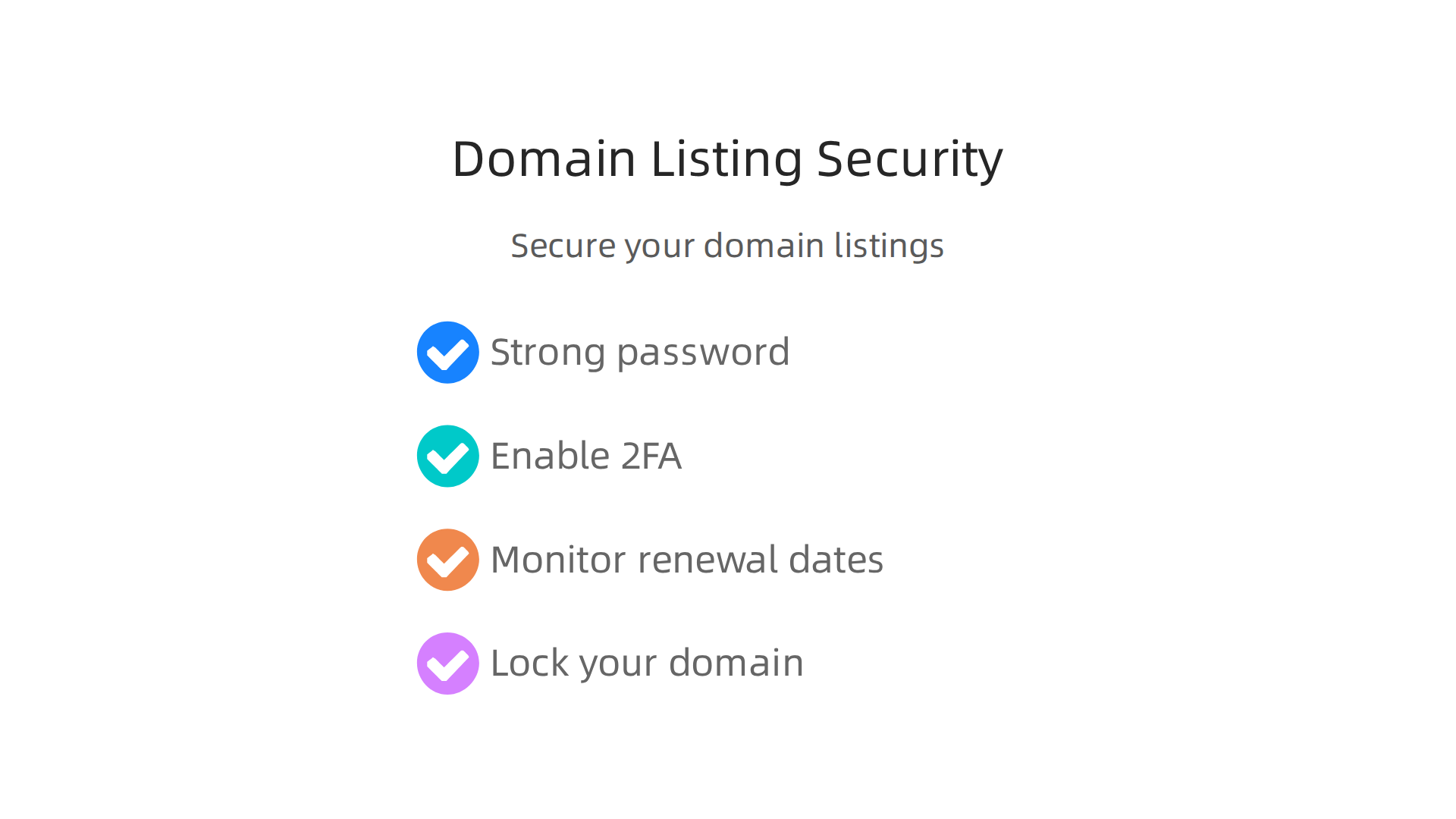
- Use a strong, unique password for your domain registrar account.
- Enable two-factor authentication. It adds a second layer of protection.
- Monitor your renewal dates. Never let your domain expire.
- Lock your domain at the registrar level to stop unauthorized transfers.
Want to go deeper? Read our full guide on how to find reputable domain name registrars that protect your business.
Your Hosting Provider Is Your Shield
Your web host plays a huge role in keeping your domain listings safe. A good host blocks attacks before they reach your site. A bad host leaves you exposed.
Prism Webhost provides enterprise-grade security features like 17Tbps+ DDoS protection, free SSL certificates, and automated backups. Their isolated hosting environments keep your data safe. And their 99.99% uptime SLA means your site stays online even during an attack.
When your domain listings drive traffic to your site, you need that traffic to be safe. Pairing solid domain security with a reliable hosting partner gives you peace of mind and protects everything you have built.
Technical Best Practices for Managing Domain Listings
Managing multiple domain listings across online directory services can feel like a fulltime job. You submit your business to one directory. Then another. Then ten more. And every time you change your address or phone number, you have to update them all. It is exhausting and mistakes happen.
Automated tools simplify this process. They let you submit and update your domain listings across dozens of directories with a single click. This saves time and keeps your information consistent. Consistent listings help your domain rating because search engines trust accurate data.
Get Your Technical Setup Right
Here is something many business owners miss. Every directory entry points back to your website. So your website must be technically sound.
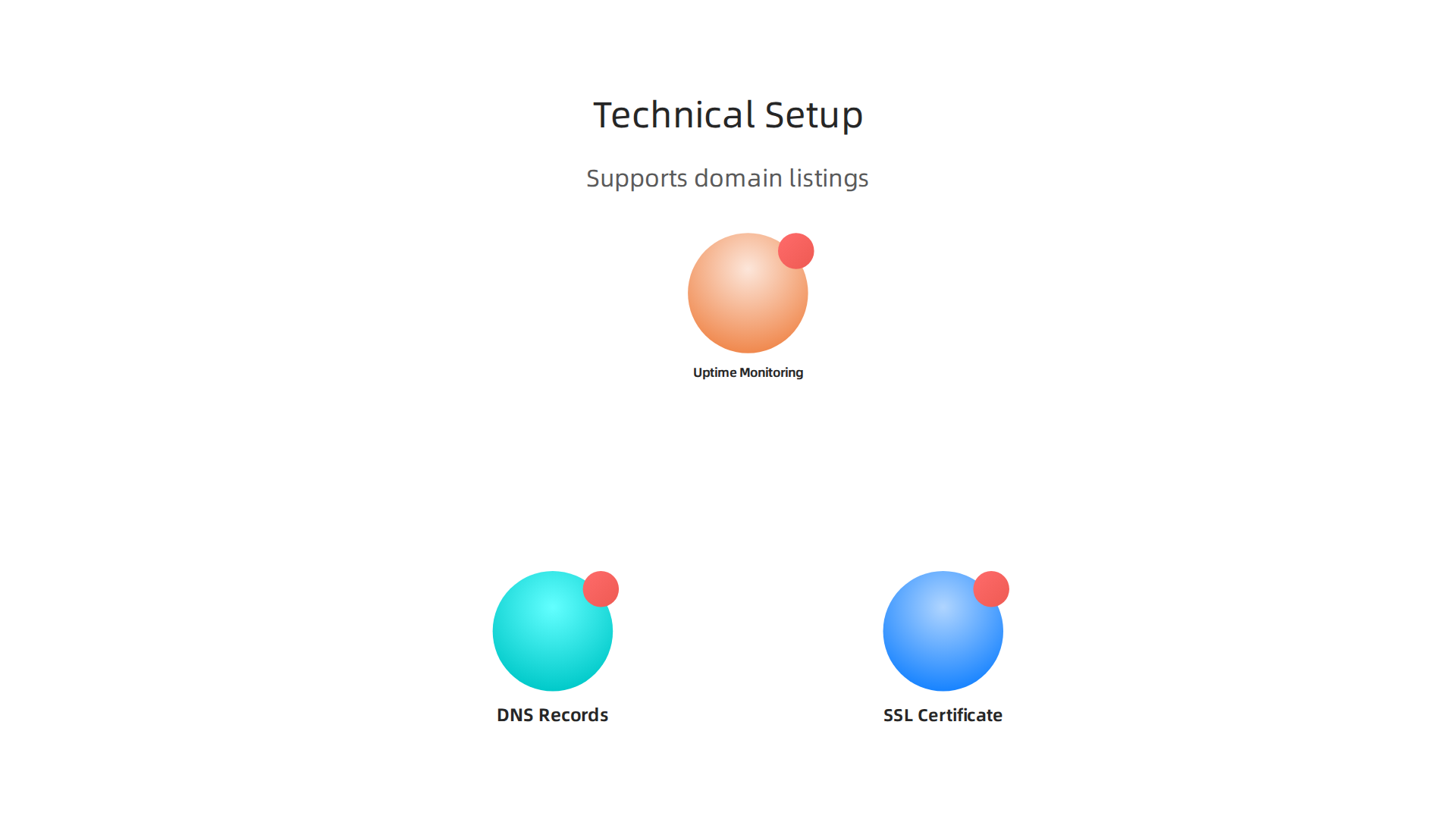
First, install an SSL certificate. This enables HTTPS and keeps visitor data secure. Most top domain services in 2026 include free SSL with their plans. It is a must have.
Second, set up correct DNS records. Your DNS tells the internet where to find your site. If your records are wrong, your domain listings send people to a dead end. IT infrastructure management best practices for 2026 stress the importance of regularly auditing your DNS configuration.
Third, monitor your uptime. If your site goes down, your domain listings still point to it. That means visitors see an error. That hurts your reputation. Using a website monitoring tool helps you catch downtime fast.
Scale Your Listings as You Grow
As your business expands, you will want to add more domain listings. That is great for SEO. But you need a structured approach.
Start with the biggest directories first. Then add niche directories for your industry. Keep a master spreadsheet of all your listings with login details and renewal dates. Use automation tools to push updates to every directory at once.
Your hosting infrastructure must support this growth. Reliable hosting keeps your site online 24/7 even when traffic spikes. Poor hosting causes slowdowns that hurt your domain rating.
Look for a Host That Grows With You
The best domain services for small businesses in 2026 combine solid security with scalable infrastructure. That is where a dependable hosting provider makes the difference.
If you want a hosting partner built for reliability, check out Prism Webhost. They provide enterprise grade DDoS protection, free SSL, and 99.99% uptime. Their isolated environments keep your listings safe while automated backups protect your data. This makes scaling your domain listings much easier.
By pairing automation with solid hosting, you turn your domain listings into a powerful growth engine for your business.
Avoiding Downtime and Performance Issues
Think about this. You spend time building your domain listings on online directory services. You get your business name, address, and phone number exactly right. Then your website goes down. Every single listing still points to a dead page. That is a fast way to hurt your reputation.
Here is the thing. A slow or broken website hurts your domain rating with search engines. According to website maintenance research from 2026, even short periods of downtime can cost businesses money and trust. So avoiding downtime is not optional. It is essential for your domain listings to work.
Use a CDN and Load Balancing
A Content Delivery Network, or CDN, helps your site load faster for visitors around the world. It stores copies of your site on servers in different locations. When someone clicks your listing, they get the closest copy. That means faster loading.
Load balancing spreads traffic across multiple servers. If one server gets too much traffic, the load balancer sends visitors to another server. This keeps your site online even during traffic spikes. For extra protection, apply DDoS protection measures to your DNS infrastructure. This stops attacks before they take your site down.
Set Up Monitoring and Backup Plans
You cannot fix downtime if you do not know it is happening. That is why monitoring tools are so important.

There are many website monitoring tools in 2026 that alert you the second your site goes down. Some even check from different locations around the world.
Monitoring tells you there is a problem. Backup plans tell you how to fix it. You need automated backups that run regularly. If something fails, you can restore your site quickly. This prevents data loss and keeps your listings pointing to a live site.
Choose Hosting Built for Uptime
The best way to avoid downtime is to start with a hosting provider that prioritizes reliability. You need a host that offers DDoS protection, fast servers, and automated backups. That way you do not have to worry about performance issues.
If you want a hosting partner that keeps your site online and fast, check out Prism Webhost. They provide enterprise grade security, LiteSpeed servers, and a 99.99% uptime guarantee. Their isolated hosting environments protect your site from problems caused by other users. Plus they offer free SSL and automated backups. This makes managing your domain listings much less stressful.
For more guidance on choosing a reliable provider, read our review of web hosting services for 2026. It breaks down what to look for in a host that supports your growth.
When your hosting is solid, your domain listings stay reliable. And reliable listings build trust with both visitors and search engines.
How to Evaluate Domain Listing Services and Directories
Not all online directory services are built the same. Some will help your domain listings climb in local search results. Others will waste your time or even hurt your visibility. So how do you tell the difference?
You need a clear checklist. Here are the key things to look at.
Feature set. A good directory does more than just list your name and address. It should let you add categories, photos, hours of operation, and links to your website. Some directories even offer review management tools. If a service gives you limited options, you might want to skip it.
Ease of use. You should be able to create and update your domain listing without a manual. If the dashboard feels confusing, that is a red flag. The best services make it easy for anyone to add or edit their business information.
Pricing and value. Free directories can still help your domain rating, especially well-known ones like Google Business Profile. But many free services show basic listings with no control over your information. Paid directories often give you more features, better visibility, and faster support. According to the latest research on citations, paid directories tend to offer higher authority and more consistent traffic. The tradeoff is worth it if the directory is relevant to your industry.
Uptime and reliability. A directory that goes down often is useless. Your domain name ideas and business details need to stay accessible to potential customers. Check if the service has a track record of uptime. If they cannot keep their own site running, how can you trust them with your listings?
Security. Some directories are targets for hackers. Look for services that use SSL encryption and verify business owners before allowing changes to listings. This protects your brand from false edits or hijacking.
Customer support. When something goes wrong, you need help fast. Look for a directory that offers live chat, email, or phone support. Avoid services that only have a contact form with no response guarantee.
Automated syncing and reputation management. The best directory services in 2026 sync your information across multiple platforms automatically. This saves you time and prevents errors. Some even offer built-in reputation management tools that alert you to new reviews and help you respond quickly.
For a deeper look at one key metric these services affect, check out our practical guide to boosting your domain rating. It explains how directory authority connects to your overall search performance.
When you find a solid directory, pair it with reliable hosting. Your website needs to be as dependable as your listings. If you want a hosting partner that delivers speed and security, consider Prism Webhost. Their 99.99% uptime guarantee and automated backups make sure your domain listings always point to a live, fast website.
Take your time choosing directories. A smart pick now saves you headaches later.
Future Trends in Domain Listings (2026 and Beyond)
The way we manage domain listings in 2026 looks very different than it did just a few years ago. And the changes are not slowing down. Here is what you need to watch for to stay ahead of the curve.
AI and automation are taking over the busy work. Artificial intelligence is no longer just a buzzword. It is a daily tool that helps business owners save time. For example, many online directory services now use AI to automatically match your business with the right customers. This saves you the trouble of manually picking categories. According to recent research, directories now offer AI-powered features like automated business matching to connect you with the right audience. On top of that, AI-powered domain name generation is now standard, helping you find the perfect domain name ideas in seconds. Instead of manually brainstorming, you can generate options instantly. The same automation applies to managing your domain listings across multiple sites, making sure your info is always up to date without extra work on your end.
Security and privacy are now non-negotiable. As more business moves online, keeping data safe is critical. The latest domain name trends report highlights a major focus on stopping fraud and securing sensitive information. Domain companies and directories that ignore security will quickly lose customer trust. Make sure the platforms you use take privacy seriously and offer real protection for your business data.
Voice search and mobile-first browsing are changing the rules. More people are asking their phones for recommendations every day. Your domain listings need to be ready for this shift. If someone asks Siri or Google for "plumbers near me," your listing needs to have the right information in the right format. Consistent details across all directories boost your domain rating and help search engines trust your business more.
For a deeper look at how these trends affect your search visibility, check out our practical guide to boosting your domain rating. It explains how consistent listings and strong hosting work together to improve your results.
As you adapt to these trends, make sure your website can keep up with the changes. A secure and fast hosting provider makes all the difference. Prism Webhost offers enterprise-grade features like automated backups and top-tier security, so your site stays live and fast no matter how much traffic comes your way.
Summary
This article explains what domain listings are, why they matter, and how small businesses can use them to increase visibility, authority, and local search rankings. It clarifies the difference between owning a domain (registration) and listing it across directories (visibility), then shows how consistent listings and high-quality citations improve domain rating and SEO. The guide walks through security threats like domain hijacking and DDoS, and gives practical defenses such as two‑factor authentication, registrar locks, and reliable hosting. It also covers technical best practices—SSL, correct DNS records, monitoring, CDNs, and backups—and recommends automated tools to manage many listings at scale. You’ll learn how to evaluate directory services by features, uptime, security, and value, plus the hosting criteria that keep directory traffic converting. Finally, the piece previews 2026 trends like AI-driven listings, voice search readiness, and stronger privacy expectations so you can plan ahead.
