




HostGator Pricing Unveiled Master True Costs Avoid Hidden Fees
Article
Quick intro: What this HostGator pricing guide covers
Starting an online business or making your brand visible online in 2026 means you need a good website. And for a good website, you need good web hosting. One popular choice many people look at is HostGator. But figuring out the real cost can feel tricky. You might see low prices at first, only to find other fees later. That’s why understanding HostGator pricing is super important for small businesses and online brands.

You want to know exactly what you’re paying for and if it fits your budget.
This guide is here to help you get a clear picture of HostGator pricing. We will break down the different plans they offer, from basic shared hosting to more powerful options. You’ll learn about what makes your web hosting cost go up or down. We’ll look at things like sign-up deals versus renewal prices. We’ll also cover extra services that might add to your bill. For instance, knowing how Hostinger pricing or Bluehost pricing compares can help you see the bigger picture of web hosting costs.
By the end of this guide, you will have all the practical advice you need to pick the right HostGator plan for your business without any surprises. Our goal is to make sure you can make a smart choice for your online home, helping you master your overall web hosting cost in 2026 and avoid hidden fees.
HostGator has many choices when it comes to web hosting, meaning there are different HostGator pricing plans for different needs. They offer various types of hosting services, each built for a certain kind of website. Knowing these types helps you understand where your web hosting cost might come from.
Here are the main kinds of hosting HostGator offers:
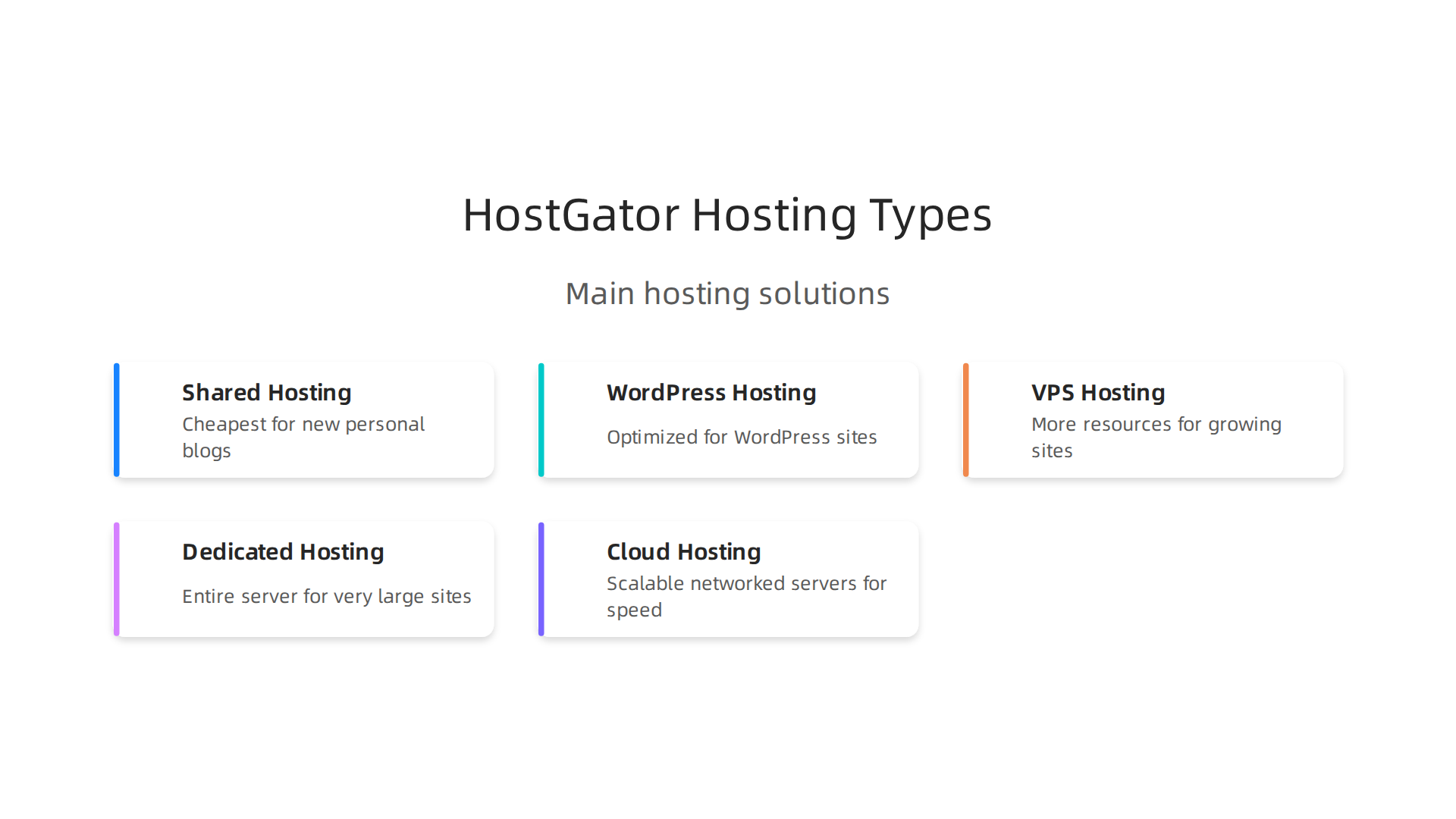
- Shared Hosting: This is like sharing a big house with many people. It’s usually the cheapest and best for new websites or small personal blogs. HostGator has plans like Hatchling, Baby, and Business within shared hosting. For example, a Hatchling plan might start very low, around $3.75 per month if you sign up for a long time, like 36 months, but then renews at a higher rate like $10.99 per month later on. These plans often include things like a free domain name for the first year if you pick a 12, 24, or 36-month plan. Choosing the best web hosting for small business in 2026 often starts with shared hosting.
- WordPress Hosting: This is shared hosting that is specially set up for WordPress websites. It often comes with extra features that make WordPress run faster and more safely. For instance, these plans usually have WordPress pre-installed, manage updates for you, and include special security. If you want to find the fastest WordPress hosting in 2026, this is a good place to start.
- VPS Hosting: VPS stands for Virtual Private Server. Think of it as having your own apartment in that big house. You still share the building, but you get more space and privacy. This is for websites that are growing and need more power than shared hosting can give. Prices for VPS hosting start higher, around $23.95 per month, based on plans seen in 2026.
- Dedicated Hosting: This is like having your own whole house. You get an entire server just for your website. This is the most powerful and most expensive option, usually for very large websites with lots of visitors. Dedicated servers can start around $89.98 per month, though promotional prices might be lower.
- Cloud Hosting: This type of hosting uses a network of servers instead of just one. It’s known for being very flexible and fast.
Understanding Billing Terms and Renewal Costs
One of the most important things to know about HostGator pricing is how their billing works. Like many other hosting companies such as those offering Bluehost pricing, HostGator often shows a very low price when you first sign up. This is called an introductory price or promotional price. This special price usually only applies if you sign up for a longer period, like 12, 24, or 36 months.
The catch is that after your first billing period ends, the price usually goes up quite a bit. This is the renewal price. For example, a plan that starts at $3.75 per month for 36 months might renew at $10.99 per month after those three years are over, as shown in 2026 pricing guides from various sources. This means your monthly cost can almost triple after the first term ends.
It’s super important to look at both the starting price and the renewal price when you’re comparing your options. Many people are surprised by the higher cost when it’s time to renew their hosting. You also need to watch out for extra services that HostGator might add to your cart when you check out. These add-ons, like extra security or automatic backups, will increase your overall web hosting cost.
Now, let’s look closer at the different HostGator hosting choices. This will help you understand what each plan offers and how it affects your overall hostgator pricing as you pick the best fit for your website.
HostGator pricing tiers explained: Shared, VPS, Dedicated, Cloud, and Managed WordPress
Each HostGator plan is like a different kind of home for your website. They offer various levels of power, control, and features. Knowing these differences is key to figuring out your real web hosting cost.
Shared Hosting
This is HostGator’s most common and cheapest choice. It’s best for new websites, small blogs, or businesses just starting online.
- What it includes: With shared hosting, your website shares space and resources (like computer power and memory) with many other websites on one big server. HostGator’s shared plans usually come with things like free website tools, a simple control panel called cPanel to manage your site, and sometimes a free domain name for the first year if you choose a longer plan term. You get storage, usually measured in gigabytes (GB), and "unmetered" bandwidth, which means you typically don’t pay extra for traffic unless it’s extremely high. For instance, the Hatchling plan is often good for just one website, while the Baby and Business plans let you host more sites. As of 2026, entry-level shared hosting plans usually cost around $2.51 to $4.63 per month to start, according to recent web hosting statistics Web Hosting Statistics 2026: 70+ Facts, Trends & Data – DiviFlash.
- Cost elements: The base plan price is quite predictable, especially with the intro offer. However, remember the renewal price jump we talked about earlier. Most resources, like storage and bandwidth, are usually enough for small sites, so you generally won’t pay extra for them unless your site grows very big.
WordPress Hosting (Managed WordPress)
This type of hosting is a special shared plan just for WordPress websites. It’s built to make WordPress run better.
- What it includes: It comes with WordPress already set up for you. HostGator takes care of important updates and adds extra security features. They might also include a faster setup like a Content Delivery Network (CDN) and automatic daily backups. This means less work for you, letting you focus on your business instead of website upkeep. These plans typically include free SSL, which makes your site secure.
- Cost elements: Managed WordPress plans are a bit more expensive than basic shared hosting, but the extra features like managed updates and better performance are built into the price. This makes the monthly cost predictable, though still subject to renewal price increases.
VPS Hosting
VPS stands for Virtual Private Server. This option gives you more power and control than shared hosting.
- What it includes: With a VPS, you still share a server with others, but you get your own dedicated part of it. This means you have a set amount of CPU (processing power), RAM (memory), and storage that’s all yours and won’t be affected by other websites. You also get more control over the server, including "root access" if you’re tech-savvy. This is great for growing websites, busy online stores, or businesses that need more speed and reliability. Around 61% of web hosting providers offer VPS hosting in 2026, showing how popular it is Web Hosting Trends in 2026: Insights from the CloudLinux Industry …. Typical entry-level VPS hosting can cost between $13.41 and $15.57 per month in 2026 Web Hosting Statistics 2026: Growth & Market Leaders.
- Cost elements: VPS plans start at a higher base price than shared hosting. However, because your resources are set (like 2GB RAM, 120GB storage), your costs for these main elements are predictable. You pay for the resources you choose for your plan.
Dedicated Hosting
This is the most powerful hosting choice. It means you get an entire server all to yourself.
- What it includes: You have full control over the server and all its resources. This offers the best performance, security, and flexibility. It’s perfect for very large websites, online applications that get a lot of visitors, or big companies that need a lot of power. You can customize the server to fit your exact needs.
- Cost elements: Dedicated hosting is the most expensive option, with prices ranging from $80 to over $500 per month in 2026 Web hosting statistics 2026: Key trends, facts & global …. The cost is largely predictable based on the server hardware and features you pick. There aren’t usually variable costs unless you add special managed services or huge amounts of extra storage.
Cloud Hosting
Cloud hosting is different because it uses a network of connected servers instead of just one.
- What it includes: This type of hosting is known for being very flexible and able to handle sudden jumps in website traffic easily. If your website suddenly gets many more visitors, cloud hosting can add more resources automatically so your site doesn’t slow down or crash. It offers high uptime and often better speed.
- Cost elements: Cloud hosting pricing can sometimes be more flexible, letting you pay only for the resources you use. This means costs can vary if your traffic goes up and down a lot. However, HostGator also offers fixed cloud hosting plans that are more predictable, with set resource amounts.
Predictable vs. Variable Costs for Businesses
When thinking about HostGator pricing, some costs are quite stable, while others can change.
- Predictable Costs: These are mainly your base plan subscription for the term you sign up for (before renewal). Features like a free SSL certificate, a domain name for the first year (with certain plans), and standard cPanel access are often included and don’t add extra cost during the intro period.
- Variable Costs: The biggest variable cost is the renewal price hike after your first term.

Beyond that, optional add-ons like extra backups, advanced security features, or specialized email services will increase your bill. While shared plans often have "unmetered" bandwidth and storage, extremely high usage that goes beyond what’s considered "normal" in their fair-use policy could lead to requests to upgrade your plan, which would change your web hosting cost. For VPS and Dedicated hosting, if you decide to upgrade your resources (like more CPU or RAM) as your business grows, your monthly bill will go up.
Understanding these different tiers and how their costs work is important for any business owner looking for a reliable web host. If you’re looking for robust, high-performance website hosting infrastructure with enterprise-grade security, consider exploring the options available from a dedicated provider. Learn more about dependable hosting solutions by visiting PrismWebHost — Web Hosting Plans & Services.
Understanding the main hosting tiers helps a lot, but what about the little extras? These can really change your total web hosting cost, especially when it comes to HostGator pricing. Many hosting companies offer a low starting price but then add extra services during checkout or when it’s time to renew. It’s smart to know what these are so you’re not surprised.
Common add-ons and hidden fees to watch for
When you choose a web host, the price you first see might not be the whole story. Companies like HostGator often offer other services that can make your monthly or yearly bill go up. Let’s look at some common ones and how they affect your total HostGator pricing.

1. Website Backups
Imagine losing all your website’s hard work in a blink! Backups are copies of your website, like a safety net. While some HostGator plans include basic daily backups, others might charge extra for more advanced or frequent backups. Checking HostGator’s add-on price chart shows that extra backup services can be an additional cost, with some costing around $25.00 a year for automated weekly backups or $2.00 per month for CodeGuard Basic backups, which can easily add to your yearly web hosting cost. Always check if this is included or if you need to pay more for peace of mind.
2. SSL Certificates
An SSL certificate is like a security guard for your website. It makes sure that information shared between your website and its visitors stays private and safe. This is why you see "https" in a website address. Luckily, most HostGator plans, even shared hosting, include a basic free SSL certificate, which is a big plus for security in 2026 according to one HostGator review HostGator Review 2026. However, if your business needs a stronger, more advanced type of SSL (like one that shows your company name in the browser), you might have to pay extra. These can add to your GoDaddy SSL Certificate Cost 2026 if you buy from another provider, or to your HostGator bill if bought directly.
3. Dedicated IP Addresses
Think of an IP address as your website’s unique street address on the internet. Most shared hosting plans use a shared IP address, meaning many websites use the same one. For most small websites, this is perfectly fine. But some businesses, especially those that need to run special server programs or have very specific security needs, might want a dedicated IP address. This means your website has its own unique address. HostGator does offer dedicated IPs, but it comes at an extra monthly cost. This can add up over time to your overall hostgator pricing.
4. Site Migrations
If you already have a website with another host and want to move it to HostGator, that’s called a site migration. Some web hosts offer to do this for free, but it’s important to check the details. HostGator often offers free migrations for new customers, which is a great benefit Shared Website Hosting – Easy and Affordable – HostGator. However, there might be limits on how many sites they’ll move or how complex the migration can be. If you have many websites or a very complex setup, you might face extra fees. The cost of moving a website in 2026 can range widely, from a few hundred dollars for simple moves to thousands for complex ones Website Migration Cost 2026 [Any-to-Any Pricing], so understanding HostGator’s policy is crucial. Sometimes, a professional service might charge anywhere from $50 to $300 for a standard hosting migration How Much Does Website Migration Cost? The Complete 2026 Guide.
5. Domain Renewals
Many HostGator plans give you a free domain name for the first year if you choose a longer hosting term HostGator Review 2026: Plans, Renewals and the Fine Print. This is a nice bonus. However, after that first year, you’ll need to pay to renew your domain name, and the renewal price is usually higher than the initial "free" offer. This is a common practice across the industry, not just with HostGator. Always plan for this future domain name renewal price comparison to avoid surprise costs.
Where ‘extras’ can significantly raise the first-year or renewal cost
These extra services can quickly add to your overall bill. What might start as a low monthly hostgator pricing for your base plan can become much higher when you include these add-ons. It’s especially important to watch out for these when your first contract term ends. That’s when your base hosting price jumps up, and if you also have several add-ons, your total renewal cost can be much higher than what you initially budgeted. Always look at the total expected cost, including renewals and any necessary add-ons, when comparing web hosting options. Check out their "HostGator Renewal & Checkout Add-on Costs 2026" guide for more details on these potential price increases HostGator Renewal & Checkout Add-on Costs 2026 | True Cost Guide.
After looking at all the possible extra fees like backups, SSLs, and domain renewals, it’s clear that the base price of web hosting doesn’t tell the full story. Beyond these add-ons, what about the actual performance of your website, its security, and the help you get when things go wrong? These areas also have hidden costs or can make a big difference in your total web hosting cost. Let’s dive into what’s usually included and what might cost you extra when looking at options like HostGator pricing.
Performance, security, and support: what’s usually included and what costs extra
When you choose a web host, you’re not just buying space for your website. You’re also paying for how fast your site loads, how safe it is from bad actors, and the quality of help you get. These parts are super important for keeping your website working well.

Website Performance: Speed and Uptime
1. Content Delivery Networks (CDNs)
Imagine your website lives in one city, but people from all over the world visit it. A CDN is like having mini-copies of your website stored in many cities closer to your visitors. This makes your website load much faster for everyone, no matter where they are. Some hosting plans, including certain HostGator plans, may offer a basic CDN, while others charge extra. For a business, faster loading times mean happier visitors and better rankings in search engines. Hosts that offer features like NVMe SSD storage and LiteSpeed servers, like Prism Webhost, also help make your site super fast.
2. Uptime Guarantees
Uptime is how long your website stays online and working. If your website is often down, your customers can’t reach you, which is bad for business. Most hosting companies promise a certain level of uptime, like 99.9% or 99.99%. For example, many top hosts in 2026 show very high uptime, with some hitting 99.99% uptime, meaning only about 52 minutes of downtime per year, while others claim zero downtime was detected in monitoring WP Cloud-Powered Hosts Earn Top Tier Recognition in 2026. A standard expectation for good web hosting in 2026 is 99.95% or higher uptime Best Web Hosting 2026: Speed, Uptime, Value Compared. Always check the uptime promises. Downtime can really cost a business money. Some reports even show what website downtime costs in 2026, making it clear how important high uptime is Website Uptime Statistics: What Downtime Actually Costs (2026). Prism Webhost, for instance, offers a 99.99% uptime SLA to keep your site running smoothly.
Website Security: Protection from Threats
1. DDoS Protection
DDoS attacks are like a huge crowd trying to get into a small shop at once, causing it to shut down. This makes your website slow or completely unavailable. Good hosting plans include DDoS protection to stop these attacks. Many basic plans have some level of protection, but advanced protection might be an extra fee. Prism Webhost, for example, includes 17Tbps+ DDoS protection to help keep your site safe.
2. Web Application Firewall (WAF)
A WAF acts like a shield that protects your website from common online attacks. It checks all the traffic coming to your website and blocks anything suspicious. While some basic security features are usually included, a dedicated WAF might be an add-on, especially for higher-tier plans or for companies with very sensitive data. Other security checks like DNSSEC, SSL/TLS, DMARC, and RPKI are also important and good hosts will include them, often in isolated hosting environments, to keep your site extra safe.
Customer Support: Getting Help When You Need It
The kind of support you get can greatly affect your overall web hosting cost and how much stress you face.
1. Basic vs. Managed Support
Most shared hosting plans, including many HostGator pricing options, come with basic support, like chat, email, or phone help for general issues. This is great for simple questions or small problems. But if you have a more complex website or you’re not tech-savvy, you might want "managed" support. This means the hosting company helps you with bigger tasks, like updating your website software or fixing errors that are harder to track down. Managed support usually costs more, but it can save you a lot of time and worry. Knowing how different support tiers affect the chances of your site being down is key. To find a host that fits your needs, it helps to read web hosting services reviews 2026.
When looking at various options, from HostGator pricing to bluehost pricing or even hostinger pricing, it’s vital to think about these features. They might seem like small details, but they greatly impact your website’s success and your total web hosting cost. Always look for a host that makes setting up and managing your website easy, with strong security and reliable support, so you can focus on your business. If you’re looking for what is web hosting services, understanding these details is a crucial first step.
It’s clear that understanding the actual features and services a web host provides is just as important as the sticker price. Now, let’s compare HostGator pricing to other companies to see where you get the most for your money.
Comparing HostGator pricing to competitors: value for money analysis
When you look at web hosting, it’s easy to just pick the cheapest option. But "value for money" means more than just a low price. It means getting the right amount of features, speed, and support for what you pay. It’s about figuring out if a hosting plan, like those offered by HostGator, truly meets your needs without adding unexpected costs later.
How to compare cost-per-resource and features
To truly compare, you need to look at what you get for each dollar spent on resources and features.
1. Cost-per-Resource (CPU, RAM, Storage)
Think of your website like a computer. It needs processing power (CPU), memory (RAM), and space for your files (storage).
- CPU (Central Processing Unit): This is like the brain of your website’s server. More CPU means your website can handle more tasks at once and load faster, especially when many people visit it.
- RAM (Random Access Memory): This is your website’s short-term memory. More RAM helps your site run smoothly, especially with many apps or visitors.
- Storage (SSD/NVMe SSD): This is where your website’s files, pictures, and videos live. Faster storage (like NVMe SSDs) makes your site quicker to access.
Some hosts will give you exact numbers for these, while others might say "unlimited," which often has hidden limits. Comparing HostGator pricing, for example, means looking at the specific CPU, RAM, and storage they offer versus what a competitor like Hostinger provides for a similar price.
2. Feature Parity Across Vendors
Beyond basic resources, look closely at what features are actually included:
- Backups: Are they automatic and easy to restore, or do you pay extra?
- SSL Certificates: Is a free SSL included, or is it an add-on?
- Domain Name: Is a free domain name included for the first year?
- Security Tools: What level of DDoS protection and firewalls do you get without extra cost?
- Support: Is it basic (email only) or 24/7 with phone and chat?
These "extra" features can make a big difference in your total web hosting cost. For example, a Hostinger plan might offer a free domain and a more robust security package than an entry-level HostGator plan, even if their initial monthly prices look similar. This means the Hostinger pricing could offer better value.
HostGator Pricing vs. Competitors: A Snapshot in 2026
In 2026, shared hosting is still very popular, especially for small businesses. Entry-level shared hosting plans typically cost around $2.51 to $4.63 per month, while mid-tier plans might start at $4.62 to $6.52 per month Web Hosting Statistics 2026: 70+ Facts, Trends & Data. Some providers can be even cheaper, with shared hosting prices sometimes starting from $1.99 per month for a first-time purchase.
- HostGator Pricing: HostGator’s entry-level plans, like the Hatchling plan, generally start around $2.29 to $3.75 per month for the first term 12 Best Web Hosting Prices Compared (Aug. 2026). However, renewal prices can be much higher, sometimes jumping to around $10.99 per month.
- Hostinger Pricing: Hostinger is often seen as a strong alternative. Its Premium plan, for instance, might start at $2.99 per month for a long sign-up period, offering resources that compare well to HostGator’s slightly more expensive Baby plan 7 Best HostGator Alternatives That Offer More Value in 2026. Its renewal price is usually around $10.99 per month as well.
- Bluehost Pricing: Bluehost also offers competitive introductory pricing, often starting around $2.95 or $4.99 per month, especially for WordPress users. Like others, its renewal rates are higher. You can learn more about specific Bluehost pricing unveiled.
Remember, many hosting providers use low initial prices to get you to sign up, but the true cost often shows up at renewal time. It’s smart to compare both the starting and renewal costs. Some sources even suggest that overall web hosting prices have changed over the years, with intro prices actually declining slightly between 2020 and 2024 Web hosting statistics in 2026: trends and market share.
Scenario-Based Comparisons for Small Businesses
Let’s look at different business needs:
1. For Blogs or Small Personal Websites:
If you’re starting a personal blog or a simple website, a basic shared hosting plan is often enough. HostGator’s Hatchling plan might seem like a good fit due to its low initial cost. However, alternatives like Hostinger’s entry-level plans often provide a good balance of low hostinger pricing, good speed with LiteSpeed servers, and included SSL, making them competitive options. Other budget-friendly options might also be available, starting from $1.99 a month, with features like free migration and transparent renewals.
2. For Small E-commerce Stores:
Running an online shop means you need more power and better security. You’ll want faster loading times and good protection for customer data. HostGator’s mid-tier plans, like the Baby plan, offer more resources. But you should compare these with other hosts that specialize in e-commerce, or those that offer specific features like higher-grade WAFs (Web Application Firewalls) and better scalability. Some alternatives might even be built on faster cloud platforms like Google Cloud.
3. For Scaling Startups or Growing Businesses:
As your business grows, shared hosting might not be enough. You might need to move to a Virtual Private Server (VPS) or dedicated hosting. VPS hosting typically costs more, ranging from about $13.41 to $15.57 per month for entry-level plans Web Hosting Statistics 2026: Growth & Market Leaders. HostGator offers VPS and dedicated server options, but it’s important to compare their pricing and features with other providers known for scalability and performance, like those offering more robust dedicated hosting providers or even cloud solutions where you pay for what you use, such as the aws hosting cost. Over 61% of hosting providers offer VPS hosting, and 52% offer dedicated servers in 2026, showing a move towards more powerful hosting solutions Web Hosting Trends in 2026: Insights from the CloudLinux Industry ….
Choosing the right host means looking beyond the initial hostgator pricing or any competitor’s basic offer. It’s about finding the right mix of features, performance, and support that truly matches your website’s needs now and in the future.
Choosing the right web hosting plan isn’t just about finding the cheapest hostgator pricing or comparing a few features. It’s about picking a plan that truly fits what your website needs right now and what it will need in the future. A smart choice can save you a lot of trouble and money down the road.
How to choose the right HostGator plan for your business (decision checklist)
When you’re looking at HostGator or any other host, a simple checklist can help you make a good decision. This way, you avoid picking a plan that’s either too much or not enough for your website.
A step-by-step checklist
Let’s break down the important things to think about:
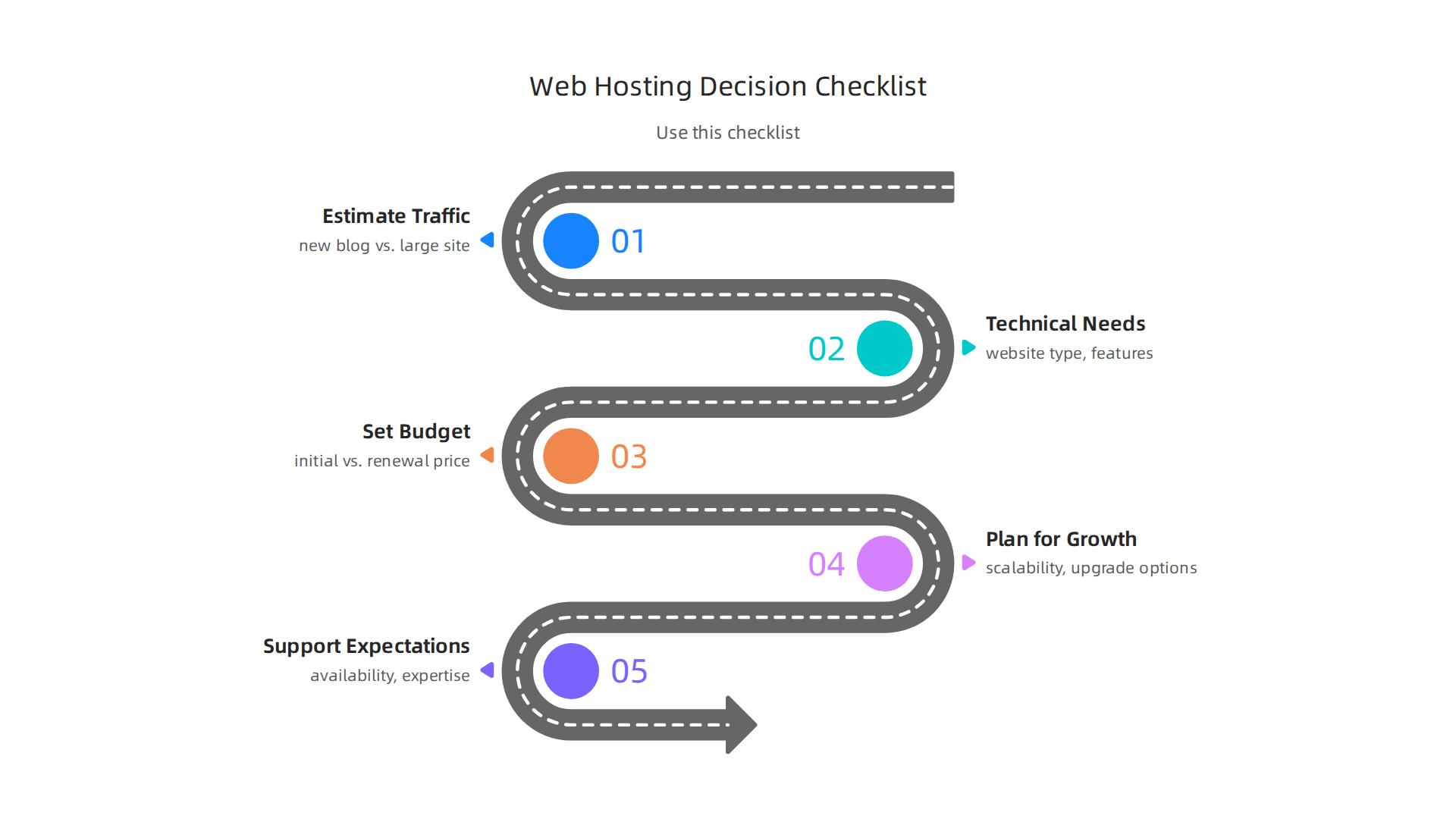
1. Estimate Your Website Traffic
How many people do you expect to visit your website?
- New or Small Blog: If you’re just starting, a few hundred or a couple thousand visitors a month is normal. A basic shared hosting plan, like HostGator’s Hatchling, will likely be enough.
- Growing Business or Popular Blog: If you expect thousands of visitors daily, you’ll need more power. Look for plans with more CPU and RAM. For most web hosts in 2026, a good target for uptime is 99.9% or higher, meaning your site is rarely down, but some providers even achieve 99.99% uptime consistently Hosting Uptime Comparison 2026: 12-Month Monitoring Data for ….
- Large E-commerce or High-Traffic Site: You’ll need even more robust hosting like a VPS (Virtual Private Server) or even dedicated hosting. This means your website can handle many visitors at once without slowing down.
2. Figure Out Your Technical Needs
What kind of website are you building, and what special tools does it need?
- Website Type: Is it a simple brochure site, a WordPress blog, an online store (e-commerce), or something custom? WordPress sites, for example, might run better on optimized WordPress hosting plans. You can find more tips on how to select the best web hosting for small business in 2026.
- Features: Do you need a lot of storage for videos and high-res images? Many databases? Special software or programming languages? Make sure the plan offers these without extra fees.
- Security: For online stores, strong security features like Web Application Firewalls (WAFs) and daily backups are crucial.
3. Set Your Budget (Initial and Renewal)
Always look beyond the first-year hostgator pricing.
- Introductory vs. Renewal Price: Most hosts, including HostGator and Bluehost, offer very low prices to get you to sign up. But after the first term (usually 1-3 years), the
bluehost pricingandhostinger pricingoften jump up quite a bit. Always check the renewal cost. - Hidden Fees: Look for extra costs for things like SSL certificates (though many now offer free ones), backups, or domain privacy. Factor these into your total
web hosting cost.
4. Plan for Growth
Where do you see your website in 1, 3, or 5 years?
- Scalability: Can your hosting plan grow with your business? If you expect a lot more traffic or new features, can you easily upgrade to a larger plan (like a VPS or dedicated server) without a big hassle or a complete website move?
- Avoiding Costly Migrations: Moving a website from one host to another or even from one type of hosting to another can be time-consuming and expensive. A basic website migration can cost $50 to $300 if done by a professional service in 2026 How Much Does Website Migration Cost? The Complete 2026 Guide. If your site is complex, like an e-commerce store, a migration could cost thousands. Choosing a scalable plan from the start helps you avoid these issues. For very large or complex needs, options like
aws hosting costmodels, where you pay for what you use, might become relevant.
5. Consider Support Expectations
What kind of help do you need if something goes wrong?
- Availability: Do you need 24/7 support through phone, chat, and email, or is email support during business hours okay?
- Expertise: Does the support team understand your specific website platform (like WordPress)?
When to start small and when to invest in higher tiers
For brand new personal blogs or small business sites with little expected traffic, starting with a basic shared hosting plan is often the best choice. It keeps initial hostgator pricing or hostinger pricing low while you get your website going.
However, if you’re launching a business-critical site, an e-commerce store, or expect rapid growth, it’s wise to invest in a mid-tier shared plan or even a VPS from the start. This proactive approach ensures better performance, stability, and security, and it helps you avoid the headache and expense of an urgent, costly migration later.
A good hosting provider like PrismWebHost — Web Hosting Plans & Services focuses on providing reliable, secure, and high-performance solutions that grow with your business, aiming for a smooth, technically simple experience.
Summary
This guide explains HostGator pricing in plain terms so you can pick a plan without surprises. It reviews each hosting tier—shared, managed WordPress, VPS, dedicated, and cloud—shows what’s included, and highlights the difference between low promotional rates and higher renewal prices. The article calls out common add‑ons (backups, SSL upgrades, dedicated IPs, migrations) that raise your total cost and explains where performance, security, and support may be limited or require paid upgrades. It also compares HostGator’s value to competitors and gives a step‑by‑step checklist to estimate traffic, technical needs, and long‑term budget so you can choose a plan that fits today and scales tomorrow. After reading, you’ll know how to calculate your real hosting bill, avoid hidden fees at checkout, and select the right HostGator option for your business.
