




FTC Event Web in 2026 How to Stay Compliant With Secure Web Hosting
Article
Let’s face it: running an online business in 2026 comes with a mountain of responsibility. You are focused on growth, customers, and keeping everything running smoothly. But there is one big thing that keeps entrepreneurs up at night: staying on the right side of Federal Trade Commission rules.

The FTC Event Web is designed to be your central source for this. It hosts all the latest regulatory updates, live webinar schedules, and enforcement news that directly impact your website and business practices.
Here is the problem though. For most small business owners, navigating these compliance requirements feels overwhelming. It pulls you away from the work you actually want to do. Worse, missing a key update can leave your site open to security threats or expensive fines.
That is exactly where choosing a reliable web hosting service changes the game.
Instead of worrying about every single rule yourself, you can build your site on a foundation that handles the heavy lifting. Understanding the clear definition of website hosting services is the first major step toward worry-free operations.
This guide will break down everything you need to know about the FTC Event Web in 2026. We will cover the critical regulations affecting your business right now and explain exactly how a secure, high-performance host like Prism Webhost keeps you protected, compliant, and ahead of the curve.
What Is the FTC Event Web and Why Does It Matter for Your Business?
Picture this: you run a small online store or maybe a community site like a fanfiction net website. You wake up one morning to find a notice that your site broke a data privacy rule you did not even know existed. That is exactly the kind of surprise the FTC Event Web helps you avoid.
The FTC Event Web is the official online portal where the Federal Trade Commission publishes its event calendar, webinar schedules, and all regulatory announcements that affect your website. Think of it as the central bulletin board for everything from advertising guidelines to data security requirements. When the FTC updates a rule about how you can collect email addresses or what you must say in your privacy policy, it appears here first.
Why should you care? Because every type of website has to follow these rules. Whether you manage a wowhead website for game guides, a rsvp website for party planning, or a straightforward alexa website for voice skill tutorials, the same federal regulations apply. If you miss an update, you risk accidental non-compliance. And that can lead to costly fines or legal headaches that drain your time and money.
The smart move is to stay connected. Bookmark the FTC Event Web and make it a habit to check it regularly.

At the same time, choose a hosting provider that takes compliance seriously. A reliable host will monitor your website’s uptime and security so you have fewer surprises. When your hosting infrastructure is solid, you can focus your energy on following the rules rather than fighting technical fires.
In short, the FTC Event Web keeps you in the loop. Use it, stay informed, and build your site on a foundation that supports your compliance efforts.
Key Regulatory Updates from the FTC in 2026
Let’s be honest: keeping up with federal rules can feel like a full-time job. But if you run any kind of online business, the FTC’s 2026 updates directly affect how you send emails, collect data, and protect your visitors. Here are the biggest changes you need to know about.
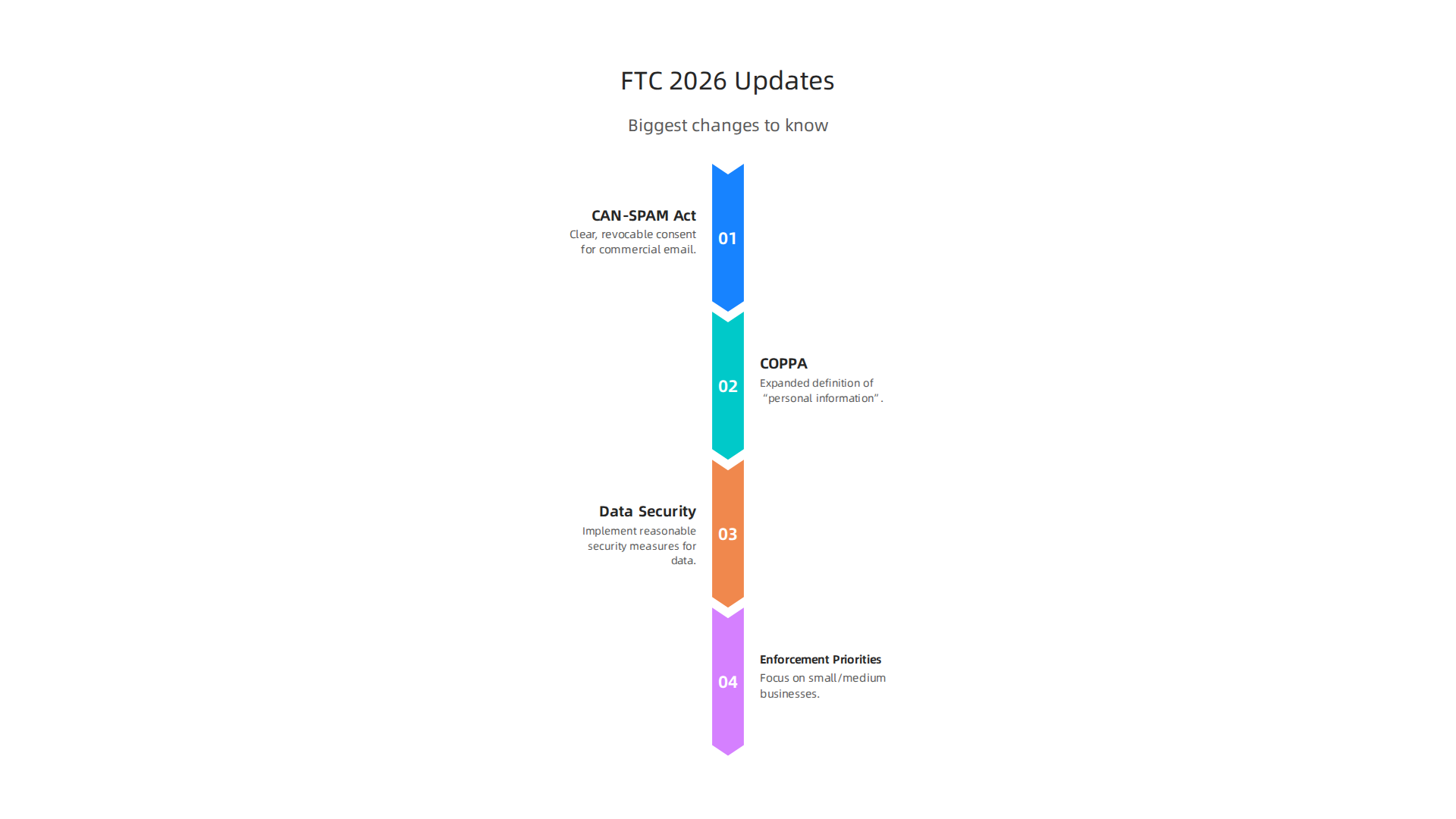
CAN‑SPAM Act updates. The FTC tightened the rules for commercial email. Now you need clear, revocable consent before sending promotional messages. Your unsubscribe link must work within one click and process opt‑outs within 48 hours. If you run a wowhead website that sends game guides via email, or a fanfiction net website with a newsletter, this applies to you. The penalty for ignoring these changes? Fines can reach thousands of dollars per violation.
Children’s Online Privacy Protection Rule (COPPA). In 2026, the FTC expanded the definition of “personal information” to include biometric data and engagement data (like how long a child watches a video). If your alexa website records voice data or your rsvp website collects birthday details, you may need to get verifiable parental consent for users under 13. The compliance deadline for these changes was March 2026, so if you haven’t updated your privacy practices yet, act now.
New data security requirements. The FTC is now requiring all websites handling customer data to implement reasonable security measures. That means encryption (SSL/TLS), regular vulnerability scans, and a plan for reporting breaches within 72 hours. These steps can slow your site if your hosting isn’t optimized. That’s why choosing a fast host matters. In fact, research shows that website loading speed directly affects user experience and retention.
A host that keeps your site fast and secure helps you meet compliance without hurting performance.
Enforcement priorities for 2026. The FTC is focusing on small and medium‑sized businesses that lack proper safeguards. They’re also targeting sites that fail to honor opt‑out requests quickly. If you’re still using outdated email lists or skipping security checks, you’re on their radar.
How to stay compliant. First, audit your email marketing flows and make sure your unsubscribe process meets the new standard. Second, review your data collection forms for any information from children. Third, check that your hosting provider supports the security measures you need. For example, a reliable host like the one reviewed in this dedicated hosting comparison can give you the performance and protection required to meet FTC expectations.
The bottom line: these 2026 updates are not optional. They apply whether you run a simple blog or a complex e‑commerce store. Ignoring them can cost you serious money and trust. So take a few hours this week to review your practices and your hosting setup. Your future self will thank you.
How FTC Regulations Affect Website Operations and Hosting
Here’s the thing: you can have a perfect privacy policy on paper, but if your hosting setup doesn’t support the technical requirements behind the rules, you’re still at risk. The 2026 FTC updates aren’t just about legal documents. They’re about how your website is built, how it handles data, and who you trust to keep it running.
Data privacy rules demand the right hosting features. COPPA changes now require sites that collect any data from kids to have strict access controls and retention limits. If your alexa website stores voice recordings or your rsvp website saves birthdays, you need a host that gives you encryption (SSL/TLS) by default and lets you easily manage user data deletion. Shared hosting without these basics won’t cut it anymore.
Security standards require a provider that takes protection seriously. The FTC expects every site to have a documented security plan, vulnerability scans, and a 48-hour breach notification process.

This isn’t optional. According to recent FTC warning letters about TAKE IT DOWN Act compliance, sites that fail to remove harmful content or secure user data face fines of over $50,000 per violation.
That stacks up fast when you host a fanfiction net website with user uploads or a wowhead website with community guides.
Your hosting provider is the foundation. If they don’t offer DDoS protection, automated backups, and server-level firewalls, you’re exposed. That’s why choosing a host that builds security into every plan matters. A provider like Prism Webhost gives you enterprise-grade features such as 17Tbps+ DDoS protection, NVMe SSD storage for fast load times, and point‑in‑time backups — all things that help you meet FTC expectations without extra work.
Non‑compliance can damage more than your wallet. Lawsuits, loss of customer trust, and bad press happen fast. And when you’re trying to fix a security issue or respond to a data request, your host’s support team matters. You don’t want to be stuck with a generic support desk while facing a regulator deadline.
The smart move is to audit your current hosting setup against the 2026 rules. Do you have a 72‑hour breach response plan? Can your host isolate your account from other customers? Is your site speed fast enough that security checks don’t slow things down? For a deeper look at how to balance speed and security without overspending, check out this guide to cheap VPS hosting that prioritizes security. It covers exactly what features to look for when compliance is on the line.
Your hosting choice is a compliance decision. Make it count.
Ensuring Your Web Hosting Meets FTC Compliance Standards
Knowing that your hosting provider is a compliance decision is one thing. Actually checking whether they deliver on it is another. So how do you audit your current setup against the 2026 rules?
Start with the basics that the FTC expects every site to have. According to the FTC’s own cybersecurity advice for hiring a web host, TLS encryption should be included in your plan by default. That means every bit of data traveling between your visitors and your server is scrambled so hackers cannot read it. If your host charges extra for SSL/TLS or makes you set it up yourself, that is a red flag.
DDoS protection is another must. A distributed denial-of-service attack can take your site offline for hours or days. The FTC has made it clear that failing to prepare for foreseeable cyber events like these can be seen as unreasonable security. Your host should offer server-level DDoS filtering, not just a basic firewall.
Automatic backups and regular server-side security patches are equally critical. If a vulnerability is found in your CMS or server software, you need the patch applied quickly. Shared hosting providers that delay updates put every customer at risk.
So how do you audit your provider? Ask them these questions directly:
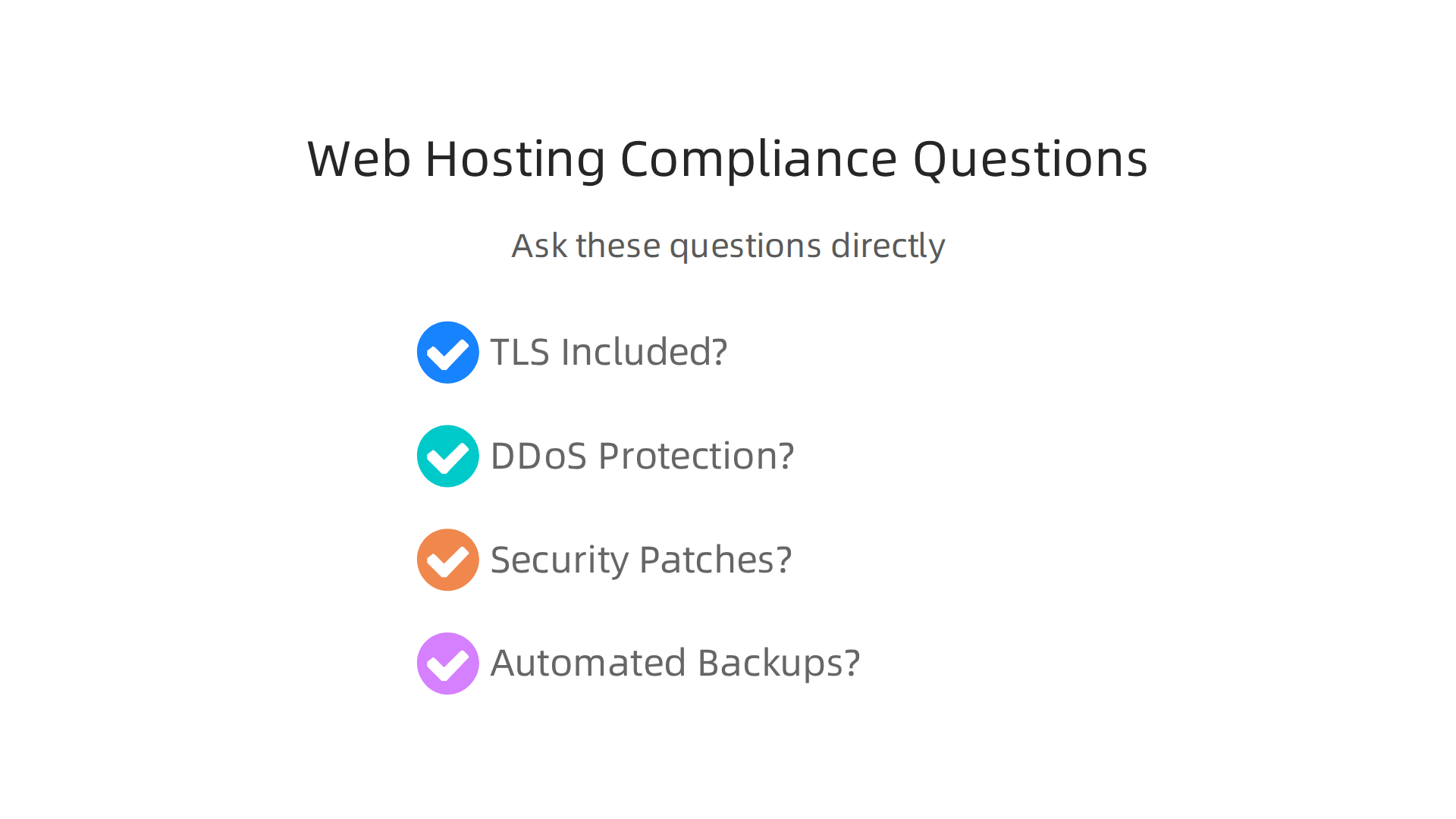
- Is TLS included free with every plan?
- Do you provide DDoS protection, and at what level?
- How often do you apply security patches to the server?
- Are backups automated, and can I restore a point-in-time backup myself?
If the answers are vague or missing, you likely have a compliance gap. A helpful tool to guide you through the evaluation is this web hosting template checklist for small business growth. It walks through every feature you need, from security to scalability, so you can compare providers side by side.
That is where managed hosting becomes valuable. Managed providers handle the technical compliance work for you. They apply patches, monitor for threats, keep backups, and typically have a documented incident response plan already in place. For an ftc event web that collects attendee information, this matters even more. You do not want to manually track security updates while also trying to run the event.
The bottom line: pick a host that treats security as a default, not a paid upgrade. Your compliance depends on it.
Proactive Steps to Stay Ahead of FTC Enforcement Actions
Choosing the right host is step one. Step two is staying active about compliance. The FTC does not wait for you to catch up. It updates rules, brings enforcement actions, and expects you to keep pace. Here is how you stay ahead in 2026.
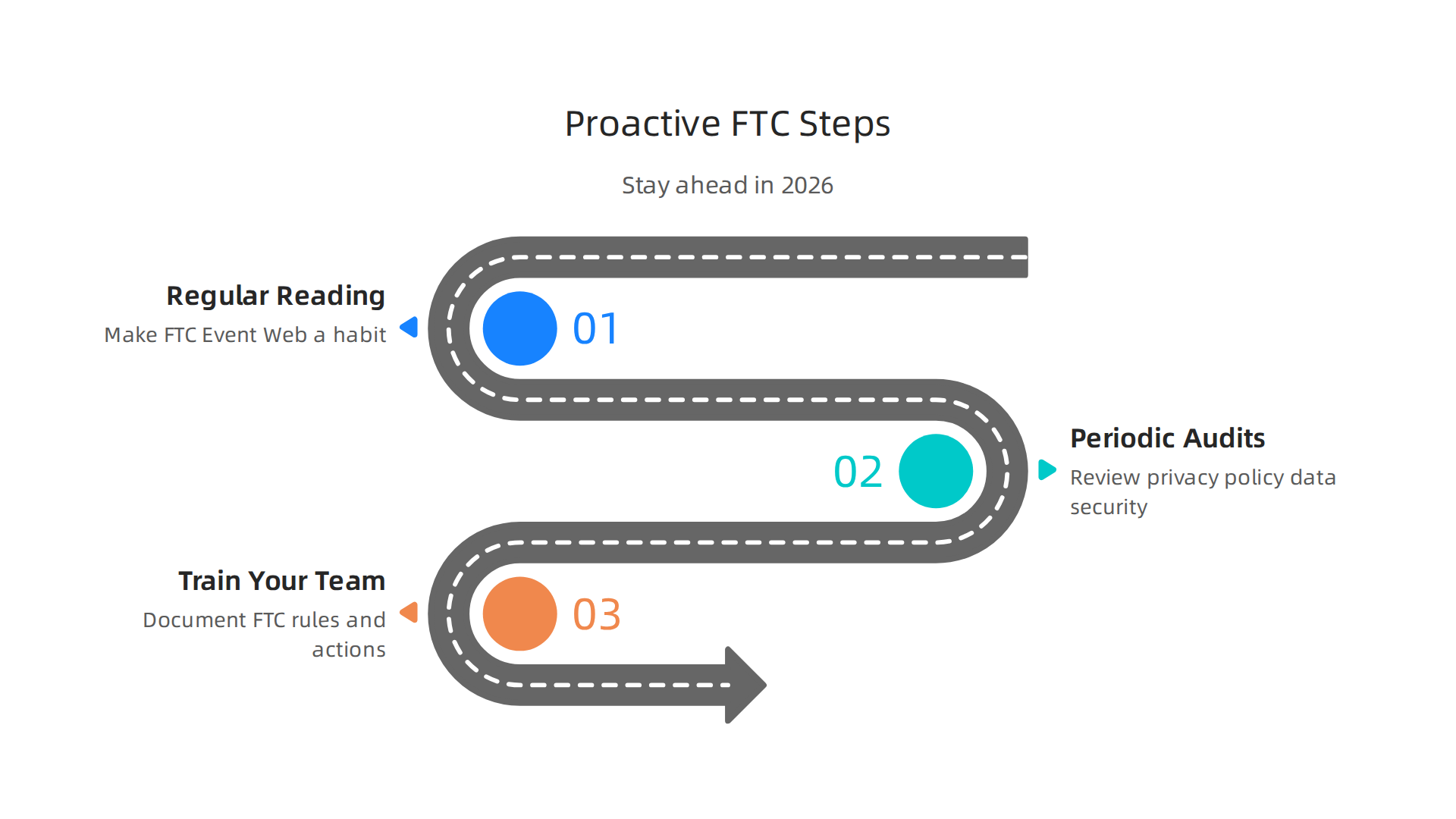
Make the ftc event web your regular reading. The FTC publishes new business guidance, blog posts, and enforcement alerts that directly affect how you run your website. For example, they recently reminded small businesses to use email authentication and protect against phishing. You can bookmark the FTC Business Guidance portal and check it monthly. If you run an rsvp website that collects attendee names, emails, or payment info, those updates matter even more. One missed rule change could mean a fine.
Conduct periodic website compliance audits. This means reviewing your privacy policy, how you handle data, and your security setup at least twice a year. Go through every form on your site. Does it clearly say why you are collecting the data? Is the consent checkbox easy to understand? Are you storing credit card numbers or other sensitive info longer than needed? Use a checklist to compare your practices against the FTC Safeguards Rule requirements for 2026.
Also, run a quick check on who actually hosts your site. A simple website host lookup can tell you if your provider still meets your security needs.
Train your team on FTC rules and document everything. It is not enough for just you to know the rules. Every employee who touches customer data or writes marketing copy needs basic training. Cover topics like honest advertising, data handling, and what to do if a breach happens. Keep records of who attended training and when. The FTC looks for evidence of a compliance culture, not just a policy on paper. A good resource is the FTC cybersecurity guide for small businesses, which covers eight key topics including ransomware and vendor security.
Finally, consider a hosting partner that makes all of this easier. A provider that includes automatic security patches, DDoS protection, and point-in-time backups removes a lot of the manual work from your compliance checklist. That is where a solution like Prism Webhost can help you stay compliant without the headache. They handle the technical side so you can focus on running your event or business.
The FTC is watching. But if you build consistent habits, you will never have to scramble to catch up.
Choosing a Web Host That Supports FTC Compliance
You now know the proactive steps for staying FTC compliant. But here is a question many people miss: Does your web host actually help you meet those rules? The truth is, your hosting provider is a huge piece of the compliance puzzle. If your host has weak security, your whole website is at risk. The FTC has even taken action against big hosts like GoDaddy for not protecting customer data. In 2025, the FTC required GoDaddy to set up a full information security program after failing to protect customers from attacks. So choosing the right host from the start matters.
Here are three things to look for in a hosting provider that supports your compliance goals.


1. Built-in security tools
Your host should include security features as standard, not as an expensive add-on. Look for a host that provides:
- Web application firewalls to block common attacks
- Malware scanning to catch problems early
- Automatic software updates so your site always runs the latest versions
The FTC itself advises small businesses to look for these features when hiring a web host. For example, they recommend hosts that support SSL/TLS encryption and email authentication tools like SPF, DKIM, and DMARC. These tools help protect your visitors’ data and prevent phishing attacks. If you run an rsvp website that collects names, emails, and payment details, these security basics are non-negotiable.
2. Quick support for security incidents
When something goes wrong, you need help fast. Ask potential hosts about their average response time for security issues. Do they offer 24/7 support? Can they help you restore a backup quickly? A good host should have a clear incident response plan. The FTC Safeguards Rule actually requires financial institutions to have a written incident response plan, and your host should be part of that plan.
3. Compliance-friendly features
Some hosts go beyond the basics and offer tools specifically designed to help you stay compliant. That includes:
- Isolated hosting environments that separate your data from other customers
- Point-in-time backups so you can recover from any mistake
- DDoS protection to keep your site online during attacks
- Regular security audits by third parties
Before you sign up, ask your host how they handle data encryption, both in transit and at rest. The FTC considers "reasonable security" to include these practices.
For a complete checklist of what to evaluate when comparing hosts, read our guide on 10 factors for choosing the best small business web host. It will walk you through every feature that matters for security and compliance.
Your host is your partner in staying FTC compliant. Choose one that takes security seriously, and you will save yourself from headaches down the road.
Summary
This article explains the FTC Event Web and why staying current with its 2026 updates is essential for any online business. It breaks down major regulatory changes—tightened CAN‑SPAM email rules, expanded COPPA definitions, new data security requirements, and enforcement priorities—and shows how those rules translate into technical hosting needs. You’ll learn which hosting features matter (TLS, DDoS protection, automated backups, patching, isolated environments), how to audit your provider with specific questions, and what proactive practices (regular audits, staff training, monitoring the FTC) keep you off the regulator’s radar. The guide also explains why choosing a managed, security‑minded host can simplify compliance and protect your site from fines, breaches, and downtime so you can focus on running your business.
