




Domain Name Renewal Price Comparison: Stop Overpaying After Year One
Article
Introduction
Imagine buying a domain name for just a few dollars. It feels like a steal. Then a year later, your renewal notice arrives and it is four times the price. This scenario plays out all the time.

Domain renewal costs can vary dramatically between registrars. Studies show that domain renewal costs in 2026 range from $8 to over $20 per year for a standard .com. Some registrars charge much more. [Domain renewal costs in 2026 can range from $8 to over $20 per year for a .com, with some registrars charging significantly higher rates.
](https://blog.webhostmost.com/domain-renewal-cost/)
A big part of the shock comes from how different companies set their prices. GoDaddy, for example, often uses a low first-year fee to attract new customers. But when it is time to renew, the real GoDaddy domain renewal price can be much higher. On the other hand, the Cloudflare domain renewal price tends to stay much closer to wholesale cost. Understanding these differences is key to making a smart choice.
Hidden fees can also sneak into your bill. That is why it helps to calculate your true web hosting cost and avoid hidden fees before you commit to a long-term plan.
Whether you run a small business or a personal blog, working with a transparent provider makes a big difference. Services like Prism Webhost focus on giving you secure and reliable infrastructure without confusing price hikes.
In this complete domain name renewal price comparison, we break down the real renewal costs at major registrars. We also share smart strategies to lock in lower rates and protect your online home for years to come.
Why Domain Renewal Prices Vary
You might wonder why your domain bill looks totally different the second year. It is not random. There are clear reasons behind the price jump. And once you understand them, you can make a much smarter choice for your domain name renewal price comparison.

The Low Price Trap
Many big registrars rely on a classic trick. They offer a very cheap first year to get you in the door.
Actually, when a registrar offers a domain for $2.99 or $5.99, they are probably losing money on that sale. Domain Renewal Cost 2026 explains that registrars offering $9.99 first-year pricing make almost zero margin. They make up for it when you renew. That is why the GoDaddy domain renewal price is often much higher than what you paid at the start.
The Real Price Breakdown
Every domain has a wholesale cost. For a .com domain, there is a base fee set by Verisign and a small ICANN fee. In 2026, this wholesale floor is around $8 to $9 per year.
On top of that, the registrar adds their own margin. Some are happy with a small markup. Others add a lot more. This is why the Cloudflare domain renewal price is often lower. They prefer to pass along closer to the wholesale rate.
Different TLDs also have different costs. A .io domain costs much more to renew than a .com. You can explore a full list of TLD prices at Compare Domain Prices – Full List of Top-Level Domains.
Bundles, Competition, and Hidden Fees
Some companies bundle your domain with hosting or email. This makes it hard to see what you are truly paying for just the domain name.
Others use complex pricing tiers. Best Domain Services for Small Businesses this year notes that the best services focus on transparent renewal pricing instead of confusing deals.
If you want to find a provider that keeps things simple, reading a guide on how to find reputable domain name registrars that protect your business is a great place to start.
And if you are bundling hosting and domains, make sure you calculate your true web hosting cost and avoid hidden fees in 2026 before you sign up.
Look for Transparent Pricing
When you do a domain price comparison, you will see that some registrars just charge a fair price from the start. They do not play the loss leader game.
Services like Prism Webhost focus on giving you reliable infrastructure without hidden price hikes. This approach saves you stress and money over the long term.
Current Market Landscape of Domain Renewal Costs (2026)
Now that you know why prices jump, let’s look at what you can actually expect to pay in 2026. The market is all over the place. Some registrars keep things fair. Others hit you hard at renewal time.
The .com baseline
For a standard .com domain, renewal prices in 2026 range from about $8 to $20 per year. That’s according to a detailed analysis of domain renewal costs. GoDaddy, for example, charges around $21.99 per year for renewal. Cloudflare and some wholesale-oriented registrars stay closer to $9 to $15 per year.
Most people end up paying $10 to $50 per year for a standard domain, but the sweet spot for a .com is $9 to $15 if you pick the right registrar.
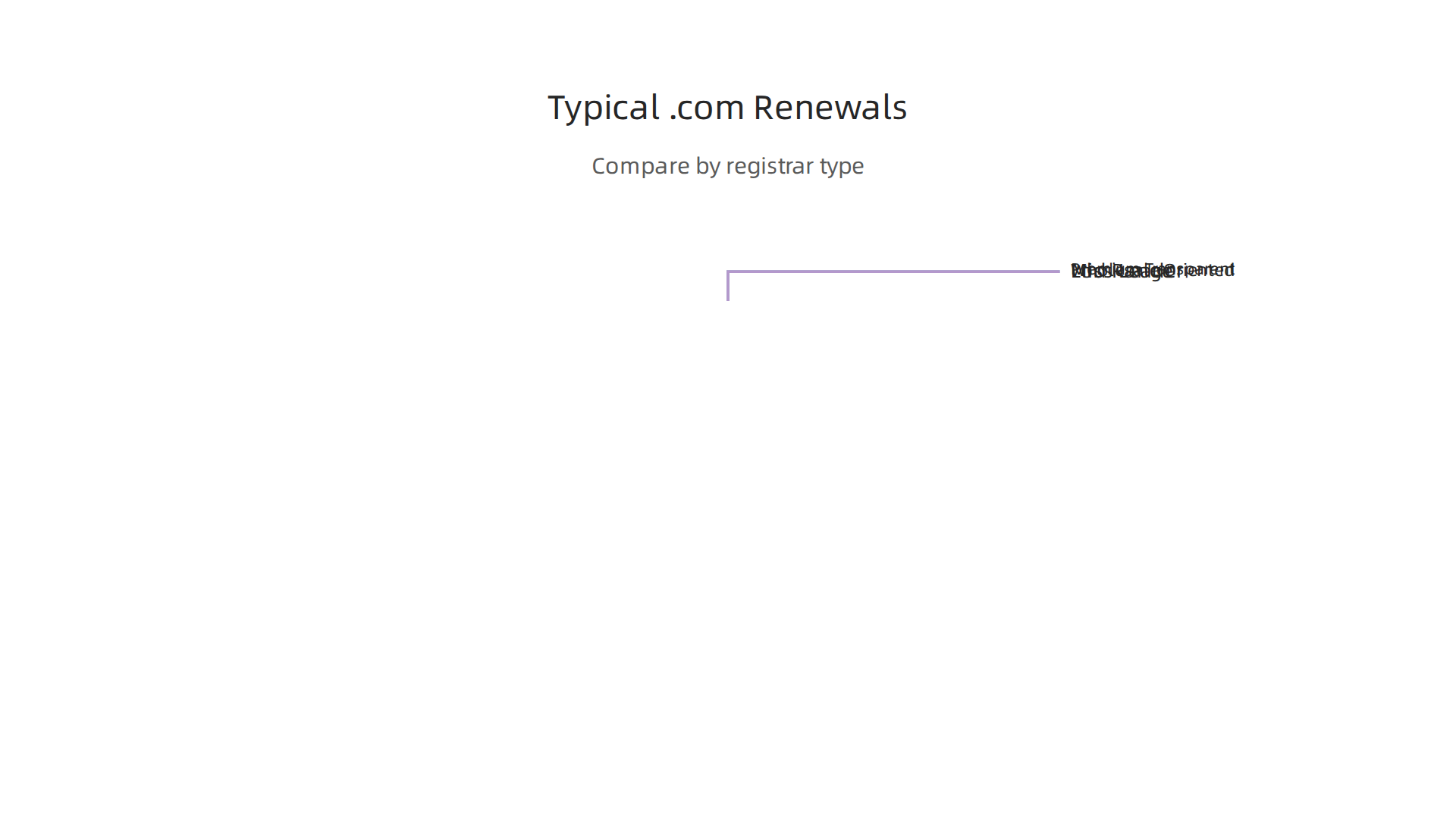
Here’s a quick look at what you might see:
| Registrar Type | Typical .com Renewal Price (2026) |
|---|---|
| Loss-leader (e.g., GoDaddy) | $20 – $22 |
| Mid-range (e.g., Namecheap) | $13 – $17 |
| Wholesale-oriented (e.g., Cloudflare) | $9 – $11 |
| Premium/transparent (e.g., Porkbun) | $10 – $13 |
The table shows the big divide. The cheapest first year often leads to the most expensive renewal.
Premium TLDs cost way more
If you want a .io or .ai domain, get ready for sticker shock. These top-level domains (TLDs) have much higher wholesale costs. Renewal prices often exceed $50 per year. Some can hit $80 or more. You can compare prices on the full TLD list if you’re curious.
So when you do a domain name renewal price comparison, always check the TLD. A .com renewal for $12 is normal. A .io renewal for $12 means you probably found a mistake or a teaser rate.
Some registrars lock in low rates, others raise prices every year
Here’s a big difference in the market. Some registrars promise to keep your renewal price the same for as long as you own the domain. Others increase the price annually by a dollar or two. That small annual hike adds up fast over ten years.
Registrars like Porkbun and Cloudflare are known for transparent, stable pricing. They don’t play the game where your price changes year to year. This matters a lot when you are doing a domain name renewal price comparison.
On the other hand, big brands like GoDaddy often raise their rates. Their domain renewal price list shows increases that can surprise you.
Why this matters for your wallet
The cheapest option today might be the most expensive in a few years. That’s why you should look beyond the first year. A provider that offers a fair renewal price from day one is worth more than a $2.99 intro deal.
If you want to find a registrar that keeps things simple and affordable, check out how to find reputable domain name registrars that protect your business. That guide will help you spot the good ones.
Where to start
For a hosting provider that combines reliable domain management with transparent pricing, consider Prism Webhost. They focus on giving you stable infrastructure without hidden hikes. That kind of peace of mind is hard to beat.
Now that you know what the market looks like, you can make a smarter choice. Next, we’ll compare specific registrars side by side.
Factors That Influence Domain Renewal Prices
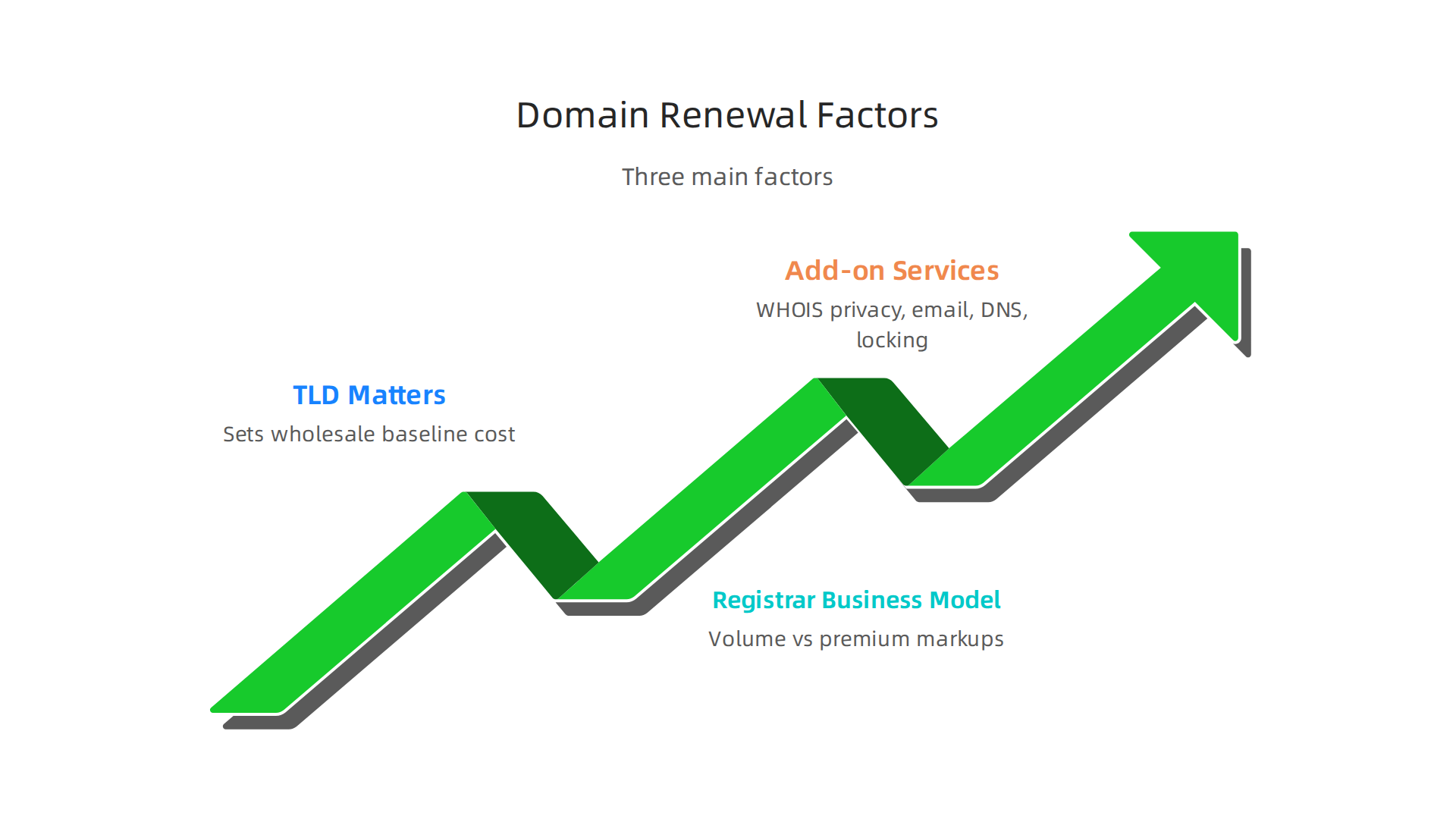
Now you know the market range. But why do two .com domains cost different amounts to renew? It comes down to three main factors.
The TLD matters more than you think
Not all domain endings are the same. The Top-Level Domain (TLD) sets the baseline price. A standard .com has a lower wholesale cost than newer or country-specific endings. Premium endings like .io, .ai, or .co can cost two to four times more at renewal because the companies that run them charge registrars more.
If you are doing a domain name renewal price comparison, always start with the TLD. A cheap .com renewal means one thing. A cheap .io renewal probably means a teaser rate that jumps later. You can explore the real costs of different domain extensions to see how much each TLD really costs.
How the registrar runs its business
Here is the biggest hidden factor. Registrars use different business models. Some operate on volume. They sell millions of domains with thin margins. Others focus on premium service with higher markups.
Many registrars use a common trick. They offer the first year at a loss to get you in the door. Then they build their real profit into renewal prices. This strategy is a standard practice for many domain resellers. The discounts you see upfront are not permanent.
The smartest registrars offer cost-based pricing with low markups. This makes it much easier to predict what you will pay over time. Transparent registrars also include things like WHOIS privacy for free rather than charging extra. You can see which models work best in our comparison of Porkbun domain pricing.
Add-on services sneak up on you
The price you see for renewal is rarely the final price. Most registrars add fees for:
- WHOIS privacy protection
- Email forwarding
- DNS management
- Domain locking
- Auto-renewal convenience fees
Some registrars bundle these features into the base price. Others charge $1 to $3 per feature each year. That small stuff adds up. The best domain services for small businesses in 2026 combine transparent renewal pricing with built-in security features.
What this means for you
When you compare prices, look at the full picture. Check the TLD cost. Understand the registrar’s pricing model. And add up all the extra fees. A domain that seems cheap today might be expensive next year.
For a hosting provider that keeps things clear and offers stable domain management, check out Prism Webhost. They focus on reliable infrastructure without the hidden games.
How to Compare Domain Renewal Prices Across Registrars
You have the factors now. But how do you actually compare prices without losing your mind? Let me show you a simple system that works.

Start with comparison tools
Don’t check each registrar one by one. Use a tool like TLD-List to compare domain prices across many providers in one place. It shows renewal costs side by side so you can spot the real deals fast.
Even better, create a simple spreadsheet. List the registrars you are considering. Then add columns for the first year cost, the renewal cost, and any extra fees. Include things like WHOIS privacy, DNS management, and email forwarding.
This is where a true domain name renewal price comparison gets real. For example, the GoDaddy domain renewal price might look fine for the first year. But when you check year two, the numbers jump. That is where the fine print hurts you.
Some domain registrars in 2026 publish transparent renewal schedules. Others hide them. The NameSilo blog on cheapest .com registrars compares real 5-year costs so you can see the full picture before you commit.
Read the fine print carefully
Introductory offers are everywhere. A registrar might advertise a .com for $1.99 the first year. That sounds great until you see the renewal cost is $18.99.
This is the teaser rate trick. Registrars use it to get your business. Then they make their real profit on renewals.
Always check two things:
- The exact renewal price for year two and beyond
- Whether the price is locked or can change
Some registrars, like those in the best domain services for small businesses in 2026, include transparent renewal pricing in their offers. Others do not.
Look for price lock guarantees
Here is a big one. Some registrars offer a price lock guarantee. That means your renewal cost stays the same as long as you keep renewing with them. No surprises.
These registrars are rare but worth finding. They take the guesswork out of your budget.
One example of a registrar that does this right is Porkbun. They keep renewal rates low and transparent. You can see the Porkbun domain pricing breakdown for yourself.
What to look for in a good registrar
When you compare, focus on these red flags:
- First year price that is way below market rate
- Missing renewal price information on the website
- Extra fees for basic features like WHOIS privacy
- No price lock guarantee
And look for these green flags:
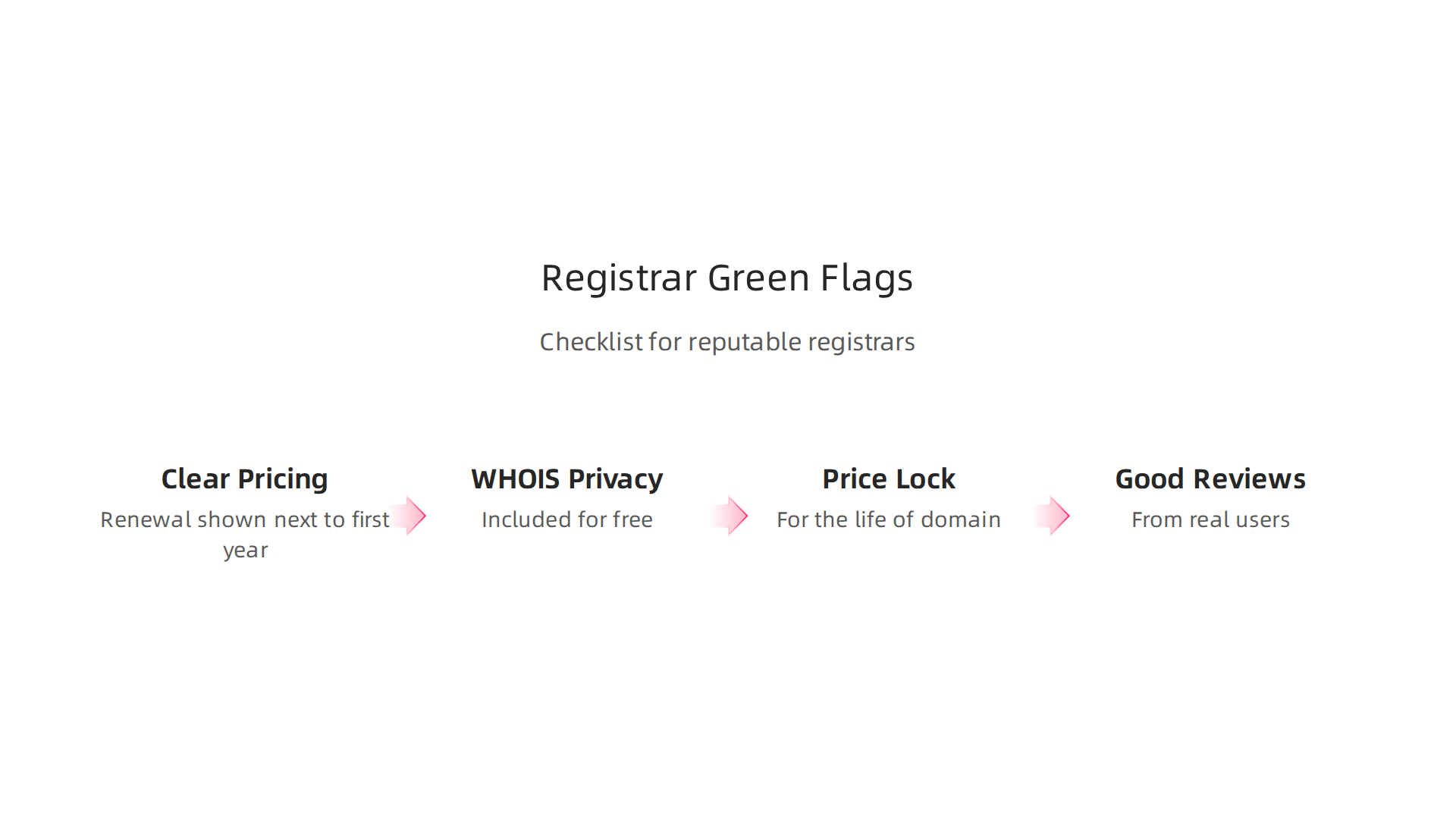
- Clear renewal pricing shown next to the first year price
- WHOIS privacy included for free
- Price lock for the life of your domain
- Good reviews from real users
The bottom line
A domain name renewal price comparison is not hard. You just need to look past the first year. Use a comparison tool. Read the fine print. And choose a registrar that shows you the full cost upfront.
For a hosting provider that keeps things simple and transparent, check out Prism Web Host. They focus on reliable infrastructure with clear pricing, no hidden games, and support that actually helps.
Hidden Fees, Auto-Renewal Traps, and Price Increases
You did the comparison. You picked a registrar. You thought you had a good deal. Then the bill came, and it was way more than you expected. What happened?
This happens to thousands of domain owners every year. The truth is that many registrars make money not on the first year but on what happens after. They use hidden fees, auto-renewal traps, and quiet price increases to squeeze more from you.
Let me show you the most common traps so you can avoid them.
The hidden fee problem
Some registrars charge fees for things you would expect to be free. Here are a few examples:
- A fee to transfer your domain away
- A fee to disable auto-renewal
- A fee to restore a domain after it expires
- Extra charges for WHOIS privacy, even though it should be standard
These fees are not always obvious when you sign up. You only see them when you try to leave or make a change. According to a 2026 analysis, some registrars build their margin into add-ons and services attached to renewals (Domain Renewal Cost 2026).
Always check the terms for transfers and cancellation before you buy. Look for phrases like "no hidden transfer fees" or "free WHOIS privacy."
Auto-renewal traps
Auto-renewal sounds helpful. It keeps your domain active so you do not lose it. But the trap is that some registrars renew your domain at a much higher price than expected. And they make it hard to turn auto-renewal off.
The FTC has been cracking down on this. They are pushing for "click to cancel" rules that make it as easy to cancel as it is to sign up (FTC Signals Enforcement). But not all registrars follow best practices yet.
Here is what you can do:
- Turn off auto-renewal right after you buy, unless you plan to keep it
- Set a calendar reminder for your renewal date
- Check the renewal price before the date arrives
The FTC also warns that scammers sometimes send fake renewal notices to trick you into paying more (Getting In and Out of Free Trials). Only pay through your registrar’s official dashboard.
Quiet price increases
Here is the sneakiest trap. Your domain renews at one price in year two. Then in year three, the price goes up again without a clear warning. Some registrars raise prices by 10% to 30% each year.
This is why a domain name renewal price comparison must cover multiple years. Use a tool like TLD-List to check year-over-year costs.
A registrar with transparent pricing will show you the price for year two, three, and beyond right on the checkout page. If you see only the first year price, that is a red flag.
How to protect yourself
Read the fine print before you buy. Look for a price lock guarantee. Choose a registrar that includes WHOIS privacy for free and does not charge for basic support.
If you want a hosting provider that keeps things simple and transparent, check out Prism Web Host. No hidden fees, no games. Just clear pricing and reliable service.
You can also learn more about calculating your true web hosting cost and avoiding hidden fees in 2026 with our detailed guide.
Domain Bundles and Promotions: Short-Term Savings vs Long-Term Costs
You see it all the time. A hosting provider offers a free domain for the first year when you sign up for a web hosting plan. Or they bundle a domain with hosting for just $2.99 the first month. It looks like a steal.
But here is the catch. That free domain or cheap bundle usually comes with strings attached. After the first year, the domain renews at the standard rate. And sometimes the hosting price jumps too.
Take Namecheap for example. Their hosting bundles include a free domain for the first year, but they clearly state that "all bundled domains renew at standard rates after the first year" (Namecheap Domain and Hosting Bundle). That standard rate can be three or four times what you paid.
Many registrars use these promotions to lock you in. You get a great deal up front. But when renewal time comes, you face a much higher bill. A 2026 guide explains that "a registrar with a cheap introductory offer might have a high renewal rate of $22 or more" (How Much Does a Domain Name Cost In 2026). That is a big jump from the $0.99 or $2.99 you paid originally.
Another common trick is requiring you to keep the hosting plan to keep the free domain. If you switch hosts, you lose the domain or have to pay a transfer fee. So you end up stuck paying for hosting you no longer want.
How to avoid this trap
Always look at the total cost over two or three years, not just the first year. Ask yourself: What will I pay for the domain in year two? What about year three? Use a domain name renewal price comparison across registrars to see the real difference.
For example, the GoDaddy domain renewal price is often much higher than its promotional price. Some registrars like Cloudflare offer more consistent renewal rates. Check the fine print for any "domain renewal price list" before buying.
Before you commit to a bundle, take a few minutes to compare standalone domain registration costs. A separate domain might cost a bit more upfront but save you a ton later. And if you do buy a bundle, set a reminder to review the renewal price six months before it expires.
Want to see how different hosting providers stack up on cost and transparency? Check out our detailed guide on calculating your true web hosting cost and avoiding hidden fees in 2026. It breaks down the math so you don’t get surprised.
If you want a hosting provider that is straightforward about renewals from day one, take a look at Prism Web Host. Their pricing includes no hidden fees, and they show you the renewal cost right up front. No games. Just honest numbers.
Practical Tips to Lock in the Best Domain Renewal Rates
Now that you know the tricks behind domain bundles and promotions, it is time to act. You do not have to accept high renewal rates. A few smart moves can save you a lot of money. Here are three practical tips to lock in the best domain renewal rates for years to come.

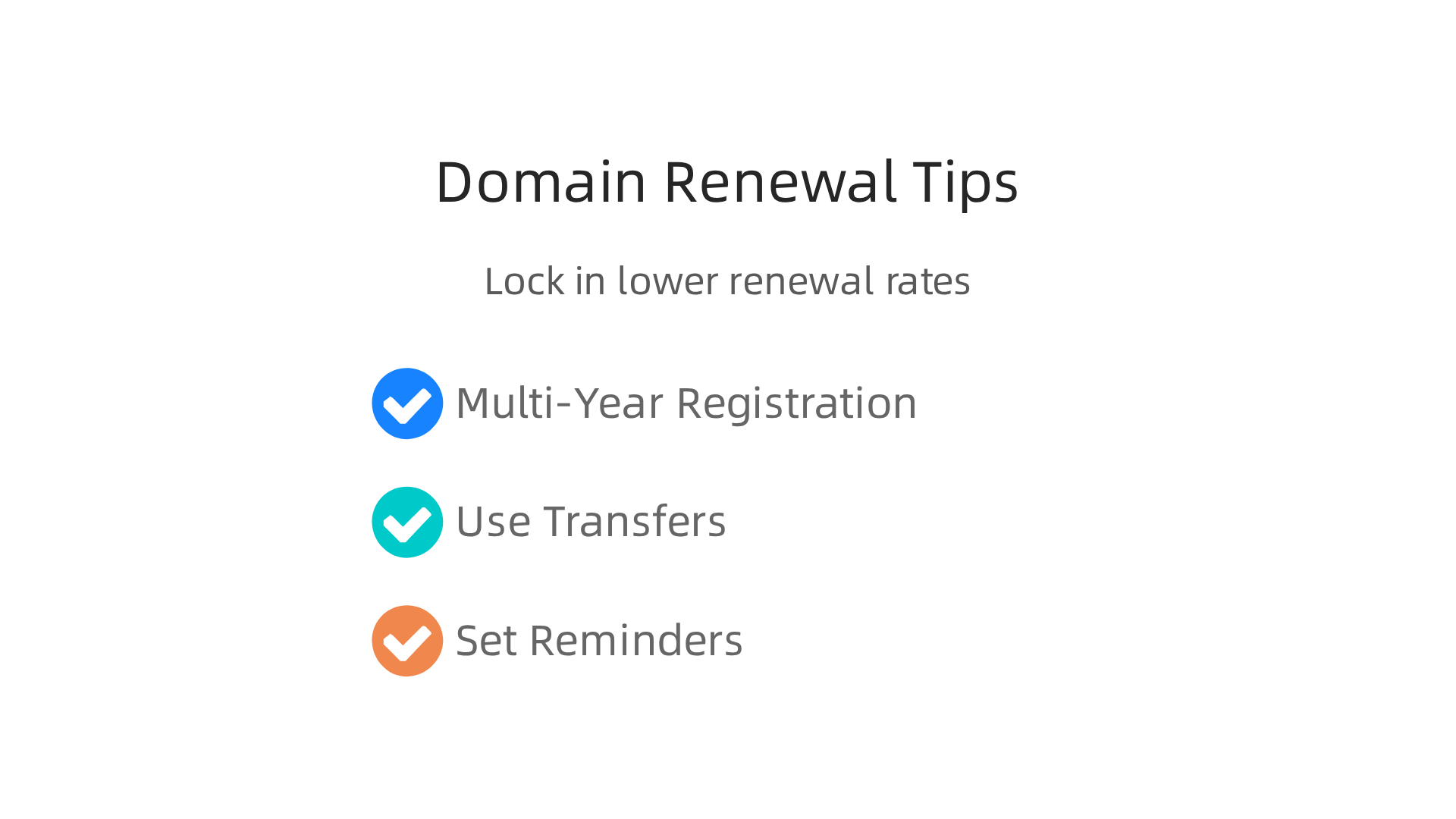
1. Register your domain for multiple years at once
Think of domain pricing like locking in a fixed mortgage rate. When you register a domain for two, three, or even five years, you pay today’s price for the entire period. That protects you from price jumps down the road. A recent study shows domain renewal costs can jump as much as 300% after the first year (Domain Renewal Cost 2026: Why Prices Jump 300% After Year 1). If you pay for three years now, you skip those increases for a long time.
Most registrars give you a discount for multiyear registrations. Even a small discount adds up. For example, instead of paying $15 per year for a .com domain, you might pay $12 per year if you buy three years at once. That saves you $9 right there.
2. Use domain transfer promotions to your advantage
Many registrars offer very low transfer prices to steal customers from other companies. You can use this to your benefit. When your renewal is coming up, shop around. See if another registrar is offering a transfer deal for $3.99 or $5.99. That is often cheaper than renewing at your current registrar’s standard rate.
But be careful. Before you transfer, do a domain name renewal price comparison to check the renewal cost at the new registrar after the first year. The godaddy domain renewal price is often much higher than its promotional transfer price, so always look ahead. For a clear example of transparent renewal pricing, check out this Porkbun domain pricing review. It shows how some registrars keep things honest.
3. Set calendar reminders to review renewal dates
Auto-renewal can be convenient, but it can also lead to nasty surprises. In 2026, the FTC continues to crack down on hard-to-cancel auto-renewals and subscription traps (Getting In and Out of Free Trials, Auto-Renewals, and Negative Option Subscriptions). The best way to stay in control is to set a reminder on your phone or calendar about 60 days before your domain expires. That gives you time to compare prices, consider a transfer, or simply decide if you still want the domain.
Late fees add up. If your domain expires and goes into a redemption period, you might pay $80 or more to get it back. A simple reminder prevents that.
Do the math before you commit
Use tools like TLD-List to compare prices across dozens of registrars at once. When you see a cloudflare domain renewal price listed clearly, you know what you are getting. Transparency wins.
If you want a hosting and domain provider that shows all renewal costs upfront with no hidden fees, take a look at Prism Web Host. Their pricing is the same for year one and year two. No games. Just straightforward value.
Summary
This article is a complete domain name renewal price comparison that explains why renewal bills often spike after the first year and how to avoid costly surprises. It breaks down the wholesale floor for common TLDs, shows how registrar business models (loss-leader pricing, markups, bundles) affect long‑term cost, and outlines typical renewal ranges for .com and premium extensions. You’ll learn to spot hidden fees, auto‑renew traps, and quiet price increases, and how to use tools and a simple spreadsheet to compare true multi‑year costs. The guide also offers practical tactics—registering multiple years, timed transfers, and calendar reminders—to lock in lower rates, plus guidance on picking registrars that publish clear renewal pricing. After reading, you’ll be able to compare providers, calculate multi‑year expense, and choose domain registration options that avoid surprise hikes.
