




Choose Your Ideal Host With Trustworthy Web Hosting Reviews
Article
Why Trustworthy Web Hosting Reviews Matter for SMBs and Online Brands
Picking the right web host for your business can feel like a really big decision.

If you run a small to medium-sized business (SMB) or an online brand, your website is often the main way customers find you and buy from you. So, choosing the wrong web hosting can cause a lot of headaches and even cost you money.
Think about it: have you ever visited a website that took forever to load? Maybe it even crashed when you were trying to buy something? These are common problems that many business owners face when their web host isn’t up to par. In 2026, website speed and uptime are more important than ever. A slow website can scare away customers, and if your site is down, you’re basically closed for business. Studies show that a good web host needs to offer strong speed, consistent uptime, and good value for small businesses, as seen in comprehensive hosting benchmarks Benchmarking 100 Shared Hosts: Speed, Uptime, and ….
Here are some of the biggest worries entrepreneurs and SMBs have about their web hosting:
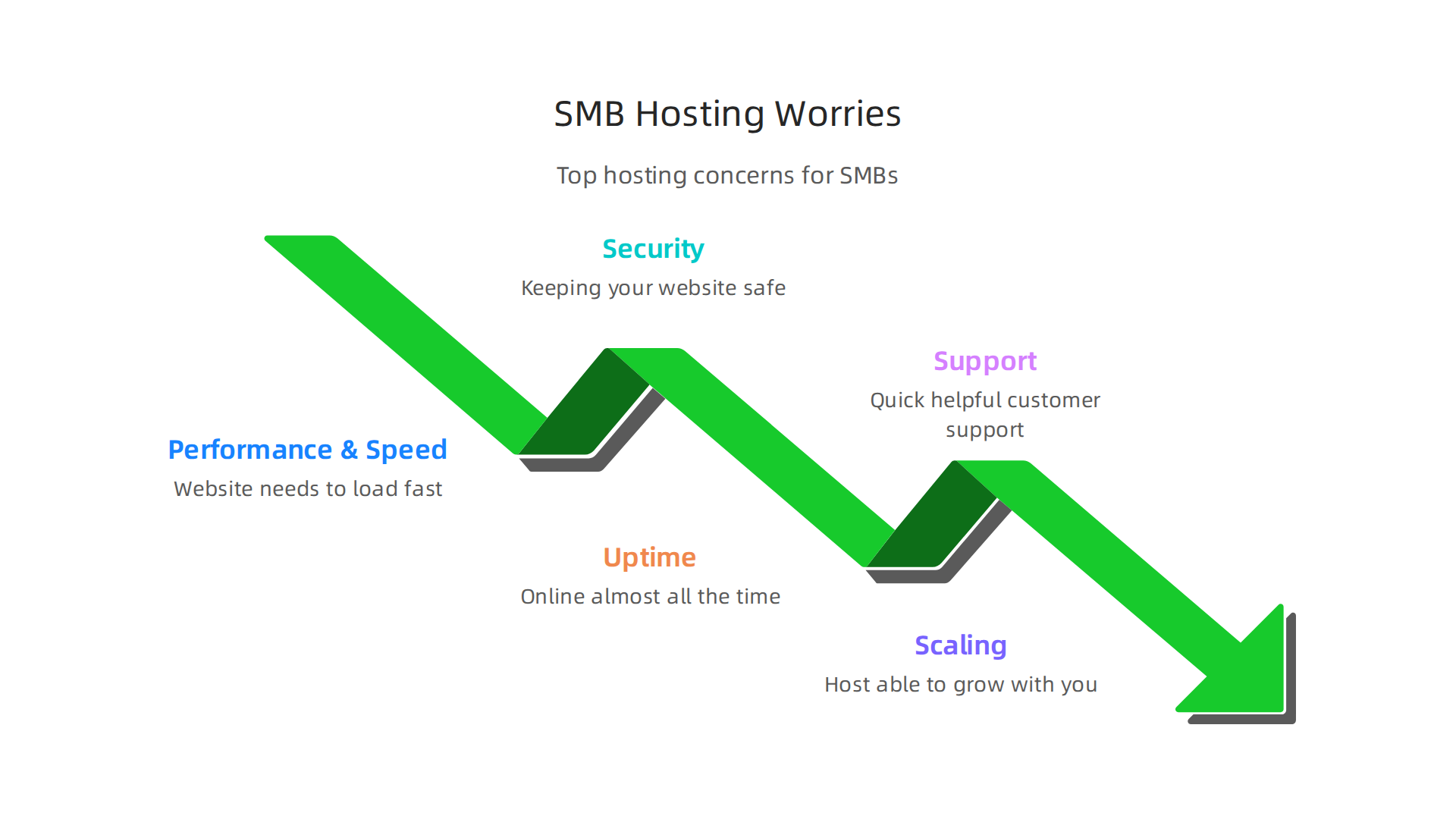
- Performance and Speed: Your website needs to load super fast. If it’s slow, people will leave. Fast loading helps with how your site ranks on Google, too.
- Security: Keeping your website safe from hackers and online attacks is a huge concern. A good host protects your data and your customers’ information.
- Uptime: Your website should be online almost all the time. If it keeps going down, you miss out on sales and lose trust with your visitors.
- Support: When something goes wrong, you need quick and helpful support. No one wants to be stuck waiting for hours while their website is broken.
- Scaling: As your business grows, your website will need more power. Your host needs to be able to grow with you without causing new problems.
This is exactly why trustworthy web hosting reviews are so important. They help you cut through all the technical talk and find out what real users think about different providers. By looking at good web hosting reviews, you can reduce the risks and save a lot of time. You don’t have to guess which company is best; instead, you can learn from others’ experiences. This helps you find the best web hosting for small business that truly meets your needs for speed, security, and reliable support. A good web hosting services reviews 2026 data backed guide to choosing a reliable host can make all the difference.
When you look at different web hosting reviews, you’ll see they often talk about the same main things. These are the important parts that help you know if a web host is good for your business. Good reviews help you understand exactly what you’re paying for and what to expect.

Here are the main things web hosting reviews usually measure:
- Performance and Speed: This is how fast your website loads for visitors. Reviews will show how quickly a host can deliver your site’s pages. A fast website makes people happy and helps your site show up higher in search results.
- Uptime: This means how much time your website is actually online and working. Good web hosting reviews will share how often a host keeps sites up. You want a host that promises close to 100% uptime, so your business is always open.
- Security: This is about keeping your website safe from hackers and bad software. Reviews look at things like free SSL certificates (which keep customer data safe) and ways to stop online attacks. Keeping your site secure is super important for trust.
- Support: When something goes wrong or you have a question, you need help. Reviews will often talk about how fast and helpful a host’s customer service team is. Is it easy to get in touch? Do they solve problems quickly?
- Features: What tools and options does the host give you? This can include how much space you get for your website files, how many visitors your site can handle, if they offer email accounts, and if they make it easy to back up your site. Many good hosts offer cPanel, which makes managing your site simple.
- Pricing: Of course, cost matters. Web hosting reviews will break down the monthly or yearly fees, but they also check for hidden costs, like higher prices when you renew. Getting a clear picture of the true cost helps you budget better.
It’s important that these web hosting reviews are real and honest. The Federal Trade Commission (FTC) has guides to help platforms feature Featuring Online Customer Reviews: A Guide for Platforms in a fair way, so you can trust what you read. You might even find genuine user experiences if you look for "web hosting reddit" discussions.
Different websites need different things from their host, so they might care more about certain points:
- Blogs and Personal Sites: These usually need good speed and uptime. They often benefit from easy-to-use controls and reliable customer support.
- Online Shops (E-commerce): These sites need top-notch security for taking payments, super-fast speeds so customers don’t leave their shopping carts, and a host that can handle many visitors during sales. They also need good scaling options to grow.
- Portfolio Sites: If you’re a designer or photographer, you’ll need lots of storage for high-quality images and videos, along with fast loading times to show off your work beautifully.
Understanding these points helps you choose the right provider from a long list of web hosting companies. Learning more about choosing a web hosting company a business guide to speed and security can make this easier. By focusing on what truly matters for your specific site, you can find the best web hosting that fits your needs.
One of the most important things web hosting reviews look at is how well a host makes your website work. This means checking its speed and how safe it is. A good web host makes sure your site loads fast and keeps bad guys out.
Performance and security: speed, caching, CDN, and DDoS protection
When you read web hosting reviews, you’ll often see how much they talk about speed. Why? Because a fast website means happy visitors and better chances of showing up high on Google. Reviewers test speed in a few ways:
- Page Load Speed: This is how long it takes for your whole web page to show up on someone’s screen. Think of it like a race: the faster your site loads, the better it performs. Many studies in 2026 show that slow websites make people leave quickly, so speed really matters for your business Website Speed & Performance Statistics 2026 | 50+ Data Points.
- Time-To-First-Byte (TTFB): This sounds a bit technical, but it’s simple. It measures how long it takes for your web browser to get the very first piece of information from the server after you click a link. It’s like how quickly a restaurant takes your order. A low TTFB means the server is quick to respond, which is a good sign for overall speed. Many web hosting reviews, like one testing IONOS in 2026, focus on this metric to show real performance IONOS Review (2026): Test, Benchmarks.
- Sustained Throughput: This checks how well a website handles lots of visitors at once. If your online store has a big sale, you want it to stay fast even when many people are shopping. Reviewers often run tests that send many "fake" visitors to a site to see if it slows down. This helps you understand if a host can handle your site’s growth. Real-world tests are key to finding hosts that pass Google’s performance standards in 2026 Web Hosting Core Web Vitals Test 2026: Which Hosts Pass Google’s SEO Performance Standards.
To make sites even faster, good hosts offer special tools. Caching saves copies of your website so it loads faster for repeat visitors. A CDN (Content Delivery Network) places your website’s files on many computers around the world, so visitors get content from a server closest to them. This makes your site super fast, no matter where your users are.
Then there’s security. This is about protecting your website and everyone who uses it from online threats. Web hosting reviews often look for these security features:
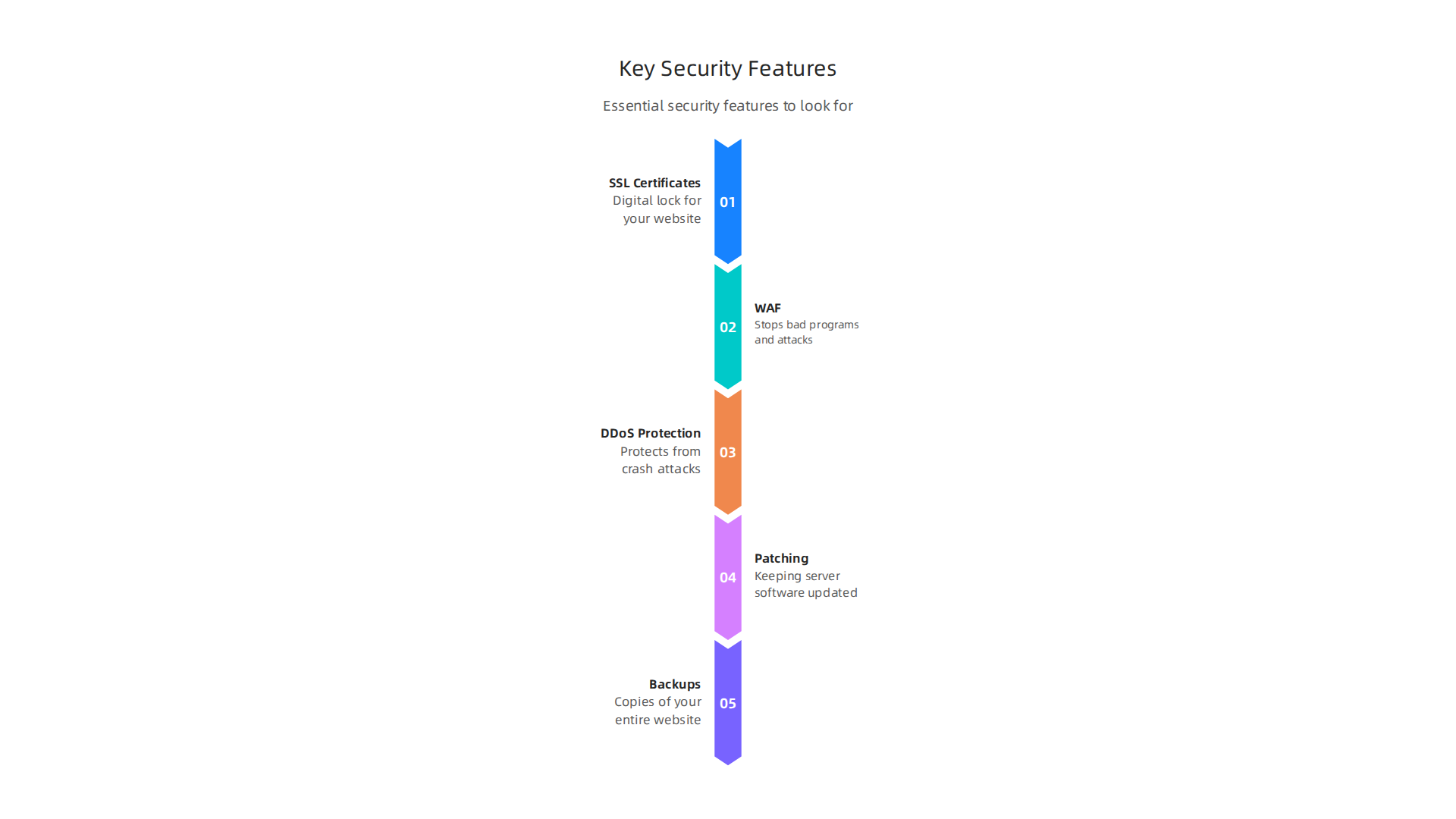
- SSL Certificates: These are like a digital lock for your website. They make sure any information shared between your site and a visitor (like passwords or credit card numbers) stays private. If a website address starts with "https," it has an SSL certificate.
- Web Application Firewalls (WAF): Think of a WAF as a guard at your website’s door. It stops bad computer programs and hacker attacks before they can harm your site.
- DDoS Protection: This protects your site from a type of attack where many computers try to visit your site at the same time to make it crash. Good web hosts have systems in place to fight these attacks.
- Patching: This means keeping all the software on the server updated. Updates often fix security holes that hackers could use. A good host will regularly patch their systems to keep them safe.
- Backups: This is super important. Backups are copies of your entire website. If anything bad happens, like a hack or a mistake, you can use a backup to get your site working again. Good web hosting reviews check if hosts make regular backups and how easy it is to restore your site. Experts suggest following a "3-2-1 backup rule" for keeping your data safe in 2026, meaning you have three copies of your data, on two different types of storage, with one copy kept in a different place 2026 Standards for Data Backup – Keep Your Information Safe. It’s also vital that these backups are regularly tested to make sure they actually work when you need them 5 Backup Trends You Don’t Want to Miss in 2026 – NovaBACKUP.
By checking these points in different web hosting reviews, you can get a clear idea of which providers offer the best web hosting for small business needs, making sure your site is both quick and secure. To help you choose from a list of web hosting companies, you can also look at specific reviews like the Terra Hosting Performance, Uptime, and Security Features for 2026.
After making sure your website is fast and secure, the next big thing web hosting reviews look at is how often your site is actually online and working. This is called uptime, and it means how available your website is for visitors. If your site is down, no one can see it, and that’s bad for business.

Uptime and Reliability: Keeping Your Site Online
Uptime is shown as a percentage, like 99.9% or 99.99%. A higher number means your website is almost always up. Even a small difference in these numbers can mean a lot of lost time. For example, 99.9% uptime means your site could be down for about 8 hours and 45 minutes a year, while 99.95% uptime cuts that downtime in half to around 4 hours and 22 minutes annually Enterprise SaaS SLA Benchmark: What 99.9. Many web hosting reviews share their findings on real-world uptime for different providers, giving you a clear picture. Reports in 2026 show that uptime varies greatly among different service providers, so it’s important to check actual data, not just promises SaaS Uptime Statistics 2026: Real Data from 100+ Vendors.
Reviewers measure uptime by using special tools that check a website every few minutes from different places around the world. If a site doesn’t respond, it’s counted as downtime. This helps you see how reliable a host truly is.
Hosts often offer a Service Level Agreement (SLA). This is like a promise, usually in writing, about the minimum uptime they will provide. If they don’t meet this promise, you might get some money back or a credit. An SLA is a key part of the deal, clearly stating the expected availability and outlining what happens if a host doesn’t meet its promises What are SLOs, SLAs, and SLIs? A complete guide to service …. It’s always smart to read the SLA carefully when comparing web hosting companies. Learning more about this helps you choose the best web hosting for small business in 2026 needs.
The Importance of Support Quality
Even with the best web hosting, problems can happen. This is why good customer support is super important. When you look at web hosting reviews, pay close attention to what people say about support. Good support means:
- Many Ways to Get Help: Do they offer chat, phone, email, or a ticket system? Having different options means you can pick the fastest way to get help when you need it most.
- Quick Response Times: How long do you have to wait for an answer? Fast support can save you from long periods of your website being down.
- Helpful and Knowledgeable Staff: Are the support people able to solve your problem, or do they just give you a generic answer? Reviewers often talk about how effective the support staff are at solving real issues.
- Good Help Guides: A host should also have a large library of articles and how-to guides (often called a knowledge base). This lets you find answers to common questions yourself without having to wait for support.
Think of support quality as your safety net. If your site goes down, you want to know that you can get quick, expert help to fix it. This is especially true for small businesses where every minute of downtime can mean lost sales or unhappy customers. Checking web hosting reviews, including what people say on forums like "web hosting Reddit," can give you honest insights into a host’s support. Good support is a hallmark of the top 10 web hosting companies of 2026. A detailed Service Level Agreement (SLA) often also includes how quickly the support team will respond and fix issues Service Level Agreement (SLA): Complete Guide for 2026 | ZiaSign.
After making sure a web host offers great support, the next important thing to look at in web hosting reviews is money. We need to talk about pricing, plans, and hidden costs. It’s easy to get tricked by low starting prices, so paying close attention to the details is super important.
Pricing, plans, and hidden costs (comparison table)
Many web hosting companies show a very low price to get you to sign up. This is often an "introductory price." The real shock can come later when it’s time to renew your plan. Renewal prices can be much, much higher, sometimes 300% to 600% more than what you first paid Web Hosting Hidden Costs Explained: 12 Fees They Hope You …. Some reports in 2026 even show renewal hikes over 900% for certain plans after the first year What Your WordPress Hosting Really Costs After Year One. When you’re looking at different web hosting reviews, always search for the renewal price, not just the first price. Many review sites will highlight this important detail.
Here are some other common hidden costs to watch out for:
- Add-on Fees: A host might offer a free SSL certificate for the first year, but then charge for it later. Other add-ons like daily backups, site security packages, or domain privacy often come with extra yearly fees, adding $50-$150 or more to your yearly bill Pricing Analysis of Web Hosting Services 2026. Make sure to ask if things like SSL and backups are truly free for the long term.
- Resource Throttling: Some cheaper plans might seem to offer a lot, but they limit how much power your website can use. If your site gets busy, the host might slow it down or even ask you to upgrade to a more expensive plan. This is called resource throttling.
- Migration Fees: If you want to move your website from an old host to a new one, some companies charge for this service. However, many good hosts offer to do this for free.
To find the best value, you need to compare different types of hosting plans. The cost changes a lot depending on the kind of hosting you pick:
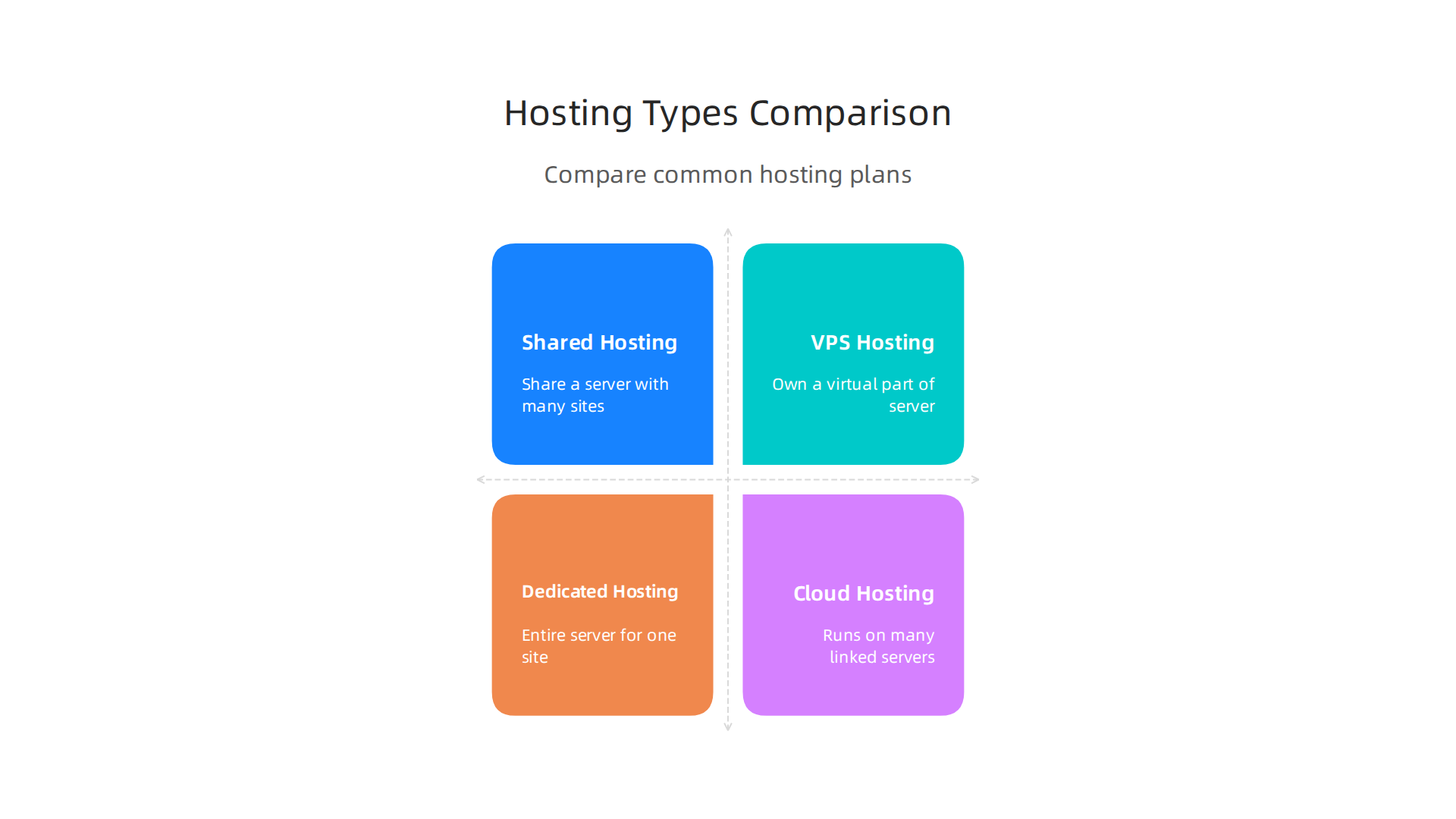
| Hosting Type | What it is like | Typical Monthly Cost (2026) | Good for: |
|---|---|---|---|
| Shared Hosting | You share a server with many other websites. | $3 – $15 | Small personal sites, blogs, new businesses. |
| VPS Hosting | You have your own virtual part of a server. | $5 – $80 | Growing businesses, e-commerce stores that need more power. |
| Dedicated Hosting | You get an entire server just for your website. | $80 – $500 | Very large websites, big online stores, sites with lots of traffic. |
| Cloud Hosting | Your site runs on many servers linked together. | $4 – $28 | Websites that need to handle big changes in traffic, very flexible. |
Note: These are average starting prices. Renewal costs can be much higher.
When looking at a list of web hosting companies, it’s wise to consider not just the advertised price, but the total yearly cost including renewal and any needed add-ons. Reviewers on platforms like "web hosting Reddit" often share their real experiences with unexpected charges, which can be very helpful for finding the best web hosting for small business needs. Understanding these pricing models helps you avoid nasty surprises and ensures you’re truly getting good value for your money. You can learn more about how to master your web hosting cost in 2026 and avoid these common hidden fees.
Understanding web hosting costs is one thing, but true value also comes from features that let your website grow and stay safe. When looking at web hosting reviews, make sure to check for scalability, backups, and developer-friendly features. These are super important for keeping your site running well for years to come.
Scalability: Growing with Your Website
Your website isn’t going to stay small forever. As your business grows, your website will need more power, more storage, and more speed. This is where "scalability" comes in. A good web host lets your site grow easily without you having to move everything or suffer slow performance.
Here are some features to look for:
- Autoscaling: This means your hosting can automatically give your website more resources (like computer power) when it gets busy. Think of it like a smart thermostat for your website, adjusting to demand.
- Staging Environments: These are like practice areas for your website. You can make big changes, test new features, or fix problems without affecting your live site. This is a huge help for avoiding mistakes and keeping your website running smoothly.
- Container Support: This makes it easier for developers to build and manage parts of your website. It means your host can handle more complex setups and updates, which is great for custom web projects.
- Managed Databases: A managed database takes care of the technical side of your website’s information storage. The hosting company handles updates, security, and performance, so you don’t have to be an expert. This is a big plus for businesses using content management systems like WordPress.
These features mean you won’t outgrow your host quickly, saving you time and headaches later on. If you’re comparing a list of web hosting companies, see how they talk about handling growth.
Backups: Your Safety Net
Imagine losing all your website’s content, photos, and customer information. It’s a scary thought! That’s why good backup features are a must-have. Web hosting reviews should always talk about a host’s backup policies.
What to look for in a host’s backup services:
- Automatic Backups: Your host should make copies of your website regularly, without you having to remember to do it. Daily backups are best, as they ensure you can recover to the most up-to-date state possible Practice Guide for Cloud Computing Security [ISPG-SM04].
- Retention Period: How long does the host keep these backups? You’ll want them stored for a good amount of time, perhaps a month or more, so you can go back to an earlier version if needed. Some hosts keep daily backups for a month and monthly backups for years for compliance reasons Best Practices for Snapshots and Data Retention.
- Easy Restores: Getting your site back from a backup should be simple. Some hosts offer one-click restore options. Make sure they test these restores to ensure they actually work when needed Azure Security Benchmark v3 – Backup and recovery.
- Offsite Copies: For even more safety, a host should store at least one copy of your backup data in a different location, away from the main server. This protects against big problems like natural disasters. This is part of the well-known 3-2-1 backup rule, which suggests having three copies of your data, on two different types of media, with one copy stored offsite 3-2-1 Backup Rule Explained: Do I Need One? – Veeam.
Don’t settle for a host that makes backups complicated or costs extra. Your data is too important.
Developer-Friendly Features for Easier Management
Even if you’re not a full-time developer, having some developer-friendly features can make managing your website much easier. These often include:
- cPanel or similar control panel: This gives you an easy-to-use interface to manage your website files, databases, emails, and more.
- SSH Access: For those who are more comfortable with technical commands, this offers direct access to your server.
- Git Integration: This helps with version control for code, allowing teams to work on a website and keep track of changes easily.
When exploring web hosting reviews, look for hosts that clearly explain these features and how they help your site. A platform like Prism Web Host offers reliable and high-performance hosting designed to help businesses launch and maintain their websites effortlessly, focusing on security and automated scalability. This type of host removes many of the technical worries, letting you focus on your business. You might want to consider how to select the best web hosting for small business in 2026 to make sure you get the right blend of features and support.
Beyond individual features, the kind of hosting provider you choose is also super important. Different types of web hosts are made for different kinds of websites and businesses. Picking the right one means your site will run well, stay safe, and fit your budget. When you read web hosting reviews, it helps to know what type of host you’re looking at and if it matches what your business needs.
Here are the main types of hosting providers and who they are best for:
Budget Shared Hosting: Best for New and Small Sites
Shared hosting is like living in an apartment building. Many websites share space on one server. This keeps costs low, making it a great choice for new businesses, personal blogs, or small websites that don’t get a lot of visitors.
- Who it suits:
- Startups and new websites
- Blogs with a small audience
- Small local businesses with simple online brochures
- What to look for in reviews: Check for consistent uptime, basic customer support, and clear pricing. Some companies offer incredibly cheap plans initially, but the renewal cost can be much higher. Many reviews for shared hosts look at speed and uptime over a long period. For example, some studies benchmark 100 shared hosts to compare their speed, uptime, and value over a year Benchmarking 100 Shared Hosts: Speed, Uptime, and Value.
Managed WordPress Hosting: For Easy WordPress Sites
WordPress is a very popular way to build websites. Managed WordPress hosting is made just for these sites. The host takes care of all the technical stuff, like updates, security, and backups, so you don’t have to. This type of hosting often makes your WordPress site faster and more secure.
- Who it suits:
- Businesses with WordPress websites
- Bloggers who want to focus on content, not technical issues
- Anyone needing a fast, secure, and easy-to-manage WordPress site
- What to look for in reviews: Focus on WordPress-specific speed tests, built-in security features, and expert WordPress support. Benchmarks often focus on how well these hosts perform for WordPress sites specifically WordPress Hosting Benchmarks 2026. If you’re looking to speed up your WordPress site, checking for the fastest WordPress hosting in 2026 can make a big difference.
VPS/Cloud Hosting: For Growing Businesses
VPS (Virtual Private Server) and Cloud hosting give your website more power and flexibility. Think of a VPS as owning a condo in our apartment building example; you have more control and dedicated resources than with shared hosting. Cloud hosting lets your website use resources from many different servers, which means it can handle sudden boosts in traffic very well.
- Who it suits:
- Growing e-commerce stores
- Websites with increasing traffic
- Businesses needing more control over their server environment
- What to look for in reviews: Look for promises of guaranteed resources, easy scaling options, and strong security. If your site needs a lot of resources but you don’t want to pay for a full dedicated server, cheap VPS hosting in 2026 can be a good middle ground.
Dedicated Hosting: For Large Enterprises
Dedicated hosting means your website gets its very own server. No sharing at all! This is the most powerful and expensive option, used by very large websites or companies that need complete control and top security. For businesses with huge needs, comparing the best dedicated hosting providers 2026 is essential.
Key Review Signals: Security, Speed, and Support
No matter which type of hosting you need, certain signals in web hosting reviews tell you if a provider is a good fit.
- Security: Good reviews will highlight how well a host protects your site from bad actors. This includes features like DDoS protection, SSL certificates, and regular security updates. Your website’s safety is non-negotiable, and the Federal Trade Commission even has guidelines to combat deceptive reviews and ensure honesty in online endorsements Federal Trade Commission Announces Updated Advertising Guides.
- Speed: A fast website keeps visitors happy and helps with search engine rankings. Look for reviews that mention fast loading times, low "Time To First Byte" (TTFB), and good Core Web Vitals scores. Website speed matters a lot for user experience and how well your site shows up in searches Website Speed & Performance Statistics 2026.
- Support: When things go wrong, you need quick and helpful support. Check if reviews praise the customer service responsiveness, knowledge, and availability (24/7 is best).
Looking for the best web hosting for small business 2026 often means balancing these three areas. A provider like Prism Web Host — Fast, Reliable Web Hosting focuses on combining these important features to help businesses succeed online. For more insights on what people really think, sometimes looking at why Reddit is your most honest source for web hosting reviews can give you unfiltered opinions. Ultimately, the best web hosting services reviews in 2026 are those that give you data-backed guides for choosing a reliable host Web Hosting Services Reviews 2026.
You now know about the different kinds of hosting and the big things to look for in web hosting reviews. That’s great! But here’s the thing: not all reviews are the same. It’s super important to know how to read them so you don’t get tricked.

We need to learn how to interpret star ratings, user reviews, and lab tests to find the real truth.
How to interpret star ratings, user reviews, and lab tests
When you’re looking at different web hosting reviews, you might see star ratings, comments from users, and detailed reports from experts. All of these can help, but you need to be smart about how you look at them.
Sometimes, a review might be "sponsored." This means the reviewer got something free or got paid to talk about the service. While not all sponsored reviews are bad, you should know when a review is a paid endorsement. The Federal Trade Commission (FTC) has rules about this, saying that advertisers should not use misleading claims, even in paid endorsements. Actually, the FTC gives clear guidelines on Endorsements, Influencers, and Reviews to help people understand honest advertising.
Another thing to watch for is if a website only shows good reviews and hides the bad ones. That’s not fair! The FTC wants companies to ensure reviews truly come from real customers and show all kinds of feedback, not just the positive parts. Knowing about these rules helps you spot when something might not be quite right. When you see a bunch of reviews that seem too good to be true, they often are. Research also talks about selection and measurement bias in online reviews, which means how reviews are gathered can sometimes make them unfair.
So, how can you tell if a review is honest and helpful? Here’s a simple checklist to help you validate claims:
- Who wrote it? Is it a real person with a history of reviews, or a brand-new account?
- Is it too perfect? Look for reviews that sound overly excited or vague. Real users often mention both good and bad points.
- When was it written? Web hosting changes fast! A review from 2020 might not be true in 2026. Look for recent reviews.
- Does it mention details? Good reviews talk about specific features, problems, or how customer support helped. Vague reviews are not helpful.
- Are they hiding costs? Be careful of amazing intro prices that don’t talk about renewal costs. You want to Master Your Web Hosting Cost in 2026 by looking for clear pricing details, including what you’ll pay after the first year.
- Look for expert tests: Websites that do their own tests, like checking speed or uptime for many hosts, can give you numbers and facts instead of just opinions. They often show how they did their tests.
By following these tips, you can become much better at finding the best web hosting reviews. This helps you to properly evaluate and choose your ideal provider from the top rated web hosting companies for your business. Remember, a careful eye will save you from bad choices and hidden fees down the road.
Summary
This article explains why trustworthy web hosting reviews are essential for small and medium businesses and online brands, and it guides readers through the key signals to watch for when comparing providers. It covers the technical and practical factors reviewers test—speed (page load, TTFB, throughput), uptime and SLAs, security (SSL, WAF, DDoS protection, patching), and support responsiveness—so you understand how those affect sales, SEO, and customer trust. The piece also breaks down pricing pitfalls like promotional vs. renewal rates and common hidden fees, and it compares hosting types (shared, VPS/cloud, managed WordPress, dedicated) so you can match a plan to your needs. You’ll learn what backup and scalability features matter, which developer tools ease management, and how to read ratings, user comments, and lab tests critically to avoid biased or sponsored endorsements. By the end, readers will be able to evaluate reviews, spot red flags, and choose a hosting provider that balances performance, security, support, and real cost.
