




Hetzner VPS Pricing 2026: Uncover True Costs and Maximize Value
Article
Why Hetzner VPS pricing matters for small businesses in 2026
For small businesses in 2026, having a good website is like having a helpful storefront that is always open. But choosing where to host that website can be tough. Many business owners face common problems with their hosting: how much it costs, if it works fast enough, if it’s safe from online threats, and if it can grow with their business. You want to make sure your website stays online, loads quickly, and is safe, all without spending too much money.
Actually, finding the right balance of these things is a big puzzle for many small businesses.

Some hosting options can be very expensive, like comparing them to high-end services such as those found with aws hosting cost. Others might seem cheap at first glance, but then surprise you with extra fees later on. This is why understanding every detail of your hosting plan is so important. You need to know exactly what you are getting for your money. For example, some providers charge extra for things like backups, which are super important for keeping your website safe. Did you know that some Hetzner backup costs can be an extra 20% of your server price each month? This detail can really change your total hetzner pricing How Much Does Hetzner Cloud Cost? 2026 Pricing Guide.
This guide is here to help you figure out hetzner vps pricing. We will look closely at how Hetzner sets its prices for VPS plans. We will also show you how to spot any hidden costs that might not be clear at first glance. Think about other services like cpanel pricing or vercel hosting pricing that also have their own ways of adding up costs. By the end, you will know how to pick the best Hetzner VPS plan that fits your business needs, helping you make smart choices that support your growth without any unwelcome surprises. If you are looking to find a good deal without sacrificing quality, learning about cheap vps hosting in 2026 that doesnt sacrifice performance or security is a great next step.
Quick overview: How Hetzner structures VPS pricing
When you look into hetzner vps pricing, it is like learning about the different parts that make up the total cost. Hetzner, like other hosting companies, builds its prices based on a few main things. These parts decide how powerful your VPS will be and how much it will cost you each month or hour.
First, let’s talk about the main parts of a Hetzner VPS plan:
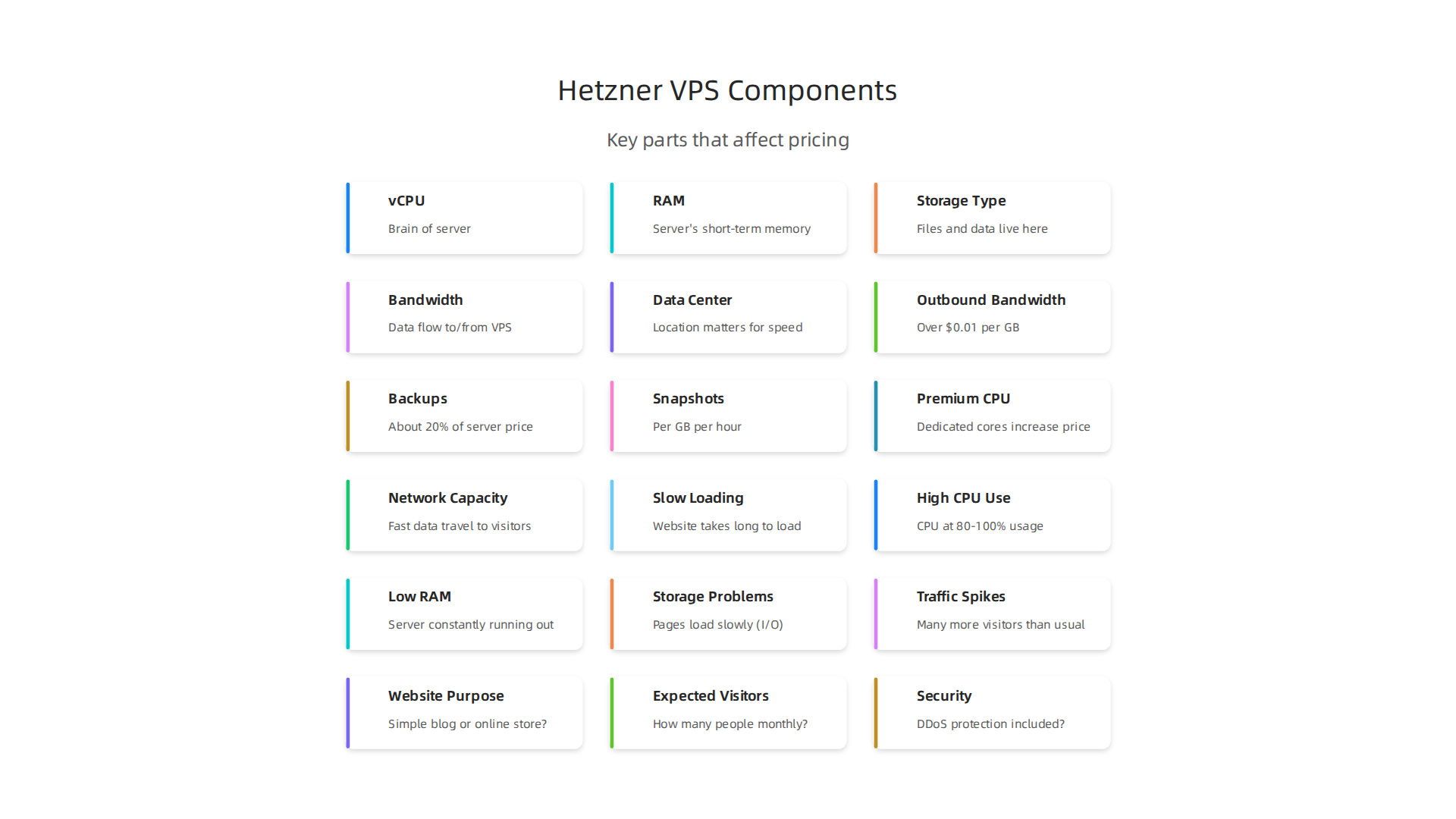
- CPU (vCPU): This is like the brain of your server. More vCPUs mean your website can do more tasks at once and run faster. Hetzner offers different numbers of vCPUs depending on the plan you pick.
- RAM: This is the server’s short-term memory. The more RAM your VPS has, the better it can handle many visitors or complex programs. You will find plans with different amounts of RAM, like 4 GB or 8 GB, for example.
- Storage Type: This is where your website’s files and data live. Most modern Hetzner VPS plans use fast NVMe SSD storage, which helps your website load very quickly. Older plans might have used slower HDD storage.
- Bandwidth: This is how much data can flow to and from your VPS. Hetzner usually includes a large amount of traffic, like 20 TB, with their plans. But if you use more than that, there might be extra
hetzner pricingcharges, often around $0.01 per GB for extra data. - Data Center Location: Where your server is physically located matters for speed. Hetzner has data centers in places like Germany, Finland, and the USA. Choosing a data center closer to your visitors can make your website load faster for them.
Let’s look at some examples of how these parts add up. As of 2026, Hetzner offers various cloud VPS plans. For instance, a basic CX23 plan might come with 2 vCPUs, 4 GB of RAM, and 40 GB of NVMe SSD storage, along with 20 TB of traffic, costing around $4.49 per month. Larger plans, such as the CX33, offer more power with 4 vCPUs, 8 GB RAM, and 80 GB SSD storage, priced higher at about $6.49 per month. You can see how the different features directly affect the price you pay each month for your hetzner vps pricing Hetzner Pricing 2026: CX23, CAX11 & CX33 Plans from $4.49/mo.
Hetzner also gives you choices for how you pay:
- Monthly vs. Hourly Billing: Hetzner lets you pay by the hour or by the month. This is helpful because you can choose what works best for your budget. If you only need a server for a short project, hourly billing is great. But if you plan to keep your website online all the time, monthly billing is usually cheaper in the long run. Many plans range from €5.49 to €10.49 per month for smaller instances, and much higher for larger ones Hetzner Cloud VPS Pricing Calculator (Aug 2026).
- Included Traffic: As mentioned, most plans include a good amount of data transfer. It is important to know this limit so you are not surprised by extra fees if your website becomes very popular and uses a lot of data.
- Billing Cycles: For monthly plans, you pay at the beginning of the month. For hourly plans, Hetzner adds up your usage and bills you at the end of the month.
Understanding these details helps you compare Hetzner’s offerings with other providers like those with higher aws hosting cost or more niche services like those with specific vercel hosting pricing. It’s all about finding the best value for your business. To really get a handle on all potential costs, you should also learn how to calculate your true web hosting cost.
When looking at what you get for your hetzner vps pricing, it is helpful to see how different plans fit different needs. Hetzner offers various sizes of VPS, and each size works best for certain types of websites or online projects. Knowing this helps you choose a plan that is just right, without paying for things you do not need.
Let’s match some common Hetzner VPS plans to what small and medium businesses often use them for:
-
Small Plans (like CX23 or CAX11): These plans are great for starting out. They usually come with 2 vCPUs, 4 GB of RAM, and about 40 GB of fast NVMe storage. A plan like the CX23 costs around $3.99 per month, while a CAX11 (which uses a different type of processor) might be around $4.49 per month, as of 2026. These are perfect for:
- A simple blog or personal website.
- A small online portfolio to show off your work.
- Testing new software or development projects.
- Low-traffic websites that do not need a lot of power.
These plans provide good value for basic needs. You can learn more about specific Hetzner Cloud VPS prices by checking out a Hetzner Cloud VPS Review.
-
Mid-Range Plans (like CX33 or CX43): If your website starts to get more visitors or you need to run slightly more complex apps, these plans offer more power. For example, a CX33 plan might have 4 vCPUs, 8 GB of RAM, and 80 GB of NVMe storage. The CX43 goes even further with 8 vCPUs, 16 GB RAM, and 160 GB storage. These plans are good for:
- A growing e-commerce store with a decent number of products and customers.
- A small Software as a Service (SaaS) application.
- Business websites that get regular traffic and need reliable performance.
- Hosting multiple small websites.
-
Larger Plans (like CX53 or CPX series): For businesses with high traffic, big applications, or extensive databases, Hetzner has even stronger options. These provide more vCPUs, much more RAM, and larger storage amounts. These are suitable for:
- Larger e-commerce platforms.
- More complex SaaS applications with many users.
- Dedicated game servers.
- High-performance computing tasks.
Understanding Extra Costs
While the base hetzner pricing for VPS plans is very clear, other things can add to your monthly bill.
It is important to know about these so there are no surprises.
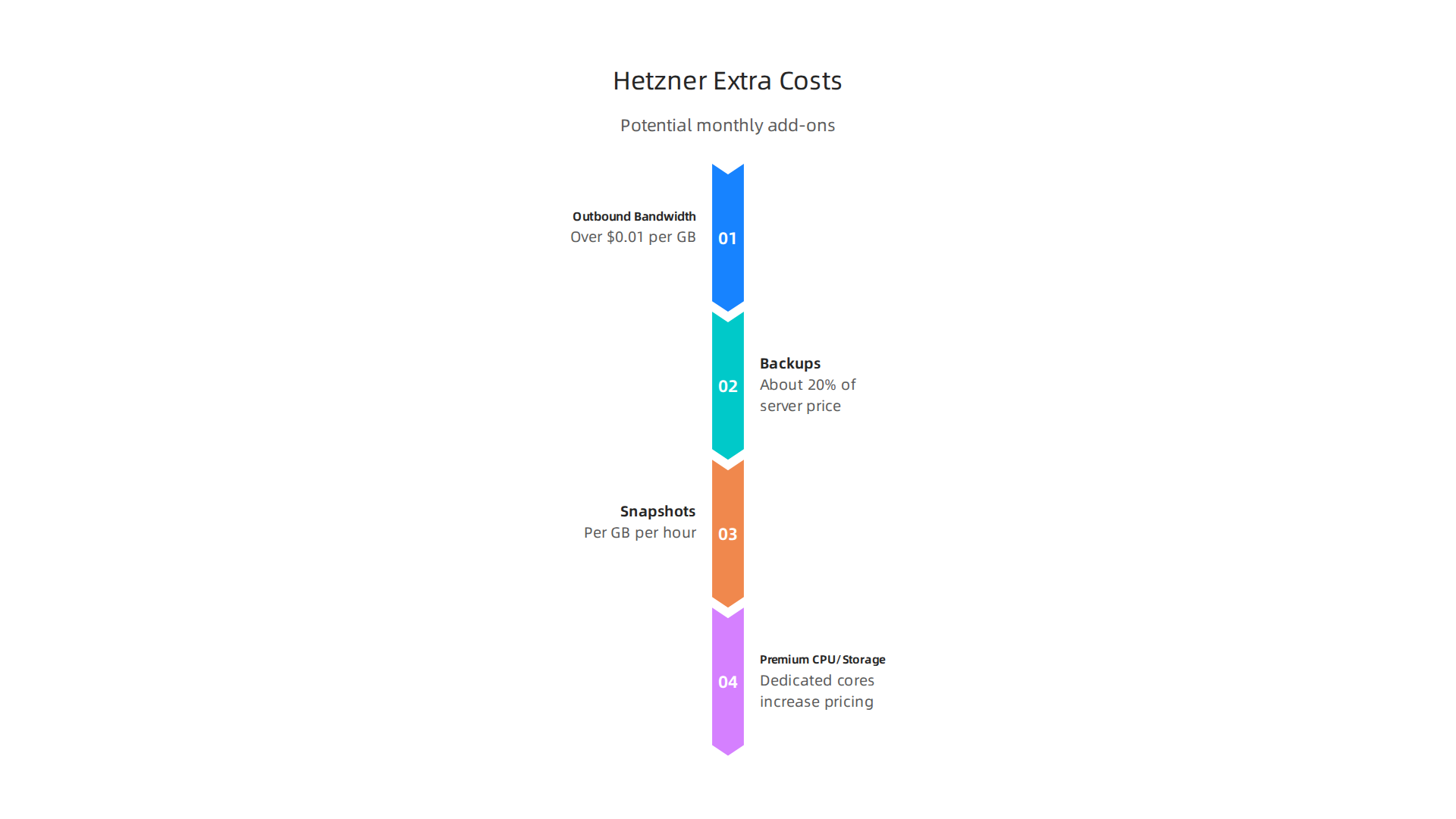
- Outbound Bandwidth: Hetzner usually includes a lot of data transfer, often 20 TB per month. But if your website becomes super popular and uses more than this, you will pay extra. This "overage" cost is typically around $0.01 per GB for data going out from your server to your visitors. Other providers also charge for extra data, so always check the details to avoid surprise
aws hosting costorvercel hosting pricingif your traffic suddenly grows beyond the included amount. You can see how this compares in various Hetzner Cloud Servers Pricing reviews. - Backups: Keeping backups of your website is very smart in case something goes wrong. Hetzner offers automated backups, which is a great feature. However, these backups come with an extra cost. They are usually charged as a percentage of your server’s monthly price, often about 20% of your VPS cost. For instance, if your server costs $10 per month, backups might add another $2. You can find this information in the Hetzner Cloud Review 2026.
- Snapshots: Snapshots are like quick copies of your entire server at a specific moment in time. They are useful for testing changes or recovering quickly. Hetzner charges for snapshots based on how much storage they use and how long you keep them, typically around €0.0143 per GB per hour. This cost is separate from regular backups.
- Premium CPU/Storage Choices: Hetzner offers different types of CPUs and storage. While the standard CX series uses shared CPUs, you can choose plans with dedicated cores (like the CPX or CCX series) for more consistent performance. These premium options will naturally increase your
hetzner vps pricing.
By understanding these additional cost factors, you can better manage your budget and truly calculate your web hosting expenses. To compare these costs effectively and avoid unexpected fees, it’s wise to master your web hosting cost in 2026 compare pricing and avoid hidden fees. For a broader look at web hosting solutions and pricing models, including reliable VPS and shared hosting options, visit Prism Web Host.
Total Cost of Ownership: Hidden Fees, Bandwidth, and Real-World Billing Surprises
When you choose a server, the price you see at first for hetzner vps pricing is just the starting point. To truly know what you will pay, it is helpful to look at all the possible extra charges.

These are often called "hidden fees," but many hosting companies like Hetzner actually list them clearly. You just need to know where to look.
Here are some common things that can add to your monthly bill:
- Outbound Bandwidth Overages: Hetzner usually gives you a lot of data transfer each month, often around 20 TB. This is plenty for most websites. However, if your site gets super busy and uses more data than this included amount, you will pay extra. This extra cost, or "overage," is usually about $0.01 per GB for data that goes from your server to your visitors. Other providers also have similar charges, so it is important to check if your traffic grows beyond what is included. This helps you avoid surprise bills, not just with Hetzner but also with other services like those that influence
aws hosting costorvercel hosting pricing. You can compare this with other providers who also charge for traffic overages, typically around $0.01 per GB, as noted in a VPS Hosting Pricing Comparison 2026 Guide Explained. - Backups: Keeping copies of your website is a very smart move. It protects your work if something goes wrong. Hetzner offers automated backups. While this is a great service, it does add to your
hetzner pricing. These backups are usually charged as an extra percentage of your server’s monthly price. Many sources, including the Hetzner Docs FAQ and the Hetzner Pricing Breakdown (2026), show this is typically 20% of your VPS cost. So, a $10 server might have an extra $2 for backups each month. - Snapshots: Snapshots are like quick pictures of your entire server at one point in time. They are very useful if you want to test new changes or quickly go back to an older version of your server. Hetzner charges for snapshots based on how much space they take up and for how long you keep them. For example, a Hetzner Cloud Review 2026 mentions a cost of about €0.014 per GB per month. This is separate from the regular backup service.
- Premium CPU or Storage Choices: Hetzner lets you choose different types of CPUs and storage. Standard plans often use shared CPUs. But if you want a server that works harder and more consistently, you can choose plans with dedicated cores (like some of the CPX or CCX series). These better options will naturally make your
hetzner vps pricinghigher.
To get a clear idea of your actual monthly bill, think about your website’s needs. If you expect a lot of visitors, factor in potential bandwidth overage costs. If you want peace of mind, plan for backup fees. By adding these extras to the base price of your chosen Hetzner VPS plan, you will get a much more accurate total cost. Taking the time to calculate your web hosting cost in 2026 can help you avoid unwelcome surprises. If you are looking for ways to handle these extra costs, understanding how to calculate your true web hosting cost can be a real game-changer.
After looking at all the extra fees, it is also super important to think about how well a server actually performs. A really cheap server might seem great for your hetzner vps pricing, but if it is too slow, your visitors will leave. This means a low price at first could end up costing you more in lost business. We need to look at performance, how reliable the server is, and what that means for your cost per visit.
Performance, reliability, and what affects cost-per-visit
When choosing a VPS, how fast and strong its parts are makes a big difference.
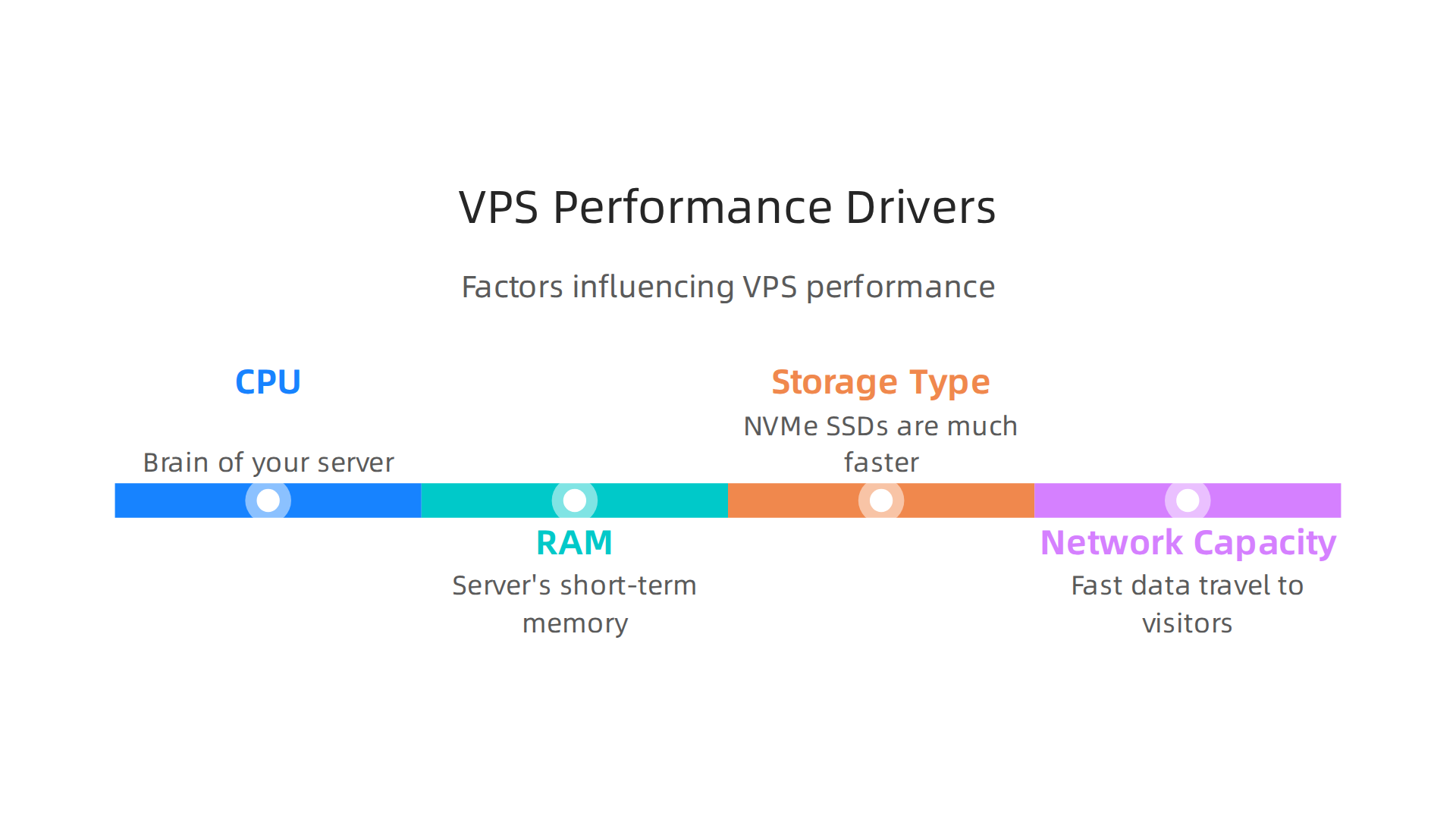
This includes the CPU, memory (RAM), storage type, and network speed. These parts all work together to make your website quick and smooth for everyone who visits.
- CPU (Central Processing Unit): This is like the brain of your server. A strong CPU can handle many tasks at once, which is key for busy websites. Hetzner, for example, offers different CPUs. Some plans share CPU power, meaning your website shares its brain with others. But if you pick a plan with dedicated CPU cores, your website gets its own brainpower, leading to much better and more steady speed. Benchmarks in 2026 show that a better CPU can really boost how well your server works overall, sometimes by more than 30% for a higher-tier VPS plan.
- RAM (Random Access Memory): Think of RAM as your server’s short-term memory. The more RAM your server has, the more things it can remember and work on quickly at the same time. If your website has many visitors or runs complex tools, plenty of RAM is a must-have. Without enough RAM, your server can slow down, even if the CPU is powerful.
- Storage Type (NVMe vs. HDD): This is where your website’s files and information live.
- HDDs (Hard Disk Drives) are older and slower, like reading from a slow book.
- NVMe SSDs (Solid State Drives) are much faster, like reading from a super-fast digital library. Most modern VPS plans, including many from Hetzner, now use NVMe SSDs. This greatly speeds up how quickly your server can find and send out information. For instance, NVMe storage often provides hundreds of thousands of Input/Output Operations Per Second (IOPS), which is how many tiny tasks it can do each second. Older HDDs are much, much slower, which means pages load slowly for your visitors. Many providers are measured in their VPS Benchmark: CPU, RAM, and Disk Speed Comparison to show these differences.
- Network Capacity: This is how fast data can travel from your server to your visitors’ computers. Good network speed means your website loads quickly, no matter where your visitors are. If the network is slow or has limits, your website will feel sluggish. Some companies like Hetzner offer very fast network connections, often 10 Gbps (Gigabits per second) or more. Testing tools like iperf3 can help you measure network throughput to see how fast your server truly is. This is important to consider in your
hetzner pricingbecause faster networks can handle more traffic without causing overage fees.
Uptime and Reliability
A server’s uptime is how long it stays online and working. Reliability means it keeps working well without crashes or problems. If your server is often down, customers cannot reach your site, which is bad for business. Most good hosting providers promise a high "Service Level Agreement" (SLA), often 99.9% uptime or more. This means your server should almost always be working. For businesses, choosing a host with a strong uptime record is critical. This ensures your online presence is always available, helping you avoid issues that could affect your business, just like avoiding hidden fees in aws hosting cost or vercel hosting pricing.
Cost-per-visit
Bringing it all together, a cheaper VPS that performs poorly or is often offline might have a higher "cost-per-visit" in the long run. If your website loads slowly, visitors will leave. If it is down, they cannot visit at all. This means you might pay less for the server itself, but you lose money because your website is not effective. A slightly more expensive, but much faster and more reliable, VPS can actually be cheaper per visitor because it keeps more people on your site and helps your business grow. When looking at options, consider providers that combine performance with good security, like those offering cheap VPS hosting in 2026 that doesn’t sacrifice performance or security. Choosing the right hosting ensures your investment truly pays off.
Moving beyond just speed and reliability, keeping your website safe is just as vital. Think of it this way: a fast car is great, but it also needs good brakes and airbags. The same goes for your website. When you look at hetzner vps pricing, you need to know if important safety tools like security features and DDoS protection are already included or if they will cost you extra money.

Security and DDoS: are protective features included or extra?
Security means protecting your website from bad things on the internet. This includes attacks that try to make your site crash, like DDoS attacks, or people trying to steal your information. Knowing what security features a hosting provider offers, and how they affect your hetzner pricing, is very important.
Understanding DDoS Protection
A DDoS (Distributed Denial of Service) attack is like a huge crowd trying to get into a small store all at once. It floods your server with too much fake traffic, making your website slow down or crash completely so real visitors cannot get in. Good DDoS protection acts like a bouncer, stopping this bad traffic before it reaches your server.
Many hosting companies offer some form of DDoS protection. For example, some providers like OVHcloud and Cloudzy include it on all their VPS plans without extra charge, offering "always-on" protection that works in the background. Others, like Vultr, might charge an extra fee, sometimes around $10 per month per server, to add this important shield. Hetzner, for its part, usually includes basic DDoS protection. However, the strength of this protection can vary a lot between providers. You might see basic shared protection bundled with plans starting around $5 to $30 a month, while more advanced, dedicated protection can cost much more, even thousands of dollars a month for very big websites in 2026, depending on how much attack traffic it can stop. You can see typical DDoS Protection Cost ranges, with some services starting around $3 to $15 per month for protection on each IP address, as shared by some hosting guides.
Firewalls and Backups
Besides DDoS protection, firewalls and backups are other key security features:
- Firewalls: These are like security guards for your server. They watch all the incoming and outgoing traffic and block anything that looks dangerous. Most VPS setups allow you to set up your own software firewall, and many providers also have network-level firewalls. It’s smart to check what kind of firewall support is included or if you need to manage it yourself.
- Backups: What happens if something goes wrong? Backups are copies of your website’s data. If your site gets damaged or hacked, you can use a backup to bring it back to normal. Some hosting plans include automatic daily or weekly backups, while others charge extra for this service. Always make sure you have a good backup plan in place.
Budgeting for Security
When you compare hetzner vps pricing with other options, always look beyond the base cost. A seemingly cheap VPS might become expensive if you have to pay extra for essential security features like advanced DDoS protection, firewalls, or regular backups. The cost of DDoS protection alone can range from free basic options to dedicated services that cost thousands of dollars per month, depending on the level of security needed. Companies like Cloudways, for instance, offer unmetered DDoS protection through Cloudflare integration on all their plans, starting from $14/month.
Think about the value of your website. If your business depends on your site being online and safe, investing in good security is not an option; it’s a must. When choosing your hosting provider, consider a company that offers strong, built-in security features to start. This proactive approach can save you a lot of headache and money in the long run. To make sure you’re getting the right protection for your needs, you can explore providers that focus on combining speed with excellent security.
For businesses looking for reliable hosting that prioritizes security and performance from the start, consider checking out Prism Web Host – Web Hosting & VPS. They provide enterprise-grade security checks, isolated hosting, automated scalability, and point-in-time backups. Learning how to properly choose a hosting company that balances speed and security is crucial for your online success.
Once your website is safe and fast, you also need to think about what happens when it grows. Will your hosting plan be able to handle more visitors or more information? This is called scaling. Knowing when to make your server bigger, move to a new one, or use special tools that grow with you is key. It also affects your overall hetzner vps pricing and what you pay for other providers.
Scaling: when to resize, migrate, or use autoscaling alternatives
Your website might start small, but if it becomes popular, it will need more power. This could mean more CPU (the brain of the server), more RAM (short-term memory), or more storage space. Figuring out when to upgrade your VPS is important to keep your site running smoothly.
Resizing Your VPS
Most VPS providers let you change your server plan. This is called resizing. You can usually move to a bigger plan with more power if your website needs it. The hetzner pricing for these changes will depend on the new plan’s features, like how much CPU, RAM, and storage it offers. For example, in August 2026, some Hetzner Cloud VPS prices increased by 30-40% for certain types of servers. You might find that larger instances cost anywhere from €20 to €140 per month, while very large ones can be over €1,000 per month, depending on how much memory they have Hetzner Cloud VPS Pricing Calculator (Aug 2026).
It’s also important to check if you can easily switch to a smaller plan if you no longer need as much power. Some providers make it simple, while others might have rules or fees. Always understand a provider’s resizing policies before you pick a plan. When comparing providers, you can look at common rates for different resources. For instance, in 2026, a vCPU might cost around $1.50 at Hetzner, $4.50 at Vultr, and $7.00 at AWS Lightsail Cloud VPS Cost Calculator 2026.
Signs You Need to Scale
How do you know when it is time to make your VPS bigger? Here is a simple checklist:
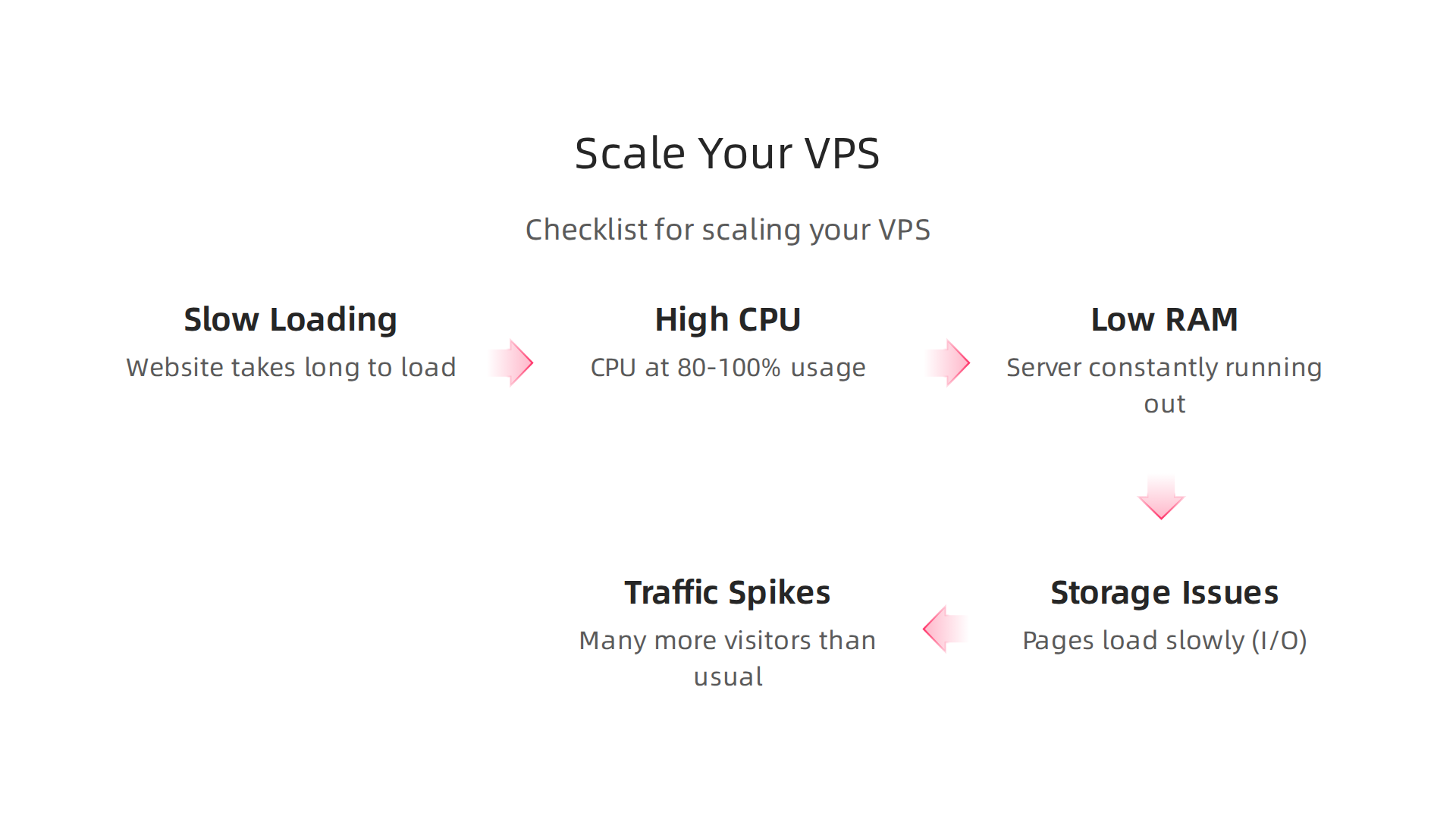
- Slow Website Loading: If your website starts taking a long time to load, especially during busy times, your server might be struggling.
- High CPU Use: Your server’s brain (CPU) is working too hard if it stays at 80-100% usage for long periods.
- Low RAM: If your server is constantly running out of memory (RAM), it needs more.
- Storage Problems: If your website stores a lot of pictures or videos and pages load slowly, your storage might be too slow. This is called I/O constraints.
- Traffic Spikes: If you get a lot more visitors than usual, your current plan might not handle the load.
Migration: When to Move
Sometimes, resizing your current VPS isn’t enough, or it’s too costly. You might need to migrate, which means moving your entire website to a different server or even a new hosting provider. This can happen if your current provider’s plans don’t meet your needs anymore, or if you find a better deal elsewhere. Moving a website can be tricky and sometimes causes a bit of downtime, so it is usually a last resort.
Autoscaling and Managed Platforms
Instead of manually resizing, some advanced platforms offer "autoscaling." This means your server power automatically grows or shrinks based on how much traffic you get. This can be more efficient, but it often comes with a different aws hosting cost model or vercel hosting pricing. Managed hosting platforms, which handle many of the technical tasks for you, can also offer better scaling options. They might let you add more servers (horizontal scaling) instead of just making one bigger. This can be more cost-effective for very large websites.
However, always watch out for hidden costs. Many providers charge "overage fees" if your website uses more bandwidth or storage than your plan includes. These can be around $0.01 per GB for extra data Annual Cloud Pricing Review 2026: Hostxpeed vs AWS vs …. To avoid surprises and truly understand your expenses, it is wise to learn how to compare hosting costs. You can find out more about this by reading our guide on how to Master Your Web Hosting Cost in 2026: Compare Pricing and Avoid Hidden Fees.
Choosing the right server plan is like picking the right tool for a job. You need to know what you’re building before you choose your hammer! For small to medium-sized businesses (SMBs), picking a Hetzner VPS means looking closely at what your website needs now and in the future. This helps you get the best hetzner vps pricing and value.
Here is a step-by-step checklist to help you choose wisely:
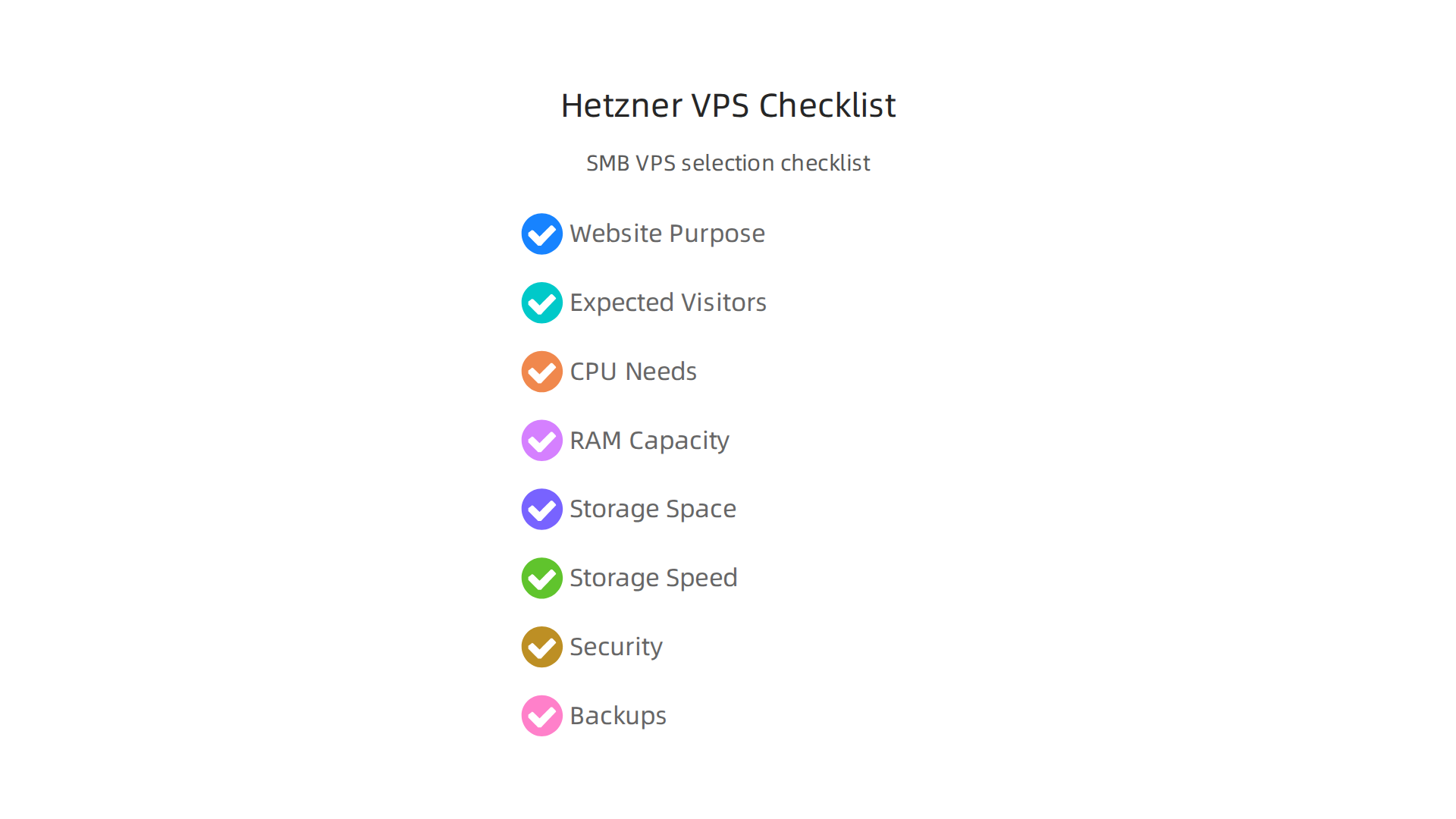
What Does Your Website Need?
Before you even look at prices, think about your website.
- What is its purpose? Is it a simple blog, an online store, or a place for a special app? Knowing this helps you pick the right kind of server. For example, a website that uses databases a lot needs more powerful storage.
- How many visitors do you expect? Try to guess how many people will visit your site each month. Also, think about how many might be on your site at the same time. Write down these numbers before you compare plans. This helps you figure out how much CPU (server brain) and RAM (server memory) you will need. According to experts, knowing your peak visitor numbers helps a lot when picking a VPS for a small business VPS Hosting Demystified: A Practical Guide for Small Business ….
Look at Compute (CPU and RAM)
The CPU and RAM are like your server’s brain and short-term memory.
- CPU: If your website has many active users or runs complex apps like an online store (WooCommerce) or a custom application, you’ll need more CPU power. Some providers let you choose "dedicated vCPUs," which means your server gets its own share of the CPU, making it faster and more reliable The Ultimate VPS Checklist: What You Must Know Before Buying.
- RAM: This is where your server stores information it’s actively using. More RAM means your website can handle more tasks at once without slowing down.
Think About Storage (Disk Space and Speed)
Your website’s files and database are stored here.
- Space: How many pictures, videos, and other files will your website have? Make sure your plan has enough space. It’s smart to plan for about 30% more space than you think you need right now to allow for growth.
- Speed: The type of storage matters a lot. Look for NVMe SSD storage. This is much faster than older SSDs or HDDs and helps your website load quickly. Ask your provider if they use NVMe storage, not just generic "SSD" The Complete VPS Buying Guide 2026: Choose the Right Specs ….
Security and Backups
These are super important for any website.
- Security: Does the VPS plan include protection against online attacks like DDoS? This helps keep your site safe when many bad requests try to overwhelm it.
- Backups: Make sure your provider offers easy ways to back up your website. This is like having an emergency save button for all your hard work. You want to know how often backups are made and how long they are kept. Also, can you easily get your site back if something goes wrong? This is called recovery.
Understanding Hetzner VPS Pricing and What You Get
Once you know your needs, you can look at the different Hetzner plans.
- Compare the CPU, RAM, and storage of each plan. This directly affects the
hetzner pricing. - Check for other features like how many IP addresses you get (IPv4 or IPv6) and if they offer an emergency console. This console is super helpful if you ever get locked out of your server.
- If you are looking for other types of managed hosting, keep in mind that
aws hosting costorvercel hosting pricingmight be different, but they could offer other benefits like autoscaling. For most small businesses, a good VPS offers a balance of control and cost.
Tips for Non-Technical Teams
If you’re not a tech expert, don’t worry!
- Start a little small: It’s often better to start with a slightly smaller plan and upgrade later if needed. Resizing is usually easier than overpaying for power you don’t use.
- Ask for help: Don’t be afraid to ask the hosting provider’s support team questions. Good customer support is a key thing to look for Best VPS Hosting: 10-Point Buyer’s Checklist.
- Consider managed VPS: Some providers offer "managed VPS" plans, where they handle many of the technical tasks for you. This can save you a lot of time and headaches, even if the
hetzner vps pricingis a bit higher.
Choosing the right VPS plan for your SMB means doing a bit of homework upfront. By understanding your website’s needs, you can find a plan that fits your budget and helps your business grow. If you need more general advice on picking a hosting company, you can find useful tips in our guide on select the best web hosting for small business in 2026.
Summary
This article explains why understanding Hetzner VPS pricing is essential for small businesses in 2026 and shows how to compare true hosting costs, not just the headline price. It breaks down the core billing components—vCPU, RAM, NVMe storage, bandwidth, and data center location—and explains payment options like hourly and monthly billing. The guide highlights common add-ons and surprises such as backup fees (often 20% of the server cost), bandwidth overages ($0.01/GB), snapshots, and premium CPU/storage options. It also covers how performance (CPU, RAM, NVMe, network) and uptime affect your real cost-per-visit, plus security considerations like DDoS and firewall coverage. Finally, it gives practical scaling guidance, a checklist for picking the right Hetzner VPS for different use cases, and tips for non-technical teams to avoid unexpected bills and performance problems.
