




Best Web Hosting for Students Affordable Secure Fast Plans
Article
Why web hosting matters for students (and how this guide helps)
As a student in 2026, you’re always working on cool projects and learning new things. You might be building a portfolio to show off your art, coding a website for a class project, starting a personal blog about your interests, or even trying to sell handmade items online.

All these online activities need a special place on the internet to live and be seen. That place is called web hosting.
Think of web hosting like renting a spot for your website on a computer that’s always connected to the internet. Without it, nobody can see your amazing work. Web hosting for students is super important because it helps you share your creations with friends, teachers, and future employers. For example, you can host your portfolio or a static site for free with options like GitHub Pages, Netlify, or Vercel, which are great for showing off your skills without spending money upfront

Free Website Hosting in 2026: Real Options, Limits, and ….
But finding the right web hosting can feel tricky. Many students worry about a few things:

- How much will it cost? Student budgets are often tight. You need to know the true web hosting cost, not just the cheap starting price. Did you know that web hosting for students usually costs between $1.99 and $10.00 each month in 2026

🎓 Best Student Web Hosting 2026 – From $1.00/month? Sometimes, you can even find free website domain offers. We’ll show you how to find the cheapest domain hosting in 2026 and understand your web hosting cost in 2026.
- Is it too technical? Setting up a website can seem hard if you’re not a tech expert. You might wonder about all the confusing settings.
- Is my website safe? Keeping your website secure from bad actors is a big deal, especially if you share personal information or sell things.
- Will it be fast? A slow website can make people leave before they even see your content. Good performance is key.
- Can it grow with me? What if your project becomes really popular? You need hosting that can handle more visitors as you go. Getting a host that offers reliable uptime, like 99.9%, is very important so your site is always available
Best Web Hosting for Students 2026: Affordable & Beginner-Friendly Picks.
This guide is here to help you understand web hosting for students. We’ll break down the basics, explain what to look for, and share tips on finding affordable and easy-to-use options. We’ll even look at what people on forums like "web hosting reddit" say about different services. By the end, you’ll feel confident choosing the best web hosting for your student life in 2026.
How to choose the right student web hosting: 6 decision criteria
Now that you know how important web hosting is for students, let’s talk about how to pick the right one. It’s like choosing the perfect backpack for school; you need one that fits your needs, is easy to carry, and won’t fall apart.

When it comes to web hosting for students, there are six main things you should look at.
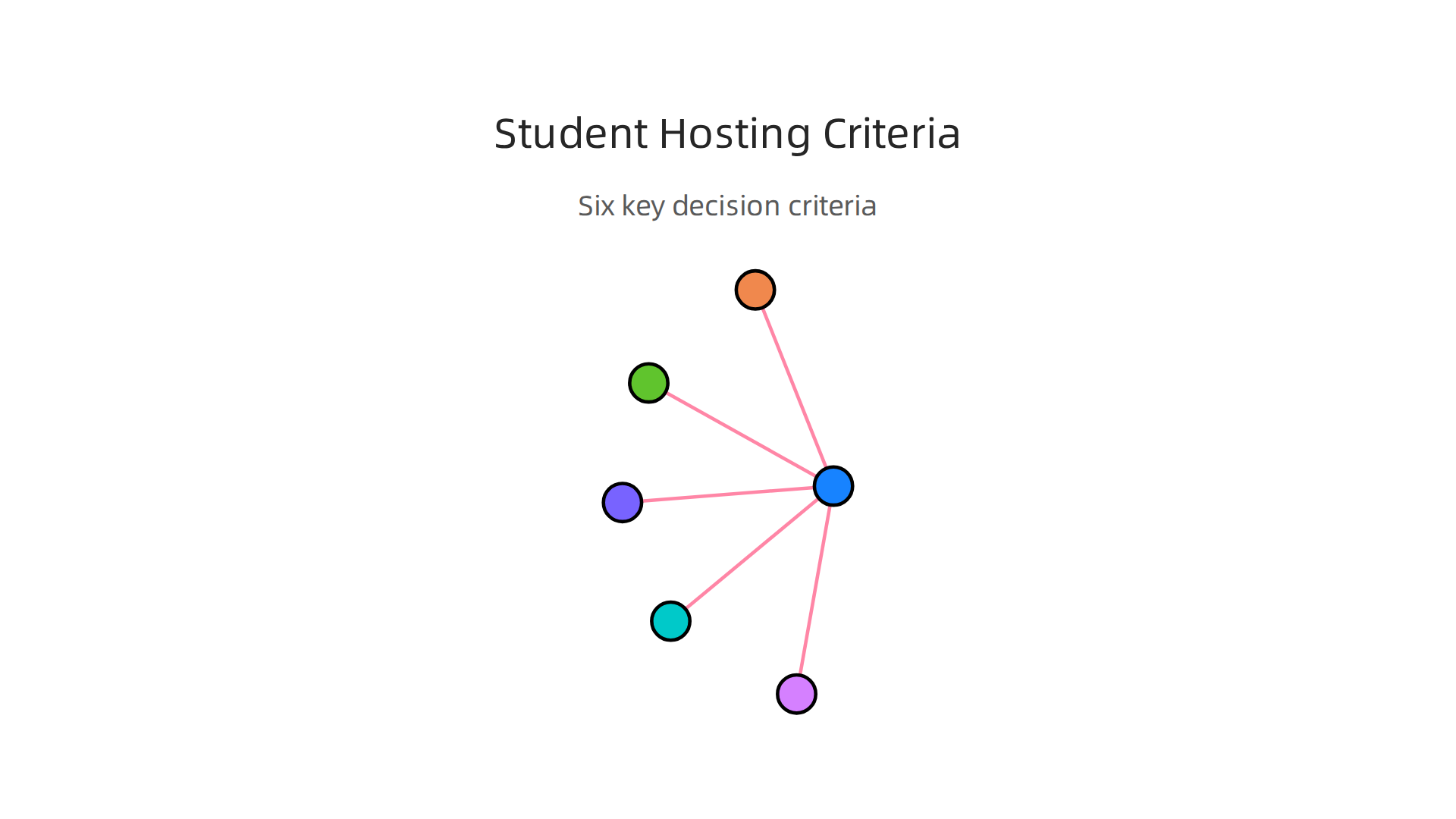
1. Price
Student life means watching your budget closely. While some places offer a free website domain or free web hosting plans, they often have limits. For paid hosting, look at the full web hosting cost in 2026, including any hidden fees after the first year. Some companies even give special student discounts.
2. Ease of Use
You want hosting that’s simple to set up and manage, especially if you’re new to making websites. Look for features like:
- Easy control panel: This is where you manage your website. A simple one like cPanel makes things much clearer.
- One-click installs: For popular tools like WordPress, you want to be able to set them up with just a single click.
- Website builders: Some hosts offer tools that let you drag and drop parts to build your site without needing to write code.
3. Security
Keeping your website safe is super important. A good host will protect your site from bad guys online. This includes things like security updates, firewalls, and ways to stop attacks. Look for features such as free SSL certificates, which keep information between your site and its visitors private.
4. Performance
Nobody likes a slow website. Good performance means your site loads fast and is always online.
- Speed: Quick loading times make people happy and help your site rank better in search engines. You want to find the fastest WordPress hosting in 2026 if you’re using WordPress.
- Uptime: This is how often your website is working. You want a host that promises your site will be up almost all the time, like 99.9% of the time, so your work is always available when people look for it. This kind of reliability is a top priority for web hosting providers
Best Web Hosting Providers for Students & Educators.
5. Support
Sometimes things go wrong, or you just have a question. Good customer support means you can get help quickly, whether by chat, email, or phone. It’s a big relief to know someone is there to assist you.
6. Upgrade Path
As your projects grow, you might need more space or power for your website. A good web host will let you easily upgrade your plan without moving your entire site. This makes sure your hosting can grow with you from a small project to a bigger one.
Matching Hosting to Your Project
The best web hosting for students depends on what you’re building:
- For a simple portfolio or class project: Price and ease of use might be your biggest concerns. You might even find a decent free option for just showing off your work
7 Best Free Web Hosting for Students on a Budget in 2026. - For an e-commerce store: Security, performance, and a clear upgrade path are key. You can’t afford a slow site or one that goes down often.
- For a blog or personal site: A good balance of all six criteria works best.
Reading what other students say on places like "web hosting reddit" can also give you real insights into how different services perform. Ultimately, choosing the right web hosting means finding a service that meets your specific needs without breaking your budget.
When you’re ready to explore options that offer a blend of reliability, security, and performance, check out our offerings at PrismWebHost. We focus on providing hosting solutions that make it easy for you to launch and maintain your online presence, with features like strong security and great uptime.
When looking for web hosting for students, your budget is often the top concern. It’s smart to look at all your choices, from completely free plans to special student deals and low-cost shared hosting. But here’s a secret: always watch out for hidden costs.
Free Web Hosting for Students: What’s the Catch?
Many students are tempted by free web hosting, and for good reason! It means no money out of your pocket. Some services offer free hosting that works well for a simple online resume or a small project for class. However, these free options often come with big limits.
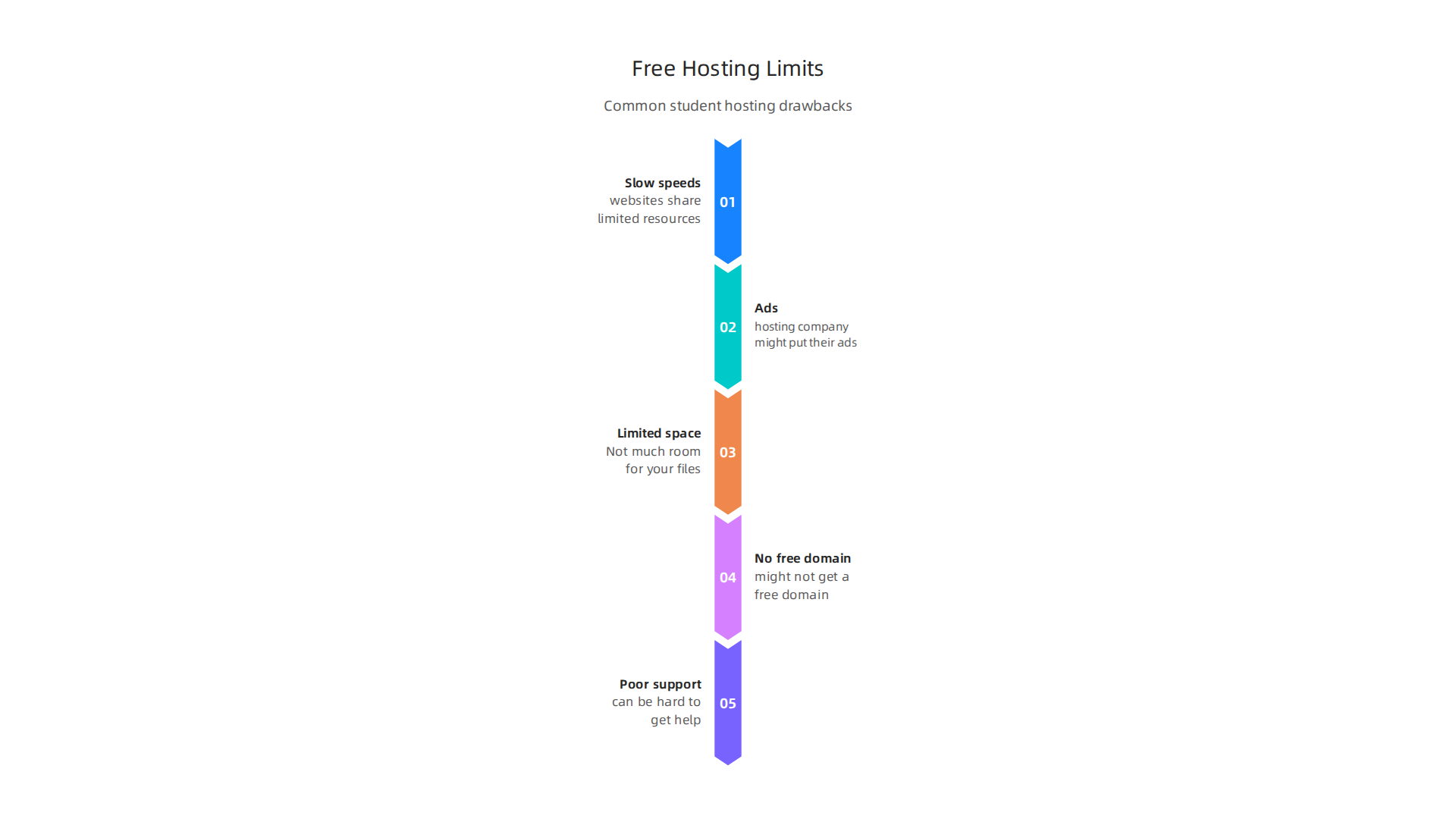
You might find:
- Slow speeds: Your website might load slowly because many users share limited resources.
- Ads: The hosting company might put their ads on your website, which doesn’t look very professional.
- Limited space: Not much room for your files and pictures.
- No free website domain: You might not get a free domain name, or it might be a strange one like
yourname.freehost.com. This makes it harder for people to find you. - Poor support: If something goes wrong, it can be hard to get help.
While helpful for quick, small projects, free hosting usually isn’t the best choice for something you want to grow or show off professionally.
Student Discounts and Special Offers
Many hosting companies know students need to save money. So, they offer special discounts. For example, some providers offer plans for as low as $1.99 per month, which can be a huge saving from their usual prices, sometimes up to 80% off for students

Web Hosting for Students 2026: 8 Free or Discounted Plans Reviewed. You might get a special student discount code, or you may need to prove you’re a student through services like Student Beans to get these deals Hostinger Student Discount. Some companies, like Wix, even give students a generous 50% off all their plans for the first year 7 Best Free Web Hosting for Students on a Budget in 2026.
These discounts can make good web hosting much more affordable. When comparing, check if the discount applies to your specific needs, like if you need Hostinger cheap web hosting.
Low-Cost Shared Hosting
Beyond student discounts, shared hosting plans are often the cheapest way to get started. With shared hosting, your website lives on a server with many other websites. This keeps costs down. It’s usually enough for personal blogs, portfolios, and small websites. When looking for the cheapest domain hosting in 2026, shared hosting is a common starting point.
What Hidden Costs to Watch Out For
Here’s where many students get surprised when looking for web hosting for students:
- Renewal rates: The super low price you see for the first year often jumps way up when it’s time to renew. Always check the regular renewal price before you sign up.
- Bandwidth and storage caps: Some plans limit how much traffic your site can handle or how much space your files can take up. If your site gets popular, you might have to pay more.
- Missing features: Sometimes, important things like automatic backups or a free SSL certificate might not be included in the cheapest plans.
- Domain name costs: While some hosts offer a free domain for the first year, you’ll likely pay for it every year after that. Understand the cost to buy a domain name in 2026 and its renewal.
- Add-ons: Things like extra security tools or advanced email might cost extra.
Always look at the full web hosting cost over a few years, not just the first promotional price. Reading reviews on sites like "web hosting reddit" can also help you find out what real users experienced with hidden fees.
After understanding the costs and deals for web hosting for students, the next big thing to think about is keeping your website safe. You’ve worked hard on your projects or personal site, and you want to make sure it’s protected from bad guys online. Good security is a must, even for the simplest student website.
Basic Security Features Your Web Host Should Offer
When you choose web hosting for students, look for certain things that keep your website safe from common online problems.
- SSL Certificates: This is like a lock for your website’s data. An SSL certificate makes sure that any information going between your website and its visitors stays private. This is super important for login pages or forms where people type in their info. Most good web hosts give you a free SSL certificate. This helps protect your site and even makes it look more trustworthy to search engines Website Security: Tips & Best Practices for Securing Websites.
- Regular Backups: Imagine if your laptop crashed and you lost all your school work. Scary, right? Websites can crash too, or sometimes things go wrong when you’re making changes. Your web host should make copies, called backups, of your entire website regularly. This means if anything bad happens, you can easily go back to an earlier, safe version of your site. It’s best if these backups happen daily and are stored in a different place than your main website Website Security Best Practices for Small Businesses in 2026.
- Password Policies: Your web host should make it easy for you to use strong passwords for your hosting account. A good password means a mix of letters, numbers, and symbols. It also helps if your host offers "two-factor authentication" (2FA), which is like needing a code from your phone after typing your password.
- DDoS Protection: Sometimes, bad actors try to flood a website with too much fake traffic. This is called a DDoS attack, and it makes your website slow or even crash so no one can visit it. Many web hosting companies, like Prism Webhost, include protection against these kinds of attacks to keep your website running smoothly Website security guide: A 10-step checklist.
Easy Security Steps You Can Take
Even with a secure host, you have a part to play in keeping your site safe.
- Keep Your Software Updated: If you use a website builder like WordPress, always update it and any extra tools you use. These updates often fix security holes.
- Use Strong Passwords: For your website’s admin area, your email linked to the site, and your hosting account, always use unique and complex passwords. Don’t use the same password everywhere!
- Be Careful with Free Themes and Plugins: When looking for things for your free website domain, be careful about where you get themes and plugins. Only download them from trusted places. Some free tools can carry hidden dangers.
- Check Your Web Hosting Cost: Sometimes, spending a little more on a reputable host means better security features are included, which can save you big headaches later. To truly understand your options, you might want to learn how to calculate your true web hosting cost and avoid hidden fees in 2026. This way, you make sure you’re paying for reliable security.
After making sure your website is safe, it’s time to think about how fast it loads. When you are looking for web hosting for students, speed might not be the first thing on your mind, but a fast website is super important. People don’t like waiting, and if your website takes too long to show up, they might just leave. This is true for your school portfolio, a blog, or any online project you make. A fast website means happy visitors and can even help your site show up higher in search results.
How Your Web Host Makes a Difference
The type of web hosting you pick plays a big part in how fast your website runs.
- Hosting Tier: Think of hosting tiers like different roads. A cheaper, shared hosting plan is like a busy street with lots of cars (other websites) trying to go at once. This can make your site slower. If you choose a better hosting plan, it’s like having a less crowded highway, meaning your website can load much quicker. When comparing web hosting cost, remember that some speed benefits come with slightly higher tiers. If you are looking for the cheapest domain hosting, just be aware of the trade-offs.
- Server Location: If your website visitors are mostly in one place, like your hometown, having a server close by can make your site load faster for them.
Making Your Website Files Faster
Even with a good web host, there are things you can do to speed up your website.
- Use a CDN: A CDN, or Content Delivery Network, helps make your website load faster for everyone, no matter where they are. It works by saving copies of your website’s files in many places around the world. So, when someone visits your site, the files come from the closest place, which is much faster.
- Optimize Images: Pictures often make websites slow. Before you put photos on your site, make them smaller in size. There are free tools online that can help you shrink images without making them look bad.
- Caching: This is like a shortcut for your website. When someone visits your site, caching saves parts of it so the next time they visit, it loads almost instantly. If you use WordPress, there are many simple plugins that can set up caching for you. You can find options to find the fastest WordPress hosting in 2026 that often includes these features.
- Keep Things Clean: If you use a website builder, try not to add too many extra tools (plugins or themes) that you don’t really need. Each extra thing can slow your site down a little.
By keeping these tips in mind, you can make sure your student website loads quickly, giving your visitors a much better experience. If you find your current host isn’t keeping up, you might be stop overpaying for slow hosting.
As your school project or personal blog grows, you might find that your simple setup for web hosting for students isn’t enough anymore. What starts as a small site can sometimes become very popular. When this happens, you’ll need a stronger web host.
When to Upgrade Your Hosting
It’s exciting when your website gets more visitors, but more people mean your website needs more power to run smoothly. Here are some signs it might be time to move to a better hosting plan:
- Your site slows down a lot: Even after trying to make your images smaller and using caching, your website feels sluggish.
- You get many visitors: If you have tens of thousands of people visiting your site each month, or if you run an online store that gets busy, shared hosting might not keep up. Many experts suggest upgrading when you have over 20,000 monthly visitors or often see warnings about using too many resources When Should You Upgrade from Shared to VPS Hosting ….
- You need more control: You want to install special software or change deep settings on your server, which isn’t possible with basic shared hosting.
- Security needs: For a business site, you might need stronger security features than what shared hosting offers.
Most websites start on shared hosting and then move to a Virtual Private Server (VPS), cloud hosting, or even a dedicated server as they grow Shared Hosting vs VPS vs Cloud Hosting: Which Is Best?. Think of it like moving from a shared apartment to your own house. A VPS gives you your own space on a server, meaning more power and control just for your website.
How to Move Your Website to a New Host
Moving your website to a new web host can seem tricky, but many hosting companies make it easy. Here’s what you need to think about:
- Backup everything: Before you do anything, make a full copy of your website. This includes all your files and your website’s database. This way, if something goes wrong, you have a safe copy.
- Pick your new hosting plan: Look for a VPS or managed hosting plan that fits your new needs. Consider factors like how much traffic you expect and your overall web hosting cost. You can find good advice on forums like web hosting reddit.
- Transfer your files and database: Your new web host will often help you with this, or you can use tools like FTP to move files and phpMyAdmin to move your database.
- Change your DNS: Your website’s Domain Name System (DNS) tells computers where to find your site. You’ll need to update this to point to your new host. This change can take a few hours to a day to fully go live across the internet.
- Test everything: After moving, check every part of your website to make sure it works perfectly. Look at all pages, forms, and links.
Moving your website carefully helps make sure your site stays online and works well for all your visitors. You can often find guides like a Hosting Upgrade Checklist in 2026 to help you through the process. Moving to a more powerful hosting setup can give your growing project the boost it needs.
If you are just starting your online journey, getting your first website ready can seem like a lot. But don’t worry! Setting up a website is much simpler than it sounds, especially with helpful tools and good web hosting for students that guide you.
Quick Checklist to Launch Your Site
Here’s a simple step-by-step guide to get your website up and running:
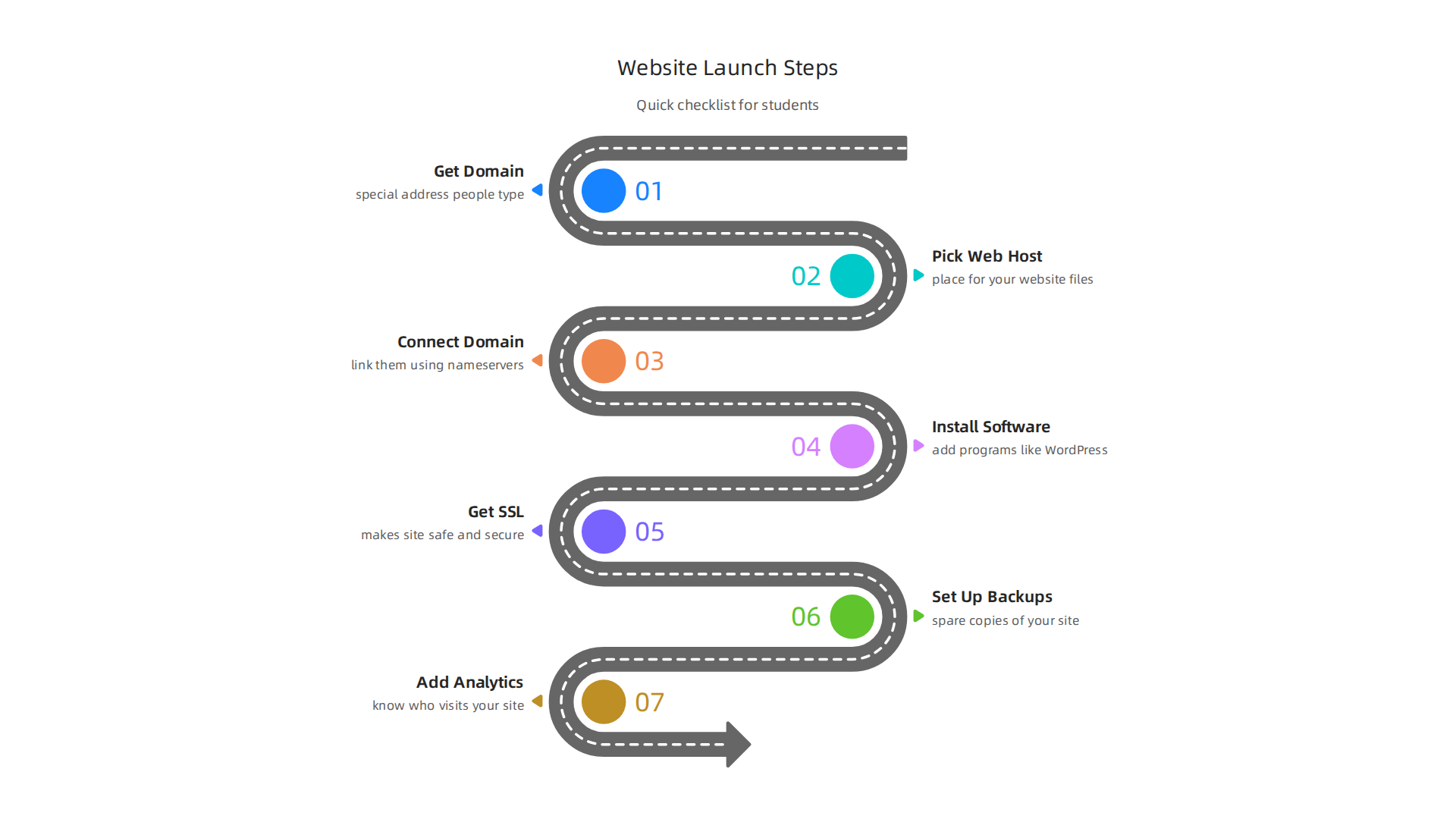
- Get Your Domain Name: This is the special address people type to find your website, like
yourcoolproject.com. Think of it as your website’s name. When choosing, look for providers that offer cheapest domain hosting in 2026. Some hosting plans even include a free website domain for the first year. Understanding the domain name meaning can help you pick the best one. - Pick Your Web Host: You need a place for your website files to live online. This is your web host. When looking at options, consider the web hosting cost in 2026 to find something that fits your budget.
- Connect Your Domain to Your Host (DNS): Once you have a domain and hosting, you need to link them. Your hosting company will give you special codes called "nameservers." You just put these codes into your domain provider’s settings. It tells the internet where to find your site.
- Install Your Website Software: Many web hosts offer "one-click installs." This means you can add popular website programs, like WordPress, with just a single button press. It’s really fast and easy, making it perfect for students.
- Get an SSL Certificate: An SSL certificate makes your website safe and secure. You’ll see a little lock icon in your browser next to your website address. This is super important for keeping your information private. Most good hosts give you a free SSL certificate.
- Set Up Backups: Think of backups as spare copies of your entire website. If something ever goes wrong, you can use a backup to restore your site. Many web hosts offer automatic backups, so you don’t have to worry about it.
- Add Basic Analytics: Want to know who visits your site and what they look at? Tools like Google Analytics can show you simple reports about your visitors. This helps you understand what your audience likes.
Quick Tips if You Hit a Snag
Starting a website can have small bumps. Here are fixes for common problems:
- "My website isn’t showing up yet!": After you change your DNS settings, it takes a few hours, sometimes up to a full day, for the whole internet to catch up. Just be patient. If it’s still not working after a day, ask your hosting support team for help.
- "I can’t log in to my website!": Double-check your username and password. It’s easy to mistype. If you really can’t remember, most systems have a "forgot password" option.
- "My website loads really slow!": Make sure the pictures you use on your site aren’t too big. Big pictures slow things down. Also, if you’re using a system like WordPress, you can add a "caching" tool to make your site faster.
It’s true that setting up a website can sometimes have little hiccups, as we talked about. But knowing who to ask for help and what you’re really paying for can make a big difference. This is where thinking about support, how reliable your website host is, and the total cost of ownership (TCO) comes in handy for web hosting for students.
Support and What You Can Expect
When you pick a web host, especially a low-cost one, it’s good to know what kind of help you’ll get. Most hosting companies offer some level of technical support. This means if your site breaks or you can’t figure something out, you can reach out for help. For many student plans, support might be through online chat or email, which can be slower than phone calls.
Actually, some web hosts offer really good deals for students, often with big discounts on their regular prices. For example, some companies provide up to 80% off their usual rates or even special student discounts when you verify your student ID Web Hosting for Students 2026: 8 Free or Discounted Plans Reviewed. Even with lower prices, good customer service is still important. It helps you fix problems faster and lessens your stress so you can focus on your studies, not website issues. If you want to see what other people think about different hosting providers, sometimes checking out what folks say on places like Why Reddit Is Your Most Honest Source For Web Hosting Reviews can give you a real picture.
Why Reliability Matters for Your Student Site
Reliability means your website stays online and works correctly most of the time. Good web hosting for students should offer "uptime" numbers, usually 99.9% or higher. This means your site will almost always be available for visitors. If your site is often down, people can’t see your projects or work, and that’s not good. A reliable host helps you avoid these worries.
Total Cost of Ownership (TCO) Beyond Monthly Fees
When you look for cheapest domain hosting, it’s easy to just look at the monthly price. But the actual cost of owning a website, called Total Cost of Ownership (TCO), is more than that. Here’s what else to think about:
- Renewal Prices: Many hosts offer a super low price for the first year. But after that, the price might jump up a lot. Always check the renewal cost before you sign up.
- Extra Features: Does the low-cost plan include things like backups, a free website domain, or enough storage? Sometimes, adding these later costs extra money.
- Downtime Costs: If your cheap host is often down, it costs you time and frustration. It might even mean you miss out on showing your work to someone important.
- Upgrades: As your project grows, you might need a bigger, faster hosting plan. Think about how much those upgrades will cost down the road.
Understanding these points helps you pick a web host that truly fits your budget and needs, not just the one with the lowest upfront price.
Summary
This guide explains web hosting for students in plain terms and walks you through picking, launching, and growing a student website in 2026. It covers the six decision criteria you should use—price, ease of use, security, performance, support, and upgrade path—and explains trade-offs between free plans, low-cost shared hosting, and paid upgrades. You’ll learn why hidden fees and renewal prices matter, what security features to demand (SSL, backups, 2FA), and practical speed fixes like CDNs, image optimization, and caching. The article also gives a simple launch checklist, signs that you need a VPS or cloud plan, and troubleshooting tips so students can get a portfolio, blog, or small store online without surprises. By the end you’ll know how to compare offers, protect your site, and plan upgrades as your project grows.
