




4chan Web Platform Lessons Every Community Site Owner Should Know
Article
If you have ever heard of 4chan, you probably know it as one of the wildest, most anonymous places on the internet. But behind the memes and fast-moving threads lies a serious technical operation. The 4chan web platform handles a staggering amount of traffic. According to recent 4chan.org traffic analytics for 2026, the site received over 82 million visits in a single month. That kind of load would crush a typical shared hosting plan in seconds.
Running a site at that scale takes extreme attention to speed, security, and uptime.

The team behind 4chan has to fight constant DDoS attacks, keep page load times snappy, and ensure the board stays online even when millions of anonymous users flood in at once. You might think that only giants like Facebook or YouTube face these problems. But small and medium businesses (SMBs) that run community sites, forums, or high-traffic applications deal with very similar challenges. A sudden spike in visitors can slow your site to a crawl. One security slip can damage your reputation. Downtime means lost sales and lost trust.
Other popular community platforms like the wowhead website, the fanfiction net website, or even a simple rsvp website for events all wrestle with the same three demands: keeping things fast, staying secure, and never going down. Even the alexa website (the analytics service, not the voice assistant) exists partly because so many site owners are desperate to understand what their visitors actually do.
This article breaks down the engineering and operational lessons that 4chan’s web platform teaches us. More importantly, it shows how you can apply those same principles to your own hosting strategy without needing a team of engineers. Whether you run a small online store, a membership community, or a content blog, the infrastructure choices you make today will determine whether your site survives the next traffic surge.
If you are just getting started with web hosting, you might want to check out our web hosting template checklist for small business growth in 2026. It covers the exact things to look for in a host so you do not learn the hard way. Let us jump into the first big lesson: how 4chan manages insane amounts of traffic with minimal resources.
The Scale of 4chan’s Web Infrastructure
To understand the first lesson, you have to see how big 4chan really is. In April 2026 alone, the site received over 82 million visits. That is according to recent 4chan.org traffic analytics. For context, that is more than the population of many countries hitting your servers every month. And 4chan does it with a tiny staff and almost no user registration.
The secret lies in a smart infrastructure. Start with the servers.
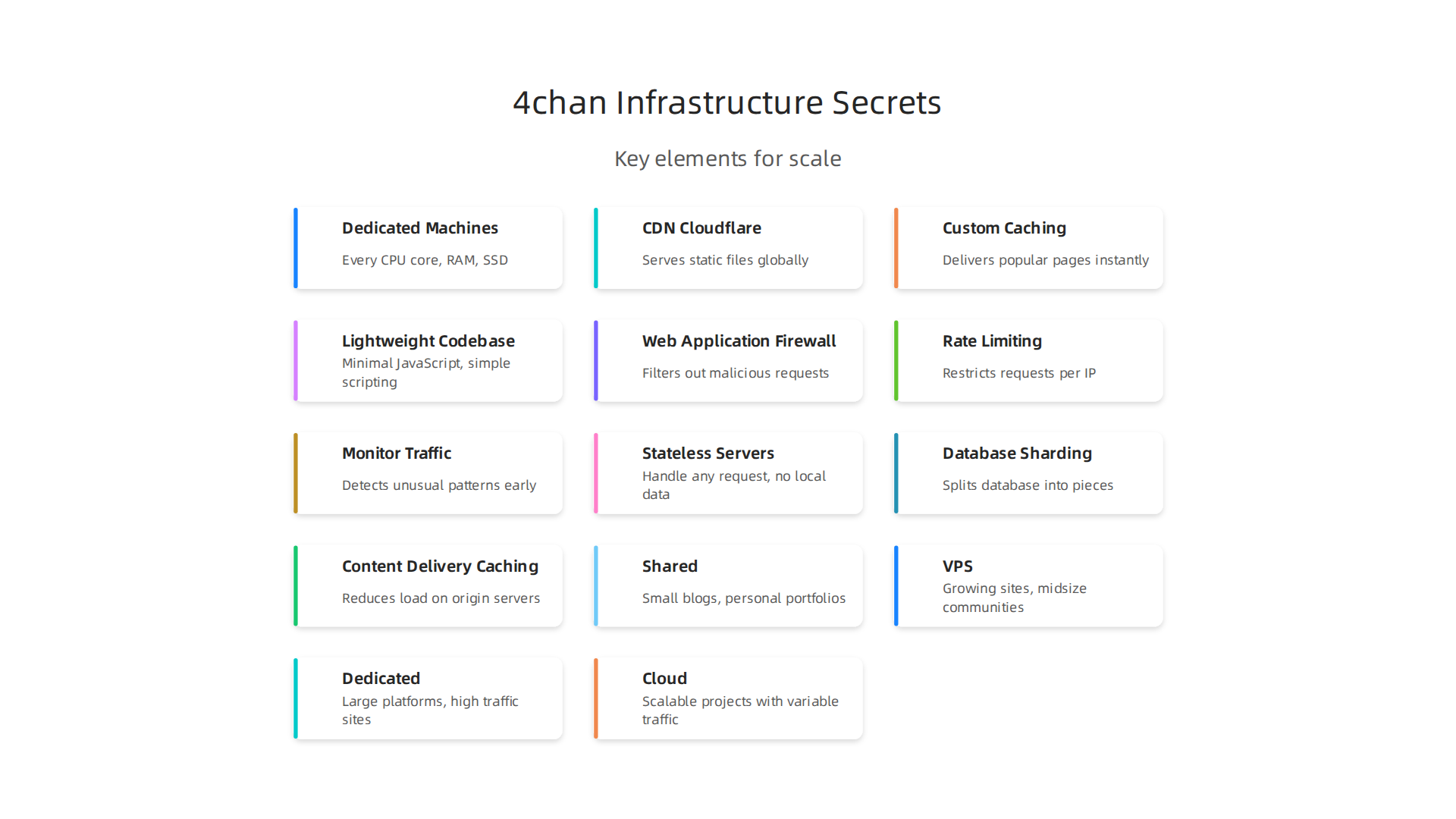
4chan does not use shared hosting. They use dedicated machines. That means every CPU core, every GB of RAM, and every SSD is theirs alone. No other site can slow them down. For a site that gets sudden traffic spikes from viral threads, dedicated hardware is non-negotiable.
Next comes the CDN. 4chan relies on Cloudflare to serve static files like images and CSS. Cloudflare has servers all over the world. When a user in Europe loads a page, the content comes from a European edge server instead of the main US data center. This reduces load time and saves bandwidth. In fact, the founder of 4chan once noted that Cloudflare is one of the main reasons the site is still around, as highlighted in a discussion about Cloudflare’s role in keeping 4chan online.
Then there is the custom caching. Most sites use generic caching plugins. 4chan built its own system. It caches popular pages and delivers them instantly without querying the database. When a thread goes viral, the cache absorbs the hit. The database barely notices. This is why you can browse 4chan during peak hours and still get near-instant page loads.
Security also benefits from this setup. The 4chan web platform faces constant DDoS attacks. Because static content is served from the CDN, the origin server only handles dynamic requests. Custom caching further reduces the load. This layered approach keeps the site online even when under fire.
Another key to 4chan’s efficiency is its lightweight codebase. The site uses minimal JavaScript and avoids heavy frameworks. Pages are mostly static HTML with simple server-side scripting. This keeps the server load low even during peak traffic.
What does this mean for you? Even if you are not running a site with 82 million monthly visits, the same principles apply. Dedicated resources, a CDN, and smart caching can make your site faster and more reliable. You do not need a huge team. You just need the right setup.
So the first big lesson from 4chan’s web platform is this: invest in dedicated resources, use a CDN, and build for lightweight performance from day one. Whether you run a small blog or a growing e-commerce store, these same strategies will help you handle traffic surges without breaking the bank.
If you want to explore hardware that can scale with your growth, take a look at our comparison of the best dedicated hosting providers. It covers performance, security, and value so you can choose a plan that fits your needs.
Security Challenges Unique to Community Platforms
Operating a site like 4chan means living with a bullseye on your back. Community platforms attract more than just users. They attract attackers. The same anonymity and free speech that make these spaces vibrant also make them prime targets for DDoS attacks, spam, and data breaches.
4chan has faced some of the largest DDoS attacks in internet history. In fact, DDoS attacks have reached record-breaking scales in recent years, with one attack peaking at 31.4 Tbps in late 2025. According to recent DDoS attack statistics for 2026, network-layer attacks increased by over 168% year-over-year in early 2026. For a platform like 4chan, being under constant fire is just another Tuesday.
The attacks forced real architectural changes. 4chan had to build its defense layer by layer. The Cloudflare CDN they use is not just for speed. It scrubs malicious traffic before it ever reaches the origin servers. This is a classic example of a multilayered defense strategy.
But DDoS is only part of the story. Spam and moderation are huge challenges. Community platforms like 4chan and similar sites, such as the fanfiction.net website or the wowhead website, have to deal with automated bots posting spam, links, or malicious content. Without strong moderation, a community can become unusable fast.
Data breaches are another constant threat. User data, even anonymous posts, can be valuable. 4chan uses minimal data collection to reduce the risk. They do not store email addresses or passwords for comments. This is a smart move: if you do not collect sensitive data, you cannot leak it.
So what security measures are non-negotiable for any community site?
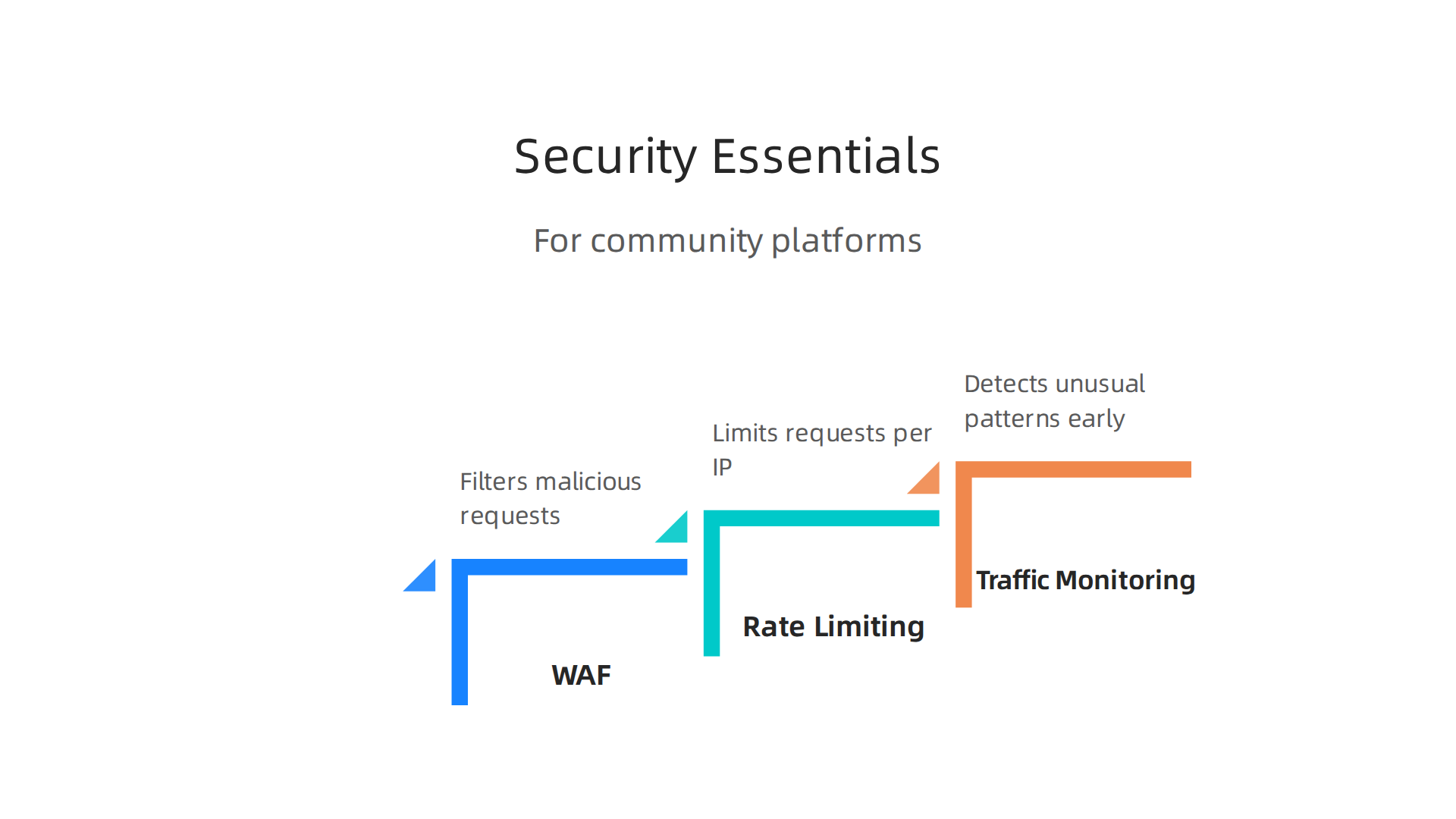
First, deploy a Web Application Firewall (WAF). A WAF sits between your users and your server. It analyzes incoming traffic and filters out malicious requests. It is especially effective against application-layer attacks. Many modern DDoS attacks target Layer 7, and a WAF is your first line of defense there.
Second, use rate limiting. This restricts how many requests a single IP can make in a given time window. It stops brute force attempts, API scraping, and sudden floods of traffic. Rate limiting is a simple yet powerful tool to protect your resources.
Third, monitor traffic for anomalies. Services that use machine learning can detect unusual patterns early and block them before they become a problem. Early detection is everything.
For a small business or community owner, these measures may sound complex. But they are not out of reach. Many hosting providers include basic DDoS protection, WAF, and rate limiting in their plans. You do not need 4chan’s budget to get solid security.
If you are building a community site or any web platform, start with a host that takes security seriously. A provider that offers 17Tbps+ DDoS protection and enterprise-grade tools can make a huge difference. To learn more about choosing a secure hosting setup, check out our guide on UK web hosting with cPanel for small business speed and security. It walks through features like free SSL, firewalls, and automated backups that keep your site safe.
Performance & Uptime: Why Speed Matters for Community Sites
Now that we have covered security, let us talk about something just as important: speed. Even the most secure site is useless if it loads too slowly. Users will leave. They will not come back.
4chan’s content is mostly text and images. You might think that means it loads fast without much work. But the truth is different. The 4chan web platform gets millions of visitors every day. Without aggressive caching and a content delivery network (CDN), pages would take too long to load. In fact, a community post on Hacker News noted that 4chan’s reliance on Cloudflare CDN is one of the main reasons the site is still around today.
Page speed affects everything. Slow pages chase users away. They hurt your search engine rankings.

They reduce ad revenue. For a community site like the wowhead website or the fanfiction net website, every second of delay means fewer page views and less engagement. Even a one-second delay can cut conversions by a large amount.
So how can a small business or community owner make their site fast? The same tactics 4chan uses.
First, compress your assets. Images, CSS, and JavaScript files can be shrunk without losing quality. Tools like Gzip or Brotli do this automatically. Second, use lazy loading. This means images and videos only load when the user scrolls down to see them. It saves bandwidth and speeds up the initial page load. Third, optimize your network. That means using a CDN and a fast hosting provider. A CDN stores copies of your content in servers around the world so users load from the nearest one.
For more tips on choosing a host that prioritizes speed, check out this guide on cheap VPS hosting that doesn’t sacrifice performance or security. It covers what to look for in a provider.
And if you want hosting that includes enterprise-grade DDoS protection, NVMe SSD storage, and LiteSpeed servers, consider Prism Web Host. Their infrastructure is built for speed and uptime, just like the big community platforms. You get fast loading times without the technical headache.
Scalability Lessons from 4chan’s Architecture
Speed is only part of the story. The other part is making sure your site can handle growth. That’s where scalability comes in. You might launch a small community site today. But what happens when traffic doubles, or triples, or goes viral overnight? That’s the challenge 4chan faced early on. And the way they solved it offers lessons for any site owner, whether you run a wowhead website or a fanfiction net website.
4chan started as a simple imageboard. But as it grew, the team realized they couldn’t just keep buying bigger servers. That approach is called vertical scaling, where you add more CPU, RAM, or storage to a single machine. It works for a while, but you eventually hit a ceiling. 4chan needed a different path: horizontal scaling.
Horizontal scaling means adding more machines to share the load. Instead of one giant server, you have a cluster of smaller servers working together. This is how 4chan web handles millions of daily visitors without collapsing. The key patterns are simple to understand.
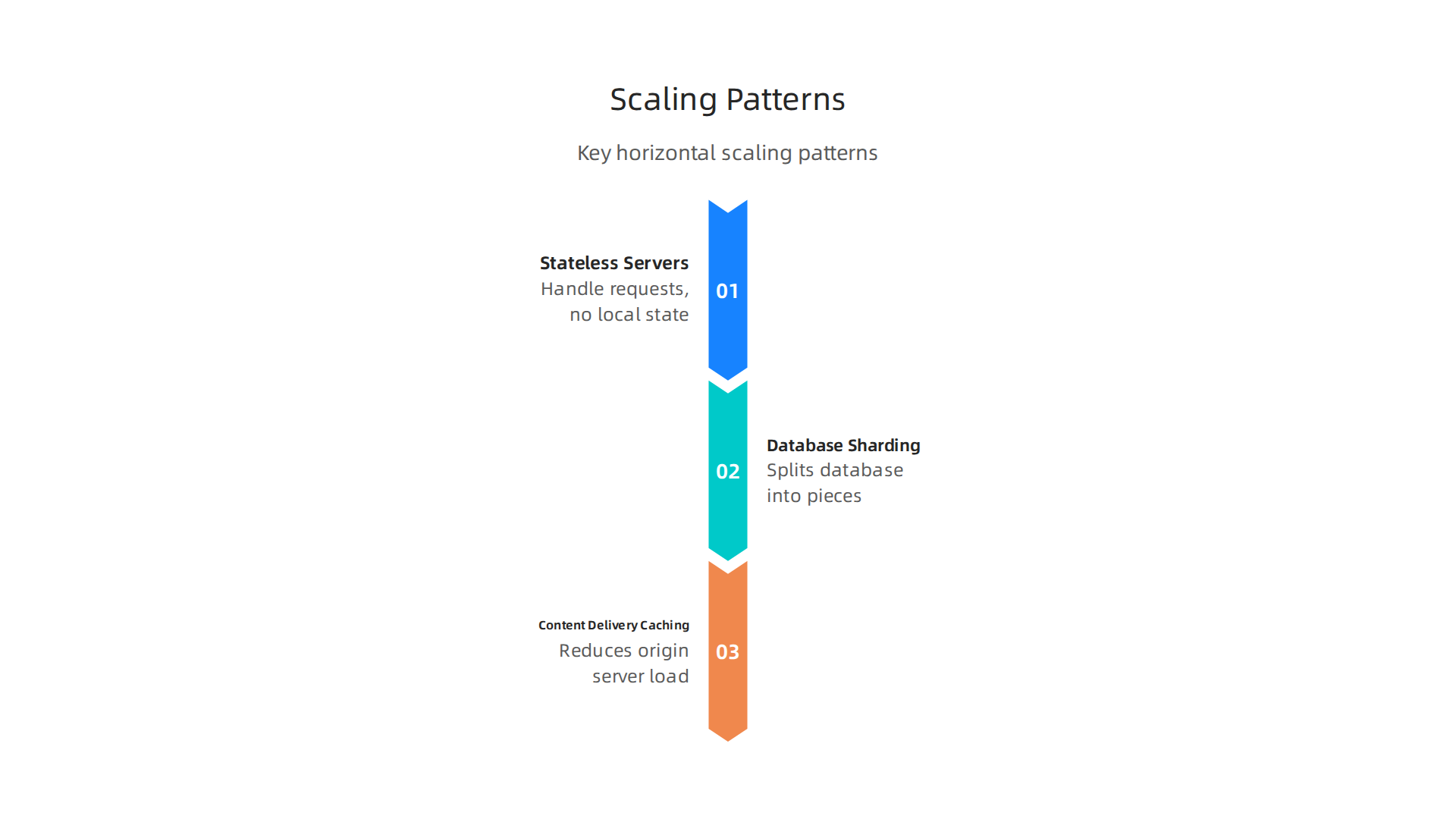
First, use stateless application servers. Each server handles any request without storing user data locally. If one server goes down, another picks up the work. This makes the system resilient. For a deeper look, check out this helpful guide to horizontal vs vertical scaling from MongoDB.
Second, use database sharding. That means splitting your database into smaller pieces, or shards, and spreading them across multiple machines. For example, user IDs 1 to 100,000 live on shard A, and the next group lives on shard B. This way, no single database becomes a bottleneck. Sharding is a reason why big platforms like the rsvp website and alexa website can handle huge traffic spikes.
Third, use content delivery caching. We already talked about CDNs in the performance section. Caching at multiple layers reduces the load on your origin servers. 4chan famously caches heavily using Cloudflare. That takes pressure off the application and database tiers.
For small businesses, the best part is you don’t need to build this yourself from scratch. You can start with a single server and scale out as you grow. Cloud services and good hosting providers let you add resources as needed. If you’re planning for growth, consider a provider that offers infrastructure built to scale. Read our comparison of the best dedicated hosting providers 2026 to see options that give you room to expand without over-engineering.
The lesson is simple: design your architecture to scale horizontally from day one, even if you only need one server today. When traffic spikes, you’ll be glad you did.
Choosing the Right Hosting for Community-Driven Projects
But designing for scale is only half the battle. You also need a hosting provider that can support that design.

Not every host is ready for the demands of a community platform. A wowhead website or a fanfiction net website needs more than a basic shared plan. Let’s look at what actually matters when choosing hosting for a project driven by user traffic.
Shared hosting puts your site on a server with dozens or hundreds of other sites. It is cheap, but it is also fragile. A sudden traffic spike from one neighbor can drag your entire site down. For community platforms where visitors expect fast load times, shared hosting is usually not enough.
Here is a simple comparison of the main hosting types:
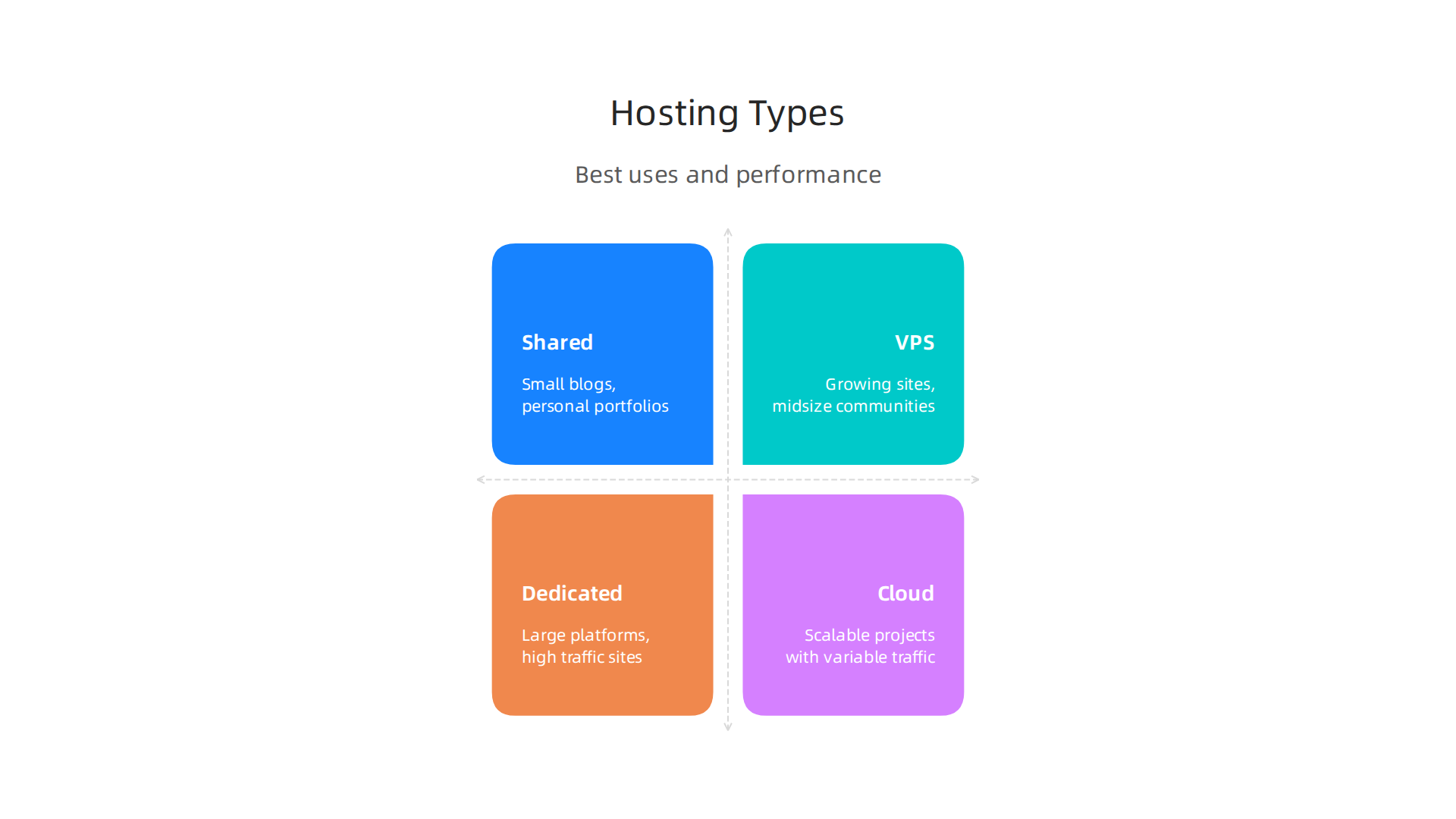
| Hosting Type | Best For | Performance Level | Typical Cost |
|---|---|---|---|
| Shared | Small blogs, personal portfolios | Low to medium | $2 to $10 per month |
| VPS | Growing sites, midsize communities | Medium to high | $10 to $50 per month |
| Dedicated | Large platforms, high traffic sites | Very high | $50 to $200+ per month |
| Cloud | Scalable projects with variable traffic | High | Pay as you go |
For a community site that might grow fast, VPS or cloud hosting gives you room to expand. Dedicated hosting makes sense when you are already pulling in millions of visitors. Think of an alexa website or a large rsvp website that needs consistent power.
So what should you look for in a host? Here are the key features:
- DDoS protection. Community sites attract attention. A good host offers hardware-level DDoS filtering to keep your site online during attacks.
- Automatic scaling. Your traffic can spike when a post goes viral. Look for hosts that let you add resources without manual work.
- 24/7 support. When your site goes down at 3 AM, you need someone who can fix it fast.
- Server location. Pick a data center close to your audience. This reduces lag and speeds up page loads.
For a detailed breakdown of what different providers offer, check out this top hosting providers in 2026 ranking from Serverspace. It compares shared, VPS, and dedicated plans with real pricing.
The smartest move for most community projects is to start with a reliable VPS plan. You get dedicated resources without the high price of a dedicated server. And when you outgrow it, most VPS providers let you upgrade easily.
If you are looking for a hosting partner built for performance and security, consider Prism Web Host. They offer isolated hosting environments, automated scalability, and enterprise-grade DDoS protection. That is the kind of foundation your community needs to stay online and stay fast.
For more help picking the right plan, read our guide on web hosting cost in 2026 to understand pricing models and avoid surprise bills.
Common Pitfalls When Running a Community Platform
Even with solid hosting in place, many community platforms fail for reasons that have nothing to do with server power. The biggest mistakes owners make are neglecting security basics, underestimating traffic spikes, and ignoring the user experience.

These three problems can destroy a site faster than any technical glitch.
Let’s look at a real example. The 4chan web platform has been around since 2003. It went through multiple major outages and security incidents that forced the team to change how they ran things. Early on, there were attacks that took the site down for hours or even days. These incidents taught hard lessons about what happens when you do not plan for the worst. You can read about some of these struggles in 4chan’s documented history of outages and security challenges.
Traffic spikes are another killer. One viral post can send thousands of visitors your way in minutes. If your hosting is not set up to handle that, your site goes down. And for a community site like a fanfiction net website or a wowhead website, downtime means frustrated users who may not come back. That is lost trust and lost growth.
User experience is just as important. Slow load times, confusing navigation, and broken pages drive people away. A site that feels cluttered or hard to use will not hold an audience. Even platforms like an alexa website or an rsvp website depend on a clean, fast experience to keep users engaged.
For a real-life case study of how these mistakes play out, check out this breakdown of common hosting mistakes that crashed a viral website. It covers exactly what went wrong and how to avoid the same fate.
The takeaway is simple. Learn from the mistakes of others. Invest in security early, plan for traffic spikes, and always put the user first. Doing this saves you time, money, and your reputation.
Summary
This article uses 4chan’s web platform as a case study to explain how high‑traffic community sites stay fast, secure, and online. It breaks down the technical choices—dedicated servers, Cloudflare CDN, custom caching, minimal JavaScript, and horizontal scaling—that let a small team handle millions of visits and constant attacks. The piece also translates those lessons into practical advice for small and medium businesses, covering hosting types (shared, VPS, dedicated, cloud), essential security measures (WAF, rate limiting, DDoS protection), and performance steps (compression, lazy loading, CDN). You’ll learn when to move from shared hosting to VPS or dedicated servers, how to design for scale, and which features to prioritize in a host. The article emphasizes low‑effort, high‑impact moves you can make today—like using a CDN and smart caching—to survive traffic surges without hiring a large engineering team. It also points to specific guides and provider comparisons to help you pick plans that balance speed, security, and cost.
