




Why a 100 Gigs Website Is the Smart Hosting Choice for Small Business Growth
Article
Imagine you have a small online store selling handmade candles. You spent weeks building the site, picking the right photos, and writing product descriptions. But when customers try to visit, the pages take forever to load. Some people just leave. Others get frustrated and never come back. This is a real problem for small businesses. Slow hosting and unreliable servers directly push visitors away. It also hurts your search engine rankings, which means even fewer people find you in the first place.
Many entrepreneurs feel stuck when choosing a hosting plan. Words like "bandwidth" and "disk space" sound confusing. And once the site is up, they rarely think about how navigation affects whether people stay or leave.

It’s easy to overlook these technical details until they start costing you money.
That’s where the idea of a 100 gigs website comes in. A 100 gigs website gives you enough bandwidth and storage to handle a growing number of visitors without slowing down. To choose the right plan, it helps to understand how much disk space and bandwidth you really need. For example, a small blog can start with just 1 GB of storage, but a busy online store or a site with lots of images will benefit from at least 100 GB of bandwidth to keep things running smoothly.
Having a 100 gigs website means you have breathing room. You don’t have to worry about hitting a limit when a post goes viral or during a holiday sale. Even popular platforms like a godaddy website offer 100 GB plans, though you should read the fine print because some "unlimited" plans still have hidden limits on resources. Larger sites, such as a wowhead website with thousands of guide pages or a fanfiction net website hosting endless user stories, rely on this kind of headroom. Even a simple rsvp website for events can crash under heavy traffic if the hosting plan is too small.
But bandwidth alone isn’t enough. Smart navigation design matters just as much. A fast server won’t save you if visitors can’t find what they need. When you choose your hosting, you also need to think about how people move through your site.
If you’re still unsure about what to pay, take a minute to calculate your true web hosting cost so you avoid surprise fees later. Getting the right foundation now saves you time, stress, and lost sales down the road.
What Exactly Is a 100 Gigs Website?
When you start looking for web hosting, you see numbers everywhere. 10 GB. 100 GB. Unlimited. It gets confusing fast. You might wonder if you need 100 gigs of storage for your product photos or if that number means something else.
Here is a simple way to think about it. A 100 gigs website usually refers to a hosting plan that gives you 100 GB of bandwidth each month. Bandwidth is the total amount of data allowed to flow from your site to your visitors. It is not the same as disk space.
Disk space is where you store your files. Think of it as the size of your kitchen. Bandwidth is the width of your front door. A 100 GB bandwidth plan gives you a door wide enough to serve hundreds or thousands of customers every day without making them wait. It helps to start with a clear definition of web hosting services before shopping for plans.
Many site owners mix these two up. For instance, a godaddy website might advertise 100 GB of space, but their policy puts real caps on your traffic. It is always smart to read the fine print on GoDaddy web hosting limits explained before you choose a plan.
Who actually needs a 100 gigs website? It is the sweet spot for growing small to medium businesses. If you run an online store with lots of product images, a blog with popular guides, or a community site like a wowhead website or a fanfiction net website, you need the extra room.
Even a simple rsvp website for an event can crash during peak sign-ups if your bandwidth is too tight.
A web hosting plans with 100 GB bandwidth comparison shows that 100 GB is the most common mid-tier option. It is fast enough for most businesses but costs much less than high-end or dedicated hosting. A report on the best web hosting services 2026 also confirms that mid-tier plans offer the best balance of cost and performance for small businesses.
When you understand the difference between storage and bandwidth, you make smarter choices. You avoid surprise slowdowns and keep your visitors happy. Once you know what you need, finding a reliable partner is the next step. Prism Web Host provides the clear limits and high performance that growing businesses deserve.
Why Bandwidth and Data Transfer Matter for Your Website Performance
Picture this. You just launched a new product. Traffic is pouring in. People are excited. Then your site starts loading like molasses. Pages take forever. Visitors leave. Sales drop.

What happened? You ran out of bandwidth.
Bandwidth and data transfer are the pipes connecting your site to your audience. Every time someone visits a page, their browser downloads files. Images, videos, scripts, fonts. All of that counts toward your monthly data transfer limit.
Here is why the numbers matter. The median web page today weighs about 2.6 MB on desktop according to recent median web page weight data. That means each page view uses roughly 2.6 MB of your bandwidth.
Do the math on a 100 gigs website plan. One hundred gigabytes is 102,400 MB. Divide that by 2.6 MB per view. You get about 39,000 page views per month. That is a solid number for most growing small businesses. For context, over 23 percent of small business websites receive between 50,000 and 250,000 monthly visitors according to 2026 small business website statistics. A 100 GB plan covers a nice slice of that traffic for a site with average page sizes.
But here is the catch. If your pages are heavier, say 4 MB or 5 MB because of large product photos or video backgrounds, that number drops fast. A godaddy website with lots of media might only handle 20,000 visits before hitting limits. An image heavy site like a fanfiction net website or a media rich community such as a wowhead website can burn through bandwidth even faster.
When you exceed your bandwidth cap, most hosts do one of two things. They throttle your speed down to a crawl. Or they hit you with overage fees. Both hurt your business. Throttling makes your site feel broken. Overage fees drain your budget without warning.
This is not just about cost. Speed is a major ranking signal for Google. Core Web Vitals measure how fast and stable your pages feel to real users. Slow load times from cramped bandwidth hurt your scores. Bad scores mean lower search rankings. Lower rankings mean less traffic and fewer customers.
Users expect fast sites. According to 2026 website speed benchmarks, people start losing patience after 2 to 3 seconds. If your bandwidth is too tight, every visitor experiences that delay. They leave. Your bounce rate climbs. Your reputation takes a hit.
A 100 gigs website plan gives you room to grow. It handles the spikes that come with promotions, viral content, or seasonal rushes. It keeps your site fast when it matters most.
The lesson is clear. Pick a hosting plan with enough bandwidth to breathe. Understanding the real limits of your plan helps you avoid surprises. It is worth learning about unlimited web hosting hidden limits so you know what you are actually paying for.
Your website performance starts with bandwidth. Get that right, and everything else gets easier.
The Critical Impact of Website Navigation on User Retention and SEO
Bandwidth keeps your site fast. But even a lightning fast 100 gigs website will drive people away if they cannot find what they need. Navigation is the map of your site.

When that map makes sense, visitors stay longer, explore more, and trust your brand.
Here is a number that should grab your attention. Better navigation can reduce your bounce rate by 30 percent according to a recent study on reducing bounce rates with better website navigation. That is huge. Picture every third visitor who would have left your site now sticking around and looking at your content. Those extra eyes mean more engagement, more leads, and more sales.
What does good navigation look like? It starts with clarity. Your main menu should hold no more than five to seven items. Labels need to be plain and obvious. "Services" works. "What We Do" is vague and makes people guess. Every extra click you ask a visitor to make is a risk that they leave.
Common mistakes hurt both users and rankings. Broken links frustrate everyone. A dead link on a godaddy website or any host tells Google your site is not maintained well. Mobile menus that are tiny or hard to tap are a disaster too. Over 65 percent of traffic comes from mobile devices for many businesses. If your navigation is not thumb friendly, you lose that crowd.
Poor navigation also wastes your bandwidth. When people cannot find the product page or contact form, they click around aimlessly. Each page load burns your data transfer. A confused visitor on a resource heavy site like a wowhead website or a fanfiction net website might load five or six pages before giving up. That eats into your monthly limit fast.
Search engines care about navigation too. Google uses your site structure to understand what is important. Pages that are buried deep under many layers get treated as less relevant. A shallow hierarchy where key pages are one or two clicks from the homepage sends strong signals. Add breadcrumbs on deeper pages. They help users see where they are and help crawlers map your site.
Start with information architecture. List every page your site needs. Group related content under clear categories. Think about what a first time visitor wants most. Put those actions front and center. Keep high intent buttons like Book Now or Get a Quote visible without scrolling.
If you are building a new site or fixing an old one, take the time to tighten your menu structure. It pays off in lower bounce rates, higher time on site, and better rankings. For a complete guide on setting up your hosting and site correctly from the start, check out our checklist on choosing the best UK web hosting for your small business. A strong foundation makes everything easier.
Key Technical Features to Look for in a 100 GB Hosting Plan
Bandwidth gets the glory, but the real power of a 100 gigs website comes from the features underneath. Think of bandwidth as the size of your pipe. The features we talk about next are what make the water flow clean and fast.
Storage and Speed: SSD and CDN
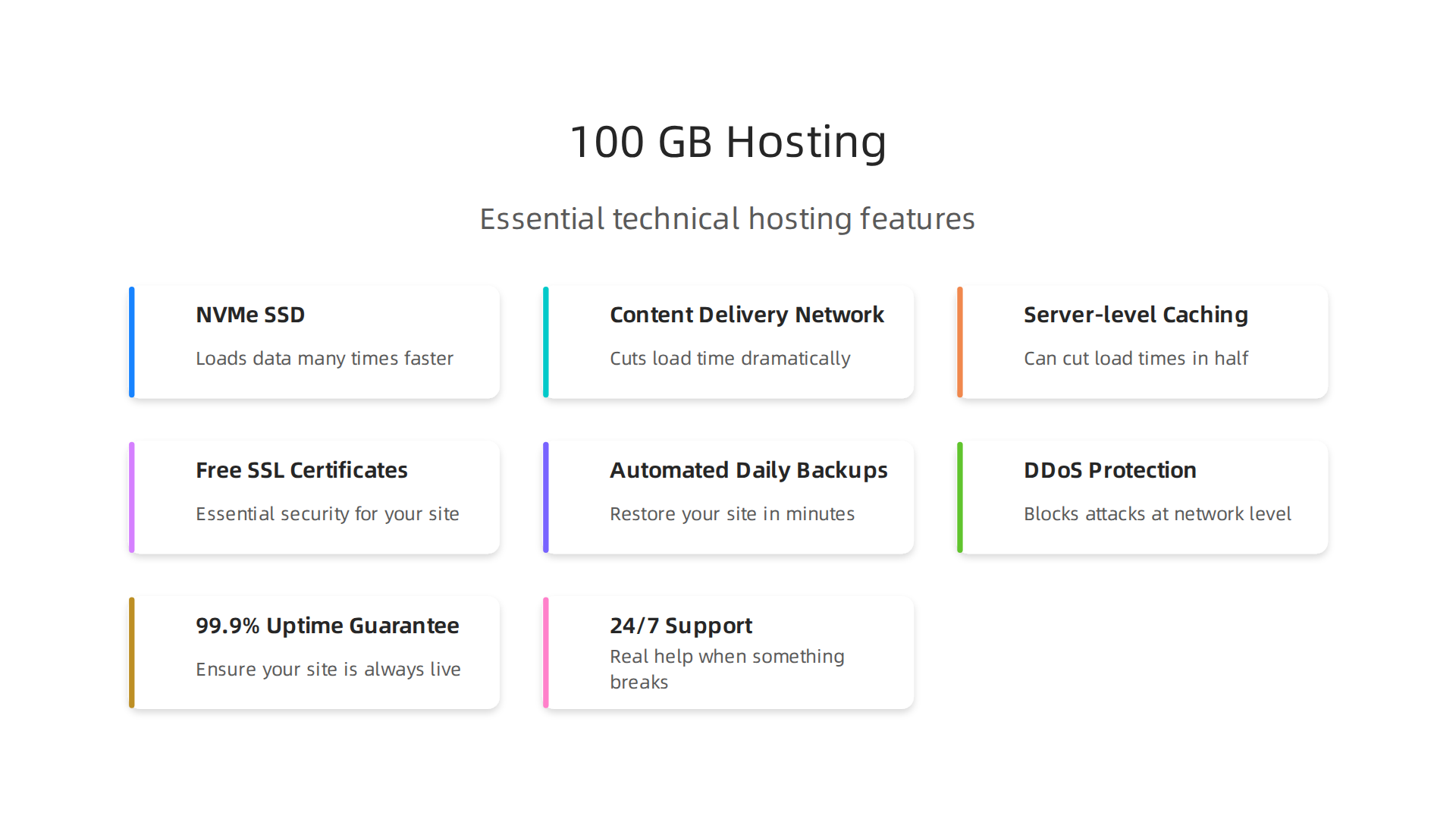
Not all storage is the same. Look for plans that use NVMe SSD storage. These drives load data many times faster than old hard drives. When a visitor clicks a page on your WordPress site, the server grabs files from the SSD. That split second matters for SEO and user happiness.
A Content Delivery Network (CDN) is another must. A CDN stores copies of your site on servers around the world. When someone in London visits your site, they get files from a nearby server instead of your main one. This cuts load time dramatically. Many 100 GB plans include a basic CDN or make it easy to add one.
Caching That Works
Caching is like having a shortcut. Instead of building a page from scratch every time someone visits, the server saves a finished copy. LiteSpeed servers do this well. They handle high traffic without breaking a sweat. Check if your plan offers server-level caching. It can cut load times in half.
Security That Protects Your Business
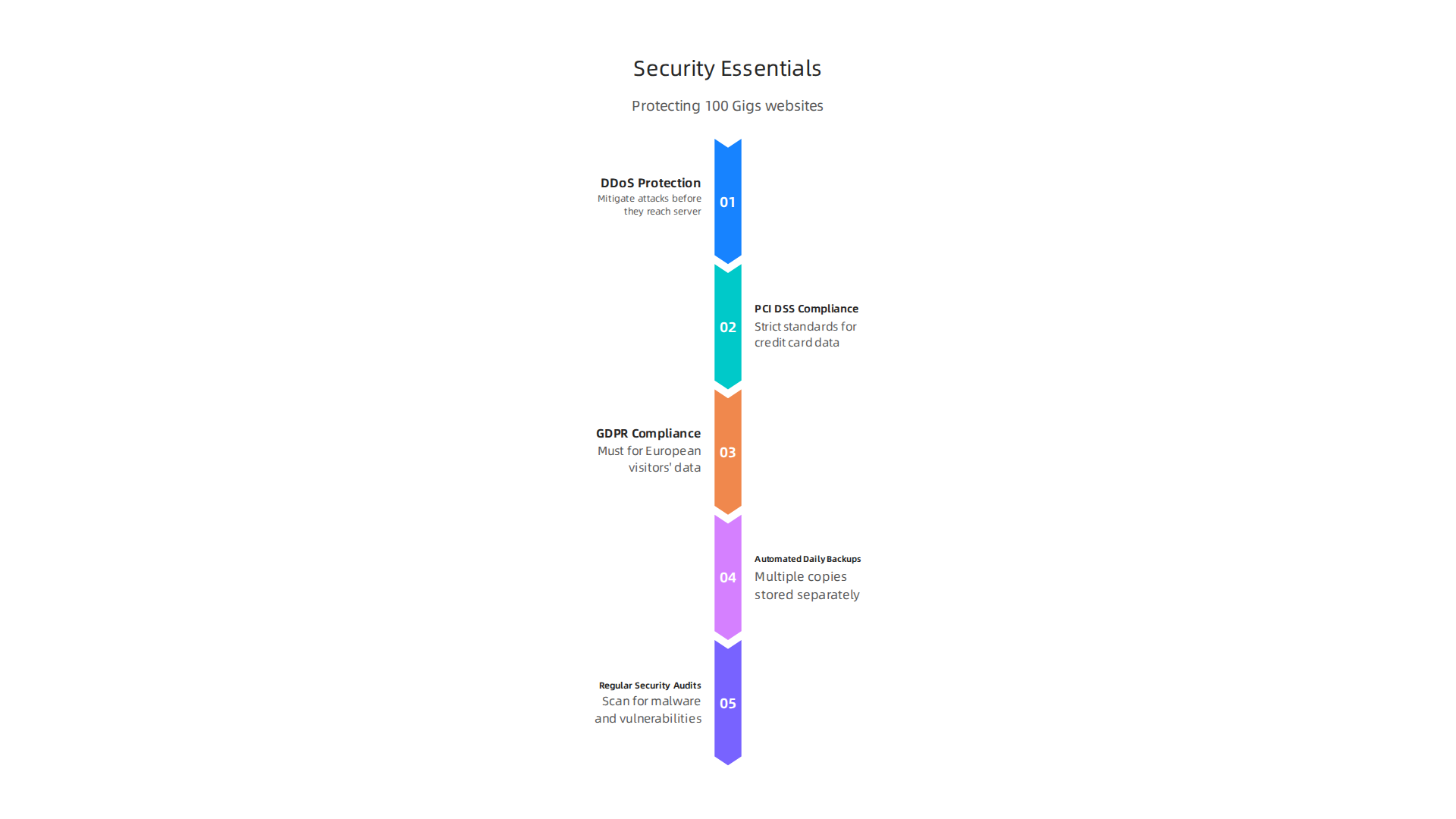
You cannot skip security. Hackers love targeting small sites. A study about top cybersecurity threats for small businesses in 2026 shows that DDoS attacks, phishing, and ransomware are real dangers. A good hosting plan should include free SSL certificates, automated daily backups, and DDoS protection.
DDoS attacks are getting worse. In early 2026, attacks grew 168% year over year according to a DDoS attacks trend analysis. That means your site could be targeted at any moment. A quality host blocks these attacks before they reach you. Look for at least 1 Tbps of DDoS protection. Higher is better.
Uptime and Support
A 99.9% uptime guarantee sounds standard, but not all hosts deliver. Read reviews. Check if they have a money-back promise tied to uptime. And 24/7 support should be real, not just a chatbot that repeats answers. Support that answers in minutes can save your business when something breaks.
If you want a deep look at high-performance hosting that checks all these boxes, check out our comparison of the best dedicated hosting providers. A 100 GB plan with the right features will keep your site fast, secure, and reliable for years.
Security Essentials: DDoS Protection and Data Security for Your 100 Gigs Website
Here is the thing. A 100 gigs website is a big target. Hackers do not care if you run a small blog or a growing online store. They see opportunity.
In 2025, 43% of all cyberattacks targeted small businesses according to small business cybersecurity statistics. That number is not going down in 2026. It is going up.
So what does real protection look like on your 100 gigs website?
DDoS Protection Is Not Optional Anymore
DDoS attacks are hitting record sizes. In Q1 2026, attacks grew by 168% year over year according to the latest DDoS attacks in Q1 2026 trends. We are talking about attacks reaching 31.4 terabits per second. That is enough traffic to knock most unprotected sites offline in seconds.
Every minute of downtime from a DDoS attack costs an average of $22,000. For a small business, recovery can run $120,000 or more. A good 100 GB hosting plan should include at least 1 Tbps of DDoS mitigation. The best plans go much higher. Your host should block attacks at the network level before they ever reach your server.
Data Breaches Destroy Trust
A data breach is worse than downtime. It costs you customers. A survey by Hiscox found that the median cost of a cyber breach for a small business was $8,300. That number can balloon fast if you handle payment information or personal data.
Compliance matters here. If you run an e-commerce store, you need PCI DSS compliance. That means your hosting environment meets strict security standards for handling credit card data. If you have visitors from Europe, GDPR compliance is a must. These are not nice to have. They are requirements that protect your business from massive fines.
Backups and Audits Keep You Safe
Even with the best protection, things can go wrong. That is why automated daily backups are essential. Your host should keep multiple copies of your site stored in separate locations. If something breaks, you restore in minutes.
Regular security audits catch problems before they become disasters. Your hosting provider should scan for malware, check for outdated software, and patch vulnerabilities automatically. If you want to understand how to stay fully compliant with secure web hosting regulations in 2026, our guide on FTC event web compliance walks through the key requirements.
A 100 gigs website with strong security gives you peace of mind. You sleep better knowing your site and your customers are protected.
Scaling Your Website: From 100 GB to Enterprise‑Grade Solutions
Your 100 gigs website is humming along. Traffic is climbing. More visitors are landing on your pages. Then you start noticing a slowdown. Pages take longer to load. Hosting logs show your resource usage creeping up. That is the moment when growth becomes a challenge.
Here is the thing. A 100 GB allocation is generous for many sites. But as you add more content, images, videos, and plugins, your page weight grows fast. In 2025, the median web page weighed 2.6 MB on desktop and 2.3 MB on mobile. That is a 5x increase in 15 years. Images alone account for roughly 40% of that weight according to the median web page weight 2025 trends. Every additional 100 KB adds about 50 ms of load time on a 4G connection. At scale, those milliseconds stack up.
Know When to Upgrade
Your 100 Gigs plan handles moderate traffic well. But when monthly visitors pass 50,000 or your bandwidth usage hits 80% consistently, it is time to think bigger. Unlimited bandwidth plans sound great, but read the fine print. Many "unlimited" plans throttle speed after a certain threshold. True enterprise‑grade solutions use dedicated resources.
Cloud hosting and auto‑scaling are your friends here. Instead of manually upgrading your plan, cloud setups automatically add server capacity when traffic spikes. You pay only for what you use during the surge. That beats staring at your control panel at 2 AM wondering why your site is down.
Use Monitoring Tools to Forecast
Do not wait for a crash to start planning. Use Google Analytics and server logs to watch your growth. Look at page views per month, average session duration, and bandwidth consumption. If your traffic grows 10–20% month over month, you will outgrow 100 GB in a matter of months. According to small business website statistics from 2026 showing over 80% of small businesses now have a website, competition for speed is fierce. A slow page costs you visitors.
When you do decide to scale, moving to a VPS or dedicated server gives you control. You get your own CPU cores, RAM, and storage. No neighbors competing for resources. For a deep comparison of what dedicated hosting actually delivers, check out our guide on best dedicated hosting providers 2026. It walks through the performance and security factors that matter when you leave shared hosting behind.
Keep Your Site Lean While Scaling
Even if you upgrade, keep optimizing. Use image compression, lazy loading, and caching. Every byte you save helps your server handle more visitors. Your 100 gigs website can stretch further with good habits. But when traffic outruns your plan, scaling up is not a failure. It is a sign of success. Plan for it early, and your transition to enterprise‑grade hosting will be smooth.
How to Choose the Best Hosting Provider for Your 100 Gigs Website
Once you know it is time to scale, the next big question is who to trust with your 100 gigs website. Not all hosting providers are built the same. Some lure you in with low introductory prices, then hit you with huge renewal fees. Others promise the world but deliver slow speeds and unreliable support. Your 100 GB site deserves a partner that grows with you, not a company that slows you down.
Look for Transparent Pricing First
The cheapest plan is rarely the best long term deal. A provider like GoDaddy might seem affordable at first, but add‑ons like SSL certificates and basic security features often come with extra costs. For a clear breakdown of what you actually pay, check out Forbes Advisor’s top web hosting picks for 2026. It compares real renewal rates and hidden fees across major brands.

When you compare plans, look past the monthly price. Ask yourself:
- What storage and bandwidth does the plan really offer?
- Are SSL certificates included or do they cost extra?
- What is the renewal price after year one?
- Are backups and security features part of the base plan?
Match Features to Your Website Type
Not every 100 gigs website has the same needs. An e‑commerce store needs strong security and fast load times. A media site like a wowhead website or fanfiction net website needs lots of bandwidth and responsive support. A simple rsvp website needs reliable uptime but not much storage. Pick a host that matches what your site actually does.
Read Independent Reviews and Test the Control Panel
Marketing pages sound great. Real user feedback tells the truth. Head over to forums and review sites to see what actual customers say about uptime, speed, and support response times. Our guide on why Reddit is your most honest source for web hosting reviews walks through how to find genuine feedback and spot fake reviews.
Before you commit, test the control panel. A good host gives you a demo or a trial period. If the dashboard feels confusing or clunky, imagine managing your site through it for years.
A Provider That Meets All the Marks
For a 100 gigs website, you want a host that offers transparent pricing, strong security, and easy scalability. Prism Web Host’s transparent pricing and features is built for businesses that need reliable performance without surprise bills. With NVMe SSD storage, LiteSpeed servers, and 24/7 support, it is a solid choice for growing sites.
Take your time comparing options. The right host makes scaling feel effortless.
Optimizing Your Website Navigation for a 100 Gbps (or 100 GB) Hosting Environment
Getting fast hosting is only half the battle. Even with ample bandwidth, poor navigation can create performance bottlenecks.
Bloated menus with too many links generate excessive HTTP requests, slowing down page load times before a visitor sees a single piece of content.
Here is the thing. A 100 gigs website that loads in under two seconds can still feel sluggish if the navigation is messy. Every extra menu item, dropdown, or animation adds weight. According to recent research on website navigation best practices, limiting your primary menu to five to seven items keeps things clean and fast.
Flat Architecture Makes Everything Faster
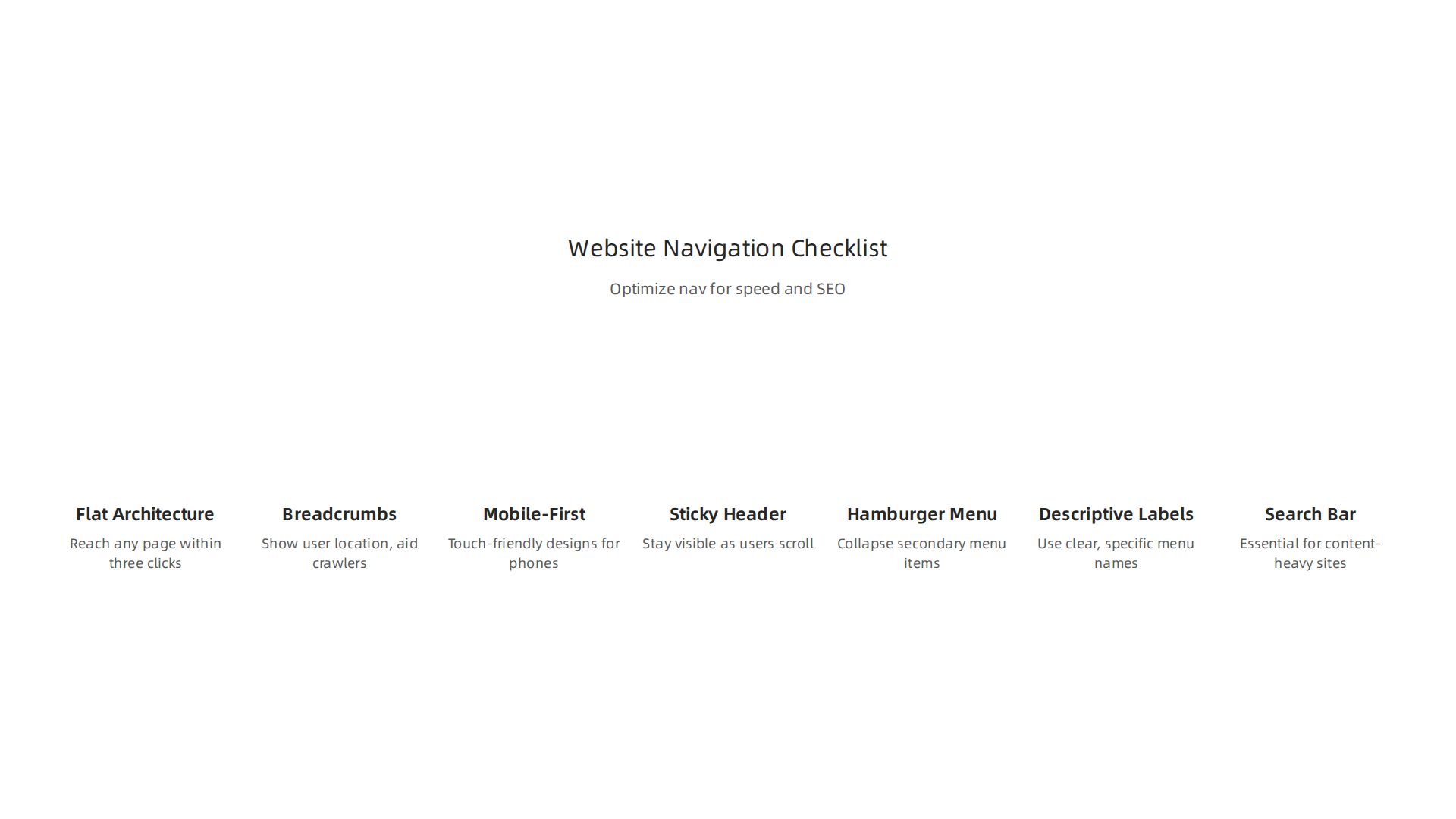
Aim for a flat site structure. That means users should reach any page within three clicks from the homepage. Do not bury important content under layers of submenus.
Breadcrumbs help here too. They show visitors exactly where they are on your site and give search engines a clear picture of your page hierarchy. Sites with deep structures especially benefit from breadcrumb navigation for better user orientation and SEO.
Think about how different types of sites handle this. A fanfiction net website needs readers to jump between stories quickly. A wowhead website relies on deep category trees for guides and databases. An rsvp website just needs a simple path to the response form. Each type benefits from a structure that matches user intent.
Mobile-First Navigation Is Non-Negotiable
Over 60% of web traffic now comes from mobile devices. If your navigation is hard to tap, zoom, or scroll on a phone, you will lose visitors fast.
Use sticky headers that stay visible as users scroll. Make buttons and links large enough for thumbs. Collapse secondary menu items behind a hamburger icon. A complete website navigation guide recommends touch-friendly designs with plenty of spacing between tappable elements.
Test your navigation on an actual phone before launch. What looks great on a laptop screen often breaks on mobile.
Keep Your Navigation Lean
Every link, image, and script in your menu is a request your server must handle. On a 100 gigs website, those requests add up quickly.
- Use descriptive labels like "Services" and "Pricing" instead of vague terms.
- Put your most important links first.
- Add a search bar for content-heavy sites so users can skip the menu entirely.
If your navigation feels bloated, simplify. A lean menu means faster load times and lower bounce rates. To see how performance issues can snowball, check out common hosting mistakes small businesses should avoid.
Take a weekend to audit your current navigation. Cut the clutter. Make every click count. Your visitors and your server will thank you.
Summary
This article explains the concept of a
