




Web Hosting UK Cost in 2026 What You Actually Pay and How to Avoid Hidden Fees
Article
Introduction
You have a great business idea. You build a website. Then you look at web hosting prices and your head starts to spin.

Sound familiar?
Many small business owners in the UK face this exact problem. You see ads for hosting at £2.99 per month. But when you try to sign up, the real price looks completely different. Hidden fees pop up. Renewal rates jump. And suddenly that budget friendly plan costs three times more than you expected.
The truth is, web hosting UK cost matters more than you might think. Your hosting affects how fast your site loads, how secure your customer data stays, and even where you rank on Google. Overpaying hurts your profit. Underpaying can hurt your growth.
According to industry research, the global web hosting services market reached $137.73 billion in 2025 and is expected to grow to $389.52 billion by 2034. That growth means more providers, more plans, and more confusion for business owners like you.
Here is what most guides do not tell you. The cost of web hosting UK depends on what you actually need. A simple blog costs less than an online store with hundreds of products. A cloud web hosting UK solution costs more than basic shared hosting but gives you better performance.
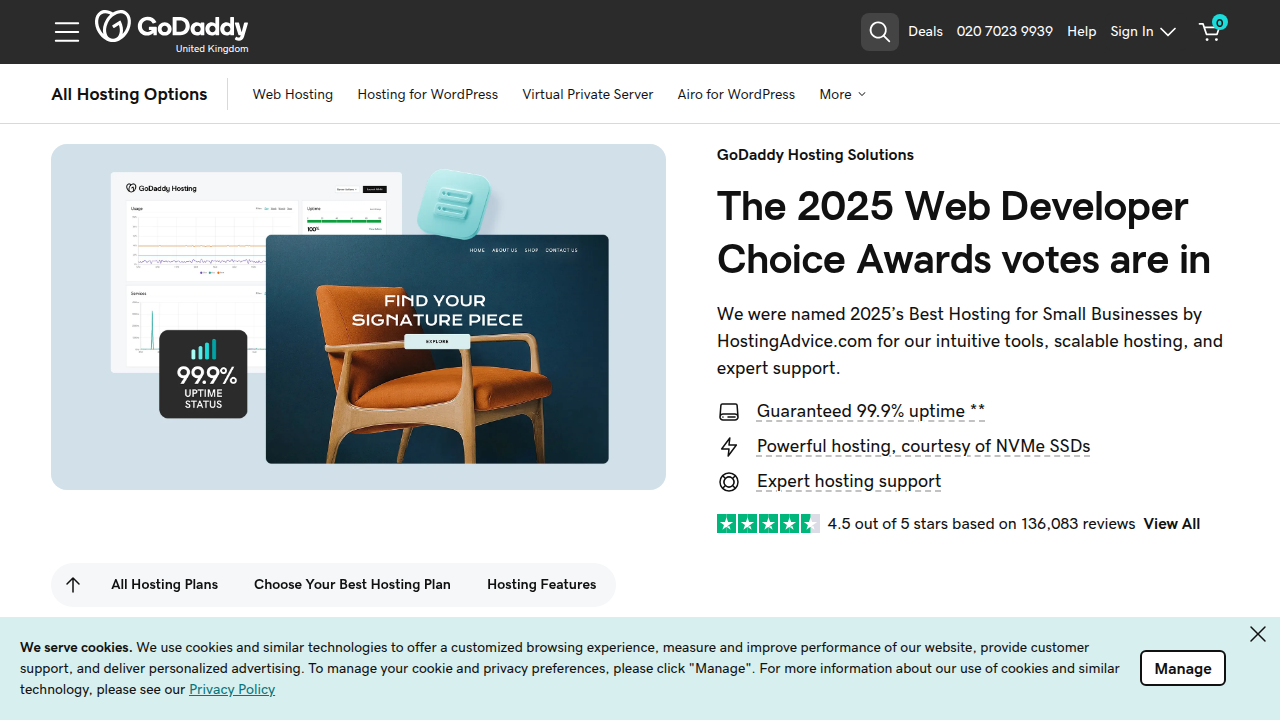
Some providers offer shared hosting starting at around £3.99 per month, according to GoDaddy.
Others offer WordPress hosting between $3 and $25 per month, as Hostinger explains.

But those starting prices often hide the real story.
In this article, we break down web hosting price UK options in plain English. No jargon. No hidden catches. Just clear numbers so you can make a smart choice for your business.
If you want to understand how pricing models work and avoid expensive surprises, we have a full guide on web hosting cost in 2026 and how to compare pricing models that dives deeper into this topic.
And if you are ready to explore a reliable hosting partner built for businesses like yours, check out Prism Webhost for secure, high performance hosting with transparent pricing.
Let us start with the biggest question: what are you actually paying for?
Key Factors That Influence UK Web Hosting Prices
Not all hosting plans are created equal. Here is what really drives the cost of web hosting UK.
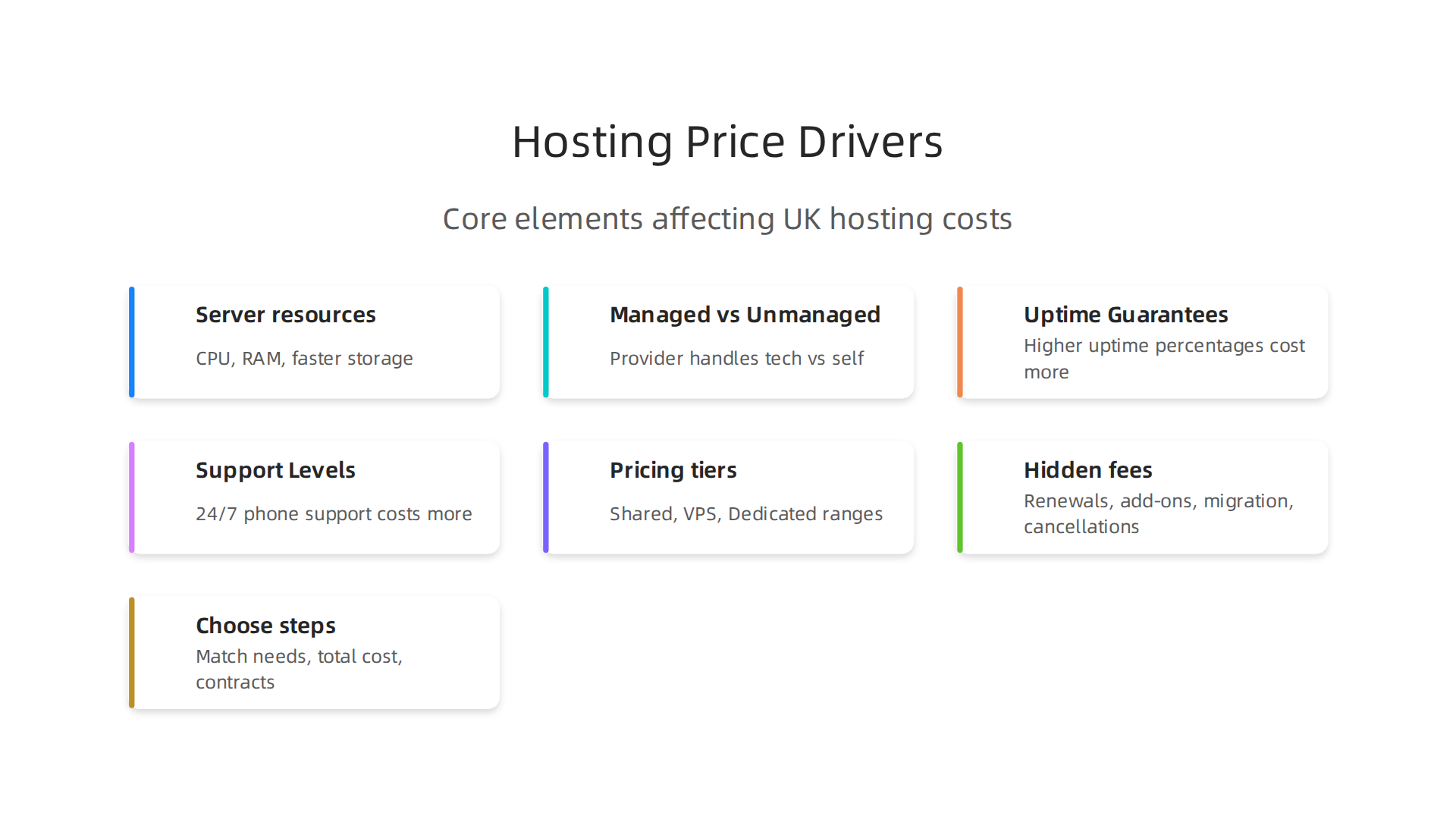
Server resources are the biggest factor. Think of them like renting an office. A basic shared office costs less because you share the space. A private office with dedicated equipment costs more. The same applies to hosting.
When you pay more, you get more CPU power, more RAM, and faster storage. According to Hostinger, shared hosting typically costs between $2 and $10 per month. Cloud web hosting UK plans range from $10 to $200 per month. The difference comes down to how much resource you can use at once.
Managed versus unmanaged services also make a big difference. With unmanaged hosting, you handle updates, security, and backups yourself. It is cheaper, but it takes time and technical skill. Managed hosting costs more because the provider handles all the technical work for you.
According to Shopify UK, many business owners prefer managed hosting because it frees them to focus on their actual business.

You pay extra for convenience, but many small business owners find it is worth it.
Uptime guarantees and support levels round out the pricing picture. A 99.9% uptime guarantee sounds good, but you pay more for 99.99% uptime. The same goes for support. 24/7 phone support costs more than email support during business hours.
If you want to dig deeper into how these factors affect your monthly bill, our guide on web hosting cost in 2026 and how to compare pricing models breaks it all down with real numbers.
The bottom line is simple. The more server power, hands-off management, and reliability you need, the more you will pay. Understanding these factors helps you avoid overpaying for features you do not need.
Average UK Web Hosting Pricing Tiers for 2026
So you know what drives costs up or down. But what do those real-world prices actually look like in 2026? Let’s break down the main web hosting UK cost tiers so you can see where your budget fits.
Shared hosting is the most affordable entry point. If you are just starting out with a personal blog or a very small business site, this is where you will land. You will typically pay between £2 and £10 per month. According to a pricing overview from Hostinger, shared hosting usually sits in the $2 to $10 range globally. Providers like GoDaddy offer UK plans starting at £3.99 per month. You share server resources, so performance is limited, but the price is hard to beat. If you are looking for great value in this tier, our guide to finding cheap UK web hosting that stays fast and reliable covers exactly what to look for.
VPS hosting is the next step up for growing sites. When your site gets more traffic or you need guaranteed resources, a Virtual Private Server gives you dedicated CPU and RAM without the full cost of a dedicated machine. The typical web hosting price UK for a solid VPS plan ranges from about £15 to £40 per month. According to Shopify UK, this middle tier is the sweet spot for small businesses that are outgrowing shared hosting but are not yet ready for a fully dedicated server.
Dedicated and cloud hosting sit at the top end of the market. These plans usually cost over £100 per month. You get an entire server to yourself or a scalable cloud environment. Cloud hosting UK plans can go up to £200 per month depending on your resource needs. This tier is built for high traffic e-commerce stores and large business websites where performance and security are non-negotiable.
Here is a quick summary of the tiers in 2026:
| Hosting Tier | Typical Monthly Cost | Best For |
|---|---|---|
| Shared | £2 – £10 | Personal sites, very small businesses |
| VPS | £15 – £40 | Growing small businesses, higher traffic |
| Dedicated / Cloud | £100+ | Large businesses, high traffic e-commerce |
No matter which tier fits your needs, transparency matters. Prism Webhost offers plans with clear pricing and features like NVMe SSD storage and LiteSpeed servers starting right in the affordable shared and VPS range. There are no surprise fees, just reliable performance that grows with you.
Hidden Costs and Fees to Watch For in UK Hosting Plans
Those pricing tiers we just looked at seem straightforward, right? Here’s the catch. Many hosting companies use teaser rates to get you in the door, then hit you with charges you did not expect.
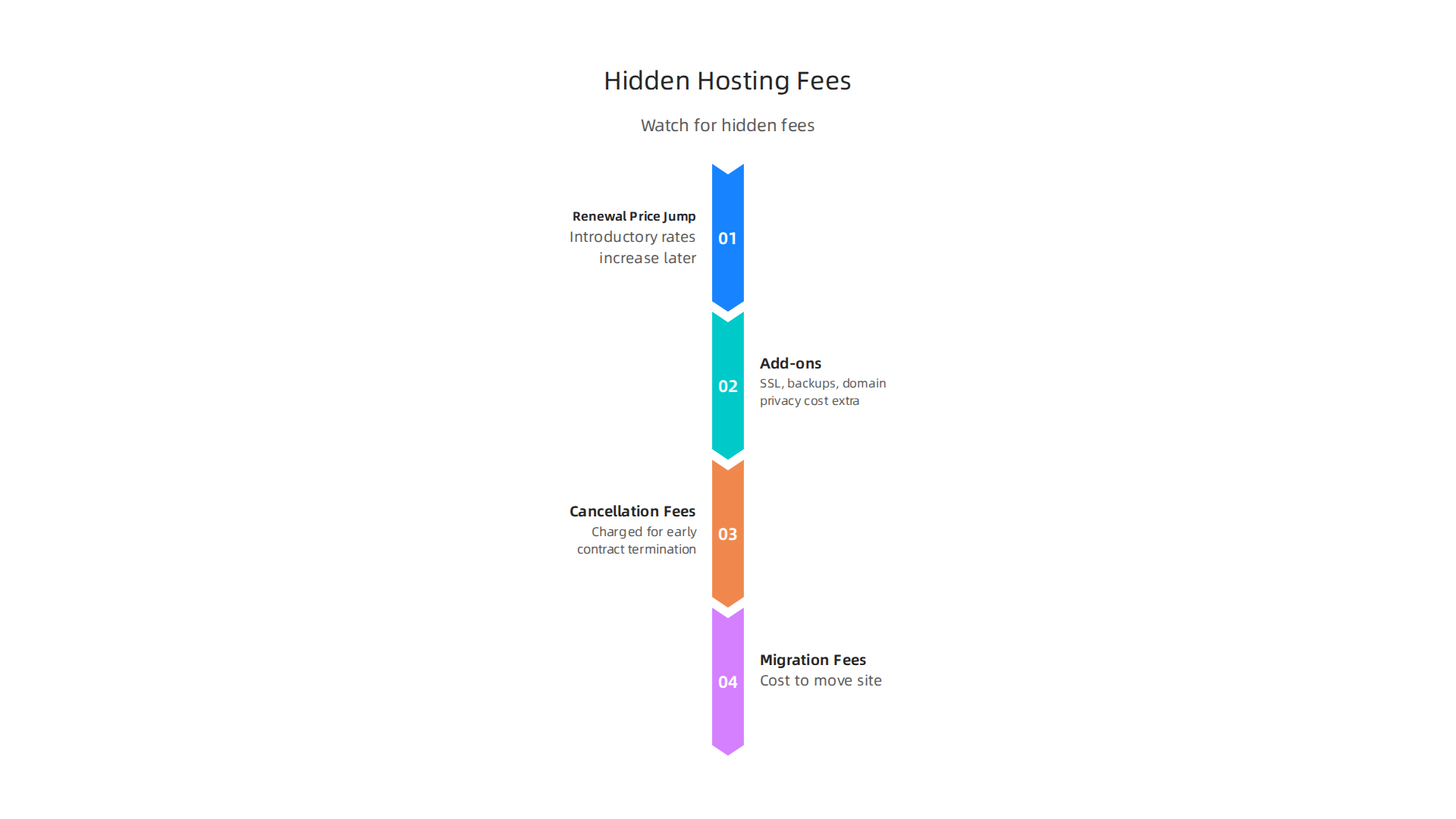
Knowing these traps ahead of time can save you a lot of frustration and money.
The biggest shock is usually the renewal price jump. You sign up for a plan at £3 per month, feel good about the deal, then a year later your bill shows up at £10 or more.

This practice is so common that a pricing breakdown of HostGator shows a Hatchling plan starting at $3.75 per month for the first 36 months, then jumping to $13.19 per month on renewal. That is more than triple the original rate. Providers use this bait and switch to attract new customers while counting on you not wanting the hassle of switching later.
Add-ons are another major source of hidden costs. What looks like a cheap plan quickly grows when you need essential features. SSL certificates, automated backups, and domain privacy protection are often listed as optional extras that cost extra. According to a detailed guide on web hosting costs from Shopify UK, these add-ons can quietly add 20 to 50 percent to your monthly bill. Some providers even charge for basic security features that others include for free. If you want to learn more about what really drives your bill up, our article on calculating your true web hosting cost walks through every possible fee.
Cancellation and migration fees catch people off guard too. Some hosts charge a fee if you cancel before your term ends. Others make it difficult and expensive to move your site to a new provider. The hidden fees behind introductory pricing are well documented across the industry.
The good news? Not every host plays these games. Providers that focus on transparent pricing give you one clear rate from day one with no surprise hikes. For example, Prism Webhost offers straightforward plans with features like free SSL certificates, automated backups, and NVMe SSD storage included in the base price. You know exactly what you are paying from month one to month one hundred. No teaser rates. No renewal shocks. Just reliable hosting that grows with you.
UK-Specific Considerations: VAT, Data Residency, and Brexit
Here is another surprise that often catches UK buyers off guard. That £5 plan you see listed? It probably does not include VAT. And VAT in the UK adds a full 20 percent on top of the advertised price.
Many hosting providers display prices without tax. When you get to checkout, the total jumps. According to DreamHost’s knowledge base, all prices listed on their website do not include VAT, and the system adds it automatically if you live in a region that requires it. This is not just one company. It is standard practice across the industry. The UK government confirms that digital services like web hosting are subject to a standard VAT rate of 20 percent. That £120 annual plan suddenly becomes £144. When you are comparing web hosting UK cost across different providers, always check whether the price includes VAT or not. Otherwise your budget will be wrong from the start.
Data residency is another cost factor that is easy to overlook. Since the UK left the EU, data protection rules have shifted. If your website handles personal data from UK visitors, you may need your data stored on servers inside the UK. This keeps you compliant with UK data protection laws. Some hosting providers store data in other countries and charge extra for UK-based servers. Others, like those that offer UK data centres as standard, include this in the base price. Understanding how UK data residency protects your business can help you decide whether local storage matters for your situation.
Brexit also changed the rules around data transfer between the UK and Europe. If your hosting provider stores data in the EU or the US, you need legal mechanisms in place to keep that data transfer compliant. This adds administrative overhead and sometimes higher costs. Some providers responded by building UK data centres specifically to simplify compliance for their customers.
The good news? You can avoid all these complications by choosing a host that is upfront about VAT, stores data in the UK, and handles compliance for you. That way the price you see is the price you pay, and your legal obligations are covered without extra legwork. To see how different hosts compare on transparency, check out our guide to choosing the best UK web hosting for small business and find a provider that respects your budget and your data.
Feature Cost-Benefit Analysis: What You Get for Your Money
So you have wrapped your head around VAT and data residency. Now the real question hits you. Is it worth paying more for a higher priced plan? Or can you get away with the cheapest option?
Here is the honest truth. You often do get what you pay for when it comes to web hosting. But that does not mean you need to overspend. It just means you need to know what extra features actually matter for your site.
What premium plans typically include
When you look at web hosting price UK comparisons, the jump between basic and premium can feel huge. But look closer at what is included. Higher priced plans almost always bundle extras that you would otherwise buy separately. According to TechRadar’s review of the best web hosting services of 2026, many top providers include free SSL certificates, content delivery networks (CDNs), and automated daily backups in their mid tier and above plans. These three features alone can save you £50 to £100 per year if you had to add them manually.
Managed support costs more but saves your sanity
Here is a trade off that catches a lot of small business owners off guard. Managed support sounds great. Someone else handles your server updates, security patches, and performance tweaks. But that convenience adds £5 to £15 per month to your bill. The Elementor guide to managed hosting for 2026 explains that you are paying for specialized expertise, not just server space. If you are not technical, that cost is usually worth it because it frees up hours of your week. If you are comfortable with cPanel and basic server tasks, you can skip managed support and save that money.
Scalability matters more than you think
The cheapest shared hosting plan works fine when you have 50 visitors a day. But what happens when you get 500 visitors? Or 5,000? That budget plan will slow down or crash. You then have to migrate to a bigger plan, which is stressful and risks downtime. Paying a little more upfront for a plan that scales automatically or has clear upgrade paths is cheaper in the long run. OVHcloud’s shared hosting overview notes that sharing resources on a dedicated server can keep performance steady as you grow.
So when you compare web hosting uk cost, do not just look at the monthly price tag. Look at the total package. Free SSL, CDN, daily backups, and scalability options all add real value. The question is whether you need them right now or later.
To get a clearer picture of your actual costs including hidden fees and renewal prices, check out our guide to calculating your true web hosting cost so you never get surprised at checkout.
How to Choose the Right Hosting Plan for Your Budget
So you now know what extra features are worth paying for. But how do you pick the exact plan for your budget without getting trapped by fine print?

Let’s break it down into three simple steps.

Step 1: Match your hosting type to your actual needs
Do not buy a plan just because it is on sale. Think about your website first. A small personal blog runs fine on basic shared hosting. But an online store or a site with lots of video content needs more power. Look at cloud web hosting UK options if you expect your traffic to grow quickly. If being green matters to your brand, check out eco web hosting UK providers. According to a Top10 guide to cheap web hosting in 2026, matching your plan to your specific site type is the number one way to avoid overpaying.
Step 2: Look at the total cost, not just the intro price
This step saves you the most money. The price you see advertised is almost always a teaser rate. For example, a HostGator plan advertises at $3.75 per month, but renews at $13.19 per month. That is more than triple the cost. Many providers also sneak in fees for extras. The GoDaddy hosting agreement lists several configuration add-ons that cost extra. The total cost of maintaining a website, as explained by RoseHosting, includes many hidden fees that add up quickly. A guide by Shopify on web hosting costs in 2026 suggests you calculate the total over three years to get the real picture.
Watch out for renewal hikes when comparing web hosting UK cost. These little extras push your web hosting price UK bill much higher. Do not just check the cost of web hosting UK in year one. Check year two and year three. For a deeper look, see our breakdown of how to calculate your true web hosting cost in 2026.
Step 3: Read the contract terms carefully
Some hosts lock you into a 12-month or 24-month contract. Others make cancellation hard. Before you sign up, check out our guide to finding cheap UK web hosting that is fast and reliable for tips on what to look for in a contract. Always look for a money-back guarantee. A 30-day trial period is standard and gives you safety. Also look for hosts that promise no price increases at renewal, as highlighted by WebHostMost. Knowing the contract terms prevents nasty surprises later.
Bringing it all together
Choosing the right hosting plan comes down to three things: match the plan to your traffic, calculate the true cost over time, and read the fine print.
If you want a hosting provider that offers clear pricing, strong performance, and fair terms, take a look at Prism Web Host. They focus on giving businesses reliable infrastructure without hidden fees or confusing contracts.
Price Comparison of Top UK Web Hosting Providers (2026)
Now that you know how to calculate the true web hosting UK cost, let’s look at specific providers. The market in 2026 has clear winners for different needs. I have pulled together a quick comparison of top hosts so you can see the differences at a glance. According to the TechRadar guide to the best web hosting services of 2026, the best choice depends on your site’s size and your technical comfort level.
| Provider | Starting Price (per month) | Key Features | Best For |
|---|---|---|---|
| Namecheap | $2.28 (first term) | Free domain, 30-day trial, easy cPanel | Beginners on a tight budget |
| OVHcloud UK | ₤3.50 (first term) | Fast SSD storage, multiple site hosting, strong EU data privacy | Small businesses needing EU compliance |
| Bluehost | $3.75 (first term) | Free SSL, WordPress integration, 24/7 support | Bloggers and WordPress users |
| Prism Web Host | Contact for pricing | NVMe SSD, LiteSpeed servers, 99.99% uptime SLA, 17Tbps DDoS protection | Growing businesses that need premium performance |
Before you pick a host, use a web hosting price UK comparison tool like the one from Domnest to check current rates. The cost of web hosting UK can vary a lot between providers.
You will notice that budget hosts like Namecheap and Bluehost offer low intro prices. But remember the renewal hike we covered earlier. For example, Bluehost’s introductory price of $3.75 per month jumps to $13.19 per month upon renewal. That is a big change in your web hosting UK cost.
If you are looking for eco web hosting UK options, check if a provider uses renewable energy or carbon offset programs. Some premium hosts now offer green hosting without sacrificing speed.
For businesses that expect to grow quickly, cloud web hosting UK plans from providers like OVHcloud give you automatic scaling. You pay only for what you use, which helps control costs.
Here is the bottom line: budget providers work great for small projects. But if you run a business site or an online store, it is worth paying more for better speed and support. For a deeper look at one popular budget option, read our Bluehost web hosting plans pricing and performance benchmarks review.
My recommendation for performance and value?
If you want reliable hosting without hidden fees, check out Prism Web Host. They use enterprise-grade infrastructure with LiteSpeed servers and NVMe SSD storage. Their 99.99% uptime guarantee and strong DDoS protection give you peace of mind. Plus, you get free SSL and unlimited subdomains. It is the kind of hosting that supports your growth without surprise costs.
Future Pricing Trends for UK Web Hosting in 2026 and Beyond
So where is the web hosting UK cost headed? If you are planning to start or grow a site this year, it helps to know what is coming. The hosting market is changing fast, and prices will move in a few clear directions.
The global web hosting services market reached an estimated $149.30 billion in 2025 and is projected to grow significantly through 2026, according to recent market analysis. That kind of growth means the industry is healthy, but it also means providers face rising costs that get passed down to you.
Here are the main trends to watch.
Inflation and energy costs will push prices upward
Data centers use a lot of electricity. As energy prices rise across the UK, hosting companies feel the pinch. Providers need to pay more for power, cooling, and hardware. According to the 2026 Web Hosting Trends Report, 65% of hosting providers reported revenue growth in 2025, but many are finding the path to profitability harder. These rising operational costs mean you will likely see moderate price increases on premium plans over the next few years. The cost of web hosting UK is not immune to the same economic pressures every other industry faces.
Managed and cloud services will grow even with higher costs
More site owners are moving to managed hosting and cloud solutions. Why? Because they save time and reduce headaches. The VPS hosting market is forecast to reach $6.4 billion by 2026, showing strong demand for more powerful hosting types. Cloud web hosting UK plans let you scale automatically and pay only for what you use. That flexibility is worth the extra cost for many businesses. But expect these premium options to get slightly more expensive as providers invest in better security and faster infrastructure.
Competition will keep entry-level shared hosting stable
Here is some good news. The low end of the market, basic shared hosting, will stay affordable. Too many companies compete for budget-conscious customers. You will still find introductory deals under $5 per month from big names. But remember what we covered earlier about renewal hikes. The low starting price is a hook, not a long term promise. For a deeper dive into how the web hosting price UK landscape looks across different plan types, check out our guide to the cheapest UK web hosting that balances cost with reliability.
What this means for you
If you are on a tight budget, shared hosting is still your best bet for now. But if you run a business site, think about locking in a longer term plan with a reliable provider. That way you avoid price jumps and get better performance.
The European web hosting market alone was valued at over $51 billion in 2025 and continues to climb. That tells you the demand is not going away. Make your choice based on what your site needs today, but also plan for where you want to be next year.

A host that offers transparent pricing and solid performance will serve you well through these changes.
Summary
This article explains web hosting costs in the UK in plain language, showing what drives price differences and how to pick the right plan for your business. It breaks down typical 2026 price ranges for shared, VPS and dedicated/cloud hosting, explains managed vs unmanaged services, and highlights hidden charges like renewal hikes, add‑ons and VAT. You’ll learn UK‑specific issues such as data residency and post‑Brexit compliance, and how to weigh cost versus value—free SSL, backups, CDN and scalability. Practical steps cover matching hosting to your traffic, calculating true multi‑year cost, and reading contract terms to avoid surprises. By the end you’ll be able to compare providers, identify traps, and choose a transparent plan that fits your budget and growth needs.
