




GoDaddy SSL Certificate Cost 2026 Avoid Hidden Fees and Renewal Surprises
Article
Introduction
You know your website needs an SSL certificate. Every business owner in 2026 understands that much. But when you visit GoDaddy to buy one, the pricing feels like a puzzle. Is it $5 a year or $300? The answer depends on which plan you pick and when you check.
GoDaddy is one of the most popular places to buy SSL certificates. Millions of websites rely on them. But here is the thing. Their pricing structure can confuse even experienced business owners. The price you see today is often not the price you pay next year. And that gap catches many people off guard.
Why does SSL matter so much? For starters, it protects your visitors’ data. It encrypts information between their browser and your server. Beyond security, SSL helps your SEO. Google has confirmed that HTTPS is a ranking signal. It works as a tiebreaker when all other factors are equal. According to research on SSL Certificates and SEO, websites with HTTPS earn trust and visibility that HTTP sites simply cannot match.
Customers also expect that little padlock icon in their browser bar. In 2026, over 92% of top websites use HTTPS by default. If your site still shows "Not Secure," visitors may leave before they even load your homepage.
The real frustration for most small businesses comes down to one thing: cost confusion.

The introductory price for a GoDaddy SSL certificate looks great. Then renewal hits, and the price jumps. Many business owners end up paying far more than they planned simply because they did not understand the pricing structure upfront.
In this guide, we break down the real GoDaddy SSL certificate cost. We compare plans, explain renewal pricing, and show you what to watch for. By the end, you will know exactly what you should pay and how to avoid overpaying. For a broader look at what you can expect to spend across all their services, check out this overview of GoDaddy hosting prices 2026.
GoDaddy SSL Certificate Pricing Tiers for 2026
When you shop for an SSL certificate on GoDaddy, you see a few different names. The three main tiers are Standard, Deluxe Automated, and Premium.
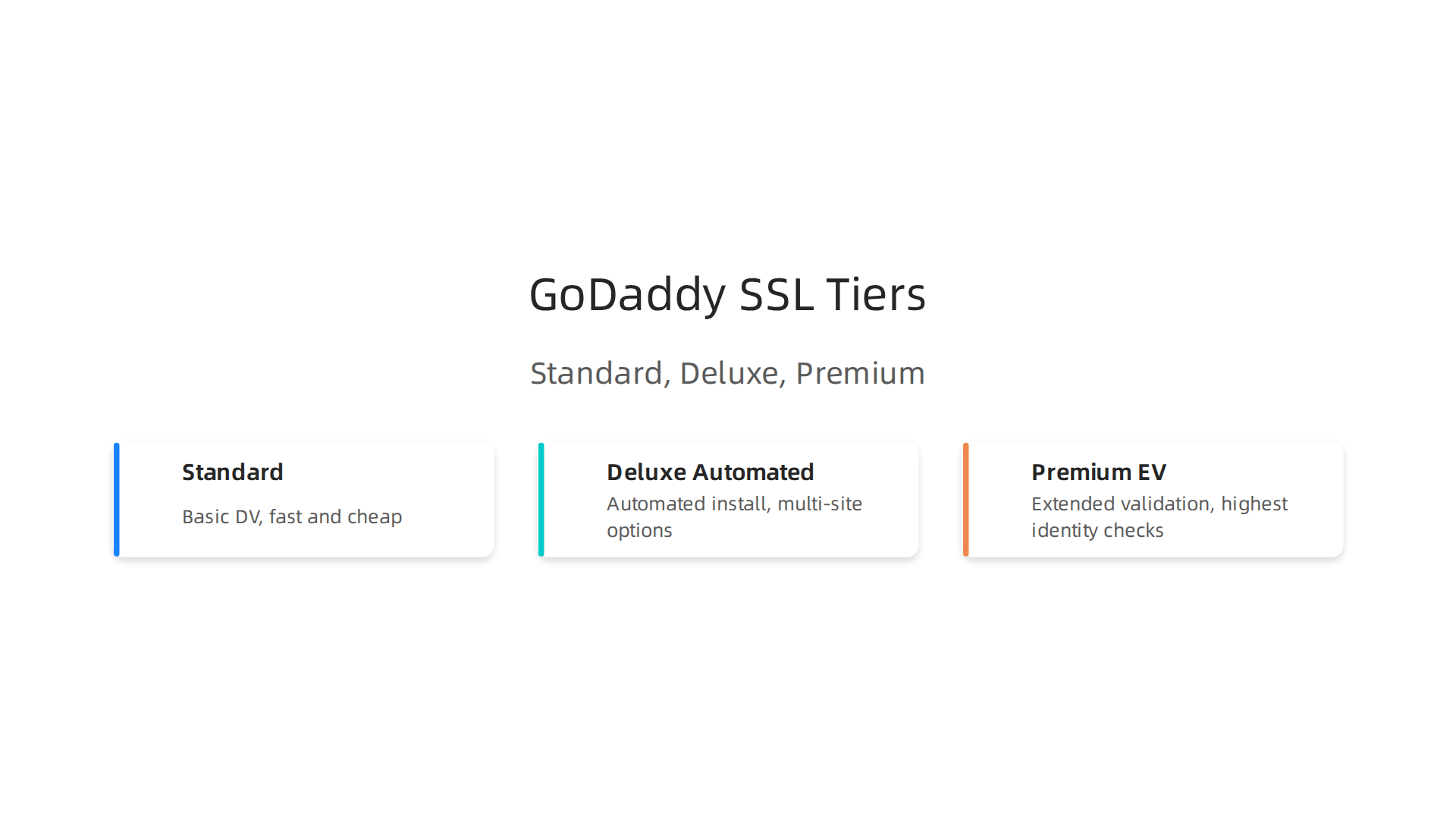
Each one comes with a different level of validation, a different price, and a different best use case. Understanding these tiers is the first step to finding the real GoDaddy SSL certificate cost for your site.

Standard SSL (Domain Validation)
The Standard SSL is GoDaddy’s basic option. It uses Domain Validation (DV), which means GoDaddy only checks that you own the domain. There is no manual review of your business. This tier is fast and cheap. You can get a certificate issued in minutes.
For pricing, a Standard DV SSL costs about $5.99 per month when you commit to a 3-year term. But watch out for renewal. After the first term, the price jumps to roughly $99.99 per year. That is a big increase. According to detailed GoDaddy SSL pricing data for 2026, the typical renewal for a DV certificate lands around that $99.99 mark. This tier works well for personal blogs, simple informational sites, or any page that does not collect sensitive data.
Deluxe Automated SSL (Domain Validation)
The Deluxe Automated SSL is also a DV certificate, but it adds a key feature: automatic reinstallation. As of March 2026, SSL certificate validity periods are shrinking. They go from 398 days down to 200 days now, and will drop further in 2027 and 2029. That means you will need to reinstall your certificate twice a year instead of once. The Deluxe tier handles this for you automatically.
The cost for a Deluxe Automated DV SSL is $7.99 per month on a 3-year term. Renewal goes higher after the first term. If you need to cover multiple domains, GoDaddy offers a multi-site version at $22.99 per month for up to five domains. There is also a Wildcard version for $34.99 per month that covers one domain and unlimited subdomains. The Deluxe tier is ideal if you hate dealing with manual renewals or if you run multiple sites.
Premium EV SSL (Extended Validation)
The Premium tier is GoDaddy’s top option. It uses Extended Validation (EV). This is the highest level of identity check. GoDaddy verifies your business name, address, phone number, and legal registration before issuing the certificate. Visitors see your company name in the browser bar along with the padlock.
Because of the manual vetting, this certificate takes longer to get. Usually 3-5 business days for OV and up to a week for EV. It is also the most expensive. Renewal prices typically run between $300 and $400 per year or more. This tier is best for e-commerce stores, financial sites, and any business that handles payments or sensitive personal data. The trust signal an EV certificate sends is worth the cost for those scenarios.
Quick comparison
| Tier | Validation | Monthly Price (3-yr term) | Typical Renewal / Year | Best For |
|---|---|---|---|---|
| Standard SSL (DV) | Domain only | $5.99 | ~$99.99 | Basic blogs, simple sites |
| Deluxe Automated (DV) | Domain only | $7.99 (single), $22.99 (multi), $34.99 (wildcard) | Varies | Sites needing auto-renewal, multiple domains |
| Premium EV | Extended validation | Not sold monthly, annual ~$300-400+ | $300-400+ | E-commerce, finance, high-trust sites |
Which one should you pick?
If you run a simple personal website, the Standard SSL is enough. But remember the renewal price jump. If you want to avoid the hassle of reinstalling every six months, the Deluxe Automated tier is worth the small extra cost. For a business that takes payments or needs maximum trust, go with Premium EV.
Before you buy, take a moment to check your overall web hosting costs. SSL is just one part of the picture. For a broader look at what you might spend on hosting and add-ons, read our guide on how to compare pricing models and avoid hidden fees. That will help you see the full cost picture for your site.
Factors That Influence GoDaddy SSL Certificate Costs
The prices you see on GoDaddy’s website are not set in stone. Several key factors push the actual cost of an SSL certificate up or down.
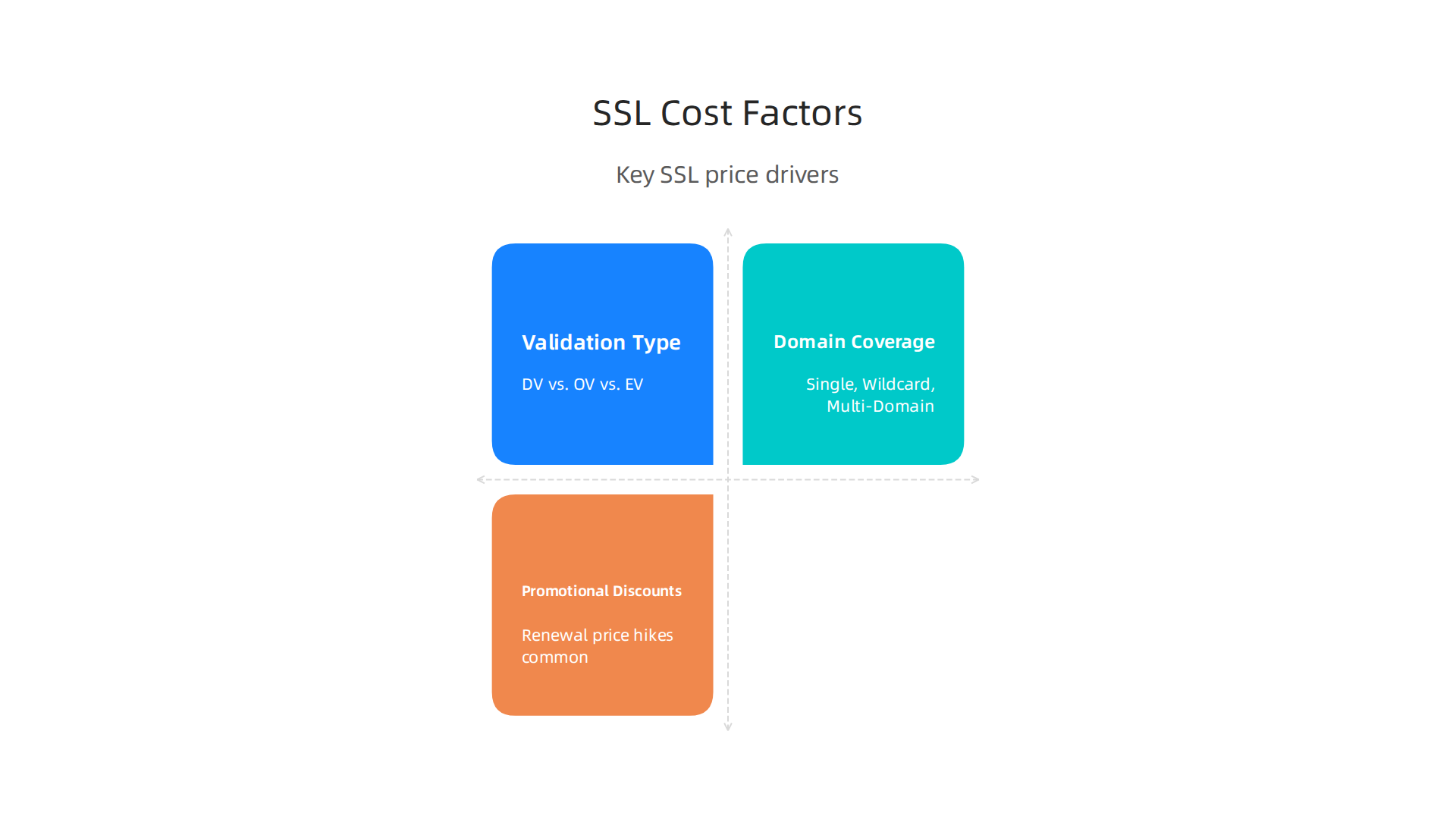
Understanding these factors helps you avoid surprises when it is time to pay.
Validation Type: DV vs. OV vs. EV
The biggest cost driver is the type of validation GoDaddy performs. Domain Validation (DV) is the cheapest because the system only checks that you control the domain. You get a certificate in minutes. Organization Validation (OV) costs more. GoDaddy verifies your business name, address, and legal registration before issuing the certificate. This manual process takes a few business days. Extended Validation (EV) is the most expensive. It requires a thorough background check on your company. According to the 2026 GoDaddy SSL certificate price overview, renewal prices for DV land around $99.99 per year, while OV runs $170 to $250 per year, and EV can cost $300 to $400 or more per year. The higher the trust level, the higher the price.
Single Domain vs. Wildcard or Multi-Domain
Another major factor is how many domains or subdomains you need to cover. A standard single-domain certificate protects only one domain like yoursite.com. If you need to secure multiple subdomains like blog.yoursite.com and shop.yoursite.com, you have two options. A Wildcard SSL covers the main domain plus unlimited subdomains, but it costs more. GoDaddy sells a Deluxe Automated Wildcard SSL for $34.99 per month on a 3-year term. A Multi-Domain SSL (also called SAN/UCC) can cover up to 100 different domain names under one certificate, and it also costs more than a single-domain plan. GoDaddy’s plan comparison page shows these options clearly. If you have multiple sites or subdomains, factor that extra cost into your budget.
Promotional Discounts and the Renewal Trap
The price you see first is almost always a promotional rate. GoDaddy often advertises SSL certificates at low monthly prices for the first 3-year term. For example, a Standard DV SSL costs $5.99 per month when you commit to three years. But after that term ends, the renewal jumps to roughly $99.99 per year. That is more than double the initial monthly rate when you compare apples to apples. A detailed look at GoDaddy pricing from CheckThat.ai confirms that first-year discounts are common across hosting and add-ons, not just SSL. This renewal spike can catch you off guard if you do not plan for it. Always check the standard renewal price before you buy, not just the promotional price.
What This Means for Your Budget
When you calculate the true GoDaddy SSL certificate cost, consider three things: validation level, domain coverage, and the long-term renewal price after the promotional period ends. Those three factors determine whether you pay $100 a year or $400 a year. If you run a simple blog, a DV single-domain certificate is fine. If you run an e-commerce store with subdomains and a verified business, you will likely need an OV or EV certificate with Wildcard coverage, which pushes the cost up.
Knowing these cost drivers helps you choose the right tier and avoid paying more than necessary. For a broader view of how SSL fits into your total web spending, take a look at our guide on domain cost per year and how renewal prices work. That will help you see the full picture of your website expenses beyond just the SSL certificate.
GoDaddy SSL Renewal vs. Initial Cost: The Hidden Price Hike
That low price you see at checkout? It usually won’t last.

GoDaddy SSL certificates come with a big catch: the renewal price is often two to three times higher than what you paid the first year. Many customers only discover this surprise when their certificate is about to expire.
How the Price Gap Works
GoDaddy uses promotional pricing to attract new buyers. For example, a Standard DV SSL can start at $5.99 per month when you commit to a 3-year term. That sounds great. But once that term ends, the renewal jumps to roughly $99.99 per year. That is more than double the promotional monthly rate.
This is not a small difference. Independent reviews confirm the pattern. A 2026 GoDaddy review covering SSL renewal price jumps shows that SSL certificates included free for the first year on some plans renew at $119.99 annually. And that is on top of your hosting costs. The gap between what you see and what you eventually pay can easily triple your budget.
Auto-Renewal Can Lock You In
Here is where it gets tricky. GoDaddy turns on auto-renewal by default for most SSL certificates. When your certificate nears expiration, the system automatically bills your payment method on file. You do not have to click a button or confirm anything.
According to a helpful tutorial on how to renew SSL certificate on GoDaddy, the company starts billing 60 days before your certificate expires. That means you get charged at the higher renewal rate almost two months in advance. If you are not paying attention, the charge hits your card before you even realize the promotional period is over.
To avoid this surprise, log into your GoDaddy account and check your SSL subscription settings. Look for auto-renewal and the renewal price listed in your account details. If you want to shop around for a better deal later, you can turn off auto-renewal. Just remember that you will need to manually renew or replace the certificate before it expires to keep your site secure.
The Long-Term Cost Adds Up
Let us look at real numbers. A basic DV SSL with a promotional first-year price might be around $5.99 per month for the first three years. When renewal kicks in, you pay about $99.99 per year. Over the next three years, that certificate costs you roughly $300. The same certificate from a different provider with transparent pricing might cost $50 to $70 per year with no surprise jump.
If you have multiple domains or a Wildcard SSL, the gap grows even larger. A Deluxe Wildcard SSL has a promotional price of $34.99 per month on a 3-year term. When it renews, the yearly cost jumps to $295 or more. That is a $120+ increase per year compared to the initial rate.
What You Can Do
The best way to handle this is to always check the standard renewal price before you buy. Do not rely on the promotional price alone. Look for the price listed next to "renewal" or "standard rate" on GoDaddy’s pricing page.
Also, consider whether you really need the auto-renewal convenience. If you do not mind a little manual work, turning off auto-renewal gives you control. You can shop for a new SSL certificate at a better price when your current one expires.
And if you are managing multiple domains and certificates, it helps to understand the bigger picture of how renewal costs work across all your online services. Our guide on domain name renewal price comparison can help you spot overpriced renewals and save money long term.
Remember: the price you pay in year one is not the price you will pay every year. Planning ahead prevents that hidden price hike from catching you off guard.
Hidden Fees and Extra Costs with GoDaddy SSL
The advertised price for a GoDaddy SSL certificate is not the full story. When you factor in hidden fees for installation, dedicated IP addresses, and premium support, your total web hosting cost can go up fast. Here are the extra costs you should know about.
Installation and Managed Service Fees
Do you need help setting up your SSL? GoDaddy offers managed SSL services that handle installation and renewal for you. But that convenience costs extra. For example, the Deluxe Automated SSL plan costs $7.99 per month on a 3-year term. That is $2 more per month than the basic plan. And if you want priority support or extra help, GoDaddy’s Pro maintenance add-on costs about $1.99 per month. According to a detailed 2026 pricing breakdown from CheckThat.ai, these small add-ons add up fast.
Dedicated IP Address Costs
Some SSL certificates need a dedicated IP address. This is especially true for higher validation levels like Organization Validation (OV) and Extended Validation (EV). A dedicated IP is not included in the base SSL price. You pay extra for it each month. The EV SSL itself can cost $300 to $400 per year based on current pricing data from Certimon, and that does not include the dedicated IP fee.
Fees for Multiple Domains and Premium Support
A standard SSL covers only one domain. If you have multiple domains or subdomains, you need a Wildcard SSL. GoDaddy’s Wildcard SSL costs around $295 per year or more on renewal. That is a big jump from the basic plan. Also, adding extra domains to a single certificate may come with additional charges.
Need fast support? GoDaddy offers premium support plans for an extra monthly fee. This can be helpful, but it is another line item on your bill.
Keep Your Total Costs in Check
To avoid surprise charges, always add up every possible fee before you buy.
Look at the SSL price, installation services, dedicated IP costs, extra domain fees, and support plans. Then compare that total to other providers that bundle these features at one flat price.
For a deeper look at how to avoid hidden fees, check out our guide on how to calculate your true web hosting cost and avoid hidden fees. It will help you compare different providers and see the real price.
By knowing all the extra costs in advance, you can make a smarter choice about your godaddy ssl certificate cost and avoid paying more than you need to.
How to Buy a GoDaddy SSL Certificate (With Cost-Saving Tips)
Now that you know the real price, you need a smart buying plan. Here is a step-by-step guide to getting a GoDaddy SSL certificate without paying too much.
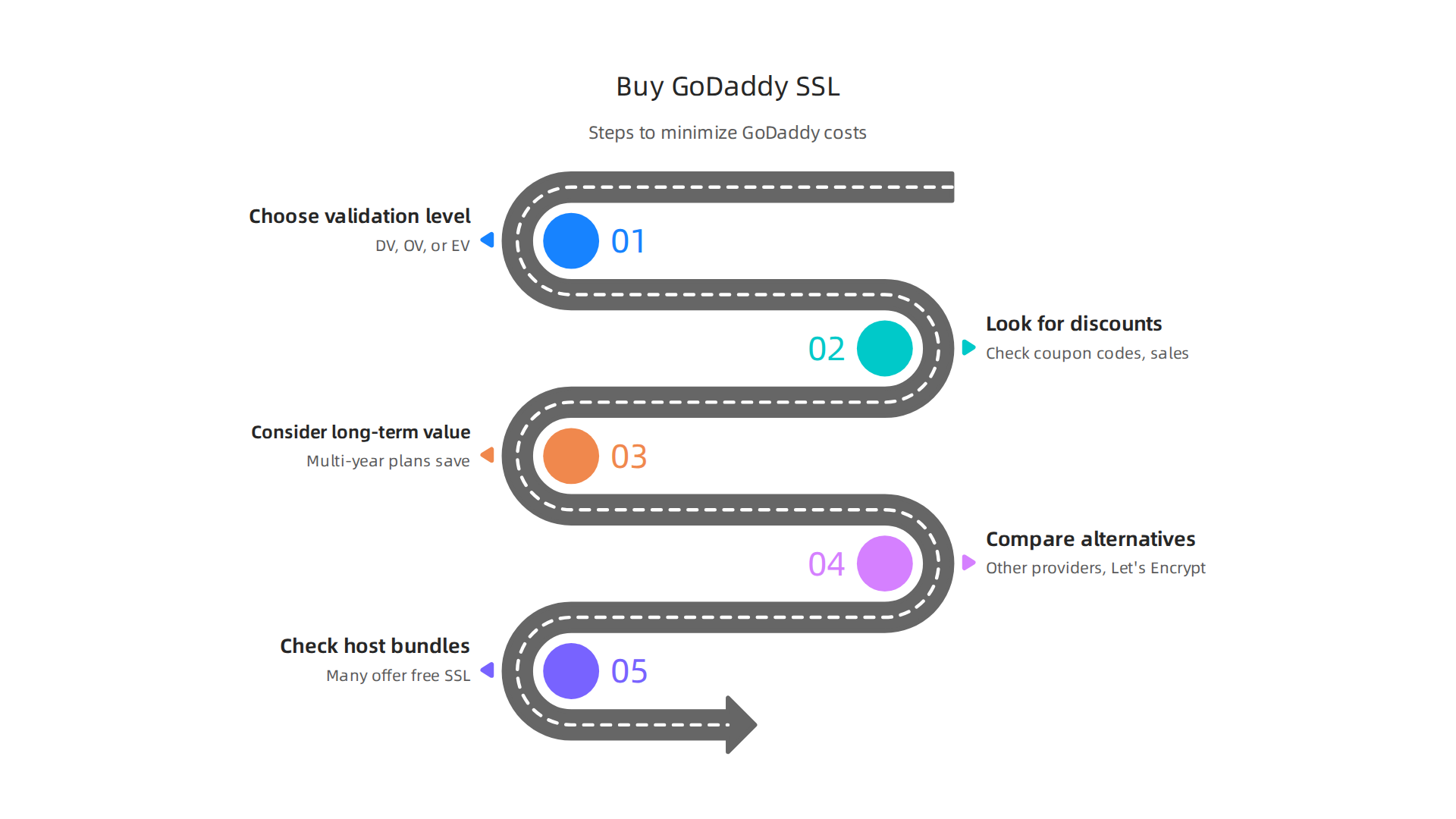
Step 1: Choose the right validation level.
GoDaddy has three types of SSL certificates. DV (Domain Validation) is the cheapest and fastest. You get it in minutes with just an email check. DV is fine for most blogs and small business sites. OV (Organization Validation) takes a few days and requires business documents. EV (Extended Validation) is the highest level, with a full background check. It costs the most but gives visitors the most trust. The GoDaddy SSL certificate price for DV starts much lower, while OV and EV go higher. Pick the level that matches your site.
Step 2: Look for discounts and coupon codes.
GoDaddy runs frequent sales, especially on first-year prices. Never buy at full price without checking for a coupon first. You can search for Godaddy cost discounts online. But watch out — renewal prices after year one are much higher. That $63.99 first-year DV SSL can jump to $99.99 or more when it renews. Always check renewal rates before you buy.
Step 3: Consider the long-term value.
Buying a multi-year plan often saves money compared to paying year by year. GoDaddy’s two-year plan for a DV SSL is around $127.98, which works out to about $63.99 per year. That is the same as the first-year price. But if you only buy one year and renew, you can end up paying much more.
Step 4: Compare with cheaper alternatives.
You do not have to use GoDaddy. Many other providers sell the same type of SSL for less. For example, a comparison with Comodo shows SSL prices starting around $8.95 per year, while GoDaddy DV SSL starts at $63.99. That is a big difference for the same level of protection. You can also use Let’s Encrypt for free DV SSL certificates. Most modern web hosts include it automatically. If your hosting already has free SSL, you do not need to buy a separate certificate at all.
Step 5: Check if your host bundles SSL for free.
Many hosting companies now include a free DV SSL with every plan. Prism Web Host provides free SSL certificates as part of all hosting packages.
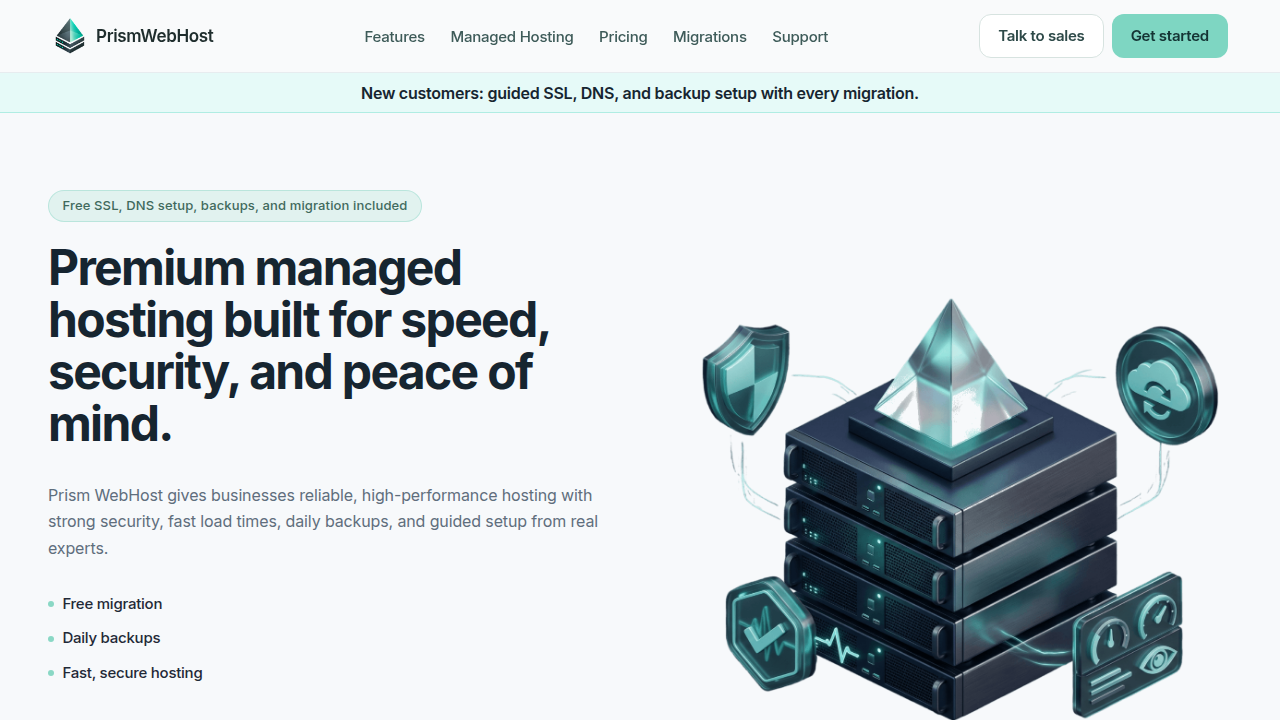
You get encryption without paying extra. This is common with many shared hosting plans. Before you buy a stand-alone GoDaddy SSL, always check if your hosting already covers it. You might save that $63.99 right away.
By following these steps, you can buy a GoDaddy SSL certificate with confidence. Focus on the right validation level, look for discounts, and always compare with free or bundled options. If you want predictable pricing without renewal surprises, a comprehensive hosting plan with included SSL could be the smarter choice.
GoDaddy SSL vs. Competitors: Price and Value Comparison
You already know the GoDaddy SSL certificate cost starts at $63.99 for a basic DV certificate. But how does that stack up against other providers? The answer might surprise you.
Competitors offer much lower prices for the same protection.
Take Comodo, for example. A Comodo PositiveSSL DV certificate costs as little as $8.95 per year. That is about seven times cheaper than GoDaddy’s DV SSL. And the features are nearly identical: both use 256-bit encryption, issue in minutes, and work on all major browsers. Check out this Comodo SSL vs GoDaddy SSL comparison to see the full side-by-side differences.
Namecheap is another strong option. Their PositiveSSL DV plan runs $7.88 per year.
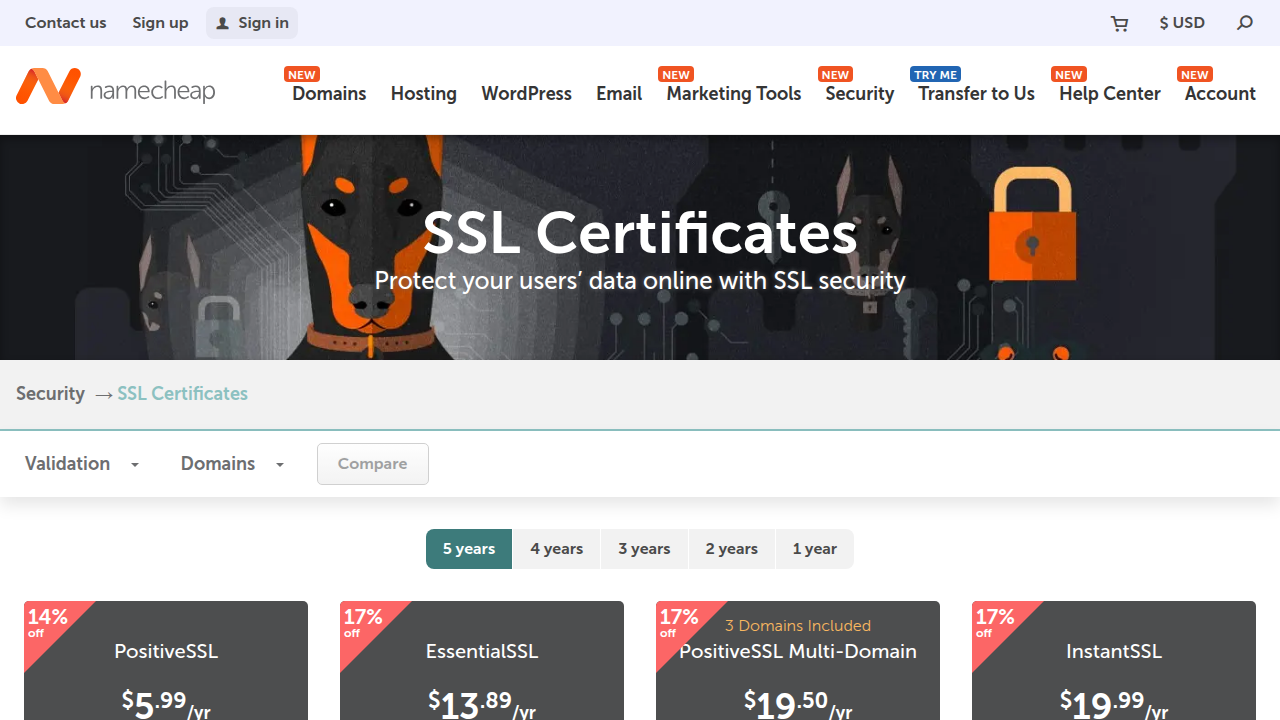
Even their wildcard SSL (which covers unlimited subdomains) is only $59.88 per year, still less than GoDaddy’s basic DV.
What about DigiCert?
DigiCert is a premium brand. Their certificates cost even more than GoDaddy. A UCC certificate from DigiCert can be $299 per year. They offer top-notch support and a strong warranty, but for most small business owners, that price is hard to stomach.
So why does GoDaddy charge more?
Part of it is brand recognition. Part is convenience. GoDaddy bundles SSL with other services like domain registration and web hosting. Their support is generally good. But the difference in price for the same level of encryption is hard to ignore. The table below shows the gap:
| Provider | DV SSL (1 year) | Wildcard SSL (1 year) |
|---|---|---|
| GoDaddy | $63.99 | $149.99 |
| Comodo | $8.95 | $59.88 |
| Namecheap | $7.88 | $59.88 |
Don’t forget free SSL.
Many hosting companies now give you a free DV SSL with every plan. If your hosting includes it, you do not need to buy a separate certificate at all. That means the GoDaddy SSL certificate cost becomes zero if you already have a good host. Before you spend money, check what your hosting package offers.
Want to know exactly what you are paying for web hosting and how to spot hidden fees? Read this guide on true web hosting cost to compare your options.
When does the price gap matter less?
If you need extended validation (EV) for an e-commerce or financial site, GoDaddy’s price difference shrinks. EV SSL from any provider is expensive. But for most blogs, small business sites, or informational pages, a basic DV SSL from a cheaper provider works perfectly.
Also, look at the warranty. GoDaddy offers up to $1 million in warranty on some plans. Competitors may offer less. And GoDaddy’s support is available 24/7 by phone. These extras can justify the higher cost for some site owners.
The bottom line on price vs. value.
If you want the lowest possible SSL price, go with Comodo or Namecheap. They deliver the same encryption for a fraction of the cost. If you prefer the convenience of one dashboard for hosting, domains, and SSL, and you value phone support, GoDaddy might still be your choice. Just know you are paying a premium.
And if you want hosting that includes free SSL with no extra charges, consider a provider like Prism Web Host. Their reliable web hosting with free SSL makes it easy to secure your site without a separate purchase.
In the end, the best choice depends on your budget and how much you value convenience over cost. But now you have the facts to make a smart decision.
Summary
This guide explains the real cost of GoDaddy SSL certificates in 2026, breaking down the Standard (DV), Deluxe Automated (DV with auto-reinstall), and Premium (EV) tiers and their best uses. It covers promotional vs. renewal pricing, how validation level and domain coverage drive costs, and common hidden fees like installation, dedicated IPs, and premium support. You’ll learn how auto-renewal can lock you into higher rates, when a Wildcard or multi-domain certificate is worth the price, and practical steps to buy smart—check renewal rates, compare alternatives, and look for bundled or free SSL with your host. After reading, you’ll be able to estimate your true yearly cost, avoid renewal traps, and choose the right certificate for your site or business needs.
