




The Real GoDaddy Website Cost Avoid Hidden Fees in 2026
Article
Introduction: Should you budget for GoDaddy?
Starting a business or bringing your current one online often comes with big questions about money.

One common worry for many small businesses is figuring out the real godaddy website cost. You might see ads for very low prices, like shared hosting plans starting around $5.99 a month for the first year, but wonder if that’s the whole story [^1], [^2]. It’s smart to ask, "Will this cost me more later?" and "What exactly am I paying for?"
Actually, the true cost of a website is more than just the monthly fee for basic hosting. When you think about the total godaddy website cost, you need to include a few different parts.
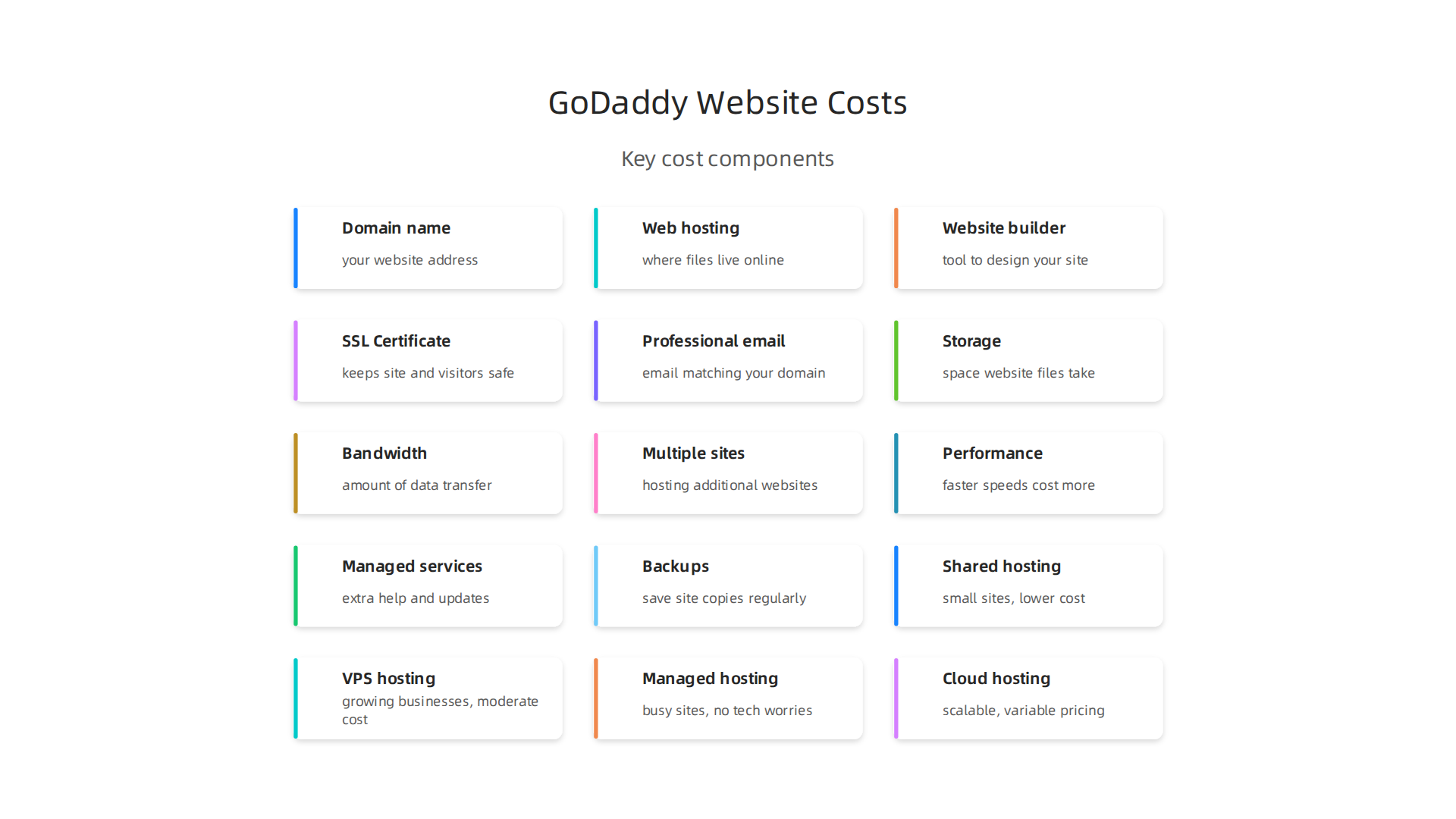
These can be:
- Your domain name: This is your website’s address, like yourbusiness.com.
- Web hosting: This is where your website’s files live online. GoDaddy has different plans, like shared hosting, WordPress hosting, and more advanced options, with prices that can range from about $5.99 to $219.99 per month depending on the type and term [^3].
- Website builder tools: If you use a tool to design your site, that adds to the godaddy prices.
- Security (like an SSL certificate): This keeps your website and visitors safe.
- Professional email: Having an email address like you@yourbusiness.com can be important.
Many people find that the initial low price for web hosting cost goes up a lot when it’s time to renew. This guide will help you understand all the different parts that make up the godaddy website hosting cost. We will look closely at common hidden fees and surprising renewal prices. By the end, you will have a clear picture of what to budget for, so you can make smart choices for your online business in 2026 without any bad surprises. If you want to dive deeper into all the things that make up your overall online presence expenses, you can also learn how to calculate your true web hosting cost and avoid hidden fees in 2026.
[^1]: GoDaddy Pricing – Which Plan Works For You in 2026?
[^2]: GoDaddy Pricing 2026: Total Cost & Competitors
[^3]: GoDaddy Pricing 2026: Hosting Plans, Website Builder, Fees
What GoDaddy charges for: the pricing overview
When you’re trying to figure out the full godaddy website cost, it helps to look at all the main things GoDaddy charges for. It’s not just one simple fee. GoDaddy offers many different services, and each one adds to your total godaddy prices.
Here are the main areas where you’ll see charges:
- Hosting Plans: This is where your website lives online. GoDaddy has different kinds of hosting.
- Shared Hosting: This is the most common and cheapest choice, good for small websites. Prices might start around $5.99 per month for a long first term, but can go up to $24.99 per month for advanced plans [^1]. These plans often come with limits on how much space your website can use (like 100 GB or unlimited) and how much traffic it can handle [^2].
- WordPress Hosting: If you use WordPress, these plans are made just for that. They usually cost a bit more, starting around $7.99 per month for the first year, then renewing at higher prices like $12.99 per month [^3].

* **VPS Hosting and Dedicated Servers:** These are for bigger websites that need a lot of power and control. They cost much more, with VPS plans starting around $4.99 per month initially but renewing at $19.99 per month or higher [^4].
-
Domain Names: This is your website’s address, like "yourbusiness.com." You buy this for a year or more. The first year might be cheap, but the renewal cost can be higher. We will talk more about this later.
-
Website Builder: If you want an easy way to build your website without coding, GoDaddy has a website builder tool. These plans range from about $9.99 to $20.99 per month if you pay for a whole year at once [^5].
-
Add-ons and Extra Services: These are things you might need or want for your website. They include security certificates (SSL), professional email, website backups, and tools to help your site show up better in searches. Each of these adds to your overall
godaddy website hosting cost. For example, an SSL certificate helps keep your website safe. You can learn more about its specific cost in 2026 by checking out the guide on GoDaddy SSL certificate cost.
Understanding Introductory Prices and Renewal Costs
One very important thing to know about the godaddy website cost is the difference between the first price you see and what you pay later. GoDaddy, like many hosting companies, often offers very low "introductory" prices to get new customers. For instance, you might get shared hosting for $5.99 a month for your first 36 months [^6].
However, once that first period ends, the price often jumps up quite a lot. This is called the "renewal price." For example, an Economy shared hosting plan that was $5.99 a month might renew at $9.99 or $11.99 a month [^7]. This big change in godaddy hosting prices can surprise people if they don’t plan for it. It’s why you need to always look at both the starting price and the renewal price when you budget for your website.
What Makes GoDaddy Plans Cost More?
The specific features you choose for your website hosting also change the web hosting cost. When you pick a plan, look for these things:
- Storage: How much space your website files take up. More storage, like unlimited, usually means a higher price.
- Bandwidth or Traffic: This is how much data can move between your website and its visitors. If many people visit your site or you have lots of videos, you’ll need more bandwidth, which can cost more.
- Number of Websites: Cheaper plans often let you host only one website. If you need to host many websites, you’ll need a more expensive plan [^2].
- Performance: Higher-tier plans usually offer faster speeds and better performance, especially important for busy sites or online stores.
- Managed Services: Some plans, like managed WordPress hosting, include extra help and updates from GoDaddy, which adds to the
godaddy hosting prices.
Knowing these details will help you see past the low starting ads and understand the real godaddy website cost in 2026.
[^1]: GoDaddy Hosting Review 2026 – Good or Overhyped?
[^2]: GoDaddy Pricing 2026 | All Plans and Renewal Prices – Buy Hosting
[^3]: GoDaddy Pricing in 2026: Compare Plans and Find Best …
[^4]: GoDaddy Software Pricing & Plans 2026: See Your Cost
[^5]: GoDaddy Website Builder Pricing: Avoid Hidden Costs [2026]
[^6]: GoDaddy Web Hosting Cost in 2026: Hosting Plans Explored
[^7]: GoDaddy Review 2026: Real Performance + Why Most …
Beyond the basic hosting plan, many other parts make up the complete GoDaddy website cost.
These are often extra services or add-ons that you need for your website to work well and stay safe. It’s smart to know about these charges so you don’t get surprised.
Domain Names: Your Website’s Address
Your domain name is like your home address on the internet, such as "yourbusiness.com." You buy this name, usually for one year at a time, though you can buy it for longer.
- Initial Cost: The first year for a domain name often looks cheap, sometimes just a few dollars.
- Renewal Cost: The
godaddy domain costgoes up quite a bit when it’s time to renew. Standard domains can cost around $15 to $60 per year to renew. Some places report that renewals typically run $15 to $22 per year, but some hosting providers might charge more [elementor.com/blog/website-maintenance-cost/, webhost365.net/web-hosting-renewal-price-hikes/]. If you want to understand more about these future costs, you can look into the real GoDaddy domain renewal price. - Domain Privacy: This is an extra service that keeps your personal information private from public records. It can add around $10 per year to your
godaddy website cost[blog.webhostmost.com/web-hosting-no-price-increase/].
SSL Certificates: Keeping Your Site Safe
An SSL certificate is super important. It creates a secure connection between your website and your visitors, protecting their information. You can tell a site has one by the little padlock icon in your browser.
- Free SSL: Many web hosts, including some GoDaddy plans, give you a basic SSL certificate for free. This is a common practice in 2026 [siteground.com/academy/website-hosting-cost/].
- Paid SSL: If your plan doesn’t include free SSL, or if you need a more advanced type for a busy online store, you might have to pay. Standard SSL certificates can cost between $10 to $100 per year, while more advanced ones can be $100 to $300 or more per year [godaddy.com/resources/skills/website-maintenance-cost]. Some providers might charge around $50 to $100 per year if it’s not bundled [stressfreehost.com/blog/web-hosting-cost-2026].
Website Backups and Restore Services
Imagine losing all your website’s information! Backups save a copy of your site, and restore services let you bring it back if something goes wrong.
- Cost: Many basic hosting plans don’t include automatic daily backups. If you want this important safety net, it’s often an add-on. It can cost around $2 to $3 per month [stressfreehost.com/blog/web-hosting-cost-2026] or sometimes more, depending on the service. Other add-on services like backups can range from $1 to $10 per month [vendr.com/marketplace/namecheap].
Professional Email
While you might use a free email service, having an email address that matches your domain (like "info@yourbusiness.com") looks much more professional.
- Cost: This is usually an extra service. Costs can vary a lot, from free with some plans to several hundred dollars per year for more advanced options or many email accounts [epixs.in/resources/hosting/web-hosting-cost-india/].
Other Useful Add-ons
GoDaddy offers many other services that can boost your website but also add to your godaddy prices. These might include:
- CDN (Content Delivery Network): Speeds up your website by saving copies of your content closer to your visitors.
- Malware Scanner: Helps protect your site from harmful software. Some hosts charge around $3 per month for this [blog.webhostmost.com/web-hosting-no-price-increase/].
- Business Tools: Different tools for marketing, SEO, or e-commerce can also come with extra fees.
How Bundled Services Affect the Overall Cost
Sometimes GoDaddy will offer a package deal, like a hosting plan that includes a "free" domain name or "free" SSL for the first year. This can make the initial godaddy website hosting cost seem very low. However, once that first year is over, you’ll start paying the full renewal price for each of those items, which can significantly increase your overall web hosting cost. Always look closely at what is truly included for the full term and what costs will appear later.
For a web hosting service that clearly outlines all costs and focuses on robust security features, consider exploring PrismWebHost – Web Hosting & Services. They aim to provide transparent pricing for businesses and online brands.
Even with clear pricing, the true value of your godaddy website cost also depends on how well your website performs and how safe it is. Faster websites that are well-protected often come with a higher price tag. This is because they use better technology and more advanced services to keep things running smoothly and securely.
Faster Websites Cost More, But Why?
Think about how quickly a website loads. If it’s slow, people might leave before they even see your content. This means lost customers and a bad impression. High-performing hosting uses special setups that cost more.
- Better Hardware: More expensive hosting often uses faster storage like NVMe SSDs instead of older, slower drives. It also might use more powerful processors. This directly affects how quickly your website responds.
- Optimized Servers: Managed hosting services often fine-tune their servers for speed. They might use things like server-level caching to store parts of your website so it loads almost instantly for visitors. A Content Delivery Network (CDN), mentioned earlier, also plays a big part in speeding up your site by delivering content from servers closer to your audience.
- Performance Matters for SEO: In 2026, website speed is a big deal for Google. If your site takes too long to load, it can hurt your search ranking. Experts say that a slow "Time to First Byte" (TTFB) can make your site less likely to meet Google’s important speed goals How Web Hosting Affects SEO: Server Speed, Uptime … – SEOAuthori. Fast and steady performance is now more important than just peak speed What is the Best Website Host? 2026 Expert Data, Testing Results ….
- Uptime Guarantees: Basic plans might promise 99.9% uptime, but that can still mean many hours of your website being down each year. Higher
godaddy hosting pricesoften come with better uptime guarantees, meaning your site is almost always available.
Investing in Website Security
Just like you lock your home, your website needs strong locks too. Beyond a basic SSL certificate, advanced security features add to your web hosting cost but protect your business from serious threats.
- DDoS Protection: This stops bad actors from flooding your website with fake traffic, which could make it crash. More robust protection can handle bigger attacks, keeping your site online.
- Web Application Firewall (WAF): A WAF acts like a guard, checking all traffic coming to your website and blocking anything suspicious before it can cause harm.
- Malware Scanning and Removal: While some basic plans might offer a scanner, more advanced services automatically scan and remove harmful software. This saves you from having to clean up a big mess later.
- Advanced Backups: While we touched on backups, some higher-tier plans offer more frequent, automated backups and easier ways to bring your site back online if something goes wrong.
When Paying More for Performance and Security Makes Sense
For many small businesses and online brands, spending a bit more on website performance and security is a smart move.

It’s not just an added godaddy website cost but an investment that brings real benefits.
- Better User Experience: A fast, secure site makes visitors happy. Happy visitors are more likely to stay, explore, and become customers.
- Improved SEO: As mentioned, speed helps your site rank higher in search results, bringing more people to your business.
- Protecting Your Reputation: A slow or hacked website can quickly damage trust with your customers. Investing in security helps keep your brand safe and shows you care about your visitors’ information.
- Avoiding Bigger Costs Later: Fixing a hacked website or trying to get back lost customers because of downtime can be much more expensive than paying for good performance and security from the start.
Understanding these details helps you calculate your true web hosting cost in 2026 and make sure your GoDaddy prices or other hosting choices truly fit your needs. When you are looking to launch or maintain a website for your business, these features are essential. You can learn more about finding the best web hosting for small business 2026 by exploring different options.
Knowing that website speed and security are key, let’s talk about another big part of your godaddy website cost: how reliable your website is and how much help you can get when you need it. This includes things like uptime guarantees and how good a host’s customer support is.
What Are Uptime Guarantees and SLAs?
"Uptime" means how much time your website is online and working. If your website is down, people can’t visit it. This can mean lost sales or upset customers. Web hosting companies often promise a certain amount of uptime. For example, they might say "99.9% uptime."
This number might sound good, but it’s important to know what it really means. Actually, 99.9% uptime can still add up to about 8.7 hours of downtime over a year. That’s almost a full workday when your website isn’t working for your customers. Higher godaddy hosting prices or other web hosting cost options often come with better uptime promises, like 99.98% or even 99.99%. This means your site is almost always available to visitors Web Hosting Performance Benchmark Guide 2026.
Sometimes, hosts offer a Service Level Agreement (SLA). This is like a written promise. It says what the host will do if your website’s uptime falls below their guarantee. They might give you money back or a credit for future services. An SLA gives you peace of mind that your godaddy website hosting cost is paying for a dependable service.
Different Kinds of Support
When you pick a web host, you also get different levels of help. This affects your overall godaddy prices and how easy it is to manage your site.
- Basic Support: Many cheaper plans offer basic help. This often means you can look up answers in their online guides, called "knowledge bases." You might also be able to send a message or "ticket" and wait for a reply. This is fine if you like to figure things out on your own.
- Premium Support: Higher-cost plans usually come with better support. This might include 24/7 help by phone or live chat. You could talk to a real person right away. Some plans even offer a special helper just for you, or faster answers to your questions. The quality of customer support is a key factor when looking at hosting options in 2026 Top Hosting Companies in the US (2026): Speed, Pricing & Uptime ….
Is Extra Support and Reliability Worth It?
For many businesses, paying more for better reliability and support is a smart choice. If your website is how you make money, like an online shop or a service business, every minute it’s down means lost income. Good support also saves you time and stress when problems pop up.
However, if your website is just for fun, like a personal blog that doesn’t make money, you might not need the most expensive plan. You can probably get by with basic support and a standard uptime guarantee. To truly understand if higher godaddy hosting prices or any other web hosting cost is worth it for you, it’s wise to think about how much your website means to your business. You can dive deeper into these figures and compare prices by learning how to calculate your true web hosting cost. This way, you make sure your godaddy website cost matches your actual needs.
Sometimes, your website will grow a lot. More people might visit it, or you might add many new things. When this happens, your godaddy website cost can change because you need more power for your site. This includes costs for handling more visitors, moving your site, and planning for bigger growth.
Costs When Your Website Grows
When your website gets really popular, it needs more resources to run smoothly. Think of it like a small road suddenly getting lots of cars. You might need a bigger road or more lanes. For websites, this means:
- Bandwidth Overages: This is like how much data your website sends out. If your plan has a limit and you go over it because many people are visiting, you could get extra charges. This can make your
web hosting costhigher than you planned. - Plan Upgrades: To handle more traffic, you often need to move to a bigger hosting plan. This could be from shared hosting to a Virtual Private Server (VPS) or even a dedicated server. These plans offer more power but also come with higher
godaddy hosting prices. - Managed Scaling Services: Some companies offer special services to help your website grow automatically without you having to do much. This means your website can handle sudden big jumps in visitors. While helpful, these services add to your overall
godaddy website hosting cost.
What to Know About Moving Your Website
Sometimes, you might want to move your website to a different host. This is called migration. Maybe you found a better deal with lower godaddy prices, or you need features your current host does not offer. Moving a website also has its own costs:
- Your Time or Expert Help: Moving a website can take a lot of your time. If you pay someone else to do it, like a developer, that’s another fee.
- Service Fees: Some hosting companies will help you move your website for free, but others might charge a fee. Always ask about this upfront.
- Risks: If a website move isn’t done carefully, your site could be down for a while, or some information might get lost. This could mean lost sales or extra costs to fix things. For small businesses, careful planning can help avoid problems during a big move to the cloud or a new host, and a "zero-downtime" move is possible with good steps The SMB Owner’s Guide to Moving Your Business to the…. Learning how to plan your budget for this kind of change is important for your
web hosting cost. When planning for bigger projects like this, it is helpful to follow steps such as making an inventory of what you have, checking risks, and setting a budget and timeline Cloud Migration for Business in 2026: Statistics, Costs, and ….
How to Budget for Growth
To avoid surprise bills, it’s smart to think about these things for your godaddy website cost:
- Think About Future Traffic: Will your website grow a lot next year? Try to guess how many visitors you might have.
- Check Plan Limits: Look closely at the limits for bandwidth and storage in your hosting plan. Make sure they fit your future needs.
- Understand Upgrade Paths: Ask your host how much it costs to move to a bigger plan if you need more power.
- Look for Hidden Fees: Always read the fine print. Some hosts might charge extra for things like daily backups or an SSL certificate, which protects your website How Much Does Web Hosting Cost in 2026? Complete Pricing ….
- Plan for Renewal Prices: Be aware that the special price you get when you first sign up might go up a lot when you renew your plan later on Web Hosting Renewal Price Hikes.
- Domain Name Renewal: Don’t forget that your website’s address, called a domain name, also needs to be renewed every year. This is typically an added cost, often around $15 to $60 per year Website Maintenance Cost in 2026: A Full Pricing Breakdown.
Knowing these extra costs can help you make a better budget for your website. It helps you choose a hosting plan that can grow with you, without too many unexpected expenses. For more details on various hosting costs, consider checking out this guide on web hosting cost in 2026 how to compare pricing models and avoid hidden fees.
Prism Webhost offers reliable, secure, and fast hosting options that grow with your business, so you don’t have to worry about these kinds of surprise godaddy website cost issues. You can learn more about how our services can meet your needs by visiting PrismWebHost – Web Hosting & Services.
To truly avoid unexpected bills for your website, it’s super important to look at all your choices. You need to compare different types of hosting and see how they stack up against what GoDaddy offers. This helps you find the best plan for your budget.
Comparing GoDaddy and Other Hosting Choices
When you pick a place for your website to live online, there are a few main types. Thinking about these helps you understand the true godaddy website cost compared to others.
- Shared Hosting: This is like living in an apartment building. Many websites share the same server. It’s usually the cheapest option. GoDaddy offers shared hosting, and its
godaddy hosting pricesfor these plans are often low to start. It works well for small websites with few visitors. - Virtual Private Server (VPS) Hosting: Think of this as having your own apartment in that building. You still share a server, but you get your own dedicated part of it. This gives you more power and control. VPS plans are more expensive than shared hosting, but they handle more traffic.
- Managed Hosting: This is like having someone else take care of your apartment for you. The hosting company handles many technical tasks, like updates and security. It often costs more but saves you time and worry. Many companies, including some managed WordPress hosts, offer this.
- Cloud Hosting: This is like having a house that can get bigger or smaller very quickly. Your website uses resources from many connected servers. If a lot of people visit your site at once, cloud hosting can easily grow to handle it. This can mean higher
web hosting cost, but it’s very flexible. For small businesses moving to the cloud, planning your budget and resources is a key step, as shown in guides about setting up an On-premises to cloud migration roadmap for SMBs.
Here’s a quick look:
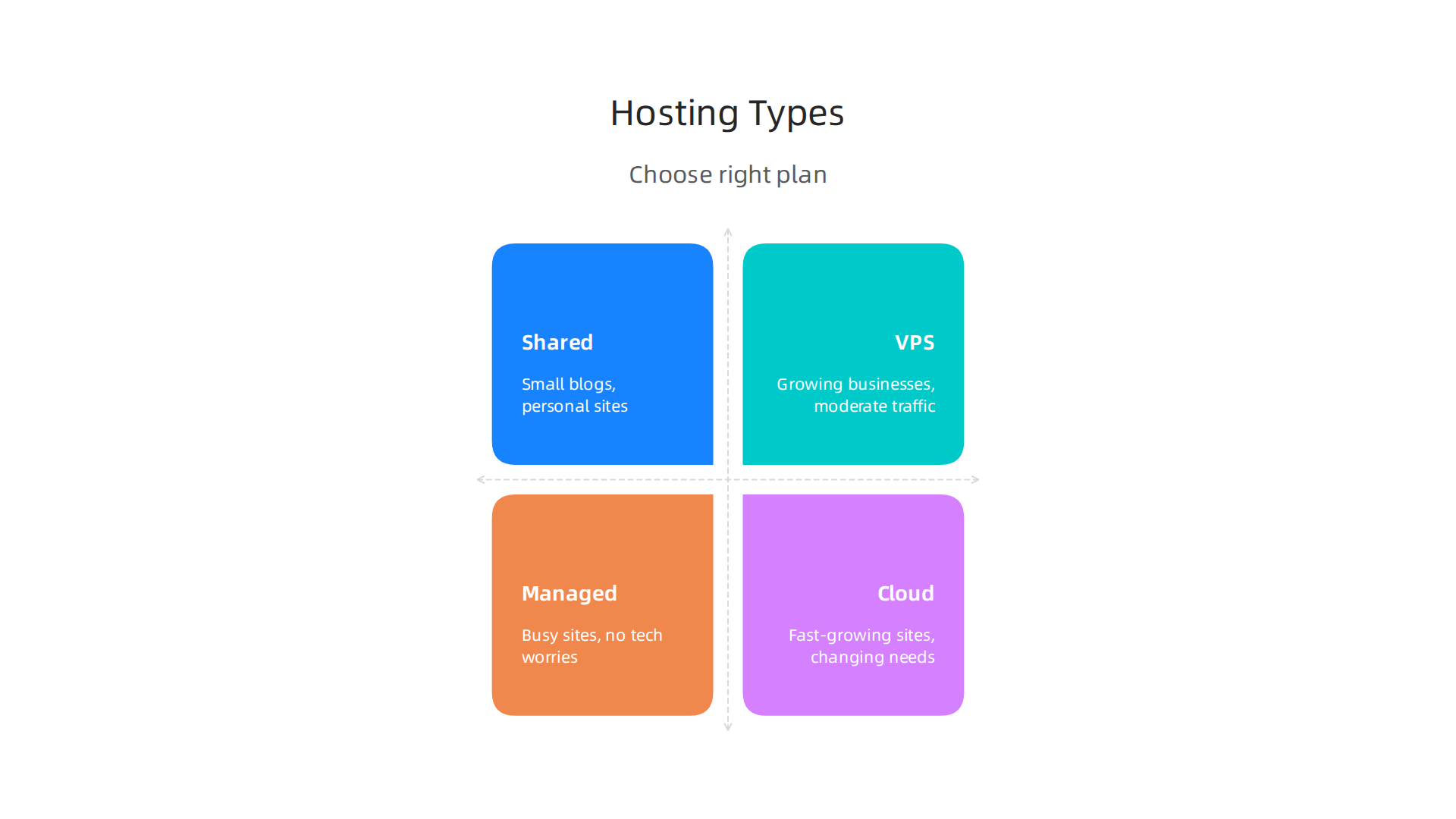
| Hosting Type | Best For | Typical Cost | Control Level |
|---|---|---|---|
| Shared | Small blogs, personal sites | Low | Low |
| VPS | Growing businesses, moderate traffic | Medium | Medium |
| Managed | Busy sites, no tech worries | Medium/High | Medium |
| Cloud | Fast-growing sites, changing needs | High/Variable | High |
How to Pick the Right Plan for Your Small Business
To choose wisely and manage your godaddy website hosting cost, consider these points:
- How Many Visitors? If you have just a few visitors, shared hosting is fine. If you expect thousands, you’ll need something more powerful like VPS or cloud hosting.
- Security Needs: Do you handle sensitive customer information? Higher security needs often mean needing more advanced hosting that might come with higher
godaddy pricesor other provider costs. - Your Technical Skill: If you’re not tech-savvy, managed hosting can be a great choice because experts handle the hard parts. If you like to tinker, a VPS or cloud plan might give you more freedom.
- Your Budget: Be clear about what you can spend. Remember to think about renewal prices, which can be much higher than the first year’s deal. You can get more details on GoDaddy hosting prices 2026 to help compare specific plans.
Smart Ways to Save Money and Avoid Surprises
Even when you pick a plan, there are things to watch out for to keep your total web hosting cost down:
- Look for Hidden Fees: Always check if things like SSL certificates (for website security), daily backups, or email hosting are included or cost extra.
- Understand Renewal Costs: Many hosts offer low starting prices that jump up a lot when it’s time to renew. Ask about the renewal price upfront.
- Read Reviews: See what other people say about customer service and uptime. A cheap host isn’t really cheap if your website is often down.
- Negotiate: Sometimes, especially if you’re a returning customer or moving from another host, you can ask for a better deal or extra features.
- Start Small and Upgrade: Don’t pay for more than you need right away. You can usually upgrade your hosting plan as your website grows.
By thinking about these points, you can make a choice that fits your business now and in the future, without worrying about surprise godaddy website cost issues. For a full picture of your website expenses, learn how to calculate your true web hosting cost and avoid hidden fees in 2026.
Summary
This article explains the real cost of building and running a website with GoDaddy by looking beyond headline prices to reveal the services that drive your bill: hosting, domain names, SSL, backups, email, security, and performance upgrades. It walks through the difference between low introductory rates and often much higher renewal prices, and shows which features (storage, bandwidth, managed services, uptime guarantees) increase costs. The guide also covers common add-ons and hidden fees, when it makes sense to pay more for speed or protection, and how growth or migration affects your budget. By reading it you’ll understand what to include in your website budget, how to compare GoDaddy to alternatives, and practical steps to avoid surprise bills and choose the plan that fits your business in 2026.
