




Boost Business with Render Web Hosting Performance Security and Scalability in 2026
Article
Running a business online in 2026 means your website needs to be fast, safe, and always working. But for many small to medium-sized businesses (SMBs), finding the right web hosting can feel like a big puzzle.

You might worry about technical things, like setting up servers, keeping your data secure, or making sure your website loads quickly enough. These are common challenges for business owners.
Think about it:
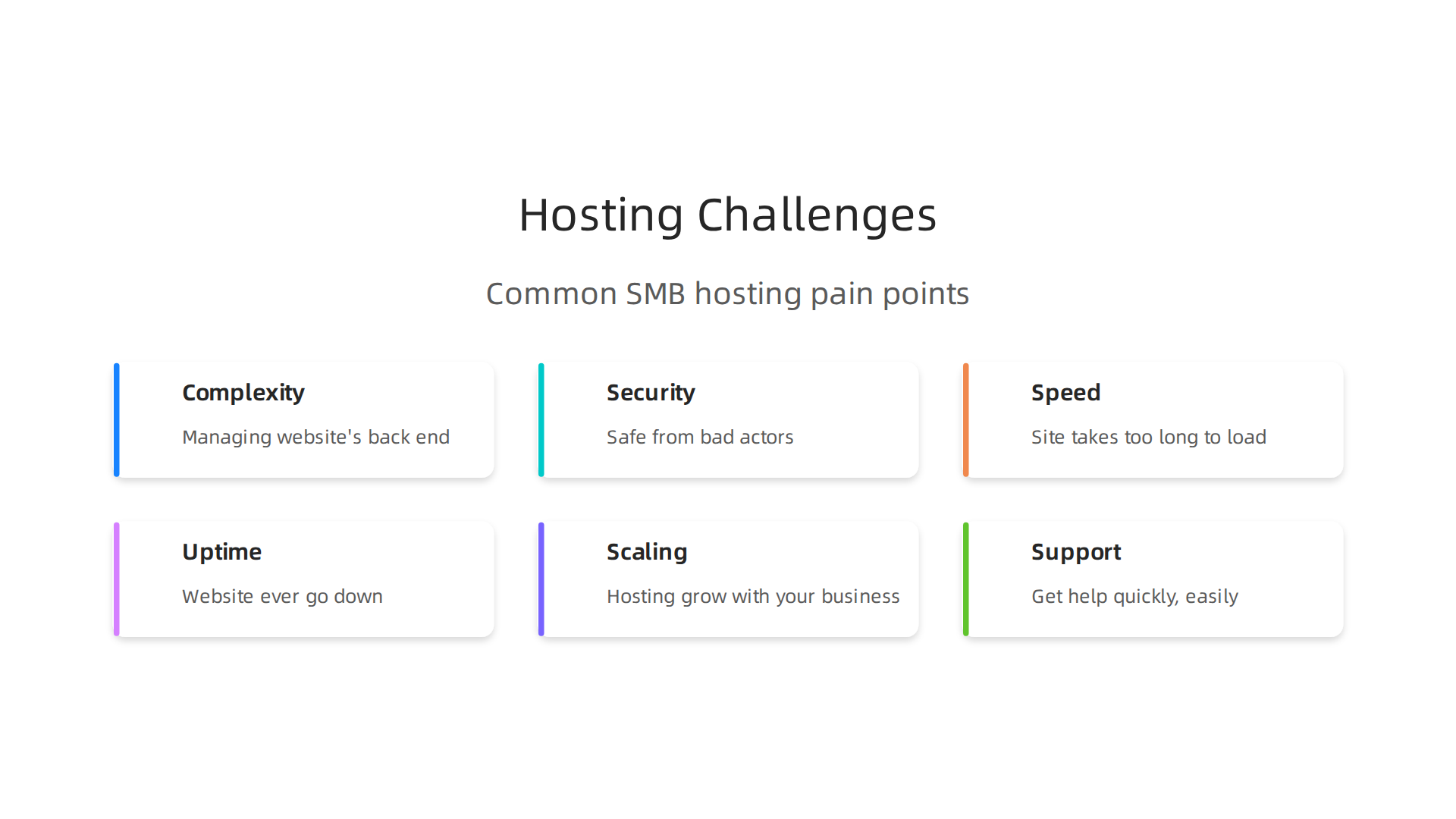
- Complexity: Are you spending too much time trying to figure out how to manage your website’s back end?
- Security: Is your website safe from bad actors and cyberattacks? Keeping your business and customer information secure is a huge deal.
- Speed: Does your site take too long to load? Slow websites can make customers leave and hurt your search engine rankings. For example, some hosting options like Render have an average latency of 451 ms, which means it takes almost half a second for a server to respond, impacting overall speed Render Performance: Benchmarks, Latency & Limits 2026 …. Faster hosts usually do better with Google’s core web vitals, which are important for how well your site performs Web Hosting Core Web Vitals Test 2026: Which Hosts Pass Google’s SEO Performance Standards.
- Uptime: Does your website ever go down? Every minute your site is offline means lost sales and unhappy customers. While many aim for high uptime, even a 99.9% guarantee can mean about 43 minutes of downtime each month SaaS SLA Agreements: Uptime Guarantees and Penalty Clauses ….
- Scaling: Can your hosting grow with your business? What happens if you suddenly get a lot more visitors?
- Support: When something goes wrong, can you get help quickly and easily?
These concerns are why many businesses are now looking at modern solutions like Render web hosting.
When people talk about "Render web hosting," they usually mean using a Platform as a Service (PaaS) that helps you deploy and manage your web application hosting without needing to handle all the tricky server details yourself. It’s designed to make web app hosting simpler, faster, and more reliable.
Choosing the right web hosting company can be a big step for your online success. If you are a business owner, marketing manager, or IT manager, understanding your options is key to ensuring your website is always performing at its best. This guide will help you understand what Render and similar managed hosting options offer. We will look at how they solve common business problems and help you decide if a service like Render web hosting is the best fit for your needs in 2026. If you’re looking for a partner that takes these pain points seriously and provides reliable hosting, you might want to learn more about PrismWebHost — Web Hosting & Cloud Services.
To start your journey in understanding web hosting better, read our guide on What is Web Hosting Services: A Clear Definition for Business Owners.
When you choose a service for your web application hosting, two of the most important things are how fast your site works and how often it stays online. Nobody likes a slow website or one that keeps crashing. This is where a good platform like Render web hosting aims to shine.
Performance & Uptime: What to expect from Render web hosting
Measuring How Fast Your Website Is
To really know if your website is fast, we look at a few key measures:
- Time to First Byte (TTFB): This tells us how quickly your server sends the first piece of information to a visitor’s web browser. A low TTFB means your server is quick to respond. Some top hosting companies have TTFB times under 200 milliseconds, making them very fast indeed, according to a Web Hosting Performance Benchmark Guide 2026.
- Time to Interactive: This measures how long it takes for your website to be fully ready for visitors to click and use. It is about more than just loading the page; it is about being able to interact with it.
- CDN Edge Performance: Many modern hosts use a Content Delivery Network (CDN). This means your website’s files are stored on many servers all over the world. When someone visits your site, the files come from the server closest to them, making everything load much faster. Services like Render offer noticeable performance gains partly due to smart setup choices Render Performance Benchmarks (2026).
- Response Times: This is the overall time it takes for a server to answer a request. The faster the response, the better the user experience. Some of the 7 Fastest Web Hosts for Loading Times in 2026 show average response times under 150 milliseconds.
These numbers help you understand if your web app hosting is giving your visitors a good experience. Slow speeds can make people leave your site and even hurt your rank in search engines.
Understanding Uptime and Service Level Agreements (SLAs)
Uptime means how much time your website is online and working. Providers like Render web hosting often talk about Service Level Agreements (SLAs). An SLA is like a promise from the hosting company about how reliable their service will be. For example, some companies promise 99.9% uptime. While this sounds great, it can still mean about 43 minutes of downtime each month, as we mentioned earlier.
It is important to know that these agreements usually have rules about what counts as downtime. For instance, planned maintenance or problems caused by things outside the host’s control (like a big internet outage) might not be included in the uptime promise, as noted in the Compute Engine Service Level Agreement (SLA). For Render, their hobby, pro, and scale plans generally do not have a set uptime guarantee or money-back clauses Render SLA — Uptime Guarantee & Measured Reliability — DevHelm. This means that while they aim for high uptime, there is not a strict financial promise for it on those plans. Businesses need to understand these details when comparing different web application hosting options.
Features That Make a Difference
Providers like Render offer special tools to help your web app hosting stay fast and online:
- Content Delivery Networks (CDNs): As mentioned, CDNs speed up delivery by using servers closer to your users.
- Autoscaling: This means your website’s resources can grow or shrink by themselves based on how many visitors you have. If suddenly many people visit your site, autoscaling makes sure it can handle the rush without slowing down or crashing.
- Caching: This stores parts of your website so they load much faster for returning visitors.
- Edge Compute: This runs some of your website’s tasks closer to your users, reducing delays.
When looking at web hosting for your business, you might also compare costs with other options. For example, learning to understand and optimize your aws hosting cost for small businesses can help you see how different platforms stack up against each other in terms of pricing and features. Choosing the right partner means balancing these features with your budget and needs.
After making sure your website is fast and always online, the next big thing to think about is how safe it is. Keeping your website secure is just as important as keeping it running well. This is especially true for small and medium-sized businesses (SMBs) that use web application hosting. A good web hosting service, like Render web hosting, must protect your site from bad actors and keep your customer’s information safe.
Threats Your Small Business Website Might Face
When you put your business online, you face certain risks. Here are some of the main ones that small businesses should be aware of:
- DDoS Attacks (Distributed Denial-of-Service): This is when bad guys try to flood your website with so much fake traffic that it slows down or crashes. It’s like too many people trying to get into a small shop at once, blocking real customers. Understanding these attacks is the first step to defending against them. You can learn more in resources like Understanding and Responding to Distributed Denial-Of-Service Attacks. Keeping your site online during a DDoS attack is critical. Many places offer good advice on Defending against distributed denial of service (DDoS) attacks.
- Data Breaches: This happens when someone unauthorized gets into your website and steals important information, like customer names, emails, or even credit card details. This can really hurt your business and your customers’ trust.
- Misconfigurations: Sometimes, security problems are not caused by outside attacks but by simple mistakes in how the website or server is set up. These small errors can leave big openings for bad people to get in.
- Supply-Chain Risks: This is when a problem in a service or tool that your web app hosting relies on causes a security issue for your site. For example, if a software component you use has a flaw, your site could be at risk.
Built-in Security Features on Render Platforms
Good web hosting providers, including Render web hosting, build in many security features to help protect your site.
These features work like digital bodyguards for your web application hosting:
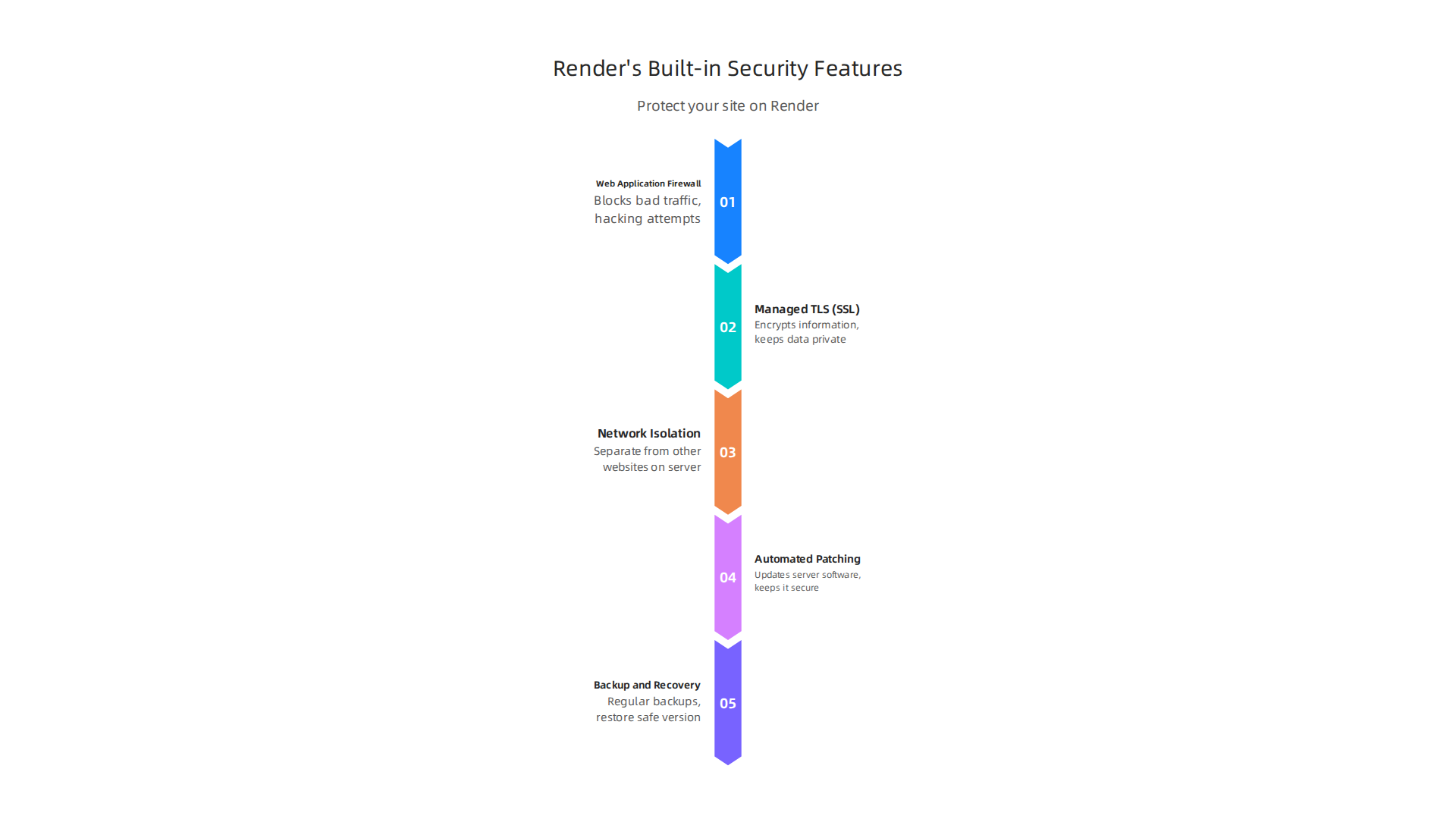
- Web Application Firewall (WAF): A WAF acts like a shield that checks all traffic coming to and from your website. It blocks bad traffic, like hacking attempts, before they can reach your site.
- Managed TLS (SSL Certificates): TLS, often called SSL, encrypts the information sent between your website and your visitors. This means sensitive data, like login details, stays private. Managed TLS means the hosting provider handles setting this up and keeping it updated for you.
- Network Isolation: This means your website is kept separate from other websites on the same server. If one website gets attacked, it won’t easily spread to yours.
- Automated Patching: Software needs regular updates to fix security holes. Automated patching means your web app hosting provider automatically updates the server software, keeping it secure without you needing to worry.
- Backup and Recovery: Even with the best protection, things can go wrong. Good hosts offer regular backups of your website. If something bad happens, you can restore your site to an earlier, safe version.
Rules and Regulations (Compliance)
For many businesses, especially those that handle customer data, following specific rules is a must. These are called compliance requirements:
- PCI DSS: If your website takes credit card payments, you need to follow PCI DSS rules to make sure card data is safe.
- GDPR: If you have customers in Europe, you need to follow GDPR rules about how you collect and use their personal data.
- Other Regional Regulations: Different places have different rules. It’s important to know what applies to your business.
When choosing your web hosting partner, you should ask them about how they help you meet these rules. A good provider will have clear answers and tools to help you stay compliant. You can also explore how to ensure your web hosting helps you how to stay compliant with secure web hosting. Choosing a host that understands and helps with compliance can save your business a lot of trouble down the road.
Once your website is safe and sound, the next big question is how easy it is for you to actually build and update it. A good web application hosting service, like Render web hosting, should make a developer’s job simpler, not harder.

This means using smart tools and ways of working that help you get your ideas online quickly and smoothly.
How Developers Work on Platforms Like Render
Modern web app hosting platforms, including Render web hosting, use clever ways to help developers. These methods make updating your website easy and less prone to errors.
-
Git-Based Deploys: Imagine Git as a special notebook where developers write down all the changes to their website’s code. When they finish a change and save it in this notebook, platforms like Render can automatically see it. Then, Render can take that new code and put the updated website online. This is called a Git-based deploy, and it makes updating your site a simple process. You can even choose to deploy a specific version of your code, if needed, directly on Deploying on Render.
-
CI/CD Integrations: This fancy term stands for Continuous Integration and Continuous Delivery. In simple words, it means that new changes to your website are automatically tested and then published. This helps small teams push out updates often and reliably, with fewer mistakes. For example, many businesses use Render with tools like GitHub to set up these automatic steps. This way, new code gets published only after CI checks pass, making sure everything works as it should. Setting up these automatic deployments with services like Render can be done in a few easy steps, as shown in guides like A Step-by-Step Guide to Setting Up CI/CD Using Render.
-
Container Support: Think of a container as a small, self-contained box that holds your entire website, including all its special parts and settings. This box makes sure your website works the exact same way, whether it’s on a developer’s computer or on the web application hosting server. This helps avoid problems and makes updates go smoothly every time.
How These Choices Affect Your Business
The way you deploy your website has a big impact on how well your business runs.
- Reliability: Using Git-based deploys and CI/CD makes your website more reliable. If a new update ever causes a problem, you can quickly go back to an older, working version. This is called a rollback and it saves your business from extended downtime.
- Release Velocity: Small teams need to move fast. These tools let you update your website more often, bringing new features and fixes to your customers faster. This means your business can adapt and grow without constantly worrying about broken systems.
- Faster Rollbacks: It’s much easier to fix things if they break. Being able to quickly go back to a working version means less stress and happier customers. Following best practices for implementing Git-based deployment in production environments can further boost this speed and safety.
Important Tools and Integrations to Look For
When you are looking for web app hosting, check for these helpful features:
- Build Packs: These are ready-made tools that help your hosting provider understand how to build your website’s code without you needing to give many instructions. They simplify the setup process greatly.
- Secrets Management: This is how the hosting provider keeps your important passwords and secret keys safe. They store these secrets separately from your code, which is a very secure practice.
- Observability: This means you can easily see how your website is performing. You can check for errors, how much traffic you are getting, and if everything is running smoothly. For instance, Render offers dashboards where you can view your service metrics at any time.
Choosing a web application hosting provider like Render that focuses on a smooth developer experience can save your business time and money. It helps you avoid the high costs and complex setups sometimes seen with other options, such as trying to manage every detail to optimize AWS hosting cost for small businesses. It’s crucial to choose a web hosting company that supports these modern ways of working.
When you run a website for your business, you want it to be online all the time. You also want to know that your important information is safe. This is where a good web application hosting service like Render web hosting truly shines, focusing on keeping your site up and protecting it from bad things.
Keeping Your Website Always On: Redundancy and Backups
Imagine having extra copies of your important papers in different places. If one copy gets lost or damaged, you still have others. This is similar to how good web app hosting services handle your website.
- Multi-Region Deployments: This means your website isn’t just stored in one giant computer in one place. Instead, copies are spread across different data centers in various locations. If something goes wrong in one place, like a power outage, your website can still run from another place. This greatly reduces the chance of your site going down.
- Redundancy: Think of redundancy as having backup parts ready to go. If one part of the system breaks, another part immediately takes over. This helps keep your website running smoothly without any interruptions.
- Backups: Even with the best systems, things can still happen. That’s why good web application hosting always takes regular backups of your website. These are like snapshots of your site at different times. If something really bad happens, like your data gets lost or corrupted, you can go back to an older, working version. Services like Render web hosting make sure your data is saved so you can always recover it.
These features are super important for small and medium-sized businesses because they help avoid costly downtime and data loss.
Protecting Against Online Attacks: DDoS Mitigation
In 2026, online security is more important than ever. One common threat is a Distributed Denial-of-Service (DDoS) attack. This is when bad people try to overload your website with too much fake traffic, making it crash or run very slowly. A strong web application hosting provider will have layers of defense against these attacks. Understanding and responding to these attacks is a key part of keeping your business online Understanding and Responding to Distributed Denial-Of-Service.
Here’s how these defenses work:
- Network-Level Protection: This is like a guard at the entrance of a big building. It stops bad traffic and huge floods of fake requests before they even reach your website’s server. Services like Render web hosting often have strong network defenses to block these large-scale attacks.
- Transport-Level Protection: This layer looks at the way information travels over the internet. It checks if the connections are real or if they are just fake attempts to slow things down. It helps make sure only proper requests get through.
- Application-Level Protection: This defense protects the actual parts of your website that users interact with, like login pages or shopping carts. These attacks are smarter and try to find weak spots in your website’s code. Good hosting uses special tools, like web application firewalls, to stop these tricky attacks Defending against distributed denial of service (DDoS).
With these layers of protection, web app hosting ensures your site can stay online even when targeted by attacks. For comprehensive protection, a 2026 guide to DDoS Protection and Mitigation can offer more details.
What to Do When Things Go Wrong: Recovery Playbooks
Even with the best protection, sometimes unexpected things happen. That’s why it’s good to have a plan, known as a recovery playbook. This plan helps small teams know what to do if their website goes down.
- Recovery Time Objective (RTO): This is about how quickly you want your website back online after a problem. For example, if your RTO is 15 minutes, you want your site running again within that time.
- Recovery Point Objective (RPO): This relates to how much data you can afford to lose. If your RPO is 1 hour, it means you’re okay with losing up to 1 hour’s worth of data from your site.
A good web application hosting provider will help you understand these ideas and how their services support your goals. They should have clear steps for bringing your site back up and restoring data from backups. For any business, having Incident Response Playbooks helps guide practical steps during outages. This makes managing your website much simpler and gives you peace of mind, allowing you to focus on your business without constantly worrying about your website’s uptime or security. To learn more about how hosting works and what to expect, check out our guide on what is web hosting services. For a deeper dive into choosing a provider, explore PrismWebHost — Web Hosting & Cloud Services.
When choosing a web application hosting service, it’s not just about keeping your site safe and online. It’s also about how much it costs and if it can grow with your business. For small and medium-sized businesses, understanding pricing, scaling, and how predictable your monthly bill will be is key.

Common Pricing Models and Hidden Costs
Different web app hosting providers charge in different ways. It’s like buying groceries; sometimes you pay per item, sometimes by weight, and sometimes you get a bundle deal.
- Per-Instance or Per-Compute: Many services, including Render web hosting, charge based on the computing power your website uses. This often means paying for things like how much CPU (the "brain" of the computer) and RAM (memory) your site needs per minute or hour. For example, Render offers different service tiers with varying CPU and RAM configurations at different minute-based prices Pricing.
- Bandwidth: This is about how much data your website sends out to visitors. Think of it as how much "road" your website traffic takes. Many plans include a certain amount of bandwidth for free, but if your site gets really popular and uses more, you’ll pay extra. For instance, Render’s Hobby plan includes 5 GB of bandwidth, with additional GBs costing extra Render Review 2026: Pricing, Features, Pros & Cons.
- Build Minutes: If your website needs to be built or updated often, some hosts charge for the time it takes to prepare these updates. These are called "build minutes." Render includes a certain number of build minutes each month, but if you go over, there’s a charge per additional 1,000 minutes Render Pricing 2026: Total Cost & Competitors Compared.
It’s important to look out for "hidden costs" like these overage charges for bandwidth or build minutes, as they can make your bill higher than expected. When comparing options, you might also look at pricing models from other popular services, like how Firebase hosting pricing uncover true costs and save your budget or understanding your aws hosting cost for small businesses.
Scaling Options and Trade-Offs
Scaling means making your website bigger or more powerful as your business grows or gets more visitors.
- Vertical Scaling: This is like giving your existing computer server more power (more CPU, more RAM). It makes one server stronger.
- Horizontal Scaling: This means adding more copies of your website across many servers. If one server is busy, another can handle the extra work. This is very common in modern web application hosting.
- Autoscaling: Good web app hosting services can automatically add or remove resources based on how much traffic your site has. This helps handle sudden rushes of visitors without your site slowing down.
- Cold Starts and Burst Limits: Sometimes, with autoscaling, a new server might take a moment to "wake up" when needed. This is a "cold start." Also, some plans have "burst limits" which cap how much extra power your site can use in a short time.
Render web hosting provides options to scale your services, helping you manage these aspects of growth.
Cost-Control Strategies for SMBs
Keeping hosting costs in check is important for any small business.
- Set Budgets and Alerts: Most hosting providers let you set a spending limit and send you alerts if you’re getting close. This helps you avoid surprise bills.
- Monitor Usage: Regularly check how much bandwidth, build minutes, and compute resources your site is actually using. This helps you understand where your money is going.
- Resource Quotas: Some services let you put limits on how much of certain resources your site can use, preventing accidental overspending.
- Choose Cost-Effective Architecture: Work with your development team to design your website in a way that uses resources wisely. This can mean choosing efficient programming languages or databases.
By carefully planning and monitoring, businesses can use powerful web application hosting services like Render web hosting without breaking the bank. Understanding these costs helps you make smart choices for your online presence in 2026.
After looking at costs and how to grow your website, another big part of picking a web application hosting service is knowing what kind of help you will get. This means thinking about customer support, how you’d move your website, and if you need extra help managing things. For a small or medium-sized business (SMB), good support can save a lot of headaches in 2026.
Support Tiers and What to Expect
When you choose a web app hosting provider, they usually offer different levels of help, also called "support tiers."

Think of it like a safety net for your website.
- Basic Support: Most plans, even free or low-cost ones, include basic help. This might be through online chat or submitting a ticket, which is like sending an email asking for help. It’s good for simple questions or small problems.
- Priority Support: For a bit more money, you might get faster help. This could mean your tickets are answered quicker, or you might get phone support during business hours. This level of support is often crucial for businesses where website downtime can mean lost sales.
- Enterprise Support: Bigger companies often need a dedicated team that knows their setup well. This top-tier support might offer 24/7 phone help, faster fixes for big problems, and a personal manager for your account. This comes with a higher price tag and is usually for very large or complex websites.
Service Level Agreements (SLAs) are promises from your web app hosting provider about how quickly they will respond to your issues and how much uptime your website will have. Always check these so you know what to expect. Services like Render Review 2026: Pricing, Features, Pros & Cons often detail what support comes with each plan.
Migration Checklist: Moving Your Website
If you’re moving an existing website to a new web application hosting provider like Render web hosting, it’s called "migration." It’s like moving homes, and you need a checklist to make sure nothing gets lost.
Here are the key steps for a smooth move:
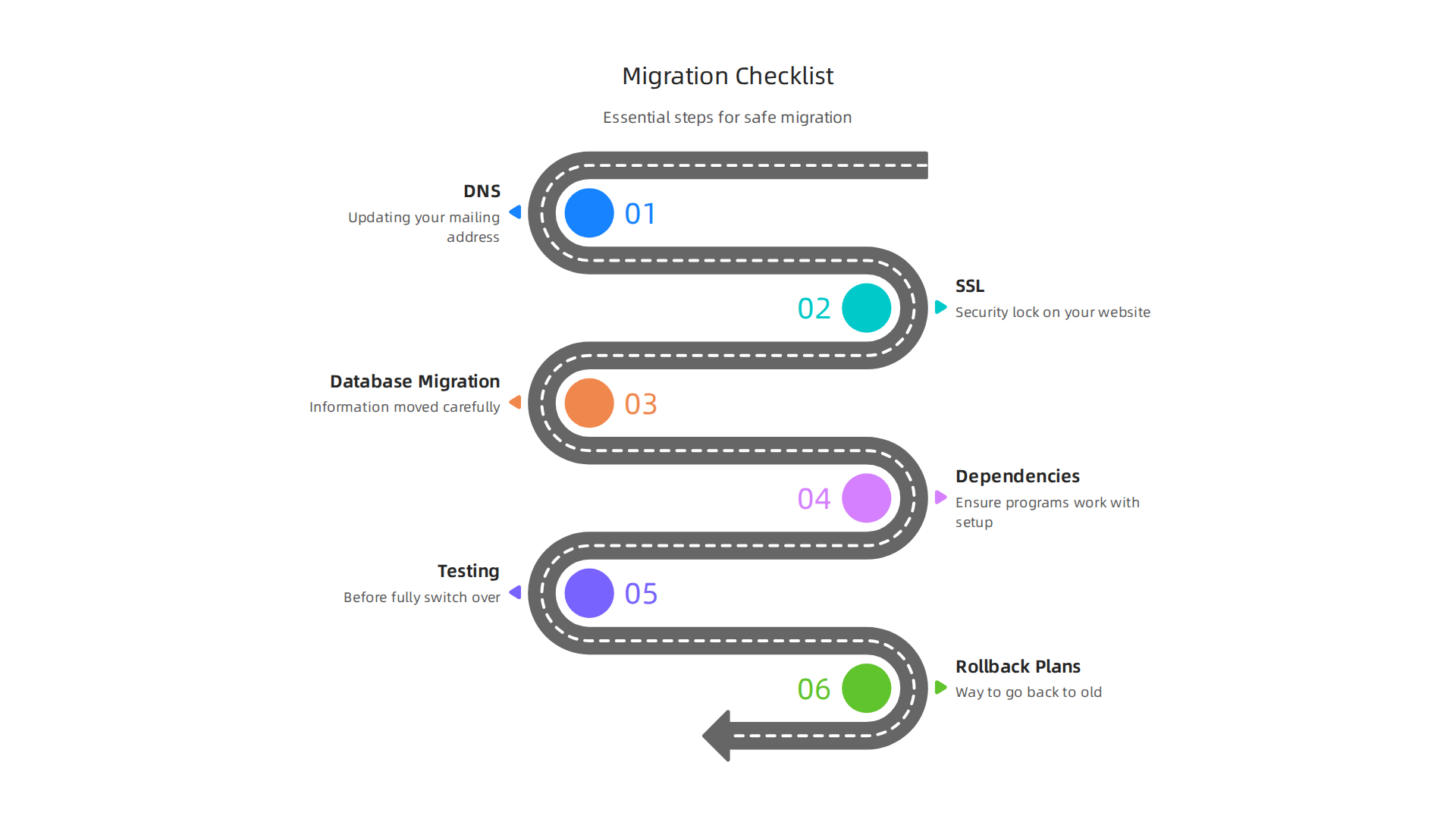
- DNS (Domain Name System): This is like updating your mailing address. You need to tell the internet where your website lives now.
- SSL (Secure Sockets Layer): This is the security lock on your website (the "https://" in your web address). Make sure your new host helps you set this up so your site stays safe.
- Database Migration: Your website’s information (like customer details, blog posts) is stored in a database. This needs to be moved carefully to the new host.
- Dependencies: Your website might rely on other programs or services. Make sure these work with your new hosting setup.
- Testing: Before you fully switch over, test everything. Make sure all pages load, forms work, and nothing is broken.
- Rollback Plans: Always have a way to go back to your old host if something goes wrong. It’s your backup plan.
Choosing a web app hosting service that makes migration easy can save you a lot of time and worry. You can also explore options to select the best web hosting for small business in 2026 to ensure a smooth transition.
When to Consider Managed Services or a Hosting Partner
Sometimes, managing your own web application hosting can feel like a full-time job. This is where managed services or a hosting partner can help.
- What are Managed Services? This means your hosting provider or a third-party company handles all the technical stuff for you. They update software, watch for problems, and keep your website running smoothly. It’s like having your own IT team without hiring one.
- Hosting Partner: A hosting partner is a company that works with you to pick, set up, and manage your web app hosting. They understand your business needs and help you find the best fit.
For small and medium-sized businesses, deciding between fully self-managed hosting (doing it all yourself) and managed services depends on your team’s technical skills and how much time you have. If you prefer to focus on your business instead of server settings, managed services can be a good choice. They can help with things like making sure your website performs well and stays safe from online threats.
To learn more about how reliable and secure hosting can support your business goals, consider exploring options at PrismWebHost — Web Hosting & Cloud Services.
Summary
This guide explains what modern PaaS web hosting like Render offers small and medium businesses in 2026, and how to pick a host that keeps your site fast, secure, and reliable. It walks through key performance metrics (TTFB, response time, CDN benefits), how uptime and SLAs work, and which built-in features — WAF, managed TLS, autoscaling, and backups — protect your site and customer data. The article also covers developer-focused tools such as Git-based deploys, CI/CD, containers, and observability dashboards that speed releases and simplify rollbacks. You’ll learn practical cost and scaling trade-offs, common hidden fees (bandwidth, build minutes), and ways to control spending. It closes with operational advice on redundancy, DDoS mitigation, recovery playbooks, migration steps, and when to choose managed services versus self-managing. After reading, you should be able to evaluate Render-style platforms against your uptime, security, developer workflow, and budget needs and decide the best hosting path for your business.
